Schneider Electric Customer Story: Mataura Valley Milk

Member News
The views expressed in this Member News article are the author's own and do not necessarily represent those of Agri-TechE.

The Challenge

To build the world’s best nutritional plant, Mataura Valley Milk needed the ability to quickly adapt and tailor production to meet market demands, tracking and tracing from farm to facility, process batching, and to maintain power supply integrity.

The Solution

Apps, Analytics and Services: AVEVA software*: System Platform, Batch Management, Manufacturing Execution System, and expert services
Edge Control: Modicon M580 and M340 PLCs
Connected Products: Altivar ATV 630 and 660 drives, AccuSine harmonic filters, iMCC, switchgear, power metering, and TeSys U

  • Bespoke integrated electrical and automation systems – based on EcoStruxure Plant and Power – tailored for the customer and standardized across the entire facility: from milk reception to dryer process, standardizing the process, wet mix, boiler, water treatment plant, wastewater treatment, refrigeration, etc.
  • Integrated AVEVA industrial software for batching, traceability, and seamless dataflow across the complex manufacturing process
  • Strong service support

The Results

  • 20% faster time to market through connectivity and engineering standardization
  • Payback period of 28 months for power-quality equipment
  • Additional 4.5% available energy on the grid
  • Visibility of real-time data on every process for informed decision making
  • Compliance with stringent standards (harmonic distortion levels)
  • Ease and flexibility to increase product portfolio and volume to meet growing demand
  • Reduced OpEx budgets compared to conventional systems
  • Cleaner and more cost-effective power

Read the full story on the Schneider Electric website.

* The Schneider Electric industrial software business and AVEVA have merged to trade as AVEVA Group plc, a UK listed company. The Schneider Electric and Life is On trademarks are owned by Schneider Electric and are being licensed to AVEVA by Schneider Electric.

A member of Yellow Brick AgTech has made a bold and generous move by making its fertilisation software available for free to non-profit organizations

Member News
The views expressed in this Member News article are the author's own and do not necessarily represent those of Agri-TechE.

This decision comes after more than 12 years of commercial sales in over 72 countries, during which time the company has accumulated invaluable data to support the algorithm behind its fertilization recipes.

The i-Plantnutrition fertilisation software is renowned for its accuracy and effectiveness, with growers using it to make informed decisions and reduce their fertilisation use. The software’s output is based on years of data that have been carefully analysed to provide reliable and unbiased results.

Johnathan Kol-Bar, CEO of i-Plantnutrition, commented: “Recognizing the importance of sustainable agriculture practices, i-Plantnutrition has decided to make its software available to all growers for free. This move demonstrates the company’s commitment to supporting sustainable farming practices and its dedication to ensuring that growers have access to the latest tools and technology.“

The decision to make the software free also ensures that good fertilisation practices is not influenced by any fertilisation company, and that its fertilisation recipes remain accurate and non-biased. This independence is crucial for growers who need reliable information to make informed decisions about their fertiliser use.

With this announcement, i-Plantnutrition is not only providing a valuable tool to growers but also encouraging the adoption of sustainable farming practices worldwide. By making the software available for free, the company is removing financial barriers that may have prevented some growers from accessing the software in the past.

The i-Plantnutrition fertilisation software is a testament to the company’s commitment to innovation and sustainability. The software’s accuracy and effectiveness have helped growers around the world to reduce their fertilizer use and improve their yields. Now, with the software available for free, more growers will be able to benefit from this valuable tool.

By providing this software, the company is helping growers to make more informed decisions about their fertiliser use, reducing their environmental impact, and improving their yields. The i-Plantnutrition fertilisation software is an example of the power of innovation and collaboration in promoting sustainable agriculture practices.

For any queries, please contact us on johan@ybcap.com

Bio Natural Solutions® products receive V-Label certification

Member News
The views expressed in this Member News article are the author's own and do not necessarily represent those of Agri-TechE.

Bio Natural Solutions® coatings have been certified by the vegan V-Label, a Swiss seal of approval that provides guarantee and safety. Our Life Cover Plus® and Vital Cover products are produced in a responsible way, without animal ingredients and with environmentally friendly production processes. We are proud to say that we offer certified vegan products that not only help to extend the shelf life of food, but also contribute to a more sustainable future for everyone.

Legume Technology attend AgriTek & FarmTek Expo in Astana, Kazakhstan.

Member News
The views expressed in this Member News article are the author's own and do not necessarily represent those of Agri-TechE.

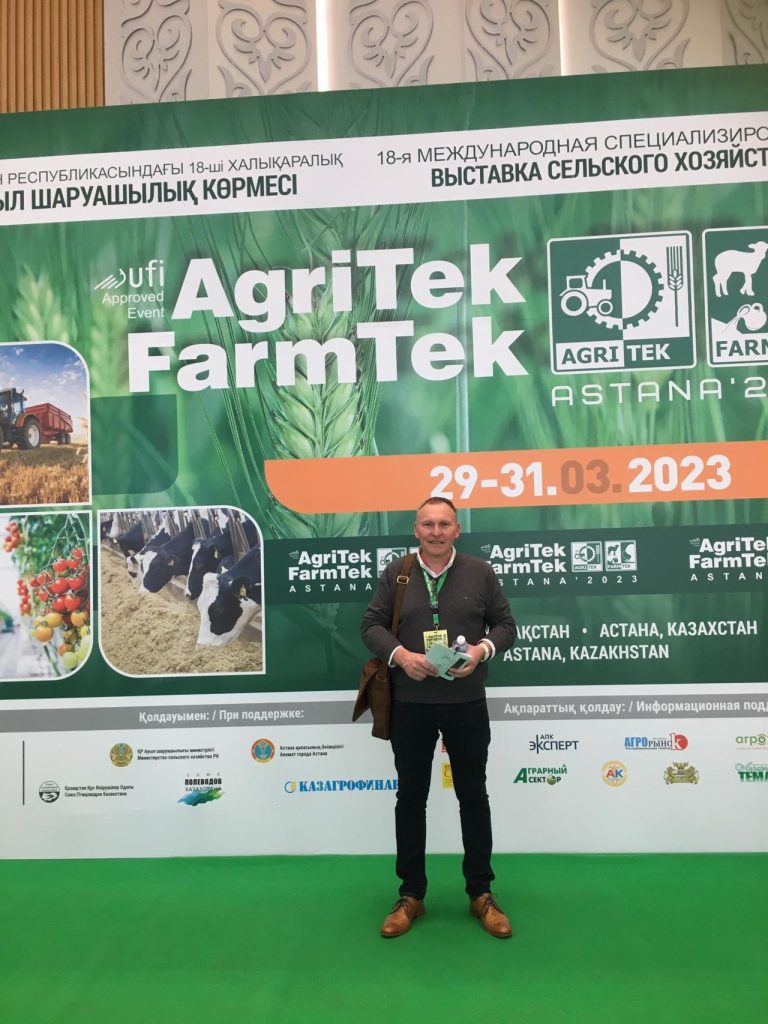
From 29th until 31st March, Legume Technology participated in a trade mission organised by Department for Business and Trade and exhibited at AgriTek & FarmTek Expo in Astana, Kazakhstan. It is the 9th largest country in the world with over 21 million ha of arable land and good opportunities to showcase the efficiency of our products. We look forward to exploring this new territory and how our products can make a difference!

In review: the role of genetic editing in crops

Member News
The views expressed in this Member News article are the author's own and do not necessarily represent those of Agri-TechE.

The process of plant domestication has been ongoing for thousands of years. Expanding the genetic diversity of crops has mostly relied on naturally occurring variations selected for their beneficial impact. However, this approach as used throughout most of the history of agriculture, lacks control and precision, is slow to yield results and depends on an element of luck. In this next guest blog, Hannah Senior and Dr Jamie Claxton provide us with a deep dive into how genetic editing in plants can help boost food production whilst diversifying our crops, reducing waste and minimising risk to pest and diseases.

Nowadays, we have numerous ways to control introduction of heritable mutations into a plant’s genetic material. For instance, the development of computing and genotyping has allowed marker assisted breeding, better informing the recognition and use of the genetic indicators of beneficial traits. In addition, creating a large pool of genetic variants to select from became easier by using chemical compounds and irradiation to increase the background mutation rate. Unfortunately this also creates drawbacks such as deletion and rearrangement of big genomic fragments.

A major step forward happened with the discovery of a new, powerful tool: the Clustered Regularly Interspaced Short Palindromic Repeats (CRISPR) and the CRISPR associated protein (Cas9), CRISPR-Cas system. This game changing approach has since been utilised in many crops to target genes linked to traits such as shelf life or taste profile.

One of the key advantages of the CRISPS-Cas system (and similar approaches developed subsequently) is the high precision it provides by enabling the introduction of specific changes at selected sites in the DNA. This not only accelerates the plant breeding process but also lowers cost and increases accuracy.

The implications could be wide-reaching, helping to rapidly develop plants with high resistance to climatic stress, emerging pests and diseases or increased content of chemicals for use in the medical sector. Yet, as with all new technologies, full consideration must be given to how these crops will be cultivated and ensure alignment with sustainability, climate changes and food security goals both in the UK and globally.

Hannah Senior CHAP Non-Executive Director and CEO of PBS International works extensively with plant breeders and seed producers worldwide. Below she provides her outlook on the value of gene editing in building a sustainable and resilient agriculture sector.

“Dramatic shifts caused by climate change, demographics and the economy have accelerated the need for new crop varieties. Successfully cultivating crops in a variable climate with the added challenges of lower inputs and less labour will require accessing every tool in the box. To help jump-start the process, it’s great news that the Genetic Technology (Precision Breeding) Bill has passed through Parliament.

Gene editing has met with concerns from the public, yet recent data presented by The Food Standards Agency indicated that around 74 percent of people are comfortable with gene editing, especially in plants, when they understand it. The problem is that inadequate representation of what genetic engineering is and can achieve limits this understanding, especially when the pros and cons of the technology itself are confused with other issues.

An example of this is a concern that if we allow genetic engineering, a handful of multinational corporations will be in control of all our crop genetics. ‘Seed sovereignty’ and the implications of consolidated agribusinesses are legitimate concerns, of course. Ironically, concerns about the safety of genetically modified organisms (GMOs) – gene editing’s predecessor’s technology – added fuel to consolidation that was already happening across seed companies.  Regulators made the process of launching biotechnology-enhanced crops very onerous, and as a result, only very large companies working on the biggest crops (e.g. soy and maize), could afford it. With appropriate regulation, gene editing has the potential to work against this trend because it is faster, cheaper and more accessible which enables small companies, start-ups, NGOs and researchers to use this technology to develop new varieties and work on a wider range of crops.

Gene editing is not the answer to all our problems. Achieving our sustainability goals and future-proofing food production in an ever-changing climate will require other tools such as including higher investments in preserving genetic diversity, scientific research more generally, and farming systems research.  But gene editing is a valuable and welcome addition to the options available.”

Next, Dr Jamie Claxton, Director of Research and Development at Tozer Seeds, discusses current industry challenges and how genetic editing could accelerate crop breeding to benefit and support food production.

“We are the largest UK-based independent vegetable, salad and herb seed breeding company but small compared to many of our multinational competitors, so we have to be really innovative to successfully compete in the commercial marketplace. We primarily use traditional plant breeding techniques but the timescale for developing new varieties is long. This is particularly true for the biennial crops we work on, such as parsnip and celery. Developing a new variety of a biennial crop can take 10-15 years which is a huge investment in resources. Even new varieties of our annual crops such as wild rocket take up to 10 years to develop.

The commercial fresh produce sector is facing huge challenges due to many interacting factors; climate change, Brexit, Covid-19, pesticides withdrawal and huge inflation of input costs for growers, threatening UK food security. It is becoming apparent to us as a company that in order to remain competitive we need to embrace new technologies to speed up the release of new varieties to market and meet these fast-changing demands to help secure UK food supplies. Traits such as pest and disease resistance, resistance to drought, improved shelf life and slower bolting to reduce food waste as well as improved nutritional content to maintain public health will need to come to market in a much shorter timeframe than can be achieved by traditional plant breeding techniques. We are also looking at quickly developing varieties for new growing technologies such as urban vertical farms to reduce food miles.

Gene editing is an efficient precision breeding tool that I believe will allow us to overcome these hurdles. It is important to distinguish this technique from genetic modification, which is the introduction of a fragment of DNA into a crop form an unrelated species. Gene editing does not involve any DNA from any other organism being introduced into a plant, it is simply a powerful and fast tool that allows very precise edits to be made to the genome that will, for example switch on a gene that codes for disease resistance or drought tolerance. The results are no different to traditional plant breeding – it is a faster and more precise technique.

We currently have an Innovate UK – funded Knowledge Transfer Partnership with a scientist from University of York, working with us to develop the protocols for gene editing within our economically important crops. The government’s Precision Breeding Bill last year has recognised that gene editing is distinct from genetic modification with an aim to remove some of the tight regulation around gene editing. This is vital to secure food security within the UK as other countries outside Europe are already pushing forward with this new technology and releasing new varieties. Public perception, understanding and approval are key to highlighting the huge benefits of this new technology and its essential role in securing food production in the UK.”

CHAP aims to build networks of leading scientists, farmers, advisors, businesses, and academia to understand industry priorities and develop innovative solutions. To be our next guest contributor, e-mail enquiries@chap-solutions.co.uk

Please note, the opinions expressed in this article do not necessarily reflect the views or opinions of CHAP.


Financing a low-emission, nature-positive agricultural sector

Member News
The views expressed in this Member News article are the author's own and do not necessarily represent those of Agri-TechE.

To achieve the transition to an inclusive, net zero carbon and climate-resilient economy, public investment alone will not suffice. In this new guest blog Amy Allan, Nature Programmes Analyst at the Green Finance Institute (GFI), discusses the role of private sector investment in supporting the transition of the agriculture sector towards reaching a net zero future and secure food production.

“In 2019 the GFI was established to sit at the nexus of the public and private sectors, convening sectoral coalitions to identify and unlock barriers to private sector investment to move capital at the scale and pace needed for the transition. We work across a range of sectors – including nature and biodiversity, where our mission is to increase private sector investment into nature restoration, nature-based solutions, and nature-positive outcomes in and for the UK.

Agriculture plays a key role in net zero and nature-positive ambitions. The agricultural sector currently accounts for an 11% share of greenhouse gas (GHG) emissions in the UK and is projected to rise to 30% by 2030, as other sectors reduce emissions at a faster rate. Furthermore, as stewards of over 70% of the UK’s land, farmers play a direct role in environmental improvements.

In England, the Environmental Land Management schemes will pay farmers to transition to more sustainable means of food production alongside improving nature. However, to deliver a resilient and secure food system – focused on food production and able to deliver the much-needed environmental outcomes – farmers require greater financial support.

To date there has been no estimate on how much a farming transition will cost, but we can be certain that it will be in the billions. A report commissioned by the GFI and produced in partnership with environmental economics consultancy, eftec, in 2021, for example, found a £3.7 billion financing gap for sustainable soils management this decade. Across the UK, there also exists a £19.4 billion gap for protecting and restoring biodiversity.

There are a series of potential private sector sources of finance that can be mobilised for the transition:

  • Banks are exploring the potential to provide loans at discounted rates to farmers that meet environmental outcomes, as well as loans to cover costs required for a farming transition. Many are looking to lend to natural capital projects, and some banks are supporting farmers through the supply of measurement and monitoring tools
  • Supermarkets, manufacturers and food and beverage companies are looking to support farmers within their supply chains to transition by exploring premium payments through certification, insetting payments and other incentives. They too are paying for, or developing their own, GHG emissions calculators and offering payments for basic baselining
  • Buyers of and investors in ecosystem services which stem from improved environmental activities on farms are also seeking to pay farmers for carbon improvements (soil, hedgerows, peatlands and woodland), habitat creation and restoration, nutrient reduction and flood risk reduction

In this context, Defra commissioned the GFI to bring together the farming sector with the above market participants in a Strategic Working Group to identify barriers and collectively recommend solutions to the flow of that capital. Following a six-month consultation with the Working Group and interviews with over 75 experts from across the agricultural sector the GFI published the Financing a Farming Transition report on the 28th March 2023.

The report lays out the barriers preventing private sector finance from moving at scale into the farming transition, including data, confidence and implementation gaps, and identifies four key enablers that will overcome these challenges and create the supporting environment needed to unlock private sector finance and investment for farmers. With each enabler, a roadmap to implementation and key considerations – such as addressing data privacy concerns – are provided.

The key enablers set out in the report are as follows:

Improving data access and availability

Making environmental and spatial data easily accessible through a common platform and language would help farmers, banks and the private sector in integrating natural capital improvements into their businesses and decision-making processes, in addition to the free provision of premium mapping software to farmers.

Setting priority environmental outcomes metrics

The private sector and farming community are seeking a clear vision from government so that they know where to invest their time and resources. A government-defined set of simple, priority environmental outcomes around soil health, water quality and biodiversity for example, complemented by best-practice measurement guidance, would help clarify for farmers and the private sector the environmental data they may want to collect.

Clarity and guidance on high-integrity environmental markets

Greater clarity and formal guidance on the operation of high-integrity environmental markets will provide confidence, such as guidance on insetting, the ability to stack or blend ecosystem services, overarching standards, the inclusion of different forms of tenure in agreements, and tax treatment of ecosystem services.

Aggregation model support

Support including funding, a community of practice and guiding principles will encourage the creation of aggregation models that produce landscape-scale environmental improvements and greater capacity for farmers to attract private finance.

The GFI and many of those that fed into the report are now working together with government to move the recommendations forward.”

CHAP aims to build networks of leading scientists, farmers, advisors, businesses and academia to understand industry priorities and develop innovative solutions. To be our next guest contributor, e-mail enquiries@chap-solutions.co.uk

Please note, the opinions expressed in this article are the author’s own and do not necessarily reflect the views or opinions of CHAP.

New irradiance sensor improves irrigation management

Member News
The views expressed in this Member News article are the author's own and do not necessarily represent those of Agri-TechE.

A new irradiation sensor will enable all arable and vegetable producers to manage their irrigation, fieldwork and disease protection more precisely, helping to curb costs and boost productivity. The low-cost system operates with exceptional accuracy, large reach and is user-friendly.

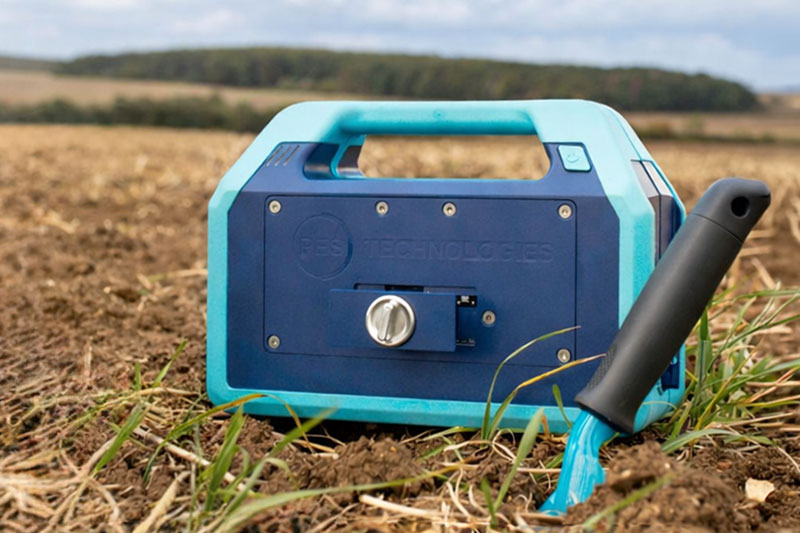
Sencrop’s new Solarcrop irradiance sensor, which has just been launched in the UK, means producers can link up real-time solar irradiation, rainfall, humidity, temperature and wind data, as well as accurate weather forecasting, in one simple app. Based on crop type and growth stage, this accurately predicts evapotranspiration rates and soil moisture availability, helping farmers to identify when and how much to irrigate without the need for expensive and very localised soil probes.

“Much of the UK is getting drier – and more extreme weather events are becoming the norm,” says Martin Ducroquet co-founder of Sencrop. “In addition, the environmental issue around irrigation is no longer in question; producers can massively reduce their water consumption by optimising irrigation systems. We want Irricrop to change the world of irrigation, by making this new solution accessible to all. This evolution is completely consistent with our original mission, to standardise precision agriculture.”

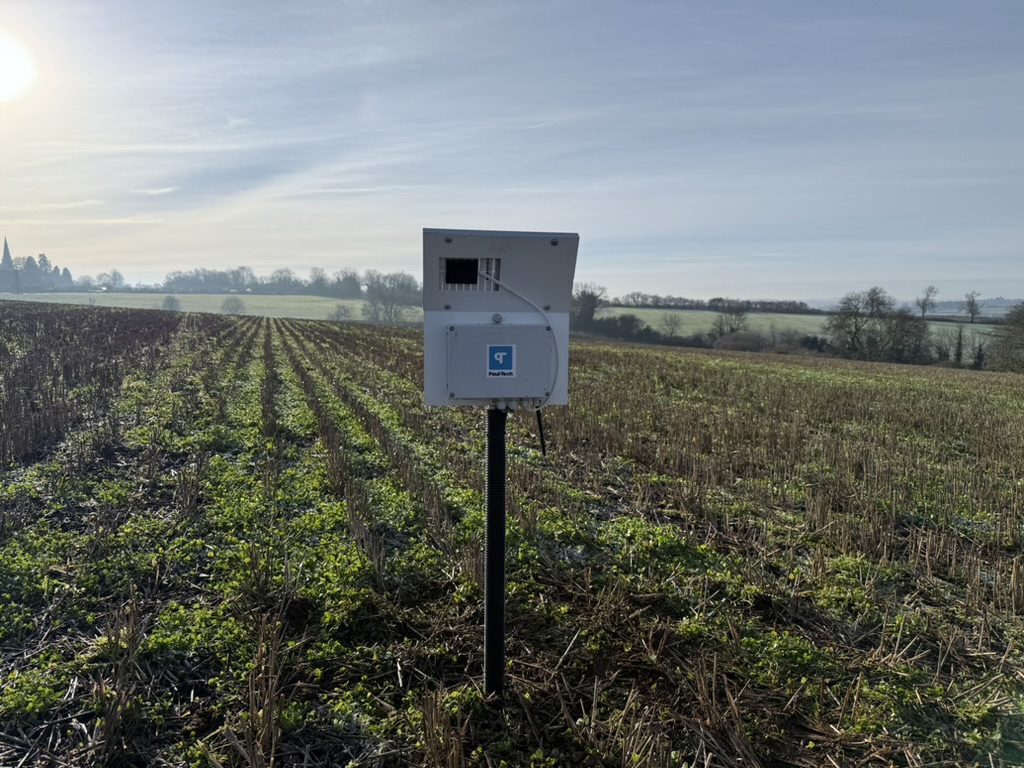
One sensor can monitor up to 10 fields across a range of 10 miles, explains Thibaut Mathey-Bony, product innovation manager at Sencrop. “Based on two years of research and development and patented technology, Solarcrop measures solar irradiation to a unique accuracy of 2%.” When combined with the Raincrop and Windcrop sensors, as well as individual field and crop information, it can accurately predict the soil moisture surplus or deficit over the coming seven days, enabling producers to better plan their irrigation or field work.

“Solarcrop is Sencrop’s third pillar of hyper-local data for farmers, helping them to make the best choices for their crops,” says Mr Mathey-Bony. “The firm now has a network of more than 2,000 connected stations across the country, generating ultra-precise and local information like temperature, humidity, wind speed and rainfall. Now farmers can also measure solar irradiation, it maximises their ability to manage climatic risks, as well as diseases and pests.”

This is because farmers get to access a whole range of ag-weather related features: The firm links up with prediction services for diseases like blight and cercospora, so that producers and agronomists can act on highly tailored risk-based advice.

The low-cost plug-and-play service also means everyone can use it, not just those with deep pockets. The sensors are extremely quick and easy to install, and farmers can choose the appropriate subscription package for them.

Mr Mathey-Bony adds: “When combined with accurate weather forecasts and real-time monitoring, farmers can optimise the use of inputs, for example only spraying and undertaking fieldwork when the weather conditions are right.”

  • For more information on the irrigation system, visit sencrop.com/uk/irrigation.

Opportunity to join the Biofortification Hub now open for membership and funding applications

Member News
The views expressed in this Member News article are the author's own and do not necessarily represent those of Agri-TechE.

A new innovation hub on the Norwich Research Park focused on research into biofortification is now open to membership applications from the industry and academic research community in the United Kingdom.

Anyone working on biofortification, at any career stage, is welcome to join this network by applying to become a member.

Whether you’re in a university or research institute, in a company involved in the biofortification of food or animal feed, a policymaker, or a member of a professional organisation you can benefit from joining this community. Applying for membership of the Hub is simple and free.

The Biofortification Hub will provide support and research grants for innovative projects, with a mission to promote interactions, collaborations and research projects between industry and academia. It will also support the UK biofortification community by disseminating opportunities and information in the broader area of health and nutrition.

Biofortification Hub Manager, Dr Philippe Vain said: “We hope that we can bring together and support the fantastic biofortification community in the UK and spark new innovations and collaborations. I’d invite anyone working in this exciting area to become a member and join us in helping deliver more nutritious food.”

A new website https://biofortificationhub.org/, is now live and gives access to a range funding opportunities for research and mobility between academia and industry, as well as opportunities to attend workshops and meetings, all with the aim of developing fruitful partnerships.

Professor Cathie Martin from the John Innes Centre and hub co-lead said: “Research and investment in biofortification will encourage productive collaboration between research, the food industry sector, and regulatory bodies. The Biofortification Hub offers support for key steps to reduce the economic and societal burdens of health care, especially in aging populations.”

Further collaborations will be nurtured through partnering opportunities in the hub’s Researcher Meet Industry initiative that links primarily early career researchers with companies and organisations keen to host them.

Dr Jon Clarke, Head of Business Development at the John Innes Centre said: “This is a really exciting opportunity for researchers to develop new concepts and accelerate their translation into new food and feed products with wide ranging health and wellbeing impacts. This Hub will fund placements for early-career researchers, enabling them to build relationships and develop the skills required to transition into roles in industry.”

Biologics are the future for agriculture, but collaboration will drive commercial development and success

Member News
The views expressed in this Member News article are the author's own and do not necessarily represent those of Agri-TechE.

Blog from Niall Mottram, Cambridge Consultants

When I attended the World Agri-TechE Innovation Summit seven years ago, about 500 people showed up. When I landed in San Francisco for this year’s event, I knew that around 2,500 growers, business leaders, technology pioneers and investors would be joining me. It’s now the thriving go-to meeting place for the global agritech ecosystem – yet familiar issues persist. Despite transformative opportunities like biologicals and biofuels sitting on the horizon, there’s still a need for greater industry collaboration to instrument meaningful change.

My theme for this article – the need to get together to do more doing and less talking – was seeded as soon as I headed to the first-morning keynote by Chuck Magro, CEO of Corteva Agriscience. Here we heard about initiatives in sustainable fuels and the need for agriculture to be central to the green energy transition.

The keynote alluded to the role of winter canola in a renewable fuel collaboration between Corteva, Bunge and Chevron. There was a call for better collaboration across the industry – including in key areas like data sharing. With biologics predicted to make up 25% of the total crop protection market by value within 10 to 15 years, there’s no time to waste when it comes to seizing commercial advantage and helping the environment.

There were plenty of representatives around from the big seed and chemical companies, including Bayer and Syngenta, but comparatively few from the equipment and machinery side. This left me chewing over the potential disconnect in collaboration when much of the debate in the sessions and around the hall was about scaling not only the production of biologics, but also the application method – which needs both sides working in tandem if it is to truly fly.

Biological fertilisers and pesticides

Rightly, this emerging paradigm of next generation biological fertilisers, fungicides, herbicides and pesticides is seen as the future. From a regulatory standpoint and the lay of the land set by the initiatives like the EU’s European Green Deal, traditional synthetic chemicals are gradually being consigned to history. But the challenges of bringing complex large molecule products to market at scale are complex and costly.

Indeed, many of today’s biological products are expensive and there is plenty of work to be done to optimise the bioreactor technology needed to produce them. When it comes to building a biological business for scale, bioengineering might be well understood, but bioprocessing is less so. Here at CC, we’re well aware that AI has a big role to play in both. It is used very successfully in trait selection and breeding today – insilico design – but there is less evidence of it being applied successfully in processing and production.

The industry could certainly be working together more to advance traditional bioreactor design, which is not cost competitive and does not scale in a straightforward way. The bioreactor providers need to innovate with solutions that go well beyond the fundamentals of computational fluid dynamics (CFD) and basic engineering. For me, there are plenty of discussions to be had around the interplay between the equipment, sensors and the potential of AI to really improve the state of the art.

Precision spraying for biologicals

Expanding on the theme, precision spraying is a must for biological farming products, so delivery mechanisms are key. Yet certain spray nozzles are not compatible with live microbes, not least because of the shear rate and pressures involved. Essentially, biology is a little more delicate than chemistry. The problem is that if you subject biologics to the same physical stresses that you do to chemical products, there’s a good chance they might rupture and die. Which brings me back to the collaboration point. If biologicals are the future, we must have greater cooperation between those who make the product and those who make the kit to dispense it. And on the evidence of World Agri-Tech, there’s not enough of this happening.

Before I close, a quick word on carbon. It was great to speak at the session that explored opportunities to improve carbon sequestration and scale both carbon markets and smart farming practices. I’ve spoken and written widely on this – including on key areas such as sensing and measurement – so it’s an issue close to my heart. So, although carbon and soil health are still a hot topic, I was a little disappointed that the overall conversation hadn’t moved on by much from the session I chaired the previous year. All of this despite the injections of cash from the Inflation Reduction Act and the USDA’s Climate Smart Commodities fund. I’m confident this will change in time, but we still need greater standardisation in approach, reduction in cost and greater confidence in our measurement technologies to properly move the needle here.

This could also be down to a lack of partnerships with agricultural retail organisations and it’s a recurring theme that I see – not enough consideration of the channel to market. Looking beyond this year’s World Agri-TechE Summit to the changing landscape, my big hope is this. That the industry can avoid getting bogged down in technology for technology’s sake. Shaping innovation with a focus on the business model and the channel to market are the real keys to progress and commercial success. Please drop me an email if you’d like to discuss that topic in more detail, it’ll be great to hear from you.

Harvest AI have partnered with farms in Germany and Canada

Member News
The views expressed in this Member News article are the author's own and do not necessarily represent those of Agri-TechE.

Transformative innovation happens when people from different disciplines work together and share their knowledge and experience. 

With the support of RentenbankAndreas Hermes Akademie invited us to visit farms in the Berlin area. Among other things, we talked about what keeps farmers busy, what challenges they face, and what motivates them. Above all, however, an understanding of each other’s mentality was created.​

As a software company with an AI and CV approach to the indoor farming industry, it is especially important to continually test our technology in the field and get feedback from people with “dirt under their nails”.

That’s why at HarvestAi, we’re partnering with farms in Germany and Canada and making it part of our mission to share knowledge and experience with the people who grow our food to develop products that solve real pain points.

Are you a grower, investor, or looking for a job? We are always interested in exchanging ideas, and discussing collaboration requests and job opportunities. Reach out to Clemens Moeller or send a mail to info@harvest-ai.com   ​

#indoorfarming    ​
#forecasting    ​
#cropgrowthprediction    ​
#yieldprediction  ​
#tomatoes ​
#lettuce ​

https://lnkd.in/gd-RrnT2 ​

New farmer-led group champions insecticide-free wheat

Member News
The views expressed in this Member News article are the author's own and do not necessarily represent those of Agri-TechE.

Wheat growers who want to leave behind the use of insecticides on their crop are invited to join a new farmer-led group that will develop the tools and the knowledge so they can do so with confidence, and benefit from new Sustainable Farming Incentive (SFI) payments.

Anyone with a resolve to support the abundance of beneficial insects in arable crops can join the Genserus Circle that will come together at a webinar on Thursday 20 April at 8:30am, hosted by the British On-Farm Innovation Network (BOFIN).

The initiative brings into perspective new genetics that offer protection to wheat crops from the day they’re planted to the date of harvest. It highlights practices that both build a thriving biodiversity and support productivity in the field.

The Genserus BYDV-resistant trait removes the need to apply insecticides to wheat early in the season, which for many farmers is the only time insecticide is used on the crop.

Coupled with other Integrated Pest Management (IPM) techniques proven to boost beneficial insects, this allows growers to go insecticide-free without risking losses from pest damage, and to benefit from the new £45/ha incentive available through Defra’s SFI.

“Growers who want take advantage of this payment can de-risk themselves by growing a Genserus variety,” says Lee Bennett of RAGT Seeds who have brought the BYDV-resistant trait to market.

At the webinar on Thursday 20 April, Lee will give an insight into the genetics and the UK field trials that have scoped their performance.

“We’ve also been investigating the use of companion crops, examining their effect on the performance of a range of RAGT winter wheat varieties,” he says.

“This will help growers looking to benefit from the additional £55/ha payment included in the new IPM standard of SFI.”

Joining Lee on the panel for the webinar is Martin Lines, UK Chair of the Nature Friendly Farming Network, who will highlight ways in which enhancing habitats to boost beneficial insects can bring business, as well as environmental benefits.

Neil Potts, an independent agronomist in the south west of England, offers a practical perspective on insecticide-free wheat. And Norfolk grower Kit Papworth who’s grown BYDV-resistant RGT Wolverine, relays where he is on the journey to going insecticide-free.

Webinar attendees will get the opportunity to suggest activities and initiatives that will make the most of the move to insecticide-free wheat. “We’re keen to support on-farm trials that will help inform how the genetics are best utilised, for example,” says Lee.

“The ultimate aim is for the Genserus Circle of growers to be at the forefront of a farming system that’s in harmony with nature as well as profitable and rewarding for all involved.”

The Genserus Circle is a BOFIN initiative supported by RAGT Seeds. AHDB Recommended List Group 4 candidate RGT Grouse combines the Genserus BYDV-resistant trait with resistance to orange wheat blossom midge.

Spray-on polymer could cut food waste and increase incomes for Kenyan smallholders

Member News
The views expressed in this Member News article are the author's own and do not necessarily represent those of Agri-TechE.
  • 60% of fine bean exports from Kenya are produced by over 50,000 smallholders – but rain splashing soil onto bean pods causes them to become contaminated 
  • New study shows spraying an environmentally friendly polymer onto soil surfaces can reduce ‘soiling’ of fine beans by almost 65 per cent
  • This gives greater financial security for Kenyan smallholder farmers and will increase the resilience of the UK food supply chain.

Spraying a safe and environmentally friendly polymer onto soil surfaces can reduce the ‘soiling’ of fine beans by almost 65 per cent, a new study from Cranfield University shows.

Focusing on vegetables produced in Kenya, the reduced food waste could bring greater financial security for smallholder farmers as well as increasing the resilience of the UK food supply chain.

The study, funded by Innovate UK, was carried out by Cranfield University in partnership with AGS Ekology Ltd, Vegpro Kenya and Provenance Partners Ltd. It demonstrated that low-cost commercially available polymers can reduce soil splash by more than 90% and ‘soiling’ of beans by more than 65%.

Dr Rob Simmons, a reader in sustainable soil management at Cranfield University, who led the project, said: “Our trials demonstrated that this polymer can stabilise the surface of the soil and stop soil splash. At least a quarter of all fine bean rejects are associated with ‘soiling’ of beans, but during the rainy season this can be 100%.”

With fine beans accounting for 70% of Kenya’s vegetable exports, the crop is hugely important to the livelihood of farmers and the country’s agriculture sector which contributes almost 30% to the national GDP. But the threat of climate change and increased frequency of extreme rainfall events could exacerbate the problem of soiling, and have a devastating impact on smallholder farmers.

Greater income security for Kenyan farmers

Dr Simmons says that big improvements can potentially be achieved through the polymer spray: “Soil splash can transfer plant pathogens such as Halo Blight and Bean Anthracnose to the growing crop, which can result in yield losses. But if you can prevent soil splash, then you will see a 40% – 65% improvement in marketable yield. That’s huge for smallholder farmers.

“This work is very innovative – there’s never been an effective spray application of these polymers before.”

Researchers are now involved in a follow-up project which will see smallholder farmers receive training to cost-effectively apply the spray-on polymer to their fields.

Cranfield University has the largest group of soil scientists in the UK, with expertise spanning basic soil physics, chemistry and biology, to soil management and conservation, to soil informatics and resource evaluation.

Cranfield University is at the forefront of imagining and delivering a sustainable green planet. You can find out more about our Sustainable Development Goals here.