Patenting, Trademarks, Copyright, Trade Secrets...
In the next installment of our micro-learning series, we’ll explore potential legal solutions to help you keep your ideas safe and sound.

Improving productivity in the vineyard – Vidacycle speaks at Pollinator

Meet the Network
Agri-TechE

Viticulture, among other crops, is data intensive, as Abby Rose’s family found when they started farming and found themselves having to keep track of over 8,000 olive trees and a few hectares of vines in the Loncomilla Valley in Chile. Abby had the idea of using an app to capture the information and share it with others, she pitched Sectormentor for Trees as part of the REAP 2015 Start-Up Showcase.
Since then Vidacycle, the company she co-founded, has gone from strength to strength. Now specialising in viticulture, Vidacycle’s community lead Annie Landless is speaking at the Pollinator event Nothing to W(h)ine About – Uncorking the Opportunities for Innovation in Viticulture”.
We asked Annie and Abby about how the company has grown since its launch at REAP.

How has the direction of Vidacycle changed since those early days?

At Vidacycle we are about building farm businesses of the future – we help build soil health and profitability on farms around the world.
When we spoke at REAP we were a two-person company and really just finding our feet. We are now six people strong, supporting 100 farms on multiple continents with Vidacycle services.
Customers now include: Ridgeview Vineyard; Rathfinny Wine Estate; the National Trust and the Leckford Estate (the Waitrose Farm), as well as many other pioneering small to medium scale farms and vineyards.
Our services:

  • Three apps: Sectormentor; Soilmentor and Workmentor
  • Regenerative Transition Consultancy – supporting farms in their transition to more regenerative farming
  • Software consultancy – we have also worked closely with Niab in the last year to develop a prototype soil quality dashboard for UK farms.

Thinking back over the last few years and the growth of the business do you have any learning points to share?

Looking back, we started out with too broad an offering. We were offering a tool that could do many different things.
Actually,  everything in farming is quite specific to each crop, so people aren’t looking for a broad tool.  As soon as we started focusing on providing tools for specific areas of farming, such as viticulture, we were able to provide much more value and  able to share helpful learnings amongst the community.

Please can you outline how Vidacycle supports viticulture – what problem does it address, have you evidence of the benefit it provides?

Viticulture requires a lot of close observation of the vines and generally each vine will have numerous passes by a human each season.
Many viticulturalists are already noting down these observations on paper, in notebooks and then typing it up back at home and trying to analyse it all in an endless number of spreadsheets.
People spend a lot of time looking for the right spreadsheet. Often those spreadsheets are very difficult for anyone else to discern, so data gets lost with a change of staff.
Sectormentor makes it easy to record any observations of the vines on your phone. That information is illustrated and turned into a visual immediately to help you use those observations to inform management decisions.
Sectormentor also provides flexibility for people to customise what they are recording but keeps everything in one place. As you build up data over a number of years, the tools become more and more powerful as they learn from past years data.
Sectormentor provides a tool kit for viticulture

  • yield predictor
  • ripeness indicator
  • vine health indicator
  • phenology tool
  • biodiversity and soil health trackers.

For the smaller vineyards,  it allows more than one person to go out and collect the data required to get a good yield prediction, or understand vine health, which is vital in a small team. Ripeness Indicator
For larger vineyards we have found the Ripeness Indicator to be one of their favourite tools.
We have heard numerous reports about how helpful it is to the winemaking and viticulture team to be able to look at the ripeness curve for each block across many different sites, and see the latest information on how the acids and sugars are progressing.
In the run-up to harvest everything gets quite hectic so this saves them a lot of time as well as ensures better grape quality at picking.  This helps them predict which blocks they will need to harvest when, and in what order.

Vineyards have increased in the UK – what do you think the future holds – will we need varieties able to cope with climate change or will warmer conditions be beneficial for vines?

As many of our visualisations provide an in depth analysis of historical data we can very clearly see how, for example, ripening dates have gradually shifted earlier and earlier over the last 20 years – there is no doubt things are changing and the summers do appear to be getting hotter. No one knows how the climate will change here in the UK, certainly the reality of climate change to date is that everything becomes less predictable and more extreme, so that is not helpful for anyone in agriculture.
It is likely we won’t be able to develop varieties fast enough to cope with these extreme conditions, so the best protection is to build soil health so that the plants can access all the resources they need for longer in the year.
More about Vidacycle 
To register for the Pollinator event:“Nothing to W(h)ine About – Uncorking the Opportunities for Innovation in Viticulture”, being held at Cambridge Consultants, Cambridge on 11 February 2020 @ 2:00 pm – 6:00 pm

Small Robot Company zaps weeds with world’s first non-chemical robotic weeder

Meet the Network
Agri-TechE

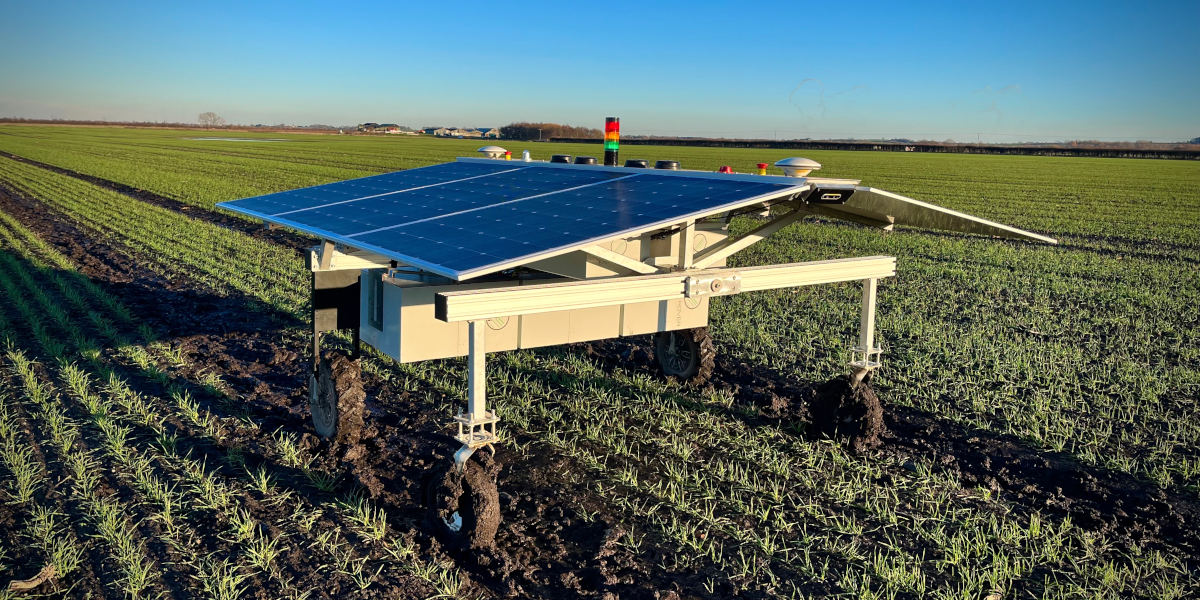
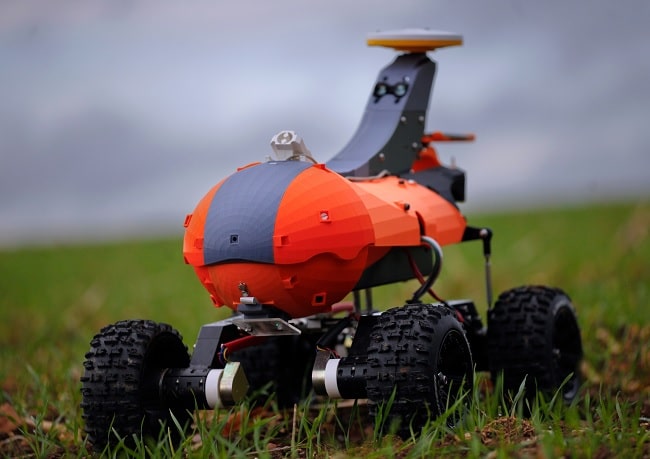
Small Robot Company in partnership with RootWave has developed  ‘Dick’ a non-chemical weeding robot that uses electricity and AI to zap individual weeds in the field.  Early field trials of the prototype will start in 2020.
“This is truly a world-first. For the first time, we can see each plant in the field – and every single weed. Instead of spraying the whole field, we can simply zap the individual weeds,” says Sam Watson-Jones, co-founder, Small Robot Company. “Farmers are integral to the environmental solution. It’s crucial that we’re working on farm to develop our technology, to ensure it delivers real benefits in field. Together, we’re creating the ultimate sustainable farming model.” Small Robot has developed a commercial weed mapping service that uses a robot called Tom to identify the location of the weeds, this is being trialled by National Trust Wimpole Estate and Waitrose Leckford Estate farms.
Callum Weir, farm manager of the 1,500 acre (600 hectare) organic farm on the Wimpole Estate, says: “The key advantage of this  technology is that it will enable us to be much more precise and targeted in controlling weeds, therefore helping us to increase crop yields and biodiversity. It is also lightweight, helping reduce compaction of soils – a consequence of using traditional tractors – which will help improve soil health.”
Andrew Hoad, Partner & Head of Waitrose’s Leckford Estate, comments: “This technology could be truly groundbreaking and has the potential to shape how we farm in the future. By helping us be more precise and targeted in controlling weeds and managing pests, this next generation of farming robots could in turn help us protect biodiversity on our land and preserve the natural environment for future generations.”
Rootwave, is a British start-up that won £1m a UK Government Innovate UK grant to scale up its technology which uses electricity to kill weeds. Electricity is applied to a weed where the natural resistance of the weed transforms the electrical energy into heat which boils it inside out from the root upwards.  This kills the weed after which the plant naturally decomposes, returning its nutrients to the soil. RootWave treats deep into the roots, making it possible to treat any weed, including tough invasive species such as Giant Hogweed and Japanese Knotweed.

Calum Murray, Innovate UK’s Head of Agriculture & Food, said: “It’s fantastic to see how Innovate UK’s funding has brought together British start up RootWave and Small Robot Company to develop game changing technologies that will revolutionise the agriculture sector. 

More information about Small Robot Company 

Complete genome of devastating soybean pathogen assembled

Meet the Network
Agri-TechE

Asian soybean rust has a devastating impact on soybean, an internationally important crop with 346 million tonnes produced globally. Now an international research collaboration has successfully assembled the complete genome sequence of Phakopsora pachyrhizi ; a critical step in addressing the threat of this  genetically-complex and highly-adaptive fungus.
In conditions favourable to its spread, the rust can destroy up to 90% of the soybean harvest. The largest producer of the soybean is Brazil, where the combined cost of losses and disease control measures is US $2 billion per season.
The new dataset comprises the genome sequence of three isolates (K8108, MG2006 & PPUFV02) of which one has been assembled at chromosome level detail (PPUFV02). These three genomes will be hosted by the Joint Genome Institute and will be made available over the coming weeks.
Phakopsora pachyrhizi has a highly complex genome, it is 60 times bigger than the yeast genome, composed of 93% repetitive elements and possesses two nuclei. This complexity has delayed progress on the sequencing of this pathogen, and meant that high-end, next‐generation sequencing technologies were required to complete the task.
“Asian soybean rust is a critical challenge for soybean growers,” said Dr. Peter van Esse, leader of the 2Blades Group at The Sainsbury Laboratory, Norwich, one of the collaborators.
“A chromosome level genome assembly allows the scientific community to study, in unprecedented resolution, components of the pathogen that are critical for causing disease. This is a critical first step towards the design of transformative control strategies to combat this highly damaging pathogen.”
The three soybean rust genomes will be hosted by the Joint Genome Institute and are available here – https://mycocosm.jgi.doe.gov/Phapa1

MoA Technology fast-tracks herbicide development

Meet the Network
Agri-TechE

A radically different approach to herbicide development that uses insights from evolutionary biology to offer new modes of action is being offered by start-up MoA Technology. The company has developed a crop protection discovery platform to find new herbicide leads. Co-founder Professor Liam Dolan says that its rapid screening process, which uses both whole plants and active ingredients, should fast track the development of effective herbicides with low environmental impacts.

Professor Dolan, who is also the Sherardian Professor of Botany at the University of Oxford, says: “The majority of herbicides used today act upon the weeds in a small number of ways and this has encouraged resistance. What is needed is a more diverse tool kit with a variety of different chemistries that can be used alongside non-chemical measures to provide sustainable crop protection.

“We have developed a really neat technology that allows us to rapidly screen naturally occurring and synthetic molecules to identify potential new herbicide leads that work in different ways. We can screen their efficacy against entire plants using imaging processing, then from this we can get a lot of information about how the molecules are killing the plants and use this to identify new targets.”

Blackgrass is an example of an aggressive weed that has become resistant to many herbicides. Blackgrass has flourished over recent years, benefiting from a reduction in deep ploughing and an increase in September drilling of wheat. Together these measures have created perfect germination conditions for the weed, and with the rapid increase in population came the opportunity for mutations that offer resistance to this group of herbicide chemistries that act in similar ways.

By developing herbicides with different modes of action, MoA Technology is confident that it can break the herbicide ‘arms race’ and provide more sustainable solutions to farmers.
Professor Dolan continues: “The Holy Grail would be a herbicide mixture that combines multiple, new modes of action that control weeds and minimises the chance of resistance evolving. Only small amounts would be needed because this mixture would be highly potent and with the advances in precision spraying it could be applied only where it was needed.
Preliminary results from MoA Technology’s trials “exceeded expectations”.

The company’s technology delivers evidence that the compound is safe and effective at an early stage in the discovery process and can provide a prediction of the risk of resistance occurring in the field. Together these elements will help reduce both the cost and time to market of new product development.

Sustainable cultivation techniques such as no-till, which reduces soil erosion, will also benefit from MoA Technology’s discoveries. Currently these approaches are at risk as they are dependent on herbicides such as glyphosate, which are being withdrawn from use. Providing a new generation of herbicides with minimal impact on other organisms and soil health would offer an alternative to these chemistries and support more sustainable methods of cultivation.

MoA Technology has raised £8 million in seed and Series A funding rounds and by the end of the year will employ 15 people at its headquarters in the Oxford BioEscalator.

2019 - Liam Dolan, MoA Technology
Liam Dolan, MoA Technology, at REAP 2019

One Agriculture is a great theme says Adrian Percy CTO for UPL

Meet the Network
Agri-TechE

Adrian Percy, CTO for UPL
Adrian Percy, CTO for global food solutions UPL is to chair the REAP sofa session

“One Agriculture is a great theme for the REAP conference. There is a need to drive innovation in a different way from what’s traditionally been done within our industry,” comment Adrian Percy,  recently appointed Chief Technology Officer for the global crop solution company UPL, who is to chair the Sofa Session at Agri-Tech’s inspirational REAP conference.
He continues: “The generation of entrepreneurs coming through are purpose driven. I think they’re looking to have an impact that can be measured in many ways, including something that is good for the planet.
“Increasingly, people are looking for that win-win in terms of a product that is efficacious, is profitable and useful and also enhances environmental sustainability. When you’ve got all of that you really are in a sweet spot and have the basis for a successful product or business. Most of the start-ups working in this area are very keenly attuned to all these different aspects.”

Open innovation approach

UPL, is headquartered in India with an R&D hub centred in North Carolina, the organisation is looking to create win-win situations for all its stakeholders.
UPL has chosen to not develop an extensive in-house research platform and pursues a different R&D approach to many of the incumbent agrochemical companies. Instead it partners with entrepreneurs and external scientists to capture the best ideas and get disruptive technologies out into the market, by providing strengths in in-house development, field trials, regulatory affairs leveraged with an international footprint.
This novel approach to open innovation is the reason why Adrian joined UPL; he comments: “It is a really exciting approach. All the big crop protection companies with their own internal discovery engines are struggling to keep the same innovation rate of the past. At the same time, there is tremendous development in new scientific approaches coming from smaller companies and across from different sectors, such as bio-pharma.
“UPL is using its Open Ag approach to drive innovation in a different way from what’s traditionally been done within the industry. It believes that food production needs to undergo a transformation, which will be driven by new technology.”

Zeba buffers soils against adverse impacts

UPL Zeba is a patented soil enhancement technology, the culmination of a research led by USDA.
UPL Zeba is a patented soil enhancement technology.

Recent innovations at UPL include Zeba, a product based on corn starch which increases retention of water in soils and then degrades providing food for microbes improving soil health.
Adrian continues: “Zeba sits on both the axis of water management, water efficiency, water saving but also soil health. This is the type of technology that is needed to supplement everything that’s already been done with nutrition and fertilisers and crop protection tools”

Advisor to agri-tech investor

Alongside his role at UPL, Adrian is also an advisor to early-stage companies and works with a west coast USA venture capital group, Finistere Ventures, which is actively investing in agri-tech. So, he has visibility of much emerging agri-tech and is looking forward to meeting the innovators at REAP.
“REAP will provide a  great opportunity for dialogue about concerns for the future and the opportunities to address them with new technology and approaches. The people we’ve got on the panel at REAP are fantastic examples of those who are looking to positively impact our planet.
“It’s going to be fun – I’m looking forward to it.”
Find out more about REAP at reapconference.co.uk

REAP 2019: Be first to trial Skippy Scout smartphone drone control

Meet the Network
Agri-TechE

Drone Ag will be offering delegates at REAP a sneak preview of its new Skippy Scout system, which will be launched commercially in 2020.
The brothers Jack and Hugh Wrangham of Drone Ag successfully raised the funds they needed to develop the software with a crowd funding campaign.Aerial shot of a field with digital text superimposed
Skippy Scout is a practical smartphone application that automates crop monitoring using drones. It flies the drone autonomously, collating high-resolution photographs that are analysed using the customised AI-based software. The aim is to give farmers real-time information that they need to better target the use of pesticides.
Field photo with graphicWhen asked what the theme of REAP ‘One Agriculture’ means to him Jack commented: “I believe that securing a great future for agriculture in the UK is all about cooperation and data sharing.

“Many companies are bringing ground-breaking new ideas and tech to this industry, but no one company is going to solve the issues we face.
“By working together, creating fast, easily accessible data sharing platforms and standardising where possible, we can create an industry that vastly improves efficiency and sustainability.”
The company aims to bring some drones to REAP – including a new pair that have just been released, one with a thermal camera and the other with a six-sensor system – in addition to demonstrating the new Skippy Scout system.
The decision to use crowdfunding was not just about raising funds, it was also to encourage input and feedback from those that will be customers for the system. This has been a successful strategy and has resulted in some mutually beneficial collaborations. Jack says he wants to develop this further and is offering an opportunity for delegates at REAP to sign up to be the first to test out the pre-release version of Skippy Scout.
See some of the other exhibitors at REAP 2019 here.

Field2Yield trial reveals point of peak profit to minimise cattle emissions

Meet the Network
Agri-TechE

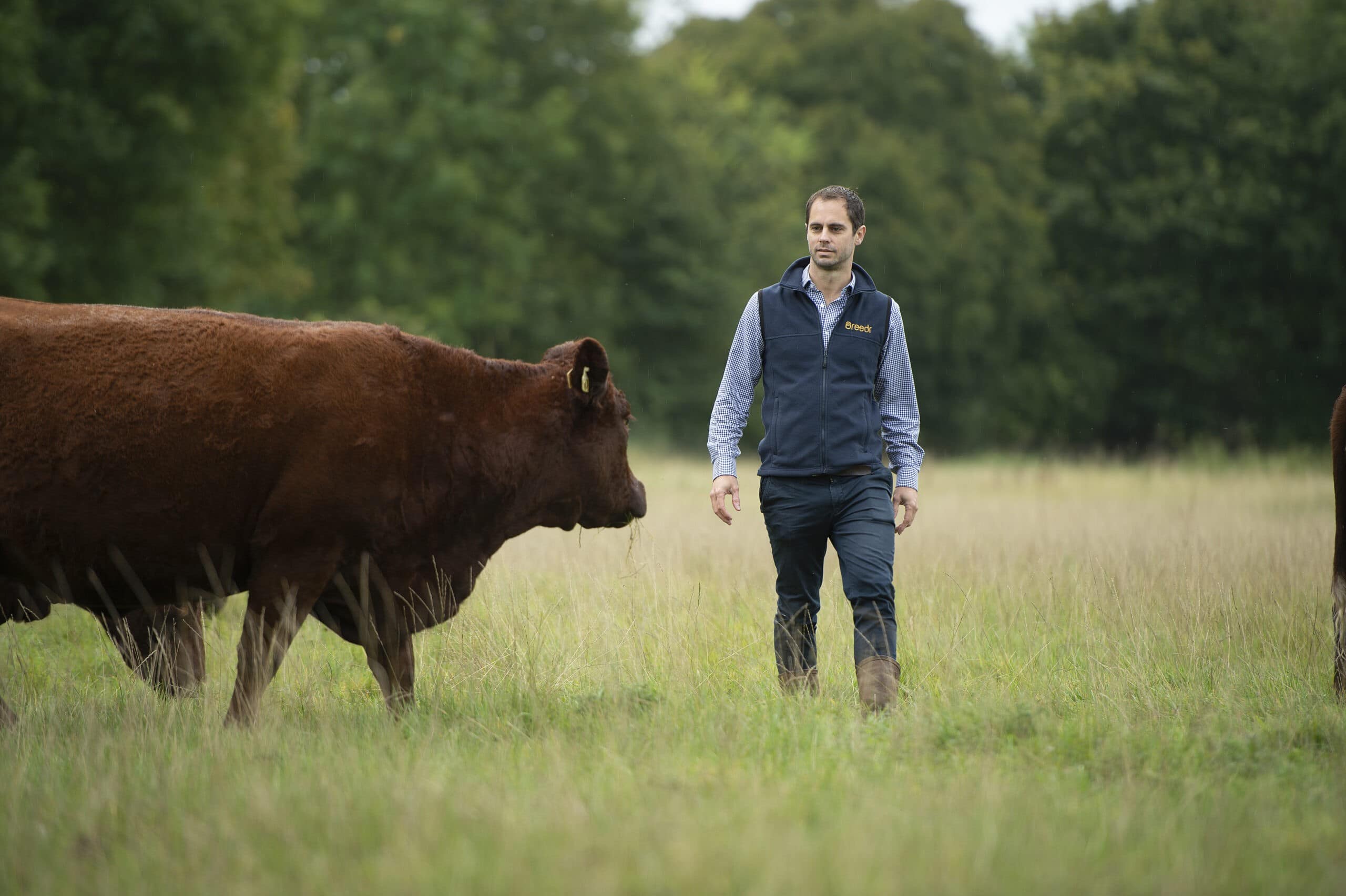
Healthy lower weight cattle, finished rapidly, are more profitable and produce less greenhouse gases over their lifetime, the Field2Yield study has revealed. This unique analysis of six years of real-world data by Breedr, developers of a precision livestock app, together with Rothamsted Research North Wyke Farm, has identified ways to identify the point of ‘peak profit’ for producers while curbing cattle emissions. Ian Wheal, founder of Breedr, is to discuss these insights alongside Sainsbury’s, IBM and Topsector Agrifood at the Animal AgTech Innovation Summit in Amsterdam this week.
The project aimed to develop metrics that would help a producer predict when an animal should be sold to get maximum returns and also how to improve the herd so that offspring would consistently meet processor specifications.
Historical data along with additional rump width, length, hip, height and body length measurements were analysed to develop models that would allow farmers to benchmark their performance. For example, growth curves were used to compare consumption over a lifetime for animals that were the same weight at slaughter. This showed that fast finishers are more profitable.
Ian Wheal comments: “Field2Yield demonstrated that growth curve analysis offers the potential to estimate the gross feed consumption and emissions of individual cattle, enabling a deeper understanding of the economic and environmental efficiency of livestock production.
“This rigorous science underpins our platform, which offers for the first time objectivity and a data driven approach to the livestock supply chain.”
As animals get larger their efficiency decreases, so giving farmers the tools to make the decision when to send an animal off would improve profitability and reduce greenhouse gas (GHG) emissions.
Dr Andrew Cooke, livestock scientist at Rothamsted Research’s North Wyke ‘farm lab’, explains: “An animal will consume about 2.5 per cent of its body weight a day in dry matter. It is accepted that dry matter intake correlates strongly with methane output – a greenhouse gas.
“Therefore, you may have two animals that are the same weight at slaughter, but if one of those gained more of its weight earlier in its life, it will have consumed more food and produced more methane during its lifetime.”
Breedr is taking the guesswork out of livestock production. Data that is routinely collected by a farmer can be captured by its app and analysed on the platform, creating a ‘digital twin’ that can be compared to retailer specifications.
By digitising livestock production, Breedr is driving innovation and integration across the industry. It is also working with industry partners to lead the development of an innovative Smart Contracts system for meat and livestock. This system uses blockchain, a form of distributed ledger technology, to capture the complicated flows of data and transactions, improving transparency and trust between multiple partners.
The precision livestock network created by Breedr aims to streamline and incentivise livestock production – increasing profitability while reducing environmental impacts and overfeeding.
Breedr’s CEO Ian Wheal will be speaking alongside: Gavin Hodgson, Sainsbury’s Head of Livestock; Willemien van Asselt of Topsector Agrifood; and Louis De Bruin, IBM’s Blockchain Thought Leader for Europe, in the session Digitisation and Data – How can we Harness the Power of Data to Deliver a More Sustainable and Transparent Supply Chain? at the Animal AgTech Innovation Summit in Amsterdam on 2 October at 9.30am.
Breedr is looking for farmers and processors to further develop their technology. Those that see commercial sustainability as vital to reducing environmental impact of beef production are encouraged to visit www.breedr.co and apply for a trial.

From connected devices to a connected farm: a long way still to go?

Meet the Network
Agri-TechE

Callum Chalmers, Farmscan AG - Leaders in the Field
Agri-tech company Farmscan AG is supporting the development of UK’s first completely connected, autonomous farm. Working with Harper Adams University and Precision Decisions, within the next three years the project aims to upscale the original ‘Hands Free Hectare’ project to a site 35 times the size.

Callum Chalmers, Farmscan AG’s Business Development Manager, will be sharing early results of the ambitious project at Agri-Tech’s ‘The Connected Farm’ event in Cambridge next month. He explains: “Originally Harper Adams had the goal to grow one hectare of arable crops using autonomous machines.

“We met the team at an event and, knowing they were looking to expand, offered up our commercially available system, so that the project could be developed using something farm-ready rather than having to develop software and systems from scratch.

“Our system has always focused on connecting farm vehicles as well as the wider farm infrastructure. This means the vehicles must manoeuvring between fields, not just in the field, for autonomous farming.
“We started working with Harper Adams University and Precision Decisions in April and by 2022 we aim to have a completely autonomous farm, with all of the vehicles pre-programmed to work with efficiency – and without human drivers. Through the project, we’re upgrading our software so it includes the features a farmer will need to control an autonomous farm in the future.”

Farmscan AG is one of the first agri-tech companies to release an autonomous module for its precision control platform, opening up its product for integration by other manufacturers.
“Interoperability is a huge issue for farmers,” Callum continues. “The ISOBUS protocol is one of the solutions that is reasonably advanced – where everyone has agreed to follow a protocol so those devices plug-and-play – and the challenge to manufacturers, and for farmers, about machinery being built now is how connected it will all be.

“Farmers need devices to work, it’s not their responsibility to navigate this – it’s the role of manufacturers and technology companies to fix it. We are as open source as we can be, we want something that add value for farmers, not locks them in.”

Equipping farmers with easy-to-use systems that enable agri-tech integration is crucial for a productive, profitable and sustainable agricultural industry moving forwards. It’s something Farmscan AG recognised almost a decade ago, when they originally set up in Australia to support farm businesses even in the harshest outback. Now based in north London, they moved to the UK three years ago to become part of Cambridge’s leading agri-tech cluster.

“Making connected devices is easy, but ensuring they actually connect – especially in rural areas – is the hard part. I know there have been a fair few 5G projects looking at this, but agriculture is based in geographically and topographically challenging areas so I think there’s a long way still to go.
“It’s why we’re excited to be working on a project that is about ensuring that every device, autonomous vehicle and the whole farm infrastructure is connected up.”

Callum is one of the speakers at the Agri-TechE Pollinator: Re-Visting the Vision of the Connected Farm being held on 15 October 2019, 4:00 – 7:00pm, at Eagle Labs Cambridge, CB4 3AZ.
See more about the event here.

Julian Gairdner of Rezare examines the sustainable delivery of human nutrition

Meet the Network
Agri-TechE

Following a recent presentation by Professor Michael Lee from Rothamsted Research’s North Wyke site, Julian Gairdner, Managing Director of Rezare UK, examines the argument that it is not enough to simply measure the global warming potential (GWP) such as C02 equivalent/kg of meat product  – there may be other, more beneficial measurements, such as measuring C02 production against recommended daily intake of certain key nutrients.
In his blog – which you can read in full on the Rezare website – Julian discusses the conclusions of Prof Lee’s presentation that for every % of RDI we need in our diet, “beef production produces fewer kg of C02 than even chicken!”
“So why as a technology provider am I interested in this?” asks Julian. “Well, if here in the UK rewarding farmers for preserving (even building) ‘natural capital’ is going to become the big game in town, then we need some ways to measure it … This seems an enormous opportunity to start creating a tangible link between human nutrition (society), farm productivity (economy) and the environment through an empirically-based approach.”
You can read his thoughts in full on the Rezare website here.

Weather firm Sencrop ranked by Crunchdex as ‘one to watch’

Meet the Network
Agri-TechE

Sencrop LeafcropA new leaf wetness sensor has been launched by digital farming and weather start-up Sencrop, which has also been named by tech-tracking index Crunchdex as ‘one to watch’ amongst European technology start-ups.

In the three years since its inception, Sencrop has grown its team to more than 40 employees from seven countries, raised €10m in funding, and attracted the attention of more than 10,000 farmers, winemakers and fruit growers across ten European countries.
It claims that its weather sensor solutions – Raincrop, Windcrop and Sencrop Plus – give farmers a new edge in ‘agro-meteorology’, measuring air temperature, humidity, rainfall and wind speed, and connecting with other local stations, to improve on-farm decision-making and maximise productivity through a simple app.  It has a network of more than 300 on-farm weather stations in the UK.
Sencrop is the only agri-tech firm to make the June top ten. The Crunchdex rankings are based on a dozen metrics such as recruitment, fundraising, web traffic, app ratings and social media reach and influence.
“We’re delighted with the ranking,” says co-founder Martin Ducroquet. “It’s a tremendous recognition for all the hard work that our small but growing team has put into innovative product development, reliable customer support and advanced but accessible technological principles.”
The new Leafcrop, a leaf wetness sensor,  promises better disease prediction and frost protection for vineyards and orchards.

Giles Oldroyd to be new professor of Crop Science at 3CS

Meet the Network
Agri-TechE

Giles Oldroyd from JIC“The Cambridge Centre for Crop Science will provide a collaborative research space to harness the breadth and depth of expertise in Cambridge for applications in crop science. The Sainsbury Laboratory Cambridge University (SLCU) is delighted with the appointment of Prof Oldroyd to lead its development,” says SLCU Director, Professor Ottoline Leyser.

The Cambridge Centre for Crop Science (3CS),  is a partnership between the University of Cambridge and Niab and it has elected Giles Oldroyd to the Russel R Geiger Professorship of Crop Science. He will be based in the Crop Science Building at Niab’s new headquarters on Lawrence Weaver Road, Cambridge, which will open in 2020.
Professor Oldroyd leads an international programme focused on engineering nitrogen-fixing cereals funded by the Bill and Melinda Gates Foundation called the Engineering Nitrogen Symbiosis for Africa (ENSA) project.
His team aims to understand the signalling and developmental processes in plants that allows interactions with mycorrhizal fungi and nitrogen-fixing bacteria, which is essential information needed for developing nitrogen-fixing cereals.
Their work has potential to deliver more sustainable and secure food production systems, with particular potential to deliver significant yield improvements to the poorest farmers in the world.

Robot uses machine learning to harvest lettuce


Meet the Network
Agri-TechE

A vegetable-picking robot that uses machine learning to identify and harvest a commonplace, but challenging, agricultural crop has been developed by engineers.

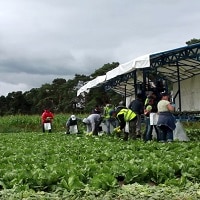
Vegebot harvesting lettucesThe ‘Vegebot’, developed by a team at the University of Cambridge, was initially trained to recognise and harvest iceberg lettuce in a lab setting. It has now been successfully tested in a variety of field conditions in cooperation with G’s Growers, a local fruit and vegetable co-operative.

Although the prototype is nowhere near as fast or efficient as a human worker, it demonstrates how the use of robotics in agriculture might be expanded, even for crops like iceberg lettuce which are particularly challenging to harvest mechanically. The results are published in The Journal of Field Robotics.

Crops such as potatoes and wheat have been harvested mechanically at scale for decades, but many other crops have to date resisted automation. Iceberg lettuce is one such crop. Although it is the most common type of lettuce grown in the UK, iceberg is easily damaged and grows relatively flat to the ground, presenting a challenge for robotic harvesters.

“Every field is different, every lettuce is different,” said co-author Simon Birrell from Cambridge’s Department of Engineering. “But if we can make a robotic harvester work with iceberg lettuce, we could also make it work with many other crops.”

“At the moment, harvesting is the only part of the lettuce life cycle that is done manually, and it’s very physically demanding,” said co-author Julia Cai, who worked on the computer vision components of the Vegebot while she was an undergraduate student in the lab of Dr Fumiya Iida.

How Vegebot works

The Vegebot first identifies the ‘target’ crop within its field of vision, then determines whether a particular lettuce is healthy and ready to be harvested, and finally cuts the lettuce from the rest of the plant without crushing it so that it is ‘supermarket ready’. “For a human, the entire process takes a couple of seconds, but it’s a really challenging problem for a robot,” said co-author Josie Hughes.

The Vegebot has two main components: a computer vision system and a cutting system. The overhead camera on the Vegebot takes an image of the lettuce field and first identifies all the lettuces in the image, and then for each lettuce, classifies whether it should be harvested or not. A lettuce might be rejected because it’s not yet mature, or it might have a disease that could spread to other lettuces in the harvest.

The researchers developed and trained a machine learning algorithm on example images of lettuces. Once the Vegebot could recognise healthy lettuces in the lab, it was then trained in the field, in a variety of weather conditions, on thousands of real lettuces.

A second camera on the Vegebot is positioned near the cutting blade, and helps ensure a smooth cut. The researchers were also able to adjust the pressure in the robot’s gripping arm so that it held the lettuce firmly enough not to drop it, but not so firm as to crush it. The force of the grip can be adjusted for other crops.

“We wanted to develop approaches that weren’t necessarily specific to iceberg lettuce, so that they can be used for other types of above-ground crops,” said Iida, who leads the team behind the research.

In future, robotic harvesters could help address problems with labour shortages in agriculture, and could also help reduce food waste. At the moment, each field is typically harvested once, and any unripe vegetables or fruits are discarded. However, a robotic harvester could be trained to pick only ripe vegetables, and since it could harvest around the clock, it could perform multiple passes on the same field, returning at a later date to harvest the vegetables that were unripe during previous passes.

“We’re also collecting lots of data about lettuce, which could be used to improve efficiency, such as which fields have the highest yields,” said Hughes. “We’ve still got to speed our Vegebot up to the point where it could compete with a human, but we think robots have lots of potential in agri-tech.”

Iida’s group at Cambridge is also part of the world’s first Centre for Doctoral Training (CDT) in agri-food robotics. In collaboration with researchers at the University of Lincoln and the University of East Anglia, the Cambridge researchers will train the next generation of specialists in robotics and autonomous systems for application in the agri-tech sector. The Engineering and Physical Sciences Research Council (EPSRC) has awarded £6.6m for the new CDT, which will support at least 50 PhD students.