Patenting, Trademarks, Copyright, Trade Secrets...
In the next installment of our micro-learning series, we’ll explore potential legal solutions to help you keep your ideas safe and sound.

PBD Biotech gains funding from Canadian government to tackle Johne’s Disease

Meet the Network
Agri-TechE

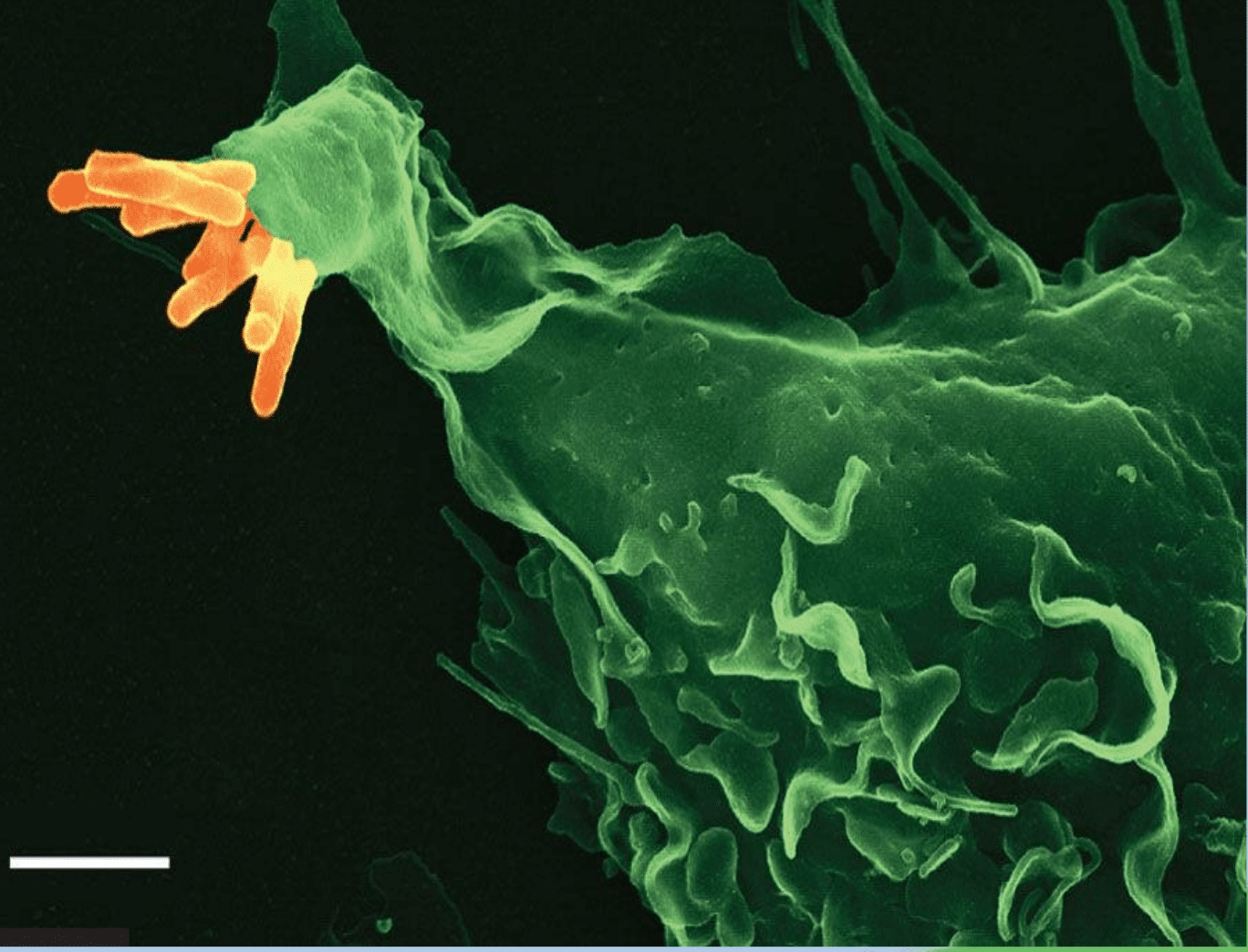
Johne’s disease, a wasting condition of cattle, costs the Canadian dairy industry an estimated $90 million a year through loss of production. Now, advisory services and funding from the National Research Council of Canada Industrial Research Assistance Program (NRC IRAP) is enabling PBD Biotech to further research and progress development of its unique Actiphage® diagnostic for hard-to-detect mycobacterial diseases, such as Johne’s.

Mycobacterial disease in elk and deer

PBD Biotech has set up its Canadian headquarters in Saskatoon and is looking to expand its team, to validate Actiphage use for cattle and also other species important to the country’s economy, such as elk and deer. The highly sensitive test offers the potential for early detection of infection, boosting productivity within the agricultural industry, helping disease control and elevating dairy quality assurances.

Johne's Disease Luis Martin PBD Biotech to tackle problem
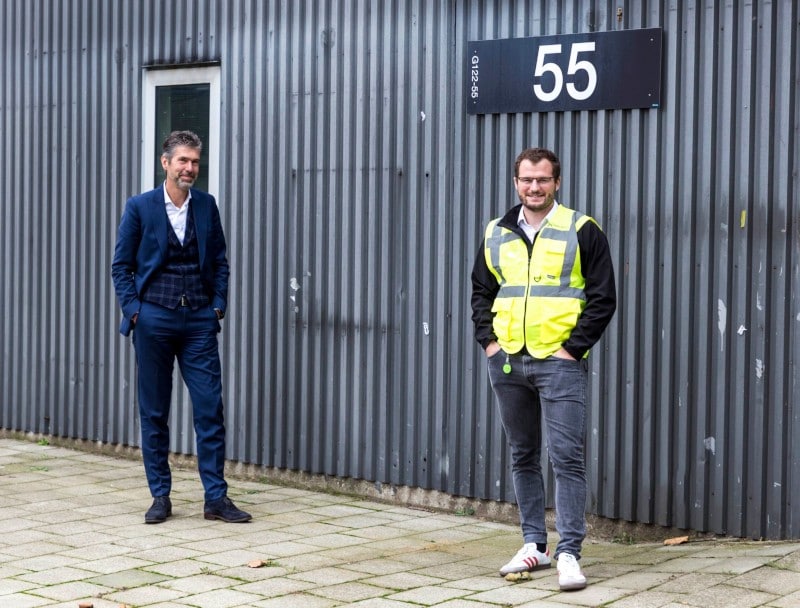
Luis Martin Director of PBD Biotech Canada

Luis Martin, Managing Director of PBD Biotech Canada, comments: “Actiphage is the first assay capable of directly detecting live infectious mycobacteria at such an early stage and we are unaware of any competitor that can compare in performance, cost or simplicity.
“With the advisory services and funding from NRC IRAP, supporting our own investment, we are keen to progress this test, enabling Canada’s agricultural and dairy industries to be among the first to benefit from early detection of globally important diseases such as Johne’s and bovine TB.”
There are a number of studies that suggest there may be a relationship between the mycobacteria that causes Johne’s disease in livestock and Crohn’s disease in humans (Mycobacterium avium subsp. paratuberculosis, MAP). Research also shows low levels of live mycobacteria are able to survive the pasteurisation process in milk and other dairy products, including infant formula*. Actiphage takes just a few hours to detect viable mycobacteria – unlike current tests, which can take up to three months to provide a result – offering the potential for a rapid quality assurance test for bulk milk.
The epidemiology of Johne’s disease is poorly understood, so a single-day test also opens the opportunity for field-based, pen-side or point-of-care testing in the future, allowing better insights into the progression of the disease and understanding of its potential for animal-to-human transmission.

Benefit from HARVEST programme

PBD Biotech first showcased its novel technology to the Canadian agri-food industry through its involvement in the 2017 Saskatoon Regional Economic Development Authority’s (SREDA) HARVEST Programme and subsequently decided to locate an office in the region.

Harvest - Alex Fallon and Belinda Clarke
Alex Fallon of SREDA with Belinda Clarke Agri-TechE
Alex Fallon, President and CEO of SREDA, explains how the HARVEST Agriculture Technology Programme provided an introduction to Saskatchewan for the company: “SREDA hosted PBD Biotech’s first visit to Saskatoon as part of our 2017 Agriculture Technology HARVEST Program. This allowed PBD Biotech to demonstrate its innovative technology to potential collaborators, building connections with Saskatchewan’s thriving ag-tech industry and ultimately leading to the establishment of PBD’s Canadian subsidiary in Saskatoon. We are delighted to see PBD receive NRC IRAP funding and look forward to its continued success and deepened ties with our province.”
Since establishing its Saskatoon headquarters in 2018, PBD has initiated trials with University of Calgary Professor Dr. Jeroen de Buck, as part of this Natural Sciences and Engineering Research Council of Canada (NSERC)-approved program monitoring Johne’s disease in dairy cattle, and also has a strong working relationship with the International Vaccine and Infectious Disease Organization (VIDO-Intervac).
Actiphage will be evaluated and registered with the Canadian Food Inspections Agency (CIFA) for detection of bovine TB and kits will be available for research. Canadian researchers will look to expand the use of Actiphage as a diagnostic for other infectious diseases of interest to Canadian health, such as human TB, E coli and Salmonella.
Mark Hammond, CEO of PBD Biotech, adds: “Through its support, NRC IRAP will ensure Canada is at the forefront of implementing new diagnostics, such as Actiphage, in the fight against TB and other devastating diseases; taking a lead in future innovation and establishing export markets.”

Trials of Germains Seed Treatments new Xbeet enrich 200 show yield benefit

Meet the Network
Agri-TechE

Germains Seed Treatments has launched a new product in its Germains Xbeet® seed treatment range that will be available for the 2021 season.
Trialled and tested for the UK climate, new Xbeet® enrich 200  treatment includes an extra coating of bio-stimulant, derived from natural plant extracts to help with crop health, accelerate emergence, increase yield and assist the crop to reach the critical twelve-leaf stage and mature plant resistance.
The development aims to help manage yield fluctuations caused by pests and diseases, helping growers achieve consistent returns from their sugar beet crops.
Independent trials for the new Xbeet® enrich 200 have been carried out in collaboration with the BBRO and independent trial specialists and have shown an average yield benefit of 1.4% from Xbeet enrich 200 over Xbeet® enrich 100 during 3 years of trials. The independent verification of the trial results by Niab have shown the results are significant to the 95% confidence level.
Further commercial scale strip trials in 2018 and 2019 have shown an average of 2.5% increase in yield across three trial sites in the UK. Commercial scale strip trials replicate commercial practice and give an indication of the results growers can expect from farm scale use of a product.
Germains EU Commercial Manager, Richard Nicholls, says: “We are really excited to be bringing our Xbeet® enrich 200 treatment to market. It addresses many of the establishment concerns of UK sugar beet growers. Our trial results have shown a significant yield increase and we look forward to growers seeing the benefits and ultimately the additional income.”
For more information and further data on the Xbeet® enrich 200, and also for your chance to enter a prize draw for a £100 gift voucher, visit germains.com/xbeet-enrich-series/

A survival capsule for tree seedlings that boosts germination by up to 40 per cent

Meet the Network
Agri-TechE
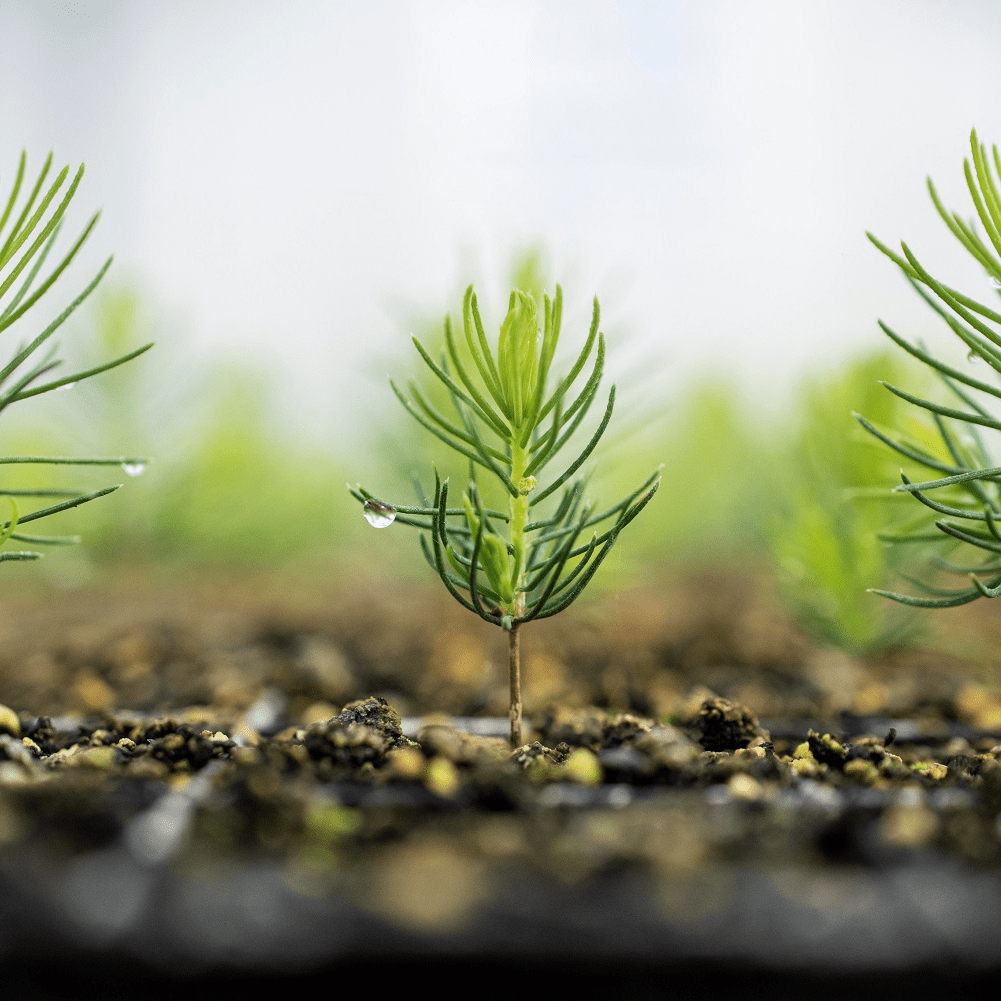
The need to grow more trees is globally recognised but germination rates are often poor, particularly where seed is applied directly to the ground in new forest projects and in bareroot forest nurseries where seedlings are vulnerable to water shortage. SilviBio has developed a seed coating for conifers, the most economically important species, that improves germination by 40 per cent where there is drought stress.
SilviBio’s innovative bio-formulation creates a survival capsule for the seedling, providing a water source and slow release nutrition. It also creates a favourable environment for the growth of beneficial microorganisms.
The company has gained the support of Forestry and Land Scotland, the government agency responsible for managing Scotland’s forests, and SilviBio is to carry out field trials at its nursery. SilviBio would also make aerial sowing of seed across regions such as Latin America more viable, enabling rapid regeneration of forest.
SivioBio Founder Dr Alicja Dzieciol is an expert in the synthesis and characterisation of hydrogel materials and has commercial experience developed when leading the scale-up of start-up company IN-PART. She says: “Many governments have announced ambitious tree-planting programmes but germination and seedling development is vulnerable to adverse weather. Using SilviBio seed coating would increase the success rate of these schemes and reduce the costs of replacing lost trees.”

UK agri-tech diverse and active

Meet the Network
Agri-TechE

The UK agri-tech scene is by far the most active in Europe and is a very diverse ecosystem, according to Louisa Burwood-Taylor, Head of Research and Media at AgFunder and guest speaker at the GROW final.
“We are just launching a Europe report and the UK shows many strengths,” says Louisa. “It is a much smaller company than the US, which is always going to be a leader, but I think the UK is definitely punching above its weight, and has a good standing overall.”
Louisa remarks that particular strengths are in biotech, alternative proteins and looking down the supply chain at companies like Deliveroo: “This is obviously a huge company, and they raised a massive round last year, and that’s out of the UK as well.” Looking at the current situation Louisa is pragmatic: “I think overall venture capital investment will decline across all industries. You just hear a lot of investors say they are focusing on their current portfolio. Many of them will try to signal that they are still investing and open for business, but I think overall investment will retract.
“The good news is that we’re in an industry that is obviously essential; what the crisis has done is really shine a light on how technology is in how we grow and get hold of our food which is something in developed markets consumers have never had to worry about. People are eating food that’s been produced more locally, often, because that’s what’s been available to them.
“I think that increased attention could be a good thing in the longer-term.”

Exciting disruptive technologies

The GROW agri-tech business plan competition, sponsored by Innovate UK, provides support for entrepreneurs with exciting innovations. It is helping to create a pipeline of early-stage companies and to develop the supporting ecosystem. The participants gaining mentoring from industry specialists and the finalists have the choice of prizes – see more about them here.
Looking internationally, Louisa highlights a number of disruptive technologies that are realising their potential.

Indoor agriculture realising its hype

“Indoor agriculture has been a little hyped up, but the way it is scaling now is exciting; it looks like the economics are improving. We have had the technology for a while, but there is a number of providers of the components it has brough the cost down and there are different business models.
“Some companies are managing to scale across multiple farms. Whether that’s the plant factory model, or whether a more of a distributed model, like Infarm in Germany, which deploys its growing cabinets within supermarkets. I am excited about that space, for sure.”

Robotics seeing growth in investment

“Robotics is still a very small category – actually I think the UK is doing pretty well in this space – and the companies have been focusing on very specific issues – whether it’s harvesting a specific crop or spraying a specific chemical for a specific crop – but I think we’re going to see robotics come on leaps and bounds. At AgFunder we’ve certainly been looking at more companies on our investment side.”

Food as medicine one to watch

“I think, looking ahead, an interesting category to watch would be the concept of food as medicine, and companies that are really researching the properties of plants and how they can help to combat certain ailments. We have a company in the AgFunder portfolio called Brightseed that is looking into everyday crops and how they express bioactives that can have a beneficial impact on your health. I think that will be a space to watch.”

GROW Final 4th June

Louisa is looking forward to finding out more about the GROW finalists when they present in the virtual final.
Normally the participants would have an opportunity also to network with the organisations supporting the agri-tech cluster with a range of business services from work space within an incubator to IP and marcoms support. In this online event there will instead be a short introduction to the support award prize donors:

Alternative proteins – big opportunity for UK farmers?

Meet the Network
Agri-TechE

Despite the increase in consumer demand for plant-based proteins and $741 million investment into US alternative protein companies in the first quarter of 2020 –  the land area used in the UK for alternative crops has barely changed for almost 40 years – is this a missed opportunity for profitable diversification? 

Mike Salter AB Agri
Dr Mike Salter AB Agri

“Protein is the big question – where do we get it from? We’re looking for novel crops and technologies that can provide more locally produced protein sources for animals,” comments Dr Mike Salter, R&D Facilitator at AB Agri, a global animal nutrition and agricultural services business of Associated British Foods, and a member of the Agri-TechE stakeholder committee. Part of his work is to look at new ingredients and he agrees there is a huge potential for innovation.
“We’re feeding protein to pigs and poultry in high levels. A lot of that is soy imported mostly from the US – Europe imports 14 million tonnes of soy a year.
The Agri-TechE webinar on 17th June 2020 ‘Novel and Alternative Crops – Improving rotation and the bottom line’ will investigate the potential of this market from the perspective of a number of growers.

Search for sources of plant-based protein

Mike is one of the speakers at the webinar, he continues:
“So at AB we’re looking at different proteins… some crops like broad beans have often been stated as a decent candidate, but they don’t make sense economically for farmers. Although broad beans have triple the protein content of wheat, you’re getting less than an eighth of the yield.

Interest in pulses and lentils is increasing with flexitarian diets

Mike travels the world looking at innovations, he continues: “There is some interesting work going on at Aarhus University in Denmark, where they’re working on extracting protein from grass. Grass is about 12% protein and Danish government made a decision that it wanted the top 25% of the Jutland peninsula to be returned to grassland for environmental and cultural reasons. The issue is transportation as the grass has a high water content, so processing must be done onsite, and even so this approach is reliant upon government subsidies.
“The other big focus nowadays is looking at alternative protein sources for the human food chain, particularly in Western markets. It is not being considered as an option merely for the relatively small number of vegetarians or vegans, but rather they see it as addressing the much larger ‘flexitarian’ market.
“There are a number of new start-ups, often California based ‘Bay Area’ style businesses, who are really focused on plant-based meals and ingredients.
“For the growers, that is an opportunity for the future. If companies offering these alternative ‘centre-of-plate’ items take a significant proportion of the market, there will be a requirement for new types of ingredients in the supply chain – and that might be millions of tonnes.
“Farmers, producers and processors need to expect and prepare for a change in demand, as new plant-based food options are identified and new sources of animal feed protein are established.”

Alternative proteins, legumes, oats and herbs among the crops to be discussed

  • Edward Blanchard of Suffolk Produce
  • David Bond of Norfolk Mint Growers (part of Condimentum)
  • Bruce Knight of Legume Technology
  • Brin Hughes, Agronomy Manager for Richardson Milling (UK) Ltd.

The free Agri-TechE webinar ‘Novel and Alternative Crops – Improving rotation and the bottom line’ is to be held from 3-5pm on June 17th more information https://bit.ly/ATEAltCrops

https://agfundernews.com/us-alternative-protein-investment-in-2020-will-surpass-2019-as-q1-brings-in-741m.html

NovaExtraction offers cost-effective CBD extraction – update from REAP start-up showcase

Meet the Network
Agri-TechE
Plant extracts are valuable for pharmaceutics, food flavourings and perfume but the equipment needed for extraction is so expensive, even big growers are forced to outsource. NovaExtraction is addressing this global problem with a low-energy extractor that is gaining interest as a means to gain a high yield of cannabidiol (CBD) from leaves of Cannabis sativa. The company will be opening a showroom shortly.
Co-founder of Nova Extraction, Alex Novitskiy says: “Carbon-dioxide (CO2) based extraction methods are generally recognised as a good all-round solution for plants, especially when high value products are at stake, for unprecedented purity and non-destructive nature of the process.
“However, one problem with (CO2) extraction in general is the expense – there’s a difficult decision between the high set-up cost of a permanent on-site extraction, or the alternative of outsourcing the extraction process, and facing a high yearly cost.
“So, we had this crazy idea to make a mobile extractor that would enable even small producers to be able to produce plant extracts from niche crops by renting equipment on demand.”
Nova Extraction presented in the Start-Up Showcase of Agri-TechE ’s REAP conference in 2018 where it attracted the attention of potential collaborators, and is planning to open its first UK showroom in May. “NovaExtraction has a unique multidisciplinary approach to the problem of plant-volatile extraction. It’s fantastic to see Alex’s work bear fruit, and it really shows the benefit of taking a fresh perspective,” says Dr Belinda Clarke, director of Agri-TechE . A principal selling point of the Cannabis sativa crop is its array of products, including hemp fibres from the stem and valuable volatile extracts from the leaves. Cultivation of hemp and cannabis in the EU is at 50,000 hectares and continues to expand[i].

Alex continues: “We looked at how we can reduce extraction costs, especially to those just getting established. This led us to design a unique piece of equipment; a low-energy extractor that works off-grid and that can be deployed on-site, almost anywhere in the world and easily transported as required.”
When Nova Extraction unveiled its product at the REAP it was aiming at the perfume, food and healthcare industries – but they’ve since captured the attention of hemp and cannabis growers. The low operating temperature of the CO2 extraction method is thought to lend itself to protecting and maximising yield of fragile non-stable products, like antioxidants.
With three units already up and running, and two more in development, Nova Extraction’s UK showroom will offer trial extractions to interested parties. They are also currently in a passive open round of funding seeking £1.5million to get their rental model off the ground.
For those wishing to learn more about the UK cannabis and hemp sector in general, Agri-TechE hosted an online event on Thursday 14th of May, and is planning a much bigger event in  which speakers will discuss the challenges and opportunities in this emerging market. A report of the event, titled ‘Farmer to Farma: A Teaser of Things to Come’, is available free to members and for a small charge for non-members.
Those interested in meeting this years’ crop of innovators in the Start-up Showcase are invited to the REAP 2020 conference on November 14th, the flagship Agri-TechE event.
[i] Data from 2018, collated by the European International Hemp Association for 2018 – kindly provided by Lorenza Romanese.

Breedr’s virtual value-chain for livestock production supports NFU’s targets

Meet the Network
Agri-TechE

A virtual value-chain for livestock production that ensures quality and supply has been developed by Breedr and has the support of the National Farmers Union, major livestock producers, processors and leading supermarkets.


Breedr is a new precision livestock network that will drive up meat eating quality, help producers to increase productivity and profitability and enable others to source high quality meat online.


John Royle, Chief Livestock adviser at the NFU, comments: “The recent crisis has shown the urgency of upgrading meat value-chains so they are fit for the 21st century. The industry needs to deliver produce of high meat eating quality, consistently, with minimal waste and environmental impacts and to do so in a way that is profitable and sustainable.


“The online network developed by Breedr supports the NFU’s target to reach net zero by 2040. It is creating a virtual supply chain that builds confidence and trust between producers and processors. It will remove the need for buyers to see the animals and ensure that producers are rewarded for meat that meets high welfare and quality standards.”


Ian Wheal, founder of Breedr, comments: “Breedr aims to revolutionise the way that livestock is produced and traded. All producers need to do is share their weight data.”

This video shows how Beef Farmers of the Year 2019 Ian and Michael Sturmer maximise the DLWG of their 6,000 steers using Breedr.

SlugBot aims to put an end to slimy pests

Meet the Network
Agri-TechE

SlugBot, an exciting new project that aims to develop an innovative robotic technology for autonomous slug monitoring and precision treatment of bio-molluscicides, will enter field trials next year.
SlugBot offers, for the first time,  the potential for controlling slugs after the main pesticide metaldehyde is withdrawn from use.  It is the result of a collaboration between Crop Health and Protection (CHAP), Small Robot Company, COSMONiO and AV and N Lee.
The precision-spraying prototype is due to enter early field trials in summer 2021. Slugs are major agricultural and horticultural pests worldwide. Current control methods rely on traditional chemical pellets, containing either metaldehyde or iron (Ferric) phosphate. Bio-molluscicides are also available in the form of the nematode products, however these are not economical for use in arable crops. The resulting over-reliance on metaldehyde has had a negative impact on UK water systems, as well as on non-target organisms, such as birds and mammals, and there have been moves to ban its use. The initiative is led by Dr Jenna Ross from UK Agri-TechE Innovation Centre, Crop Health and Protection (CHAP), in collaboration with the Small Robot Company (SRC), a British agritech start-up for sustainable farming; COSMONiO, a British artificial intelligence start-up; and Devon based farming enterprise, AV and N Lee. The project is funded by Innovate UK.
Dr Ross said “I travelled the world in 2018 as a Nuffield Farming scholar and noticed a gap in the market for autonomous slug monitoring. In addition, bio-molluscicides are currently too expensive for use in arable crops. Therefore, this game-changing project fills a market demand and opens up an exciting opportunity for farmers.
“The project brings together expertise from our CHAP network of partners, along with input from Small Robot Company, who will deliver expertise in in robotics, mechanical and electrical engineering, COSMONiO, who will assist with artificial intelligence and machine learning through their NOUS AI platform, and AV and N Lee, who will provide the land for field trials and input from the farming community.”
Ben Scott-Robinson of Small Robot Company comments: “Robotic slug control is a natural next step for Small Robot Company. Precision robotics has tremendous potential for agriculture across the board. Slugs are a terrible bane for farmers. They can decimate emerging crops and have a significant impact on yield. But treatment is problematic. Both water and wildlife have been impacted by chemical methods. Legislation is looming – farmers need an affordable alternative.”
James Lee, farmer and partner of AV and N Lee, said “It is brilliant to be involved with a project that has farmers involved from the get-go. This is important when addressing key agricultural challenges, such as slug control, and vital for technology uptake.”
Find out more at chap-solutions.co.uk and smallrobotcompany.com.

ImpacTrack goes undercover to reveal causes of fruit damage

Meet the Network
Agri-TechE

Results from a datalogger –  the shape of a fruit –  have unveiled how fresh produce is damaged on processing lines. Insights from ImpacTrack could help reduce the estimated 40 million tonnes of fresh produce that are being wasted each year in Europe; because it doesn’t meet strict quality control standards.

Research reveals surprising results

Martin Lishman’s  ImpacTrack  is a datalogger encased in a shape that mimics the real produce. Research by the University of Lincoln in the UK used an apple shaped datalogger to investigate the impact of grading and sorting line during commercial operation and recurring patterns of damage areas could clearly be seen. Two surprising discoveries came to light when the packing lines were running near empty, and when several stoppages occurred along route.

  • Greater damage on near empty lines – when the line is more congested nearby fruit was creating a cushioning effect as they bumped into each other and softened the impacts, when the line was near empty significantly higher impact force results were recorded.
  • More damage with repeated stoppages – there was an increase in impact forces every time the conveyor started again, indicating that repeated stoppages have a potentially damaging effect on produce.

After a successful investigation, the University of Lincoln’s research team concluded that ImpacTrack is “An easy to operate device providing instant results to which remedial action can be carried out” and a “potentially useful tool for staff training on good produce handling.”
Managing Director of Martin Lishman Ltd, Gavin Lishman adds “ We have sold a similar product, the well-trusted TuberLog electronic potato to farmers and processors for many years and it continues to be a vital tool for testing harvesters and grading lines. To bring a similar device into the fruit industry was a logical step for us to take.”

3D printing used to mimic fruit

ImpacTrack has a range of more than 16 different waterproof 3D printed shapes that mimic the size, shape and density of the produce being processed to allow it to react to handling machinery in the same way as the real thing. By linking to a smartphone or tablet via Bluetooth, data can be viewed in real time to show potential sources of damage in processing lines. Built-in memory also allows the logger to record both shocks and temperature changes independently, perfect for discreet logging of transport shipments.
Customers have embraced the opportunity to reduce waste that has been presented by ImpacTrack.
Greenyard Fresh UK’s Technical Manager, Sebastian Janik, was one of the first to use the device and it was clear after the first run through their avocado line where damage was being caused: “Following the results of the ImpacTrack tests we were able to implement modifications to the grading and packing equipment which has significantly reduced the impact force to the fruit.” “Prior to the implementation of ImpacTrack, our grading and handling processes were creating significant levels of wastage; however, with a number of straight forward modifications to the equipment our fruit utilisation has increased, with negligible wastage levels.”
“I would recommend ImpacTrack to those undertaking post-harvest grading and handling within the fresh produce sector, especially as the device can be manufactured to the shape and density of the product you are monitoring. This provides a true reflection of the process and I believe it is an excellent device for use in post-harvest handling.” Martin Lishman Ltd have worked closely with both Greenyard Fresh and the University of Lincoln to utilise their research and real-world testing to fine tune the design and range of ImpacTrack shapes, which now includes clementine, pear, kiwi and garlic in addition to a range of apple and avocado shapes and sizes. “Damage to fruit can occur at all stages of the handling process,” says Gavin Lishman, “so ImpacTrack is the ideal tool to help improve these processes and minimise the damage as much as possible.” Gaining further insight into what’s happening along the processing line gives the user not only the opportunity to increase output and reduce waste but also to gain information in advance of potential customer complaints.
Joel Capper, National Sales Manager at Martin Lishman added “It became clear that we cannot offer the customer a product such as ImpacTrack without first understanding their requirements. Growers and processors have specifications to meet and that’s why our brilliant in-house design team can reproduce almost any shape at the correct weight and density to ensure it’s as close to the real thing as possible”.
To find out more about Martin Lishman’s ImpacTrack visit their website: www.martinlishman.com
Sale enquires can be made directly to sales@martinlishman.com

Phytoponics secures £500,000 to scale commercial trials

Meet the Network
Agri-TechE

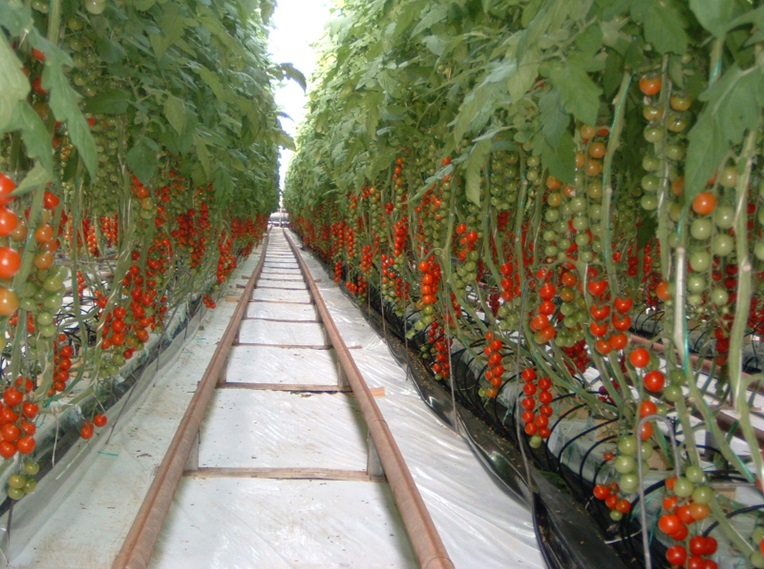
Hydroponics company Phytoponics has just completed a £500,000 equity financing round. The company specialises in the design, development and supply of Deep Water Culture systems for large scale sustainable hydroponic crop production.
In Deep Water Culture (DWC) plants are located in the growing module and the roots of the plant are suspended in the water which has the crop specific nutrient recipe and the correct amount of dissolved oxygen.
In the Phytoponics system, the growing modules are kept oxygenated by built in aerators and  serviced by a computerised nutrient control system. This maintains the nutrient and pH at optimum levels whilst also irrigating the rootzone of the plants. Phytoponics has a number of controlled-environment glasshouses equipped with various configurations of its DWC hydroponics growing different varieties of tomatoes, cucumbers, snack peppers and strawberries in additional to other experimental crops such as nutrient intensive vine crops, soft / exotic fruits and high value crops such as medical grade cannabis.
The company is also working closely with Edward Baarda Limited, a major produce grower and the first commercial grower in the UK to deploy Phytoponics technology at scale growing tomatoes hydroponically without a rockwool substrate.
Phytoponics Co-Founder Adam Dixon is thrilled to have secured the funding which provides the necessary operating cash to scale up trials of its technology whilst enabling it to innovate further. He says: “I’m excited for the future as we move a step closer to achieving our mission to deliver the sustainable benefits of hydroponic agriculture at scale through the global deployment of our substrate-less Deep Water Culture growing solutions”.
Established in October 2016, Phytoponics is headquartered in Abersytwyth and currently has a technical R&D facility in Yorkshire at Stockbridge Technology Centre, the renowned horticultural research and agriculture innovation hub.
The £500,000 investment comes from a number of existing shareholders with match funding provided by the Development Bank of Wales as the company’s first institutional investor.  Investment Executive David Blake, comments: “We are delighted to support the scaling up and commercialisation of the technology. The potential reach for this exciting new solution is global with UK wide and international opportunities already evident and we wish the team every success.”
Mark Hindmarsh, Phytoponics Chairman, added: “I’ve backed many start-ups over the years and have seen very few that have got to the point Phytoponics has with so little resource, in comparison to some of their sector peers.
“Not only have we enhanced and broadened our technology offering since the early experimental trials with the support of Aberystwyth University, but we’ve successfully proven that it works across a number of crop types.
“To close any level of funding in these uncertain times of the COVID-19 pandemic is no mean feat and I therefore would like to personally thank our new investors and existing shareholders for their continued support and belief in the future potential of the business.”
The Phytoponics investment process was managed internally and supported by the company’s legal representative, Acuity Law and Blake Morgan on behalf of the Development Bank of Wales.
Information on Phytoponics can be found at phytoponics.com

MycoNourish raises funding to improve crop production with innovative customised microbes

Meet the Network
Agri-TechE

Around 10 percent of strawberry production goes to waste as it doesn’t meet the quality standards required for retail. To address this, biotechnology company MycoNourish has gained £150k of funding to develop its first two products that harnesses the power of beneficial microbes.
MycoNourish, a spin-out of the James Hutton Institute, has announced the completion of a £150K funding round led by Techstart Ventures which, together with a recent £125K Higgs Award from Scottish EDGE, will allow the company to grow the business and release its first two products targeted at enhancing yield and quality in strawberry and tomato crops.
MycoNourish founder Dr Peter Orrell says: “We are delighted to have recently completed this investment round, which will enable us to bring our first two products to market. We found the pragmatic approach of our investors to align well with our company, and we look forward to working with them to commercialise this exciting opportunity.”

Sustainable improvement of quality and yields

MycoNourish aims to sustainably improve crop production by taking advantage of microbes that work in symbiosis with crops. This is done with the assistance of beneficial fungi, known as ‘mycorrhizae’, which act as a secondary root system for plants, and work with crops to enhance yields.
Growers are facing increasing pressures, ranging from changes in regulations and plant protection products no longer being available to labour shortages, it is vital for growers to maximise the amount of their produce that meets the highest grade. Use of these beneficial organisms can add value for growers, increasing their margins and supporting them to be globally competitive.

Reducing losses

€143B is lost by growers to wastage each year across Europe, and technology such as that provided by MycoNourish will form an important part of a toolset of sustainable improvements to tackle food wastage at the primary production stage, and increase food security.
MycoNourish will launch its first line of products later in the year.

Uncertainty in food supply fast tracks innovation in agricultural automation

Meet the Network
Agri-TechE

The COVID-19 crisis has shown the fragility of food supply chains. It has also accelerated the labour challenges for the agricultural industry predicted for the UK post-BREXIT. Both these elements have generated interest and a sense of urgency for new methods of automating agricultural processes.

After the Brexit vote of 2016 the agricultural industry had seen the initial impact of restricting freedom of movement for agricultural labour. The lockdown has exacerbated this and brought the issue to a head.
In addition, the unprecedented situation has created chaos in the supply-chains:

  • Consumer buying behaviour has radically changed with less fruit and vegetables being purchased and more ‘stock cupboard essentials’
  • The food service sector has collapsed as demand for ‘food on the go’ and restaurants ceased overnight
  • Supermarket predictions of supply and demand have been disrupted as computerised systems try to apply algorithms not developed for the current situation
  • Lack of understanding of the whole picture and the implications has led to ‘politicising’ shortages, adding further complications to the system.

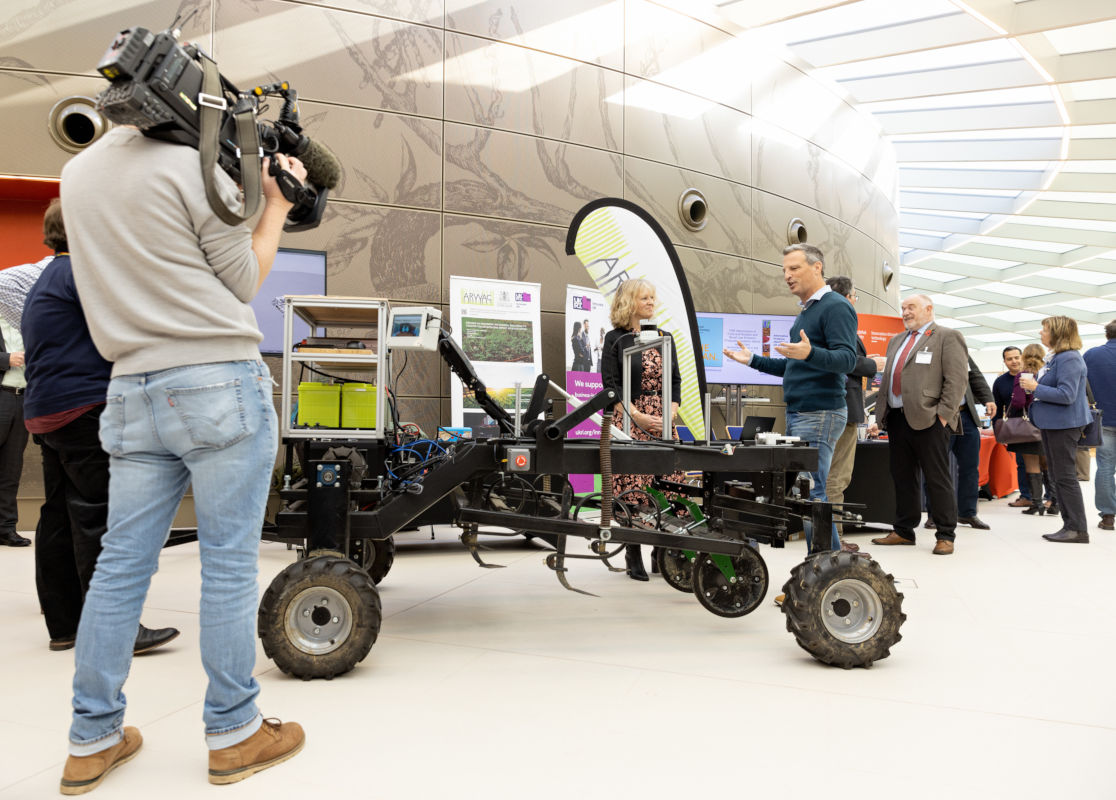
Labour and supply-chain management are driving a need for improved automation of the industry. To address this an initial webinar on ‘Accelerating Automation’ was hosted by the University of Lincoln on 9th April, attracting over 80 participants, each offering different perspectives on the challenge facing the industry, together with potential solutions. Professor Simon Pearson, Director of LIAT/Professor of Agri-Food Technology at Lincoln Institute for Agri-Food Technology (LIAT) comments: “The industry knew there would be a problem in the event of Brexit but it has become a real problem now.
“Even encouraging people into the fields is not a workable solution; the job requires physical stamina, motivation and an efficient technique. One producer commented that while an average 20-year-old would last a few hours’ celery harvesting, a 50-year-old Estonian mother of four with years of experience could keep going all day. There is also the problem of uncertainty when casual labour is used – there is no guarantee they will turn up if they get a better offer elsewhere.” Simon considers that an alternative to manual labour is required: “What is urgently needed is new methods of automation and now there is a clear recognition of the challenge and the opportunity.”
Participants of the webinar included:

  • Growers and producers of fresh produce
  • SMEs involved in automation, ie robotics companies
  • Established companies that are already using robotics within the fixed environment for example automotive engineering or for clearly defined roles in the outside such as robotic grass cutting at airports

The conclusion: the opportunity is three-fold:

  • Assess the availability of ‘off-the-shelf’ equipment that with investment and effort could be viable
  • Repurpose existing kit that has been developed for a different purpose
  • Invest in emerging agri-tech to fast-track promising solutions

The limiting factors and potential solutions

  • Fast track funding – many of the SMEs currently working in agri-tech robotics are vulnerable. Releasing funds quickly would enable these organisations to accelerate developments and to collaborate.
  • Lack of engineers and skills – although robotics is a new technology in agriculture the discussion revealed that there is a wealth of expertise in robotics in other industries – notably automotive engineering – and many of these skilled engineers have been furloughed.
  • Lack of evaluation sites – the SMEs have been struggling to find real-world sites to pilot and test the technology. Input from producers suggests that produce is being dumped, as it could not be harvested, creating an opportunity for testing technology at low risk to the producers.
  • Lack of capital to scale – the step from prototype to working product and then manufacture requires long-term finance. The robotics industry has struggled to find this commitment. Anecdotal evidence suggests that while many angels are unable to expose themselves to further risk, some VCs and banks do view this as a potential ‘quick win’ with an exit possible in four years.
  • Delay in IP protection – many SME robotics companies have in the past been unwilling to collaborate as IP protection takes years. However this may change as some IP attorneys are investigating a possible fast-track response.

Simon Pearson comments that the first webinar showed that there was appetite for collaboration across the industry and potential for government funding. He is currently preparing a bid for funding and also looking to a distributed model for progressing some of the projects.
As part of this the collaboration has invited contributions from others with an interest in this area.

Call to action – Accelerating Automation of Agriculture needs

Experienced robotics and data management engineers interested in applying their skills to agri-tech automation

Simon comments: “There is a huge resource out there of engineers that have been furloughed and might be interested in exploring the challenge of applying their knowledge to agriculture. We are thinking of some type of distributed development project that these people could contribute to.”

People with knowledge of verification, health and safety for the use of AI and robotics in the real world

Many industries have already overcome the issues that those in the agricultural sector are just facing now. Rather than reinvent the wheel it would be possible to adapt those learnings into agri-tech to accelerate adoption of the technology into the field.

IP lawyers and regulators able to facilitate freedom to operate and to fast-track collaboration between SMEs

Simplifying the legal system so that a pragmatic solution is created that protects IP while enabling collaborative working between academic institutions, SMEs and large corporations is vital for Open Innovation that is commercially viable.

Financial support for scale-up

Any solution needs to be feasible in the real world, so funding is needed immediately to ensure the viability of the existing agri-tech robotics companies and long-term funding is required to ensure that these developments move out of the lab into the field and beyond. If you are able to contribute any of the above please get in touch.