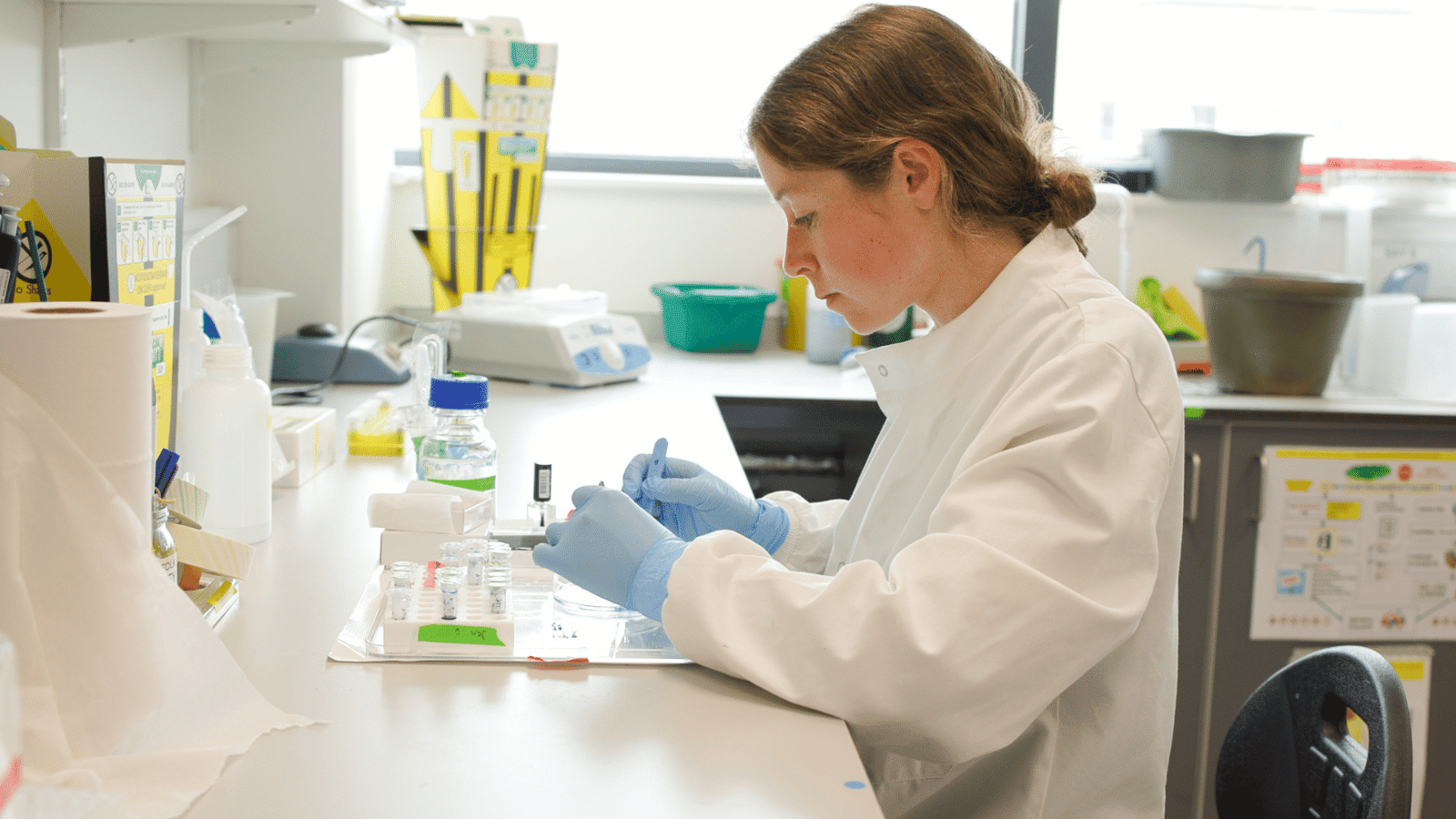
How Elveden Estate is turning to agri-tech to protect their “new gold”
 Agri-TechE
 For Elveden’s senior farm manager Nick Scantlebury, the overall message is: water is becoming the new gold. The estate’s £4.5m investment in a new reservoir is one part of the solution, but long‑term resilience lies in precision resource management. With groundwater extraction licences expected to tighten, Elveden is proactively exploring how far data‑driven decision‑making can take them.
To help them along the way, Agri‑TechE hosted a demonstration day at Elveden Estate, bringing together technologies that are helping farmers manage vital water supplies more efficiently. After another dry spring in East Anglia, the estate on the Norfolk/Suffolk border provided a timely backdrop.
Nick explained that the reservoir investment was an important step in securing future water supplies, but the farm, which grows around 6% of the UK’s onions, plus potatoes, carrots, parsnips and cereals on its 4000ha of farmland needed to continue to seek new ways to adapt to a future where groundwater extraction licenses were likely to be cut.
Nick hoped greater collection of data through the use of new technology would lead to smarter decisions regarding resource use.
That theory was being tested in a Defra-funded ADOPT (Accelerating Development of Practices and Technologies) project where 14 soil moisture probes supplied by Soil Moisture Sense were being placed in a single 15ha field rather than the typical one or two.
This potentially would allow the farm to refine water management by splitting fields into smaller management zones, and monitor irrigation use at different points of a run to see if timing can be further optimised.
The project will compare differences between day and night irrigation, as well as between scheduling designed to Elveden best practice versus what is suggested by renowned irrigation expert Mark Stalham’s model. “A third treatment will run a day later to see if there are any knock-on effects on yield or quality,” Nick said.
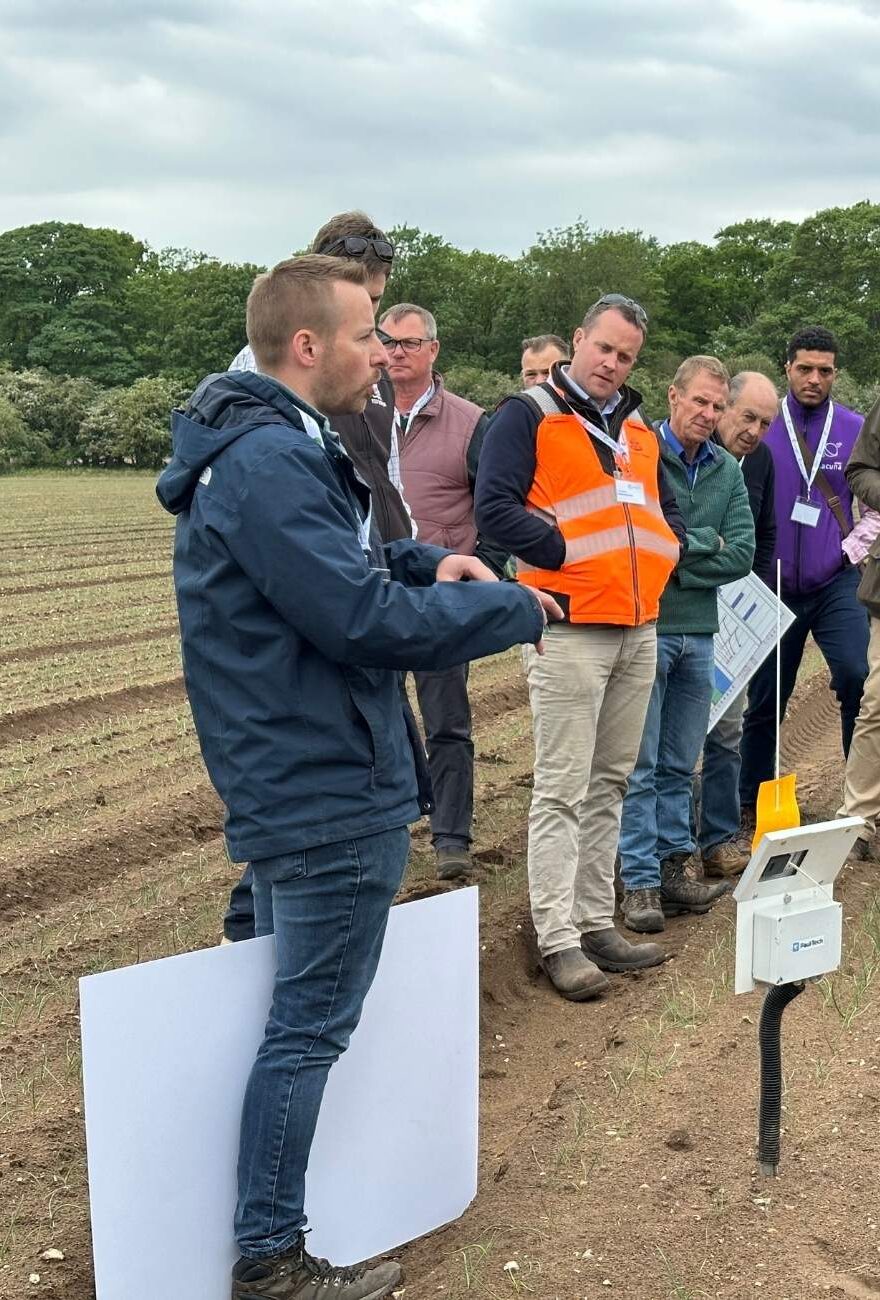
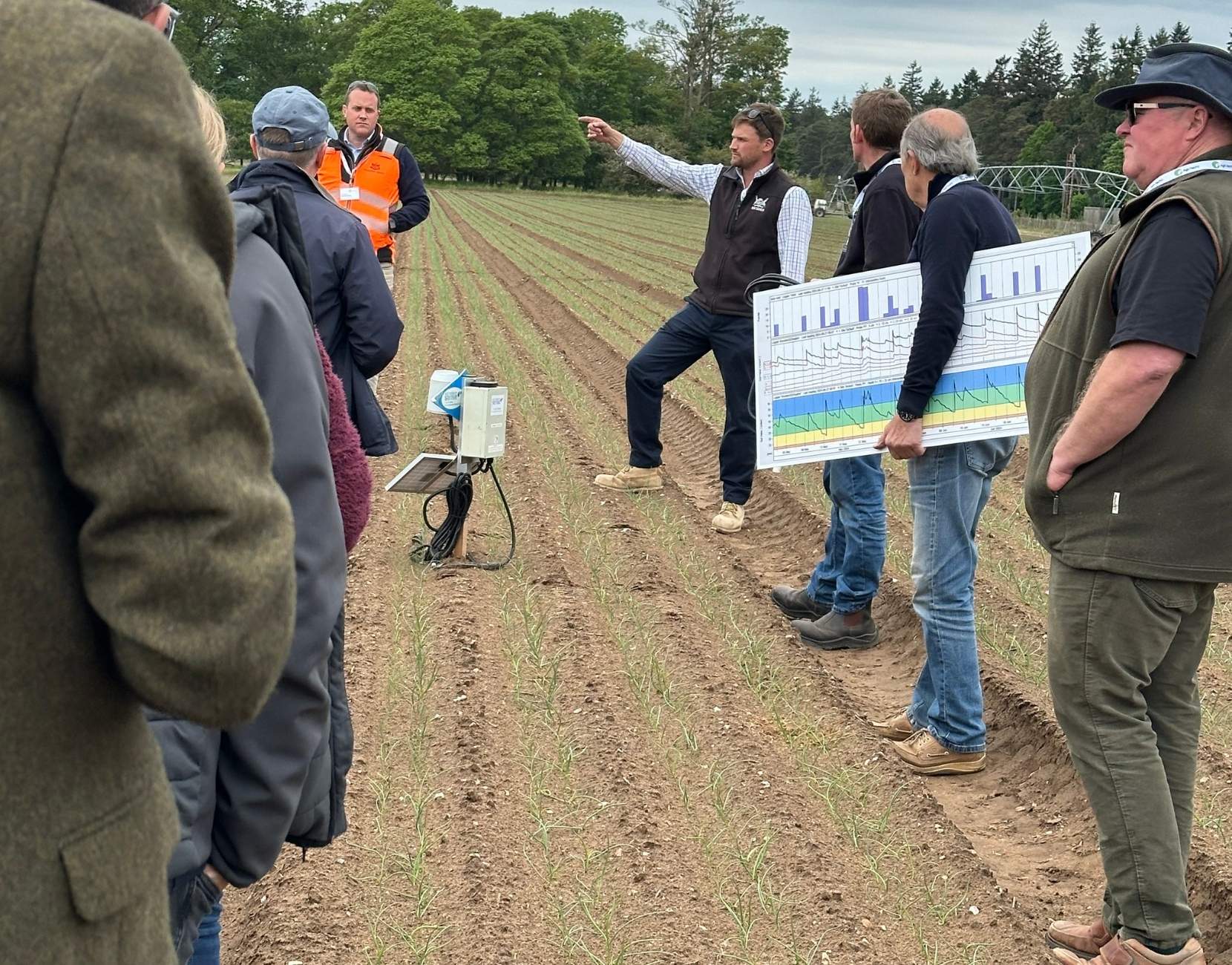
Elveden had also been testing Paul-Tech nitrate sensors on the farm after the spikes in fertiliser prices. The sensors track soil nitrates in real-time allowing growers to monitor when nutrients are released and absorbed.
Trials in onions on the farm suggested that by using smaller, more frequent doses, the farm could potentially save up to 40 kg/ha of nitrogen while maintaining yields.
Andrew Howseman of Drip UK discussed the practicalities and economic benefits of using drip irrigation, which offered 30-40% water savings and used significantly less fuel.
“The sweet spot [economically] for drip irrigation is around 32ha,” Andrew explained. “On 10ha it is too expensive but around 32ha the costs of infrastructure start to settle down.”
The technology was particularly well suited to use on potato crops grown on marginal soils. “From our experience, drip evens up the water through the soil profile so the drier areas get more water, and you get higher yields.”
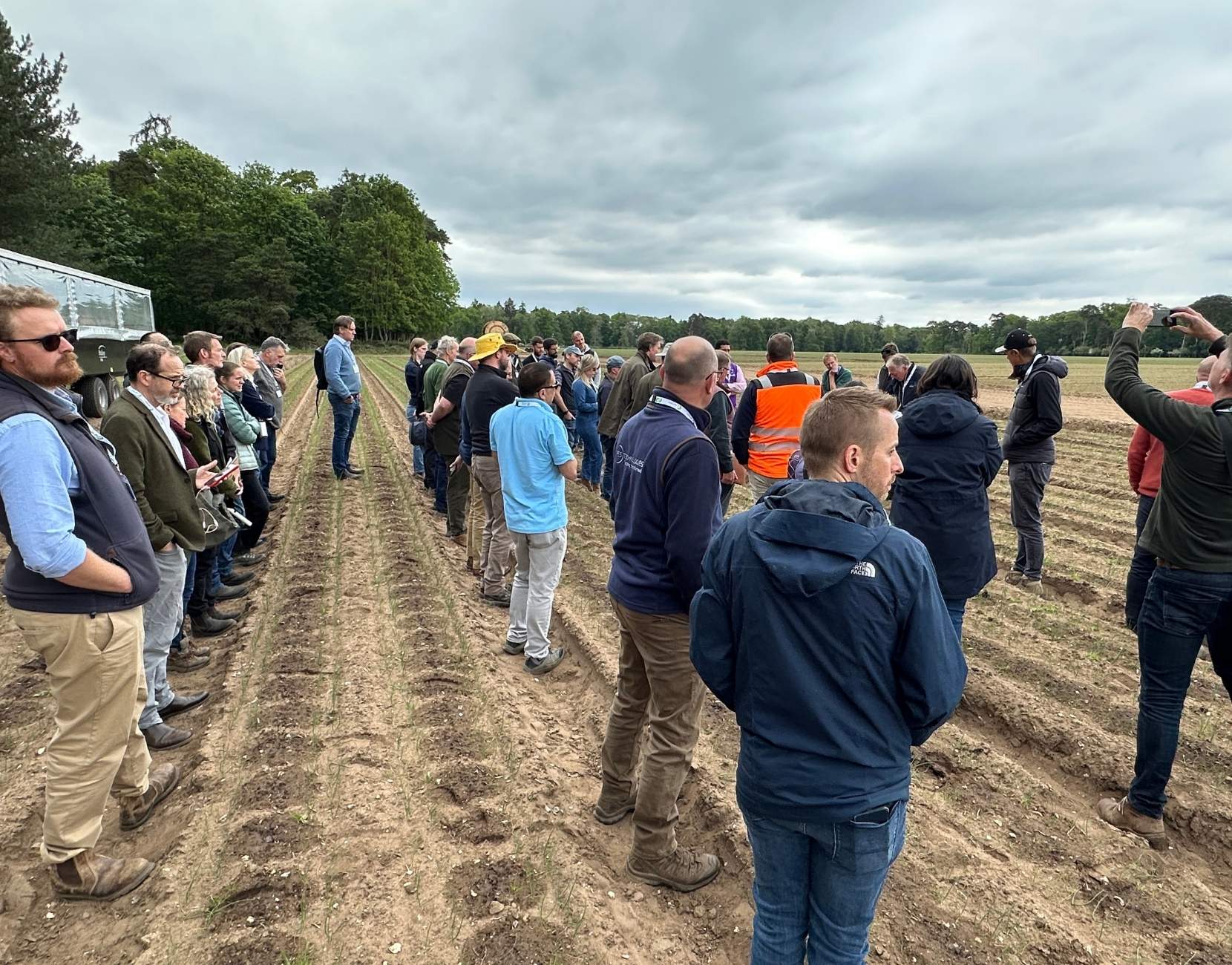
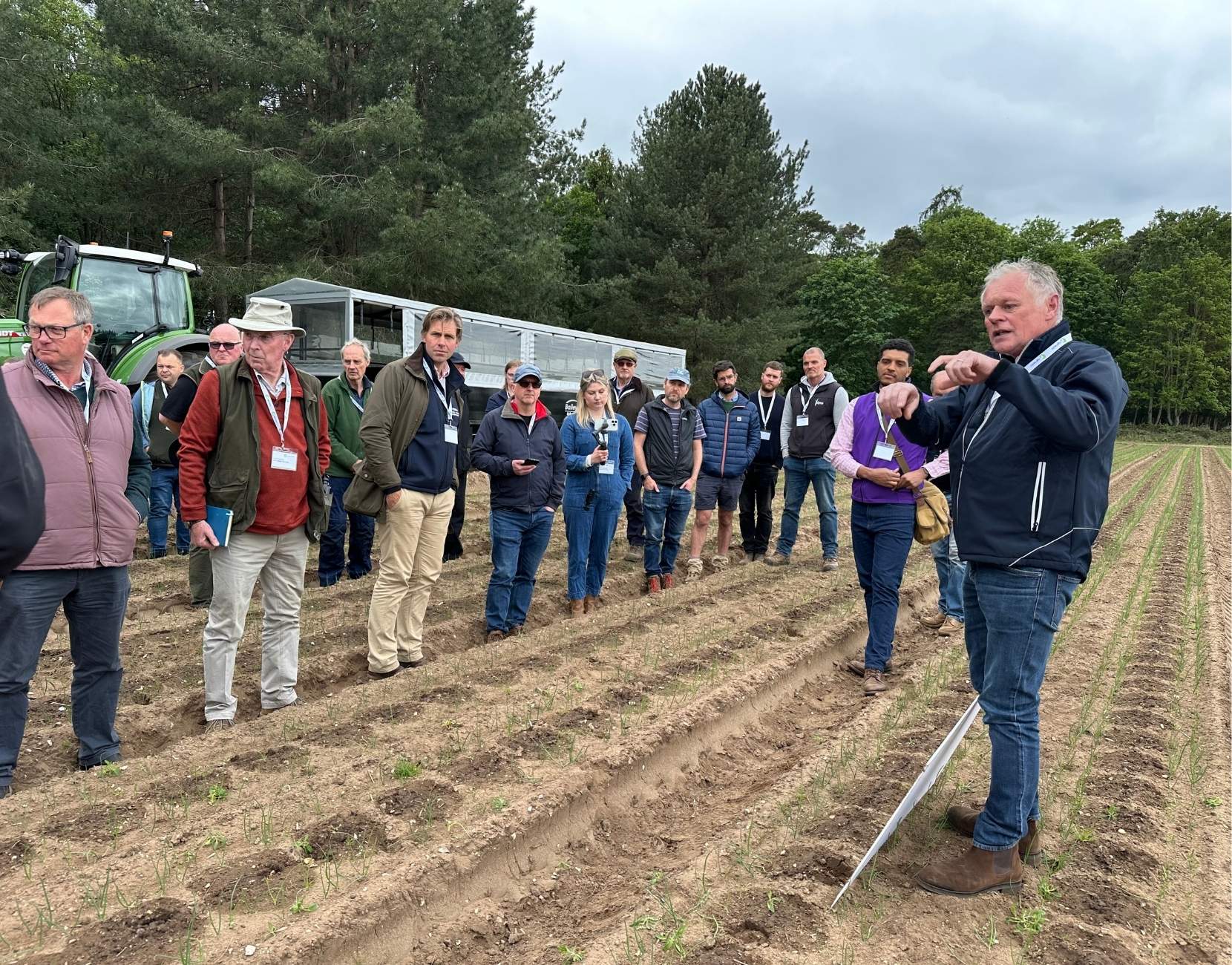
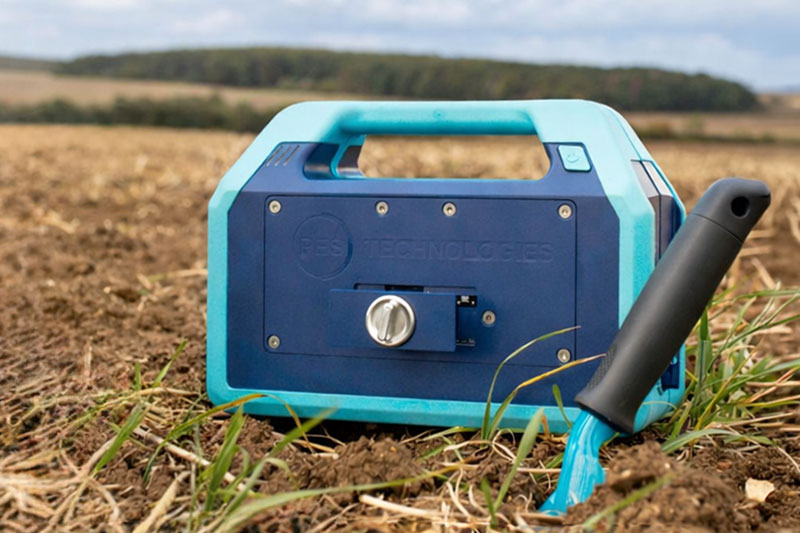
Attendees at the event also heard short presentations from other Agri-TechE member organisations, Delta-T with its portable soil moisture measurement device, Farmer Charlie with a new low-cost soil sensor, and Lacuna Space with a sensor that solves the connectivity anywhere problem using satellite connectivity.
Aquagrain had a different solution to sensor technology: a soil-enhancing technology that converts rendered fallen stock into a biodegradable polymer that absorbs up to 30% of its mass in water.
“The idea is that you add it to the soil or compost, and once you irrigate or it rains it absorbs water, which is slowly released and made available to plants,” explained Aquagrain chief scientific officer Arjomand Ghareghani. “By doing this you can potentially cut irrigation by up to 50%.”
The different technology showcased was well received, with Jack Smith, Technical Director at Waldersey Farms Ltd, finding the day to offer useful, practical insights.
“I came today because I’m a relatively recent subscriber to Agri-TechE, having followed all the good work they’ve done, and I’m also a keen follower of Elvedon and the good work they do,” he says.
“Water is a very prominent conversation across the board, so combine all those three things, and it made sense to come and see what the latest and greatest irrigation water technology is to, ultimately, pick up nuggets of information and good ideas that we can take home and try and replicate and scale up.”
Although Jack says Waldersey Farms prides itself on already looking at irrigation and water-use technology, he found that attending offered insights into improving their practices.
“Water efficiency and water usage is high up the agenda, but we need to keep looking and not be satisfied with what we already do.
“Some of the equipment that was on show today we are already utilising, but maybe not utilising as well as it could be used. How can we use it better? And that’s the piece, isn’t it, where you learn from other growers, other people in the industry: how do you do what you’re doing, better?”
The Demo Day series
The demo day at Elveden Estate is part of a series designed to invite farmers to explore technology firsthand and provides opportunities for technologists to present their latest innovations.
Andrew Peal, Farm Manager at Salle Farms, attended the first event and found it to be insightful.
“We’ve recently been awarded a water productivity grant for a reservoir, and managing our water resources is crucial. I’m involved with other irrigation projects elsewhere, but I’m really interested in how we can best monitor and get the most out of the products we’re applying, so whether it be water or nitrogen,” he says.
“It’s been good to catch up with some friendly faces and people I haven’t seen for a while, and I think it’s really interesting looking at the different tech that’s coming along”.
Agri-TechE will be hosting the next Demo Day later in 2026. Sign up to our events mailing to hear when the next Demo Day is announced.
Post Overview
Agri-TechE Related Posts
CASE STUDY: Development of a Handheld Soil Health Measurement Device
Naturally occurring soil fungi could boost rice yields while reducing reliance on synthetic fertilisers
New hyperspectral satellite imagery crucial for lowering nitrogen use amid rising fertiliser costs

Chief Scientist of the Environment Agency to open Agri-TechE’s New ‘NatureTech’ Conference

How I’m helping rice farmers in India harness the power of fungi in the soil