Exhibition opportunity for naturetech innovators!
As agriculture navigates a new landscape of environmental ambition, our next conference spotlights ‘NatureTech’ innovation for enabling the delivery, measurement, and monetisation of ecosystem services across UK farmland. We’re looking for innovators to exhibit their technology at the one-day event “The Productive Landscape: NatureTech for Profit and Planet” on 28th April 2026.

Calling all agrifood tech innovators: Applications now open for the AgriFutures evokeAG. 2026 Startup Program

Member News
The views expressed in this Member News article are the author's own and do not necessarily represent those of Agri-TechE.

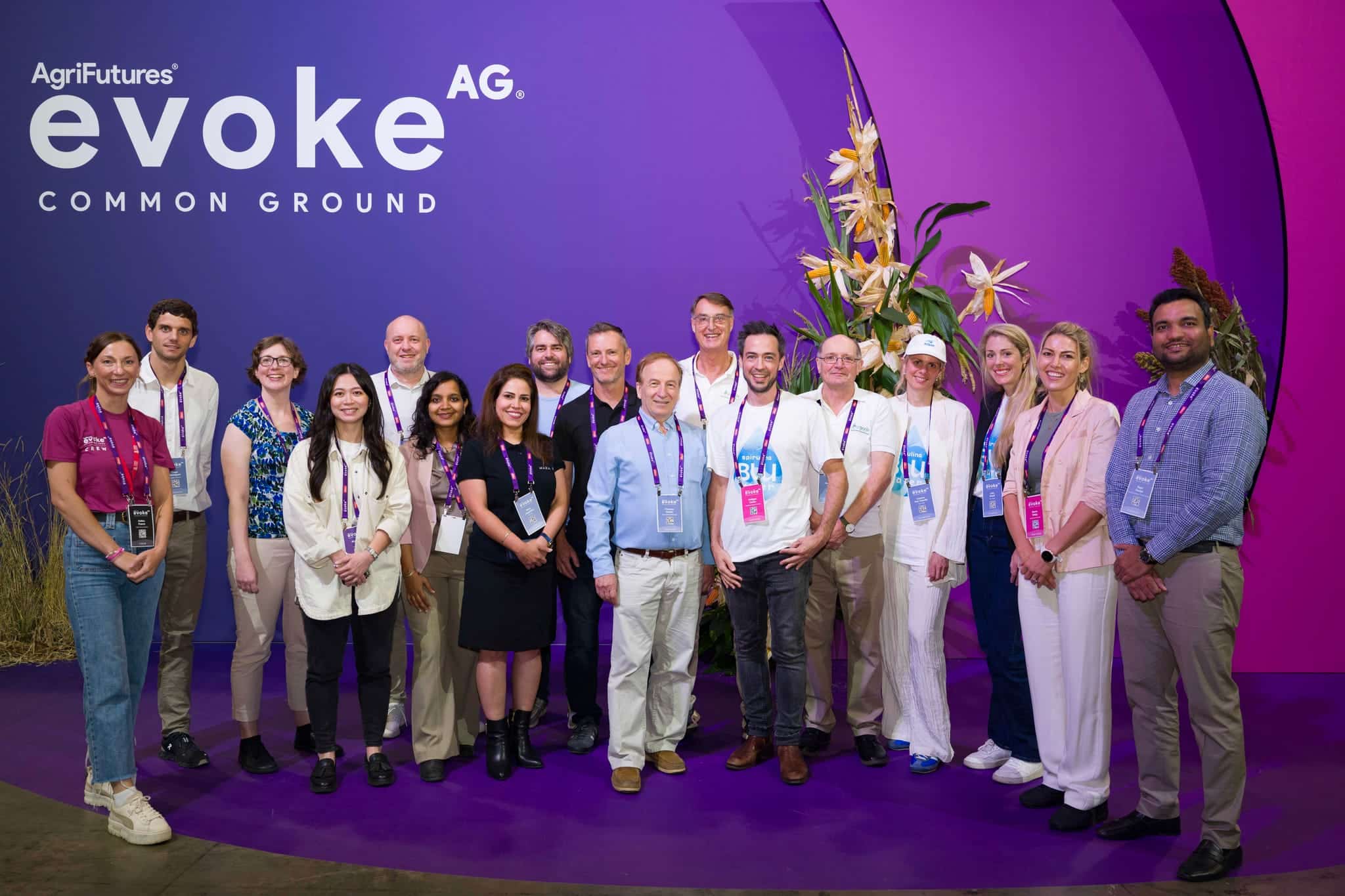
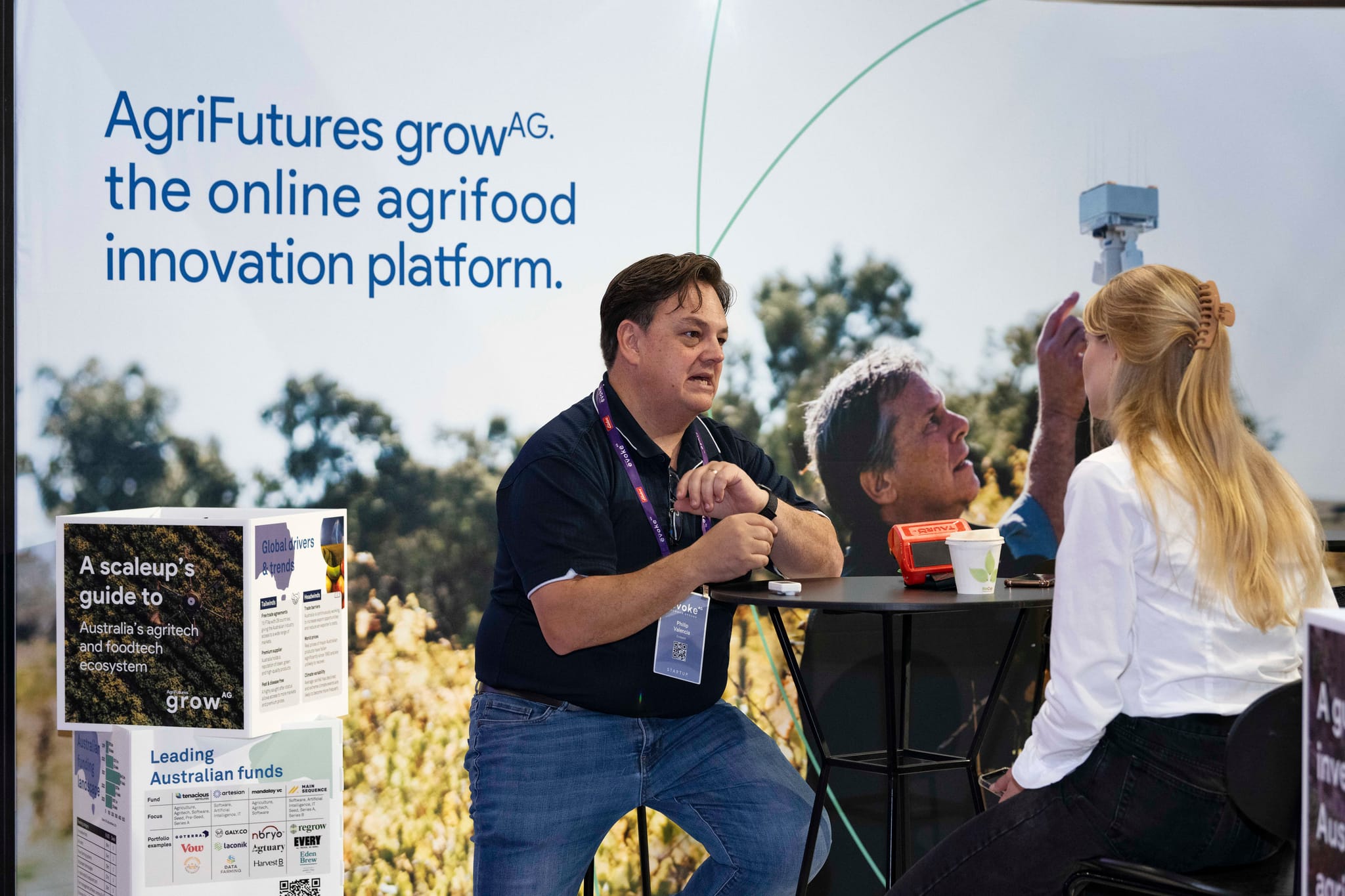
Applications are now open for the AgriFutures evokeAG. 2026 Startup Program, where 50 of the boldest agrifood startups will receive a free pass to showcase their innovations on a global stage at evokeAG. 2026 in Melbourne on 17-18 February 2026.

Hosted by AgriFutures Australia, evokeᴬᴳ. is the premier global agrifood technology and innovation event, bringing together the brightest minds, breakthrough technologies and bold ideas shaping the future of agriculture.

The Startup Program offers founders a high-impact platform to:

  • Showcase their solutions to a global audience
  • Connect with investors, corporates, and producers
  • Accelerate growth through partnerships and exposure.

Angela Wakeman, Acting General Manager, Global Innovation Networks at AgriFutures said the evokeAG.  Startup Program is designed to give agrifood startups and scaleups tackling agriculture’s biggest challenges a platform to showcase their innovation and drive positive change for the sector.

“evokeᴬᴳ. is more than an event – it’s a launchpad for the technologies and ideas that have the potential to transform agriculture. The Startup Program is designed to connect founders with the networks and opportunities they need to scale and succeed.”

The evokeAG. 2026 Startup Program offers three streams:

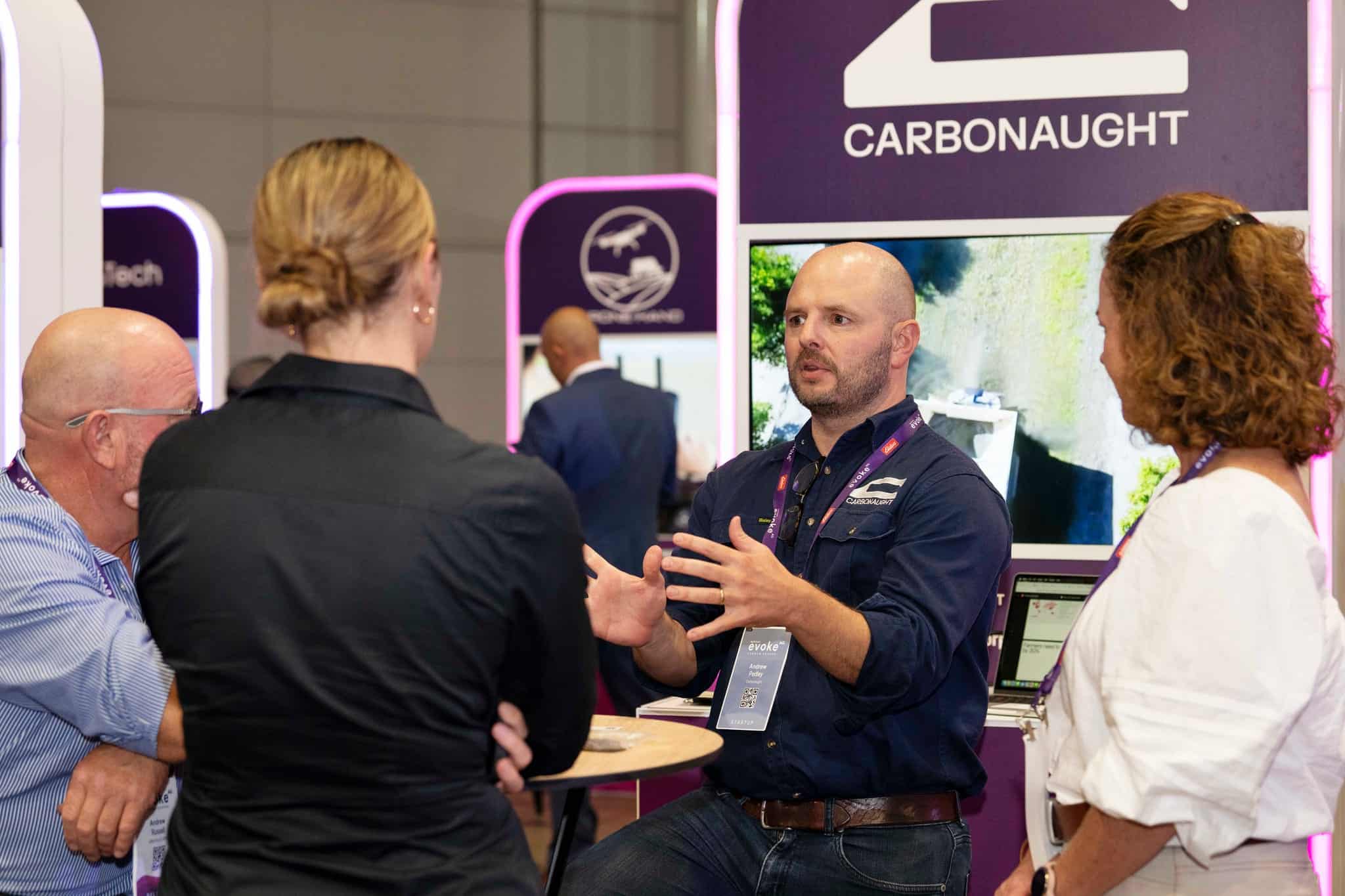
  • Startup Alley – The heart of evokeᴬᴳ. Startup Alley is a dynamic exhibition space featuring 50 of the most innovative startups tackling agriculture’s biggest challenges.
  • Culinary Capital – An exclusive networking dinner where startups pitch their solutions directly to investors, corporates and potential customers in a rotating table format.
  • The evokeᴬᴳ. Australian Landing Pad (formerly AgVenture Downunder) – A tailored program for 10 international startups ready to enter the Australian market, offering business support, market insights and connections with producers and trial partners.

Edward Barraclough, Founder of livestock management technology startup Drone-Hand, said the Program was instrumental in accelerating his business.

“The evokeAG. Startup Program gave us exposure to the right people – investors, trial partners, customers and everyone in between – at exactly the right time. It was pivotal in creating pathways and securing partnerships that have led to the completion of our investment round and accelerated our move towards commercialisation,” said Edward.

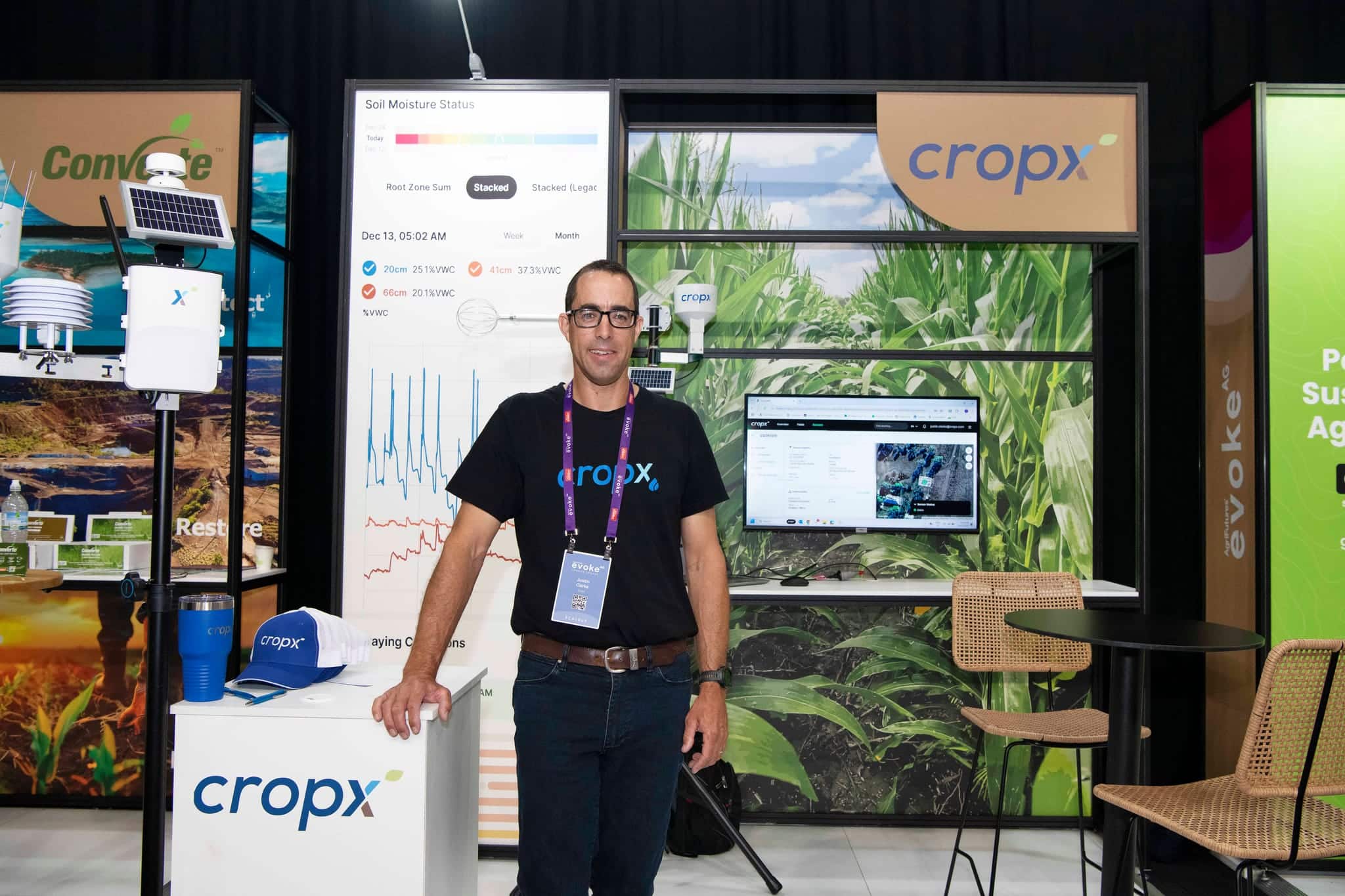
Since its inception in 2019, the evokeAG. Startup Program has supported the growth of more than 170 local and global startups, supporting their efforts to secure investment, partnerships and international expansion. Alumni include innovators such as RainstickCropifyPeople in PaddocksCropX and RHST, whose participation in evokeAG. has fostered growth, investment, partnerships and international expansion.

Applications for the evokeAG. 2026 Startup Program are open from Monday, 15 September 2025, until Friday, 24 October 2025 at 5.00pm AEDT.

For program details, eligibility criteria and further details on how to apply visit: evokeag.com/startups.


evokeᴬᴳ⋅2026 will be held on Tuesday, 17 February and Wednesday, 18 February 2026 at the Melbourne Convention and Exhibition Centre. evokeᴬᴳ⋅ is powered by AgriFutures Australia and funded by the Australian Government, Platinum Partner Elders and Host State Partner, Agriculture Victoria. 

Tickets are now on sale at evokeag.com 

  • *I have permission from the copyright holder to publish this content and images.

Reimagining the ‘F-word’

Agri-TechE Blog
Agri-TechE

What does it mean to fail?

At this time of the year where many farmers are measuring success by crop yields and students are receiving exam results, we’re flipping failure on its head and exploring why we need to re-define its meaning – particularly in agriculture.

At its core, failure simply means that the outcome we hoped for didn’t happen. And while it’s a hackneyed truism that one learns from failure, there is more to it than that.

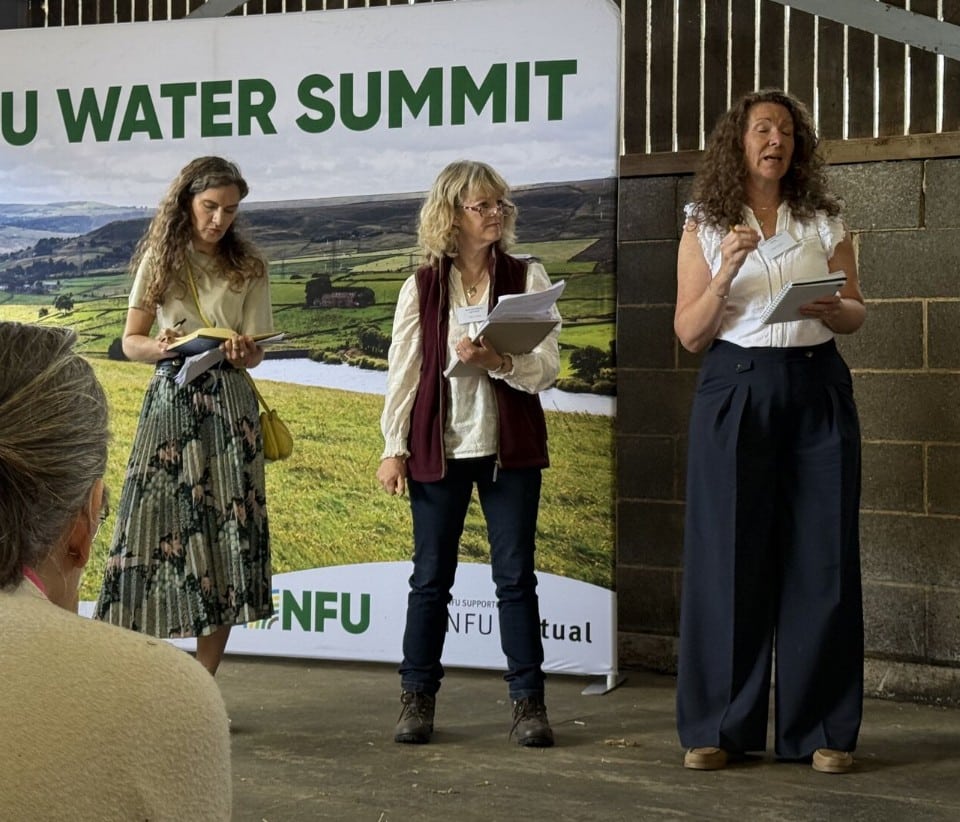
Inspiration for this blog topic came from the recent NFU Water Summit, where delegates discussed how failure – particularly when it comes to innovating in a tightly regulated area – can potentially lead to dire consequences.

We were discussing the need for new solutions around improving water quality, and how the risk of a trial, new technology, or different practice “failing” is inhibiting the process of developing and testing new ideas, given there might be potentially disastrous – or even legal – consequences from things not going as we might have wanted.

So the risk of failing is impeding the innovation process and impacting risk appetite.

08_BC at NFU water
the-tampa-bay-estuary-program-dHXw8yEEpew-unsplash

What wasn’t funded?

Another area which has long vexed us at Agri-TechE is the destiny of “failed” proposals submitted for publicly supported projects that don’t meet the criteria for support. Some of these proposals, particularly those with big and complicated consortia, require weeks – sometimes months – of preparation.

Without doubt, most of those submissions won’t be funded – for example, BBSRC’s “responsive mode” grants (through which academics apply for money for their research) has a success rate of around 25 %. So nearly three quarters of proposals go unfunded. Now this might be that the science wasn’t up to scratch, the assessors weren’t persuaded by its potential impact, or it didn’t meet other success criteria.

Yet we only ever hear about those projects that were funded, meaning the “failures” are either reworked and resubmitted (hopefully with a more favourable outcome), or the idea fades away, and everyone moves on with their lives.

But all that brain power, agreement to collaboration, and the energy involved in building a “coalition of the willing” goes to waste.

No-one wants to see a weak proposal funded, but “failure” to persuade reviewers that the project doesn’t meet the funding criteria could still mean it was an idea which could hugely benefit agriculture and horticulture.


Was it all plain sailing?

Once a project has been funded and the work completed, it’s often a condition to share the learnings more widely. Naturally, there is a tendency to present the most positive and interesting elements of some research or set of trials – after all, no-one wants to appear as if they didn’t make good use of public money. Yet sometimes ‘the outcome we hoped for not happening’ could help others – maybe not a scientifically rigorous outcome, but perhaps adequate to inspire a change in practice.

Sweeping “failure” under the carpet isn’t universal – sometimes it is even celebrated. The “badge of honour” associated with having run “failed” start-ups in Silicon Valley is often quoted, although of course needs to be taken in context – failure just due to being not good enough still happens!

But let’s rethink what we mean by failure. As Thomas Edison said, “I have not failed. I’ve just found 10,000 ways that won’t work.”

Dairy Australia: National Dairy Forages R&D

Member News
The views expressed in this Member News article are the author's own and do not necessarily represent those of Agri-TechE.

Research Partnerships

Opportunity for

  • Agtech companies and researchers to submit research ideas that align with Dairy Australia’s forage R&D priority areas.

Opportunity description

Industry challenge

Australia’s dairy industry relies heavily on forages and pastures to drive nutrition intake for dairy herds. Yet current forage productivity, resilience, and utilisation are not keeping pace with the evolving demands of the sector. Without a coordinated, forward-looking national approach, the dairy sector risks falling behind in feed base innovation affecting profitability, environmental performance, and long-term resilience. The National Dairy Forages R&D initiative seeks to overcome these systemic challenges by building a connected, nationally aligned research platform that accelerates forage innovation and adoption across Australian dairy regions.

Current opportunity

Dairy Moving Forward via Dairy Australia are seeking submissions for research ideas that align with their National Dairy Forages R&D Priorities.

These priorities are:

  • Low emissions forage systems:
    • Design integrated forage systems for low-emissions dairying that deliver productivity, profitability and sustainability
  • NextGen Technologies:
    • Harness next-generation technologies to transform forage management
  • Optimise Management Practices:
    • Refresh forage management practices to maximise genetic potential and to adapt to changing conditions
  • Optimise Mechanically Harvested Forages
    • Optimise yield, quality, and system performance of mechanically harvest forages
  • Track soil-plant microbiomes:
    • Track emerging insights into soil-plant microbiomes to guide future innovation.

Submission process

To receive the resource pack containing the documents required for the idea proposal, submit your interest via the ‘Enquire now’ button.

The resource pack contains:

  • Capability and infrastructure template
  • Idea proposal template
  • Information pack.

Collaboration for proposals is encouraged. Ideas submitted must be singularly focused on responding to above priorities. More detail on focus area and scope of priorities can be found in the info pack attached.

Once you have been filled out, please email them to: nfs@dairyaustralia.com.au

Questions can also be directed to: nfs@dairyaustralia.com.au and will be responded to by email by the 8th of August.

Submission due date

Thursday 4th September, 5pm AEST.

More Information

AgriFood Futures – the new research strategy for the University of Reading

Member News
The views expressed in this Member News article are the author's own and do not necessarily represent those of Agri-TechE.

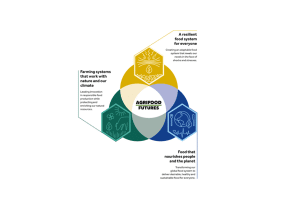
Agrifood Futures is the new, ambitious research strategy that builds on the University of Reading’s reputation for research excellence and work with global partners.

National and global challenges in our food system include climate-driven disruption of food production, rising levels of malnutrition and hunger, and the degradation of natural resources. The University of Reading is well-placed to drive change thanks to its deep expertise across the food system.

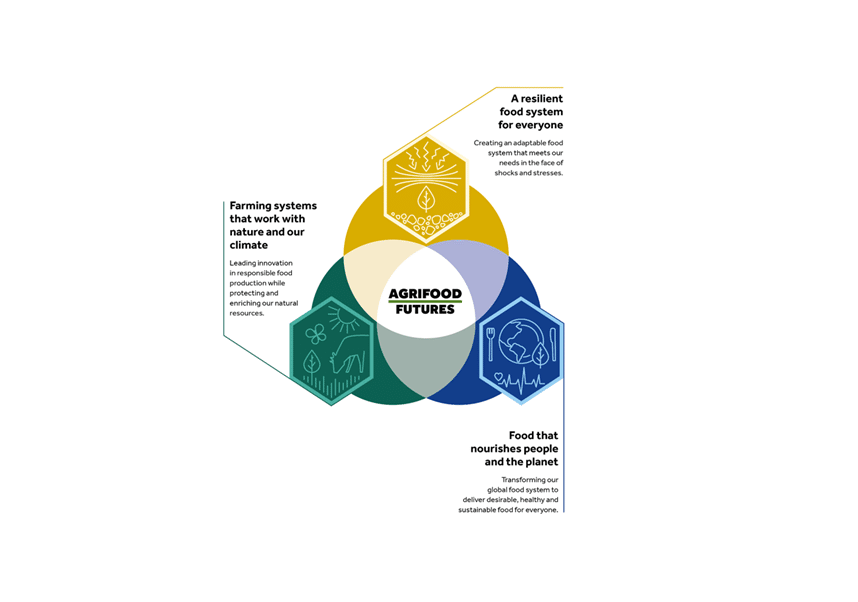
The three priority areas are:

  • A resilient food system for everyone – Creating an adaptable food system that meets our needs in the face of shocks and stresses
  • Farming systems that work with nature and our climate – Leading innovation in responsible food production while protecting and enriching our natural resources
  • Food that nourishes people and the planet – Transforming our global food system to deliver desirable, healthy and sustainable food for everyone

Our vision is that everyone across the world is able to consume a sufficient, healthy, sustainable diet that leaves the lightest possible footprint on the planet. Agrifood Futures will unlock innovation and drive the transformation needed to create an equitable, resilient and sustainable global food system for 2050.

Read more here: https://research.reading.ac.uk/agrifood-futures/ 

  • *I have permission from the copyright holder to publish this content and images.

Agri-Tech recognised as ‘Frontier Sector’ in Modern Industrial Strategy

Agri-TechE Article
Agri-TechE

Investment, growth, skills, scaling and export… the newly-unveiled Modern Industrial Strategy offers lots of “wins” for UK agri-tech, hopefully removing some of the well-articulated barriers to help the industry realise its full potential.

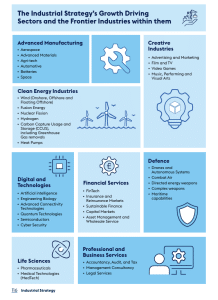
As part of the over-arching 10 year Strategy, “agri-tech” has been identified as one of the six “frontier sectors” (alongside automotive, batteries, aerospace, space and advanced materials) within the Advanced Manufacturing ‘Growth Driving Sectors’ Plan.

As well as outlining some specific interventions for agri-tech (including committing at least £200m for the Farming Innovation Programme until 2030), there are some even bigger prizes for agri-tech embedded in the Strategy.

(And Agri-TechE even got a mention!).


Why does inclusion in the Sector Plan matter for agri-tech?

Being named in the Sector Plan means that across various government departments there is a collective and agreed direction of travel. It means hopefully better cooperation between departments where they might have influence over different elements of a challenge – now they can and should work together to align their efforts.

Weather and seasonality aside, the challenges still facing widespread commercial agri-tech adoption are not unique to our industry. As we heard at our Challenge Convention, there is an urgent need to reduce energy costs, minimise supply chain disruption, raise finance, support scale-up, and develop the skills for the workforce of the future.

It’s heartening to see that while many of the interventions outlined in the strategy are not bespoke for agri-tech, they certainly provide huge opportunities. For example, the plan includes data sharing infrastructures to support governance and build trust, leveraging public and private investor partnerships, and regulatory reform. It also features specific deliverables, such as a new Robotics and Autonomous Systems programme, creating a network of physical Robotics Adoption Hubs to help businesses adopt these technologies. In addition, £100m has been committed over three years to enhance engineering skills, plus short courses in engineering, AI and digital skills.

So, we are going to have to learn to sit alongside other sectors and demonstrate the value, impact and potential return on investment to ensure money will be directed to agri-tech.


How hard was it to get agri-tech recognised in the plan?

Three days after the announcement, Daniel Zeichner (Minister of State for Defra) visited us at our Innovation Hub at the Royal Norfolk Show. We took the opportunity to ask him three quick-fire questions about getting agri-tech into the Industrial Strategy.


Going Further, Together

Looking at the other “frontier sectors,” it’s hard to imagine a farm, agri-business or supply chain player not looking to harness solutions from them. In fact, many of the innovations we classify under the umbrella of “agri-tech” have been developed within, or inspired from, these other sectors.

There are natural partnerships that will hopefully emerge, and co-operation, not competition, is going to be key.

Agri-tech-specific interventions

  • Precision technologies feature strongly, with controlled environments, robotics and automation, advanced sensors, AI and data systems all named, as well as an ambition for “engineering biology” (formerly known as synthetic biology) to be applied to agriculture.
  • An additional £5m committed to the Farming Innovation Investor Partnerships which will hopefully leverage another £10m of private investment by 2030.
  • An Agri-TechE xport Accelerator Programme, aiming to match high growth potential businesses with promising markets.
  • An ambition to support The Institute of Agriculture and Horticulture to “support farmers and growers access and develop the technical and business skills needed for their business.”


Promise, with a note of caution

It is of course fantastic to see the Government’s recognition of the impact to date, and the future potential for agri-tech in the UK. Its inclusion is the result of many months of work by unsung heroes behind the scenes, putting forward the business case for agri-tech’s place amongst other key sectors.

This is a huge opportunity – but things have to change. There has been much success to celebrate, but there is some fatigue and even disillusionment over certain initiatives in the UK agri-tech community that haven’t delivered on original ambitions. Displacement of existing commercial entities by mis-aligned public funding has also been a risk.

Change is needed, and there is now an opportunity to do things differently, reflecting the “new world order” and building on past successes.


What will success look like?

The ultimate aim – for agri-tech at least – is to achieve a sector turnover of at least £20 billion by 2035. This is an increase from – £13.1bn achieved back in 2023. It will be achieved by the success of the growing number of companies spending more on R&D, increasing their productivity, scaling and exporting.

When it comes to government success, the metrics are everything. Let’s give them something to count on.

Welcoming Kate Brunswick to the Agri-TechE Team

Agri-TechE Article
Agri-TechE

We are delighted to welcome Kate Brunswick to Agri-TechE as our new Business Development Associate.

Kate brings with her a rich and varied background rooted in the food and farming ecosystem. Born into a farming family in Hampshire, her early exposure to rural life inspired a lifelong passion for the outdoors.

Following a degree in Biology from Surrey University, Kate’s career kickstarted in the fundamentals of food and farming, where she trained in salad production. This technical grounding soon expanded to encompass food manufacturing across sectors as diverse as cut flowers, fine foods, and organic dairy.

Over time, Kate transitioned into strategic and commercial roles, supporting market development through innovation-led business growth. Her recent role as Business Development Director at Innovation Agritech Ltd saw her champion cutting-edge vertical farming technologies and lead the company’s academic engagement strategy, delivering over £1m in commercial sales and forging impactful partnerships with universities and research institutions.

From enabling AI-driven PhD studies in plant phenomics to designing novel education pathways for agritech, Kate has an increasing focus on how innovation can drive sustainability and resilience across the food system. Demonstrating a genuine commitment to promoting sustainable supply chains and finding practical solutions to industry challenges.

Collectively, this experience has enabled a tangible insight into the numerous complexities within the UK retail supply chain – navigating omnichannel strategies and adapting to ever-changing consumer behaviour, sustainability concerns, food safety, and traceability.

Kate Brunswick
Kate Brunswick
Business Development Associate, Agri-TechE

“Coming from the fast-paced world of vertical farming, I’ve seen how technology can completely reimagine the way we grow food,” Kate says.

“What’s exciting about agritech in the UK right now is that we’re not just talking about innovation—we’re starting to see it applied on farms, in glasshouses, and across supply chains. There’s a real opportunity to make agriculture more resilient, efficient, and sustainable—and that momentum is growing.

“I feel privileged to join Agri-TechE team as Business Development Associate. It is a unique opportunity to help connect pioneering technologies and tailored research with the people and businesses that can benefit most.”

In her new role, Kate will work closely with technology providers, farmers, researchers, and industry stakeholders to support the adoption of impactful agri-tech solutions and accelerate sustainable change across the industry.

“We’re delighted that Kate is joining the Agri-TechE team,” says Agri-TechE Director Dr Belinda Clarke. “She brings a wealth of commercial and technical experience that will help accelerate our growth trajectory as our activities across the UK increase and we have more approaches from international partners.

As a network organisation we also hugely value Kate’s strong reputation in the community – and many will know her from having attended so many of our events and being a highly engaged member in her previous role. She is a great communicator as well and we are confident she will be a key part of our future growth.”

Please join us in warmly welcoming Kate to the team.

ADOPT Fund – Defra’s Farming Innovation Programme

Member News
The views expressed in this Member News article are the author's own and do not necessarily represent those of Agri-TechE.

We’re pleased to share that our CEO, Tim Isaac, is a Project Facilitator for the new Accelerating Development of Practices and Technologies Fund (ADOPT). This is part of Defra’s Farming Innovation Programme, with the aim to fund on-farm trial and demonstration projects to improve adoption of new ideas or solutions in the agricultural sector.

ADOPT sets out to invest up to £20.6 million over the next 2 years to empower practical farming solutions. The full ADOPT grant is for project costs between £50,000 and £100,000. There is also a Facilitator Support Grant of £2,500 for a farmer or grower to engage with an external project facilitator.

As a project facilitator, Tim will be able to provide support to your project through:

  • Providing expertise to ensure a successful project
  • Project management
  • Preparing administrative documents, such as reporting
  • Ensuring the project remains on track and is well communicated

From the 28th April 2025, you can apply for funding. Your project must:

  • Have total costs between £50,000 and £100,000
  • Last between 6 and 24 months
  • Start by 1 November 2025
  • End by 31 October 2027
  • Intend to exploit the results from or in England
  • Carry out all of its project work in the UK
  • Embrace open innovation principles and be willing to share results with other farmers, growers or foresters
  • Have a Project Facilitator as part of the project team who is listed in the ADOPT Innovate UK Business Connect database

Ceres Research are very happy to have an initial discussion with you about a project idea and how we might be able to help.

For further information on the ADOPT programme, please see here: ADOPT Fund: guidance now available for innovation funding – Farming

  • *I have permission from the copyright holder to publish this content and images.

Nutrisphere: Advancing Sustainable Agriculture with Smarter Nitrogen Management

Member News
The views expressed in this Member News article are the author's own and do not necessarily represent those of Agri-TechE.

A Breakthrough in Nitrogen Retention for Future-Proof Farming

In modern agriculture, the challenge of balancing high yields with environmental responsibility has never been greater. While traditional nitrogen stabilisation methods have been relied upon for decades, their long-term impact on soil health and sustainability raises concerns. 

Nutrisphere presents an innovative alternative. It offers farmers a cutting-edge solution that enhances nitrogen efficiency while safeguarding the natural ecosystem.

The Shortcomings of Traditional Nitrogen Management

For over 40 years, nitrogen stabilisers such as NBPT (N-(n-butyl) thiophosphoric triamide) and DCD (dicyandiamide) have been used to manage nitrogen loss. However, these methods come with limitations:

NBPT only inhibits urease bacteria, reducing ammonia volatilisation but failing to prevent nitrate leaching.

DCD slows nitrate conversion, yet it does not address ammonia volatilisation, leaving nitrogen vulnerable to loss.

Chemical-based inhibitors can disrupt the soil biome, affecting beneficial microbial activity.

While effective in specific areas, these conventional approaches do not provide a comprehensive or sustainable solution.

Nutrisphere’s Advanced Mode of Action

Nutrisphere takes a fundamentally different approach—leveraging a physical, non-chemical mechanism to protect nitrogen while maintaining soil health. This is achieved through two key mechanisms:

  1. Cation Exchange Capacity (CEC) for Metal Ion Retention

Nutrisphere’s electrostatic charge binds in the microzone around the urea with key metal ions such as Nickel (Ni), Copper (Cu), and Iron (Fe). These elements are crucial for harmful bacteria to facilitate nitrogen conversion into volatile forms. By restricting these elements access to the bacteria, Nutrisphere naturally disrupts nitrogen loss without harming beneficial soil microbes.

  1. Localised pH Regulation for Nitrification Control

Nutrisphere lowers the pH in the immediate area surrounding urea, creating an unfavourable environment for nitrifying bacteria. This reduces nitrogen loss via volatilisation, leaching, and denitrification, ensuring a more stable crop supply.

Key Benefits of Nutrisphere for Farmers

Nutrisphere’s innovative approach to nitrogen management delivers multiple benefits for farmers striving for increased efficiency and sustainability:

Greater Nitrogen Retention

  • Minimises nitrogen loss, ensuring crops have consistent access to essential nutrients.
  • Leads to improved plant health, stronger growth, and better yield potential.

Preserves Beneficial Soil Microbes

  • Unlike traditional chemical stabilisers, Nutrisphere does not disrupt beneficial bacteria.
  • Protects the natural balance of the soil biome, promoting long-term soil fertility.

Lower Environmental Impact

  • Prevents the release of ammonia and also nitrous oxide (NO), a greenhouse gas 273 times more harmful than CO.
  • Reduces nitrogen runoff into waterways, supporting cleaner and healthier ecosystems.

Future-Proofing Soil Health

  • Unlike traditional stabilisers that can contribute to soil degradation, Nutrisphere maintains soil vitality for future generations.
  • Offers a sustainable farming solution that enhances productivity without compromising environmental health.

A Smarter Approach to Sustainable Agriculture

Nutrisphere is a progressive, science-driven alternative to traditional nitrogen stabilisation techniques. By employing a physical rather than a chemical process, it provides a groundbreaking, environmentally responsible solution to nitrogen retention.

For forward-thinking growers looking to optimise yield, reduce waste, and improve environmental sustainability, Nutrisphere is the future of crop nutrition.

Want to learn more? Contact us today to discover how Nutrisphere can transform your nitrogen management strategy.

View our latest presentation on how Nutrisphere’s unique Mode of Action (MOA) works View the presentation.

  • *I have permission from the copyright holder to publish this content and images.

Nutrisphere: Advancing Sustainable Agriculture by Optimising Nitrogen Efficiency

Member News
The views expressed in this Member News article are the author's own and do not necessarily represent those of Agri-TechE.

Driving Sustainability in Modern Farming

The agricultural industry faces a crucial challenge: maximising yields while minimising environmental impact. Nitrogen fertilisers play a key role in crop productivity, but inefficient nitrogen use can lead to volatilisation, leaching, and denitrification, resulting in lost nutrients, soil degradation, and environmental pollution.

The latest Nutrisphere Environmental presentation explores how Nutrisphere transforms nitrogen management by reducing emissions, improving soil health, and enhancing fertiliser efficiency. This article summarises the key findings and real-world trial results demonstrating Nutrisphere’s role in sustainable farming.

Download the full presentation here

The Role of Nutrisphere in Environmental Protection

Nutrisphere has been developed to optimise nitrogen efficiency while maintaining soil health and reducing environmental risks. Preventing nitrogen losses ensures more fertiliser is retained in the soil, benefiting crops and the environment.

Key benefits of Nutrisphere’s mode of action (MOA) include:

  • Reduces nitrogen loss through volatilisation, leaching, and denitrification
  • Minimises nitrate leaching by over 20%, protecting water quality
  • Retains up to 4x more ammonium in the soil, improving nutrient availability
  • Decreases ammonia volatilisation by up to 85%
  • Reduces nitrous oxide (NO) emissions by over 50%

These findings confirm Nutrisphere’s effectiveness in improving nitrogen retention while safeguarding the environment.

Proven Impact on Soil Health and Clean Air

Nutrisphere’s ability to preserve soil biodiversity differentiates it from traditional nitrogen stabilisers. Extensive research confirms:

  • No negative effects on crucial soil microbes or earthworms
  • No impact on freshwater aquatic life, ensuring clean water systems
  • Cuts nitrogen-related air pollution, helps to reduce agriculture’s carbon footprint

Nutrisphere supports a more sustainable and eco-friendly approach to fertiliser application by addressing these critical factors.

Field Trials: Real-World Success in Enhancing Crop Yields

Over the past six years, Nutrisphere has undergone 58 field trials across Europe, including in France, Poland, Turkey, and Germany. These trials demonstrate its ability to boost crop productivity while maintaining soil integrity.

  • 5.4% average increase in crop yields
  • 87% of trials reported positive yield improvements
  • 12% higher nutrient utilisation efficiency (NUE)
  • 3.5% increase in grain nitrogen content
  • 1.5% average grain weight increase

Nutrisphere consistently performs across different soil types (pH 5.1 – 8.1) and is proven to work under varied agricultural conditions.

Sustainable Nitrogen Utilisation for Future Farming

As the agricultural sector seeks more sustainable fertiliser management, Nutrisphere presents a scientifically validated solution that ensures:

  • Less nitrogen waste More fertiliser retained in the soil
  • Cleaner water sources Reduced nitrate runoff into rivers and lakes
  • Higher farm profitability Improved crop performance and efficiency

By integrating Nutrisphere into modern farming systems, growers can increase productivity without compromising sustainability.

Download the full presentation to explore the science behind Nutrisphere

Join the Sustainable Farming Movement

Nutrisphere is redefining nitrogen efficiency, helping farmers achieve high yields while protecting the environment. Whether you want to enhance soil health, reduce fertiliser waste, or improve nitrogen retention, Nutrisphere is the solution for a more resilient agricultural future.

Contact us today to learn how Nutrisphere can help optimise your nitrogen strategy.

  • *I have permission from the copyright holder to publish this content and images.

The easiest way to create connections across the international agrifood community

Member News
The views expressed in this Member News article are the author's own and do not necessarily represent those of Agri-TechE.

Success in the agrifood industry isn’t just about what you know – who you know can often play just as big a role in reaching your end goal. Creating an online profile on AgriFutures’ growAG. platform can help you tap into an international database of nearly 500 organisations, creating connections between industry, investors and innovators across the world at the click of a button.

growAG. contributor Michelle Meehan sat down with AgriFutures growAG. Customer and Growth Coordinator Amelia Cooper to discuss how easy it is for organisations to make the most of this thriving global community.  Amelia supports growAG.’s engagement team as they help new and existing organisations effectively navigate the online platform, providing guidance on everything from posting opportunities to engaging with industry networks.

What type of organisations create profiles on growᴬᴳ⋅ and how many different countries are they from?

There are almost 500 organisations listed on growAG. who represent a diverse range of sectors within the agrifood ecosystem, including research institutions, universities, agribusinesses, startups and government bodies. These organisations focus on areas such as food production, sustainable farming practices, biotechnology, animal health, crop science and agritech innovation.

The platform features profiles from countries across the globe, making it a truly international network that spans Australia, New Zealand, the United States, Europe, Asia, and the UK. This wide geographical representation allows for rich cross-border collaboration and knowledge-sharing in the agrifood space.

Why should an organisation choose to join this global community – what are the main benefits of being listed on growᴬᴳ⋅?

It’s more than just a ‘platform’ – it is supported by our engagement team who can assist with all aspects, whether that be finding the right strategic partners, making connections, highlighting potential grants and more. Our concierge service is free, easy to use and we are always happy to have a chat with anyone who might have questions about the ecosystem.

Time is money in business, so it’s essential to make the process of listing their organisation as quick and easy as possible. What steps are involved in creating an organisational profile?

It is a very simple process. Our submit form is located on our website. Simply select ‘organisation’ and fill out the questions. Once submitted we will review and be in touch when it is published live on growᴬᴳ⋅ This is a great chance to tell us about what kind of collaboration or engagement you are seeking.

Our concierge team members are always happy to chat, and we are always available to update or amend any information on your profile.

Are there any specific requirements or eligibility criteria for organisations that want to create a profile and how long does the process take?

To be listed on growᴬᴳ⋅ your organisation must be;

  • Related to agrifood and technology innovation, whether that be a corporate, startup or research organisation.
  • You must have an ABN or your country’s equivalent.
  • A website is ideal, so users are able to access you directly and a good logo is essential.
  • We encourage both Australian and international applications.

Once an organisation is listed, what comes next? How do other users interact with and make the most of this organisation list?

Once your organisation is published on growAG., our users will be able to see and interact with your profile. Our ‘visit website’ button allows users to access and browse your website directly.

Your profile is also a great opportunity to showcase a brief outline of what your organisation does and include any other promotional materials you might have, including presentations, videos, brochures etc.

Are there any guidelines for reaching out to other organisations listed on growᴬᴳ⋅?

There are no strict protocols, but best practice includes researching the organisation, personalising your message, being clear and concise about your purpose, and highlighting potential collaboration opportunities.

Again, if you require any help, or would like a personal introduction, our concierge team is more than happy to assist.

What other opportunities or features of the growAG. platform can an organisation tap into once they have created their own profile?

Listing an organisation profile is just the beginning. There are a range of opportunities to enhance visibility and foster collaboration within the agrifood and technology sector.

The platform allows organisations to showcase their innovations, research outcomes, and technologies, attracting potential partners and investors. They can also list funding opportunities, submit research for commercialisation and signal openness to collaboration. We have also launched a user portal this year which allows users to save their interests and get notifications directly to their inbox.

growAG. connects organisations with a global network of researchers, startups and industry professionals, facilitating partnerships and market expansion.

By engaging with growAG.‘s diverse features, organisations can accelerate innovation and drive impactful industry connections.

To find out more visit www.growag.com/submit/organisation.

January 2025 Business Update: Deliverables from Ceres Research

Member News
The views expressed in this Member News article are the author's own and do not necessarily represent those of Agri-TechE.

Since Dr Alex Setchfield and Dr Danni Roche joined in October 2024, the Ceres Research team has been able to meet the growing demand for independent agricultural research and knowledge exchange within the sector. In our first business update, we bring you the latest activities and deliverables from Ceres Research.  

Deliverables: 

  • Research and Development: Collaborative partnerships and expert project management, including developing a circular economy-based R&D project linking arable and poultry farming, with multiple stakeholders. 
  • Analysis and Review: Comprehensive impact analyses and market studies to detailed policy reviews and strategic consultancy, such as a bi-annual farming update being prepared for institutional landowners to send out to tenants. 
  • Industry Intelligence: Targeted farmer surveys, focus groups and practical field-based analysis, including a farmer survey understanding nature recovery and floodplain management on-farm, and breaking news on the first instance of glyphosate resistance in Italian ryegrass in the UK. 
  • Technical Training and Events: Training programmes, engaging events, and expert-led presentations, including farm cluster event organisation and a technical review of harvest 2024 (more detail below). 

Ceres Research Technical Event
The first technical event was held at the end of 2024 at the Young Farmers Club in Essex. The event provided a deep dive into what had worked and what hadn’t during harvest 2024. We also explored what can be done to improve productivity in the face of climate change moving into harvest 2025 and beyond. You can read the full article from this event, with the resources attached, here: Reflect and Project: A Harvest 2024 Review – Ceres Research. 

Corporate Memberships 

Ceres Research is delighted to have joined Agri-TechE  and UK Agri-TechE Centre as a corporate member in 2024, bringing together organisations across agriculture, technology and science. This membership will help Ceres Research to connect with industry pioneers and cutting-edge technology developers to expand our data-driven insights and actionable solutions on farm. We will continue to provide updates on future projects that result from these valuable connections. 

Sector Engagement and Knowledge Exchange 

Amongst many of the critical conferences attended late last year and early this month (such as the Institute of Agricultural Management, British Crop Protection Council Diseases Review, CLA East Roadshow the Oxford Farming Conference and the AICC Industry Day), Ceres Research was also delighted to be invited to sponsor the British Society of Soil Science Early Career members event in Cardiff, focused on careers in the soil-related industry in December 2024. Dr Danni Roche also presented some of her work on biostimulants and their potential impacts on soil health at the AHDB Agronomy Conference. The full conference was recorded and is available here. 

We are looking forward to the year ahead, especially harnessing the skills and expertise of our newly formed team as we continue to advance research and knowledge exchange in the agricultural sector. 

If you come across something interesting you hear from us or have a collaboration idea, let us know! We’d love to continue maximising our opportunities through Agri-TechE .

  • *I have permission from the copyright holder to publish this content and images.

Are we missing a trick?

Agri-TechE Article
Agri-TechE

The future agri-tech workforce is ready and waiting…

Laura Bouvet, Knowledge Exchange Manager at Agri-TechE describes her career path and the benefits she received – and offered – through industry work experience.

Postgraduate studies traditionally focused on training researchers to do research and work in Academia. But with only a small proportion of students continuing in the sector, the landscape has changed significantly in the last decade.

There is now a larger focus on providing students with skills and experience to go on to work in Industry as part of Doctoral Training Partnerships, for example. These offer students the opportunity (and the money through a continuous stipend) to gain work experience in a different field and environment through Professional Internship for Postgraduate Students (PIPS).

And that’s what attracted me to my PhD.

Laura Bouvet

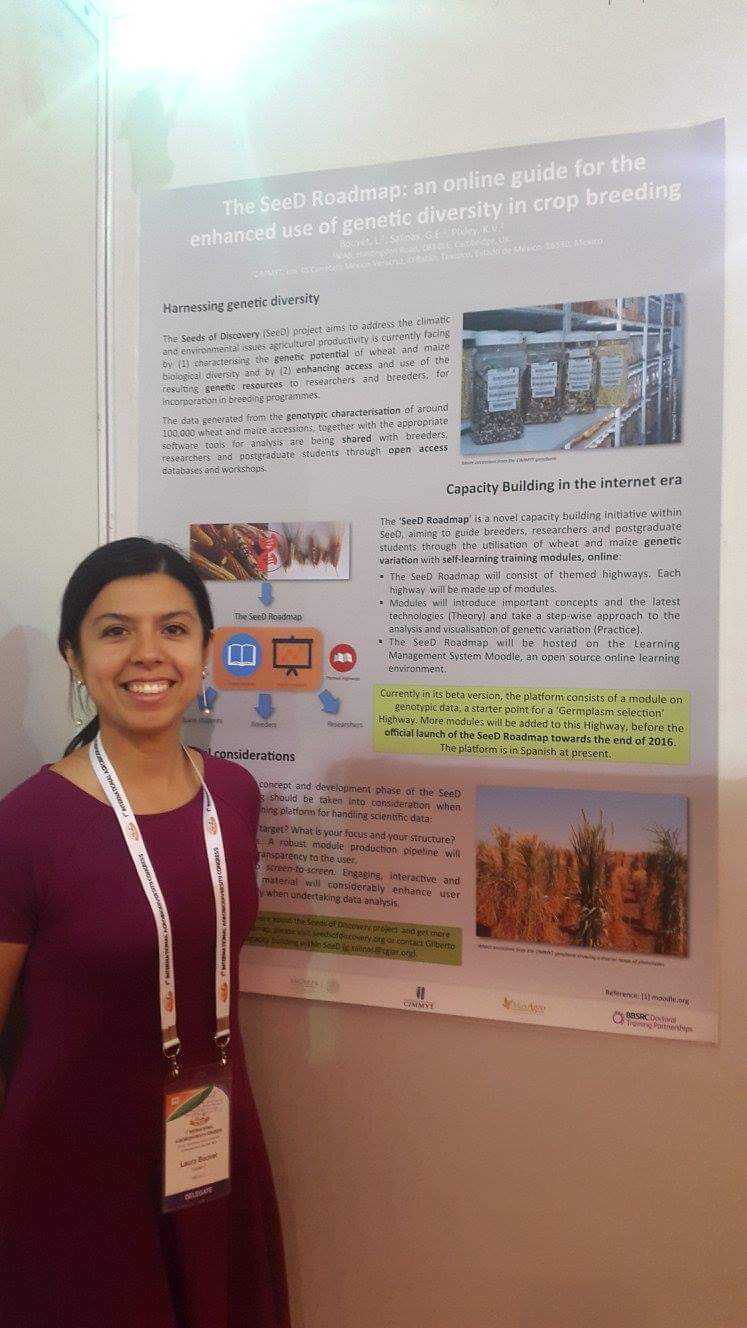
Back in 2016, I was enrolled on the Cambridge Biosciences BBSRC Doctoral Training Programme (I know, it’s a mouthful!) and was looking for an organisation to do my three months’ PIPS.

I set out for CIMMYT, the International Research centre for Maize and Wheat in Mexico, as I had a fascination for their seed conservation work (and have family from there!). There, I mapped out pilot online training modules in genetics and genomics for scientists. These would complement in-person training, so that more scientists could access and make use of the wealth of genetic data available from CIMMYT’s maize seed bank.

5979294226_af07140158_o
FB_IMG_1725540820929
Laura Bouvet

How can it benefit your organisation?

Early-careers researchers, whether Masters, PhD or postdocs represent an untapped pool of skills and experience for innovation in agriculture.

For many organisations, PIPS and other types of student/researcher placements can be a good door opener to knowledgeable and motivated individuals to support ongoing projects, to help complete timely activities or kick off a new collaboration.

At Agri-TechE , we have benefitted from the research skills that Erica Hawkins a postdoctoral researcher at the John Innes Centre. Erica was brought in to work on a digital transformation project with the UEA in 2022.

Across the three research councils that fund Doctoral Training relevant to agriculture and agri-tech (BBSRC, EPSRC, NERC), organisations can benefit from a wide array of technical skills, from computer science to plant science, data science, engineering and animal science – to name a few!

But researchers’ skills extend beyond their topical area of expertise. During my PhD, I was also:

  • Project manager
  • Trials coordinator
  • Data scientist
  • Communicator

These are all transferable skills that I brought to CIMMYT. Skills that most postgraduate researchers will have and that organisations can benefit from. With the added bonus of a fresh perspective and bucket loads of youthful motivation!

Whatever your area of expertise, it’s likely that you’ll benefit from a fresh and different perspective, and who knows, maybe even your next recruit.

I found my way to my PIPS host, maybe it’s time for you to explore the benefits of being one?

Here you can find further information about the different types of postgraduate student placements and how they can benefit you. If you have any projects in mind, please contact us so that we can put you in touch with suitable universities.