Bringing back steam decontamination
 Agri-TechE
As plant science research advances, the need for sophisticated laboratory infrastructure grows. A key consideration for research facilities is how to safely manage the contaminated liquid waste they generate.
Decontamination is essential to maintaining biosafety and security. Chemical treatment has traditionally addressed this challenge, but it can bring its own complications, from chemical storage and handling to dosing and neutralisation.
UK-based company AstellBio believes there is another way: return to basics by using steam.
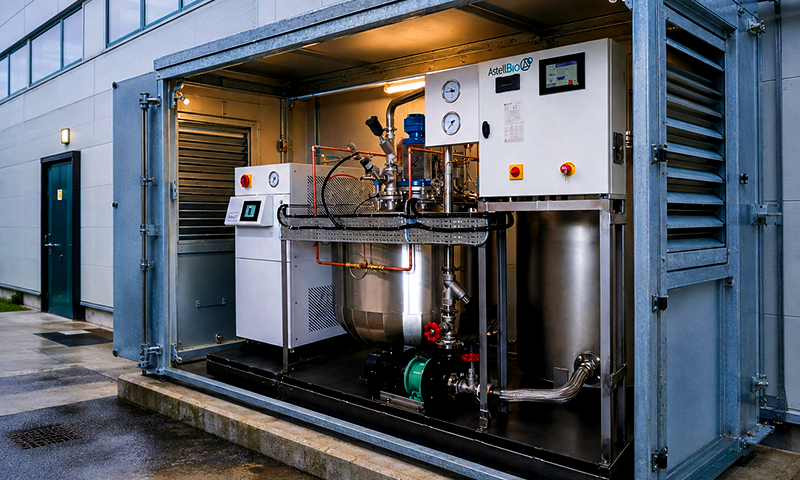
The company specialises in designing and manufacturing Effluent Decontamination Systems (EDS), which use heat to treat liquid biological waste before it leaves a research facility. By raising the effluent temperature within a controlled treatment vessel, the systems deactivate biological material, helping prevent it from entering the wider environment.
One key advantage of this approach is its ability to handle substantial volumes of liquid waste, making it particularly relevant to larger research facilities.
For organisations looking to move away from chemical-based treatment, it can also remove several operational headaches.
“We have installed our systems at a facility that wanted to move away from using chemicals, as dosing and neutralisation were difficult to manage,” explains Paul.
“With steam, it becomes water at the end of the cycle, so you don’t have to worry about contamination. It makes it much better for the environment,” he adds.
The benefits are not simply environmental. Removing the need to manage treatment chemicals can also reduce the time, labour and administrative burden associated with their storage, handling and disposal.
“The labour costs associated with having to manage and store chemicals are eliminated,” says Paul.
For Paul, attending Agri-TechE’s REAP conference was an opportunity to introduce the technology to organisations that could benefit from a different approach to waste management.
“We are looking to connect with organisations such as John Innes, Rothamsted Research and Syngenta – those that have the infrastructure and generate sufficient volumes of liquid waste to utilise the system.”
As agricultural research continues to advance, the infrastructure supporting that work must keep pace. For AstellBio, steam is an effective method to support research facilities in maintaining stringent biosafety standards and managing their waste without adding unnecessary complexity to the process.
Post Overview
Agri-TechE Related Posts
Plant, microbial and algal biotechnology for a clean energy future
Smarter, not harder: BactoTech is crossing the biological crop fertilisation Rubicon

Connect, Co-Develop, Co-Exist: the REAP Report 2025 is launched

Global Weather, Grain Markets & Nitrogen

When the going gets tough are farmers getting biological? Five Take-Aways from the McKinsey report