The Productive Landscape: NatureTech for Profit and Planet
How can technology enable delivery of food, nature recovery, and climate resilience - all at once?
The Head of the Environment Agency is asked: what's the national plan for dealing with land use pressures, plus you’ll hear from technologists and land managers working on nature-based and tech-enabled solutions for water, soils and climate adaptation.
The views expressed in this Member News article are the author's own and do not necessarily represent those of Agri-TechE.
We talk to Casey Woodward, award-winning Founder and CEO of groundbreaking agritech innovator, AgriSound, which has pioneered the Polly bioacoustic monitoring device, to listen to and track the well-being of pollinators providing data vital for environmental intervention and ESG planning.
AgriSound is a York-based Agri-tech start-up, partnering with several companies, including Dyson Farming, Innocent Drinks, National Trust Scotland and the Royal Horticultural Society. How have these collaborations impacted the business?
Casey Woodward, Founder & CEO at AgriSound
The collaborations with such large and prestigious organisations have taught us a lot over the last few years. Firstly, it’s given us improved access to expertise and a deeper understanding of the real-world environment and challenges faced by our customers. By working closely with established companies in the agricultural and horticultural sectors, we’ve gained valuable insights and knowledge that have helped us understand what exactly our market wants from our insect-listening device, Polly.
Secondly, these collaborations have expanded our reach in the market, providing us with increased exposure, facilitating business growth and the acquisition of new customers. The collaborations have strengthened our credibility and reputation within the industry, and we’ve been lucky enough to be considered a trusted player in the agritech sector, attracting more customers and opportunities for growth.
AgriSound has won awards for its innovation. What is your advice to up-and-coming innovators?
The most crucial thing is to be open to feedback. Embrace constructive criticism and actively seek out different perspectives. Feedback can provide valuable insights and help refine your ideas or projects.
You also can’t underestimate the value of building a strong network and finding mentors who have accomplished what you aspire to achieve. Surround yourself with experienced individuals who can guide and support you on your innovation journey. Their wisdom and expertise can offer invaluable advice and help you navigate challenges more effectively.
Remember to be persistent but also adaptable. Innovation often requires perseverance and resilience in the face of setbacks. However, it’s equally important to recognise when a change in approach is needed. Set clear milestones to assess progress and be willing to adjust your strategy if necessary.
Innovation is a dynamic process that demands continuous learning and improvement. By remaining receptive to feedback, cultivating a strong support network, and balancing persistence with adaptability, you can enhance your chances of success as a young innovator.
Post Overview
This story has been submitted by an Agri-TechE member.
The views expressed in this Member News article are the author's own and do not necessarily represent those of Agri-TechE.
Long Island-based vertical farming company, CubicAcres completed a $3.7 million funding round in partnership with Intelligent Growth Solutions. The funds are earmarked to facilitate a tenfold expansion in production capacity by CubicAcres in response to growing market demand for the company’s lettuce production.
Ryan McGann, CEO of CubicAcres, remarked, “Our partnership with IGS will bring cutting-edge vertical farming technology to Long Island to meet the insatiable demands we have experienced in the LI and NYC markets for high-quality produce year-round.” Ryan added, “Long Island has a unique, robust agricultural ecosystem. By situating our vertical farm within the heart of its agricultural districts, we aim to demonstrate an effective blend of vertical and traditional farming methodologies.”
The partnership will begin with the construction of a fully automated vertical farming facility on Long Island, slated to yield one million heads of lettuce annually. The farm will be capable of producing about 3 million heads of lettuce annually from an 11,000-square-foot production facility.
Steve Gereb, Head of North American Operations for IGS, said: “Working with Ryan and CubicAcres has been a significant step on our path to bringing IGS to the North American market, and we are delighted to see the business’ continued success. Since launching our US headquarters in November last year, we have grown our team to 15 deployment and operational experts in the region, supported by our more than 200-strong global team. We are excited to work with forward-thinking partners like Cubic Acres as we continue to deliver technology to customers across the world.”
Post Overview
This story has been submitted by an Agri-TechE member.
The views expressed in this Member News article are the author's own and do not necessarily represent those of Agri-TechE.
REDEFINING greenhouse cultivation of horticultural crops in multi-faceted project following the launch of a new collaborative project.
Conventional greenhouse practises are optimised for growing warm-climate crops such as tomatoes and peppers. When attempting to grow cooler-climate crops such as lettuce, production and quality challenges arise due to the diminished light-exposure, warm air temperature and increased humidity. As a result, production of such crops remains primarily in open fields, where exposure to extreme weather conditions, pests and diseases have a major impact on cultivation and ultimately yield.
This 21-month project will focus on designing a cutting-edge greenhouse that optimises natural light exposure for enhanced crop growth. By employing novel heating, ventilation and air conditioning (HVAC) principles and technologies, the resulting climate within the structure will closely resemble outdoor conditions with regards to air temperature and humidity.
By addressing the challenges linked to light exposure, temperature and humidity, the project will be able to establish a robust platform that enables year-round cultivation of lettuce and a wide range of horticultural crops, in typical English weather conditions.
James Bean, Managing Director at Crystal Heart Salad Company, who are leading the project, said: “We look forward to collaborating with expert research organisations to prototype a novel closed greenhouse that we hope will represent the future of protected cultivation.
“For growers, this solution will ultimately mean less risk and uncertainty, coupled with the ability for greater control over inputs across extending cropping seasons.”
The work will aim to provide physical validation of the novel greenhouse structure and HVAC systems as well as identify conditions for scaling-up in a commercial setting. This innovative system offers unparalleled climate control compared to traditional greenhouses and presents opportunities for implementing further novel functionalities.
Dr Harry Langford, Innovation Network Lead at CHAP, added: “The system is ingeniously designed with sustainability at its core and the need to reduce carbon emissions.
“The energy management systems are developed to seamlessly integrate with renewable sources which in turn provides a fantastic opportunity to cultivate a variety of crops under protective cover.
“We are confident that by collaboratively working alongside our industrial and academic partners, this project can provide a real step-change in enhancing profitability for growers whilst reducing energy and resource consumption.”
Get the latest agri-tech news, events and opportunities direct to your inbox
Tech to tackle rural crime
Agri-TechE Article
Agri-TechE
Farms and remote landscapes face isolated and vulnerable conditions making them prime targets for crime. And from farmers to supply chains, the impact of rural crime reaches far and wide, affecting insurance premiums and even the cost of our food.
Cutting-edge technology can scale crime-prevention activities to make them more effective and efficient. From smart surveillance systems, drones and night-vision monitoring, tech can be the ultimate ally in safeguarding farms and rural businesses.
What is rural crime?
Rural crimes fall into four broad categories – agricultural, equine, wildlife and heritage, alongside environmental crimes such as illegal waste-dumping and water pollution.
Agricultural crimes can range from theft of farm machinery and fuel to livestock worrying, criminal damage, and cyber attacks.
In 2023, NFU Mutual, the UK’s leading rural insurer, released a Rural Crime Report to highlight its true cost to the UK. Livestock rustling, quad and ATV theft are some significant examples that contribute to the total loss of over £49.5m in 2022.
To address these challenges, experts recommend a focus on crime prevention to protect rural businesses and farms. PC Chris Shelley of Norfolk Police’s Rural Crime Team explains:
“Obviously our preference is the prevention of crime in the first place, and I am excited to learn about any technologies that can help farmers protect themselves from being targeted.
But given the pace of new technology development, both farmers and police increasingly have ever-more sophisticated tools which help identify criminals, watch over farm assets and wildlife as well as tracking and tracing stolen goods.”
Rural Crime (Strategy) Bill
As well as equipping individuals with the technology to protect against and prevent rural crime, policy and unified policing strategies have an important role to play.
In July 2023, the Rural Crime (Strategy) Bill was presented to parliament. The Bill would require the Secretary of State to establish a task force to produce and implement a strategy for tackling rural crime.
In the interim, some constabularies have established dedicated teams for tackling rural crime – as in Norfolk’s Operation Randall.
Agri-TechE event ‘Protect, Prevent and Retrieve: Agri-TechE to Reduce Rural Crime’
At this online event we’ll explore the latest innovations in rural security that are revolutionising the way we protect our businesses, livestock, machinery, and people.
We have gathered a panel of experts and law enforcement professionals who will share their knowledge and experiences related to rural crime. We will also showcase real-life farmer case studies that demonstrate the effectiveness of agri-tech solutions.
In collaboration with Norfolk County Council and AF Group, and featuring insights from the Norfolk Police and Crime Commissioner, this event promises to be an engaging and eye-opening discussion.
Whether you’ve been a victim of rural crime, want to proactively protect your assets or you have technology and solutions to offer, this event will provide you with valuable insights and practical tips in effectively taking your next steps.
The views expressed in this Member News article are the author's own and do not necessarily represent those of Agri-TechE.
In its latest investment round, WeedBot, the high-precision laser weeding technology startup, has raised €425 000 to fund the production of its first commercial machine.
The prototypes developed so far were intended more for testing individual elements in the field wheras the new commercial version will enable WeedBot to perform real demos of the product in customers’ own fields. WeedBot co-founder Jānis Jaško shares that major organic carrot growers from France, Germany, Austria and the UK have already signed up to test the commercial machine.
Alongside manufacturing the commercial machine, the company is also preparing to raise further funding.
“We plan that after successful tests with farmers, we will need capital to scale up production. We’re also in talks with potential industrial partners to make use of their production capacity,” says Jaško.
To date, Weedbot has raised €400 000 from business angels in Latvia and the UK in several funding rounds. The company has also embraced the support instruments offered by Latvia’s Law on Support for Start-ups.
International pool of investors
Both existing and new investors have contributed to this round. The main investor is the Latvia-based Overkill Ventures, together with its Danish partners Accelerace, joined by several angel investors and a UK-based vegetable seed breeding and production company.
“We were attracted by the Weedbot team’s original insight into the problems that farmers are facing, their ability to execute and the potential for a far reaching impact of their product,” says David Ventzel, General Partner at Accelerace.
The fund has previously invested in Latvia’s Kedeon and Vigo Health, and is on the lookout for more local investment opportunities.
Tough times for attracting investment
The last year has been a turbulent one in the world of startups and investment, with the global economy shaken by Russia’s war in Ukraine. As a consequence, the startup environment has seen less investment. When asked how to go about attracting investment in these times, Jaško shares that, having spoken to other startups in the sector, he learned that many have struggled in the past year.
“In the middle of last year, it seemed that investor activity was starting to return, but data for the first quarter of this year show that investor activity around the globe still remains low compared to 2021,” says Jaško.
In addition, equipment manufacturing is not the most desirable sector from an investor perspective. They still prefer business software development, he says. “We can’t directly influence these things, so it’s not worth getting too upset about it. But it’s definitely something to be aware of and take into account in order to properly plan how much time and resources will be needed to complete the investment round,” Jaško emphasises.
Carrots for now but other crops to follow
WeedBot’s solution uses a concentrated light or laser beam to kill weeds. It looks like a typical agricultural machine and connects to the rear of the tractor. For now, the machine is tailored to weeding carrots. The idea is that, as the AI continues to be trained, its use could be extended to other similar crops like lettuce, beetroots and onions.
“To ‘catch’ the weeds, we’ve trained the AI to recognise what a carrot looks like at different stages of growth. The rest of the plants are treated with a laser beam. The weed is heated from the inside and dies completely or is so badly damaged that it takes a week to recover,” Jaško shares.
Jaško and colleagues came up with the idea while working on a research project at university, investigating how to use lasers to control weeds. To ensure that the results didn’t just stay on the shelf gathering dust, they decided to continue their work by going the commercial route.
Currently, WeedBot’s laser weeder runs at speeds of up to 1.2 kilometres per hour, which is up to five times faster than weeding by hand. Last year, the company ran a trial on partners’ fields in the Bordeaux region of France. Customers are queuing up.
The views expressed in this Member News article are the author's own and do not necessarily represent those of Agri-TechE.
Supporting Scotland’s rural and island communities in ways that make financial sense while also benefitting those living and working locally requires a thought-out approach and careful planning. That’s where Rural Enterprise Hubs can come into their own. Multi-use, person-led and available in all shapes and sizes, these spaces bring unused or under-utilised buildings back to life and give the opportunity for often isolated people to come together. Rural Enterprise Hubs are physical spaces that provide rural businesses and entrepreneurs with workspaces (offices or workshops), communal spaces to network and socialise, meeting rooms, coworking spaces, shared kitchen facilities, networking groups and business support opportunities. They vary in terms of ownership (public, private or third sector owned/managed), size (five tenants up to 40 in this research) and management strategies. Rural Enterprise Hubs can also provide community services such as library and ICT facilities, drop-in sessions (from Citizens Advice or GP surgeries, for example) and cafes. Networks of successful Rural Enterprise Hubs can be found in Ireland (Connected Hubs) and Northumberland (see work from NICRE), where there are good stocks of Hubs, as well as a joined-up approach of co-advertising and sharing of best practices between Hub managers.
Rural Enterprise Hub provision has been steadily increasing in Scotland and examples are starting to emerge – such as Scottish Borders Council’s plans to transform its headquarters at Newtown St Boswells into a civic hub. Media attention is also beginning to gain momentum. Indeed the £12.5 million pound Rural and Veterinary Innovation Centre (RAVIC), which is being led by SRUC and due to open in Inverness later this year, recently announced its plans to help bridge the gap between science and business in a rural setting housing several commercial business incubation units as part of its collaborative hub. Hubs can become a focal point in small towns or villages to develop and enrich entrepreneurial ecosystems. They can encourage new businesses to start-up (potentially having a role in encouraging young people to remain or move into rural areas), be a social destination and offer a place from which business support agencies can deliver their services. As such, they could be considered key infrastructure in community wealth building and as a tool for placemaking. Town and village centres are an ideal place to create Rural Enterprise Hubs, and many examples of best practice are available elsewhere. However, perhaps novel to Scotland, estates could also be a vital place to create new Hubs for isolated and dispersed businesses. There are examples of Hubs being built on farms, often repurposing disused barns (see Orwell Farm or Windmill Farm Business Hub) and some emerging examples on Scottish estates (see Balcaskie Estate and Crichton Central), but more could be done to utilise these places. With the right support in place, Rural Enterprise Hubs offer solutions to the multitude of challenges facing rural communities.
The views expressed in this Member News article are the author's own and do not necessarily represent those of Agri-TechE.
Farmers will need to gain a better understanding of their soils to meet the new Sustainable Farming Incentive (SFI) ‘arable soils’ standard.
David Newton, Timac Agro technical manager, says this knowledge will be key to accessing future funding, but also for supporting future crop growth.
“The SFI funding aims to encourage activities which improve soil health, but it can be hard to know where to even begin,” he says.
“Under the current guidelines, farmers and growers can receive £22/ha at an introductory level, or £40/ha at an intermediate level for the ‘arable and horticultural soils’ standard, so it’s well worth investing in your soil health.”
Mr Newton shares his top tips to help meet the new arable soils standard:
Take soil testing to the next level
Mr Newton recommends going above and beyond when it comes to getting soil tested, and to seek advice from someone who can determine the soil analysis results.
“Don’t just test for soil pH and macronutrients (nitrogen, phosphorus and potassium) – the scheme requires a test for organic matter levels, so why not test trace elements and assess your soil structure at the same time?” he says.
Understand your soil type
“Understanding your soil type means understanding it’s advantages and challenges; how best to work with it and improve its health and biology,” says Mr Newton.
Soil type influences structure and its consequent ability to retain nutrients and water, as well as its workability.
He explains that lighter, sandier soils can be more acidic and prone to leaching due to their porous nature; they can also have lower organic matter levels, which consequently affects soil biology.
“On the other hand, heavier clay soils are more prone to compaction and poorer water drainage due to smaller particle sizes and are heavier to work. However, often they are more fertile and retain organic matter more efficiently,” says Mr Newton.
Therefore, understanding your soil type will help you find ways to improve soil structure.
Understand your trace elements
Mr Newton says crops require a host of essential nutrients for growth and requesting a more detailed soil analysis for nutrients, such as sulphur, calcium, manganese, copper, iron and boron, can help you predict any deficiencies and limitations to plant growth in the future.
Maximise your soil biology
Encouraging soil biology to thrive is paramount to soil processes, such as the mineralisation of organic matter to provide nutrient availability for plants.
“Using a soil conditioner, such as Humistart+, can help provide a better environment for fungi and bacteria to thrive, in turn encouraging rapid break down of organic matter and the release of nutrients,” he explains.
Maximise nutrient use efficiency
Mr Newton says taking steps to better understand your soils and carrying out practices which enhance soil biology and fertility will lead to maximised nutrient use efficiency.
“Under the current circumstances where the cost of fertiliser is still high, improving your nutrient use efficiency is paramount, as well as reducing risks such as soil run-off and leaching – an ultimate goal the SFI standards are wishing to achieve,” he adds.
The views expressed in this Member News article are the author's own and do not necessarily represent those of Agri-TechE.
Endotoxin can have detrimental effects on susceptible animals leading to an increase in illness, death rate and economic losses. Regular testing & monitoring of endotoxin levels in raw ingredients and finished feed can enhance animal welfare & improve livestock productivity. Developing endotoxin-specific binders would reduce the burden on animal health & provide financial benefits for the grower & farmer.
Endotoxin is a complex molecule consisting of lipid and polysaccharide moieties present on the outer membrane of Gram-negative bacteria.
Certain Gram-negative bacteria (such as Enterobacteriaceae, Bacteroidetes, and others) are present as normal flora in the intestinal tract of humans and animals. Endotoxin is constantly shed from Gram-negative bacteria during multiplication through binary fission or when they die. Other potential sources of endotoxin contamination include water, feed, certain feed additives produced by E. coli (including vitamins and amino acids), faeces from farm animals, and the environment.
Endotoxins can translocate from the animal gut to the systemic circulation when the tight junctions between gut epithelial cells become compromised. This can occur due to dietary components, injury or stress. Additionally, endotoxins can translocate to the bloodstream from the mammary gland (Dosogne et al., 2002) and uterus (Mateus et al., 2003, cited in Eckel and Ametaj, 2020). This will lead to various health problems such as:
Did you know that Endotoxins pose a significant risk to animal health and can lead to a range of detrimental effects, including:
• Increases death rates in herds
• Increases diseases in herds
• Reduces animal feed conversion by 15%
• Increases maintenance energy requirements by 23%
• Decreases lipid deposition by 27%
• Decreases average daily gain by 26%
To improve livestock productivity, reduce the risks associated with endotoxin-related diseases and increase financial benefits to the grower, it is recommended to: A- Regularly monitor endotoxin levels in animal feed B- Develop endotoxin binders and include them in the feed C- Adhere to best practices established by the industry and scientific community D- Seek guidance from experts to provide specific recommendations for minimizing these risks
Contact us today to discuss how we can help you Achieve Greater Profits and Optimal Animal Health with our Endotoxin Testing technology.
Anas.sattar@molendotech.com
Post Overview
This story has been submitted by an Agri-TechE member.
The views expressed in this Member News article are the author's own and do not necessarily represent those of Agri-TechE.
This webinar, presented by partners, Andy Bentham and Chris Milton from J A Kemp, is available to watch on demand.
Agriculture is an increasingly technology-driven sector in which IP is ever more important. Ag sector IP can relate to a broad range of technologies: from plant breeding and biotechnology, to agri-tech ranging from traditional farm machinery to sophisticated robotics and software/AI, to the chemistry of plant protection products such as herbicides and pesticides. As such, IP considerations vary quite widely both within the ag sector and between that sector and others. The situation is further complicated by the fact that there is not only patent protection to consider, but also other forms of protection such as plant variety rights, contractual mechanisms, supplementary protection certificates and regulatory data protection. This webinar seeks to provide an update on legal developments and practical tips for practitioners active in this sometimes under-appreciated but exciting area of IP.
Topics include:
Patenting plant protection products such as herbicides and pesticides.
A recent development concerning data to support inventive step at the EPO for plant protection products.
Other considerations when patenting plant protection products.
An update on supplementary protection certificates for plant protection products.
Regulatory data protection for plant protection products.
Patent-eligibility of plants and agricultural microbes under the European Patent Convention – latest case law and unanswered questions.
Plant variety rights in the EU and UK.
Brexit considerations.
Post Overview
This story has been submitted by an Agri-TechE member.
The views expressed in this Member News article are the author's own and do not necessarily represent those of Agri-TechE.
Intellectual property (IP) rights offer legal protection for your innovative and creative endeavour, explains Hermione Thompson, a partner at J A Kemp, in this light-hearted look at protecting IP in agri-tech.
IP can relate to something that you have created, such as a brand, an invention or a design, or to information that you have developed or collated.
IP can be something that is registered: trade marks, patents and designs. However some IP rights arise automatically (so-called unregistered rights), such as copyright and unregistered designs.
Each form of IP right has a different purpose and can be highly valuable to your business.
Reasons to cultivate IP:
Growing recognition – Trade marks can be invaluable as a tool to ensure that your brand is recognisable.
Putting down roots – Trade marks can help you maintain your reputation as a business by controlling the use of your trade marks.
Harvesting revenue – With margins tight for many businesses, it is important to consider all possible revenue streams. Although obtaining a patent may require some investment, it may also open up an untapped revenue stream via licensing, or support a claim to patent box tax relief.
Protect your turf – You can use a patent to stop other people from competing with you by copying your invention.
Weed deterrent – Your patent portfolio can be a deterrent to others trying to develop competing technologies in the same field.
Barter economy – IP can put you in a good position to make better deals, e.g. by cross-licensing to help reduce the amount you pay for access to what you need from third parties.
Sowing seeds – Development of IP can attract investors or partners which could fund further development or support an exit strategy.
Fertilising innovation – Being aware of and encouraging possible developments is useful in identifying innovation within your business. Effectively identifying and supporting potential developments means that you are less likely to miss an opportunity.
The views expressed in this Member News article are the author's own and do not necessarily represent those of Agri-TechE.
As the Earth’s population continues to grow we are faced with a high demand for the construction of more houses and buildings to provide shelter around the world. According to the United Nations, building and construction accounts for approximately 40% of global carbon dioxide emissions. Given the high demand for housing, and the environmental effect that this industry has globally, we are constantly searching for more cost effective, durable and environmentally friendly materials that can be used in the construction industry.
In the last few years, it has been brought to light that an unusual material may have the potential to help solve some of the environmental issues associated with the construction industry, while still allowing growth in this area. Research into the use of fungi as a material for building and construction is an area which has developed rapidly over recent years. The range of properties of different fungi species and finding ways in which we can utilise these characteristics are showing promise for their use as building materials.
Fungi: A Broad Overview
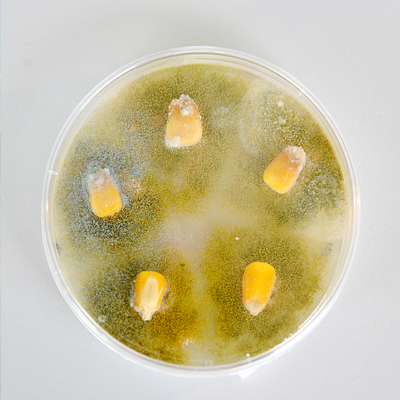
Fungi are a group of organisms in which there are around 144,000 different species that have been identified. A fungus typically consists of a mass of branched, tubular filaments called hyphae which, in the correct conditions, continually grow and branch out to form mycelium, the body of the fungus. To maintain this growth, fungi require carbohydrates or proteins, as sources of carbon and nitrogen, along with oxygen. Therefore, there are a diverse range of environments where fungi are able to grow and populate.
Fungi are a versatile group of organisms with a range of uses. We encounter fungi in our day-to-day life, commonly in the form of mushrooms, moulds or yeast. These fungi have many important roles including as a source of food, and they are also essential to many household industrial processes such as making bread, wine or cheese.
Another area where fungi have been useful is medicine. This group of organisms have been involved in countless medical discoveries and advancements, one of which was the discovery of penicillin, a common antibiotic in the present day, which was extracted from the green mould Penicillium notatum.
This raises the question, what other uses may fungi have that we are yet to discover. Is it time that we encounter these organisms closer to home?
Construction and Fungi – How Will It Work?
The concept of fungi as a construction material is not completely new to society, as mycelium have been used in the production of sustainable packaging for many years.
Fungi mycelium is easy to grow because it is able to decompose wood or leaves to gain sufficient nutrients. Mycelium is therefore a very appealing option for a construction material given the straight forward production process.
Researchers have recently been using mycelium to ‘grow’ strong, self-repairing, lightweight, insulating and fully compostable walls which can be moulded into a particular shape – similar to moulding concrete. Once moulded to shape, the fungi then become dormant. In doing so, the fungi dries out to form a strong, sturdy structure. Researchers believe it will be possible to ‘reawaken’ the fungi when necessary, for example if cracks have formed, allowing the walls to repair any damage that may be caused through wear and tear. There are also other scientists and architects around the world who have teamed up to produce building blocks made from mycelium. It is clear to see that there are numerous different ways in which fungi can be implemented into the construction industry.
The Farrell Centre is one example of the progression that has been made so far for fungal construction materials. This architectural exhibition centre has recently opened in Newcastle, set up by architect Sir Terry Farrell. The Farrell Centre has an exhibition dedicated to visions of making buildings more sustainable. The exhibition is home to a structure grown from mycelium, demonstrating the progress that is being made in developing this idea into a reality.
Despite these great advances, we are merely scraping the surface regarding the scope of fungi in construction and the different ways that it can be used to lower the environmental impact of this industry. The potential appears to be limitless for this incredibly exciting field of science!
Get the latest agri-tech news, events and opportunities direct to your inbox
Building resilience to risk in the stretch zone
Agri-TechE Article
Meet the Network
Agri-TechE
Andrew Pitts is a second-generation farmer working 2,000 acres of land at Moat Farm, Northamptonshire. He hosts the Hutchinsons’ Helix Technology Development Farm at Whiston, which gives him early sight of new technologies and the opportunity to test them on his farm with minimal risk to the business.
Andrew will be part of the Farmer Panel at Agri-TechE ’s 2023 REAP conference with the theme ‘Adaptation through innovation; beyond the comfort zone’.
Actionable insights from soil and cost mapping
Over the last five years Andrew has moved the farm towards minimum tillage and direct drilling. He has gained useful input from Michael Shemilt, the Helix Farm agronomist, that has enabled him to build soil health and resilience to reduce risks from extreme weather events.
Cost mapping for decision making
Michael used Hutchinsons’ Omnia service to produce baselines for the farm. The service provides soil and cost maps that not only show the soil composition, but also the input costs, yield and return for each parcel of land.
The baseline assessment of the Lockstump Field at Moat Farm revealed that the top section of the field was performing very poorly, with a wheat yield of 5t/ha compared to 13-15t/ha for the rest of the field. The input costs were also double for this section of the field.
Andrew Pitts of JW Pitts & Sons
Test results at Hutchinsons’ Helix Technology Development Farm
Data-interpreting to support on farm decisions – Dick Neale, Hutchinsons’ Technical Manager
Data reveals nutrients stored in soil
Further analysis of the field using the Gold Soil Test demonstrated to Andrew that there are two pools of nutrients – those that are readily available to the crop and those that are ‘complexed’ and locked away in the soil.
The mineral elements – sand, silt and clay – and the cation exchange capacity (CEC) gives an indication of the nutrient holding capacity of the soil.
The larger the CEC, the bigger the nutrient reserves and thus the greater potential for nutrient saving if the soil can be stimulated to cycle its nutrients.
Big question: ‘what is stopping the nutrients from cycling?’
Talking at a recent farm open day, Ian Robertson, Hutchinsons’ Head of Soil Services, explained that the big question has moved from ‘what is deficient in the soil?’ to ‘what is stopping the nutrients from cycling?’
The acidity of the soil is a big factor in reducing the availability of nutrients such as phosphate, it also impacts the ratio of bacteria to fungi in the biome. Adding calcium and organic matter to a clay soil, for example, can reduce the acidity – in turn unlocking the nutrients.
Some of the species grown within a cover crop also have a role in adjusting the acidity of the soil. Additionally, their root networks and exudates feed the microbes and mini beasts in the soil. Increasing organic matter and biological activity in the soil accelerates cycling of nutrients and improves soil structure, increasing water retention and building greater resilience to adverse weather.
Taking data-informed action on-farm
Reducing acidity to release nutrients – Although initially sceptical of cover crops, Andrew is now a convert. Selecting the right combination of plants in a herbal ley has adjusted the pH of the soil and made a visual improvement to its health.
He says: “Based on information about soil quality and cost production maps, we made the decision to take this section out of cropping and instead plant a fertility-building mixture containing clovers, tillage radishes, buckwheat, phacelia and linseed to enhance the soil rather than leave it totally fallow. That proved to be a big success.
Improving soil resilience to adverse conditions – Peas are a high risk, high value crop that is sensitive to soil quality. Andrew continues: “When we were cropping the whole field, this top section increased the risk. Waiting for the clay caps to dry out meant we were delayed from drilling at the optimum time and as that section was late to ripen, it would also delay combining. You have a small window of opportunity for these procedures.
“As our soils have improved through better soil management, the areas that in the past considered not cropping have got smaller. It’s a leap of faith to change but over time the soil will get better, and you can see it with your own eyes.”
Reducing need for crop protection products – Other adaptions include strips of wildflowers across the fields to provide a habitat for natural predators – known as a beetle bank. This habitat also supports pollinators.
Reducing need for crop protection products – Other adaptions include strips of wildflowers across the fields to support pollinators and provide a habitat for natural predators – known as a beetle bank.
Improving water management – The water strategy has moved away from drainage towards increasing water retention in the soil. Organic matter increases water storage and worm holes enable greater penetration of the water. This banks the water from the winter for use by the crop in summer. Andrew says it is noticeable how the soil retains its structure and is now more resilient during extremes of hot and wet weather.
Reducing risk with Sustainable Farming Incentive brings dilemmas
Crop choices can also reduce risk, as Andrew explains: “To further de-risk the business we are considering reducing the break crops as they are too risky. We lost two-thirds of our Oil Seed Rape crop this year, not to cabbage stem flea beetle as expected, but to winter stem weevil. Linseed is another high-risk crop.
“As an alternative, we are considering using the Sustainable Farming Incentive (SFI) which is coming in August 2023. This would provide an opportunity for fertility-building and soil-improvement between the second and first wheat. It would further reduce the amount of bagged nitrogen used and we would be paid to do it, increasing the gross margin on this land.
“This would be a massive change for the farm, but it also creates a real conflict because that could mean as much as a third of our cropped area would not produce a food crop. There is an ethical issue there. If we don’t produce it, who is, where is it coming from?”
In conclusion
“You’ve got technical input, crop protection and specialist advice, and coming through there is SFI stuff. All of those elements each add a layer of de-risking and that’s how we try to survive in an ever-changing political and financial world.
“The theme of REAP is very topical and I am looking forward to participating in the discussion.”
Wednesday 8th November, 9:30 am – 6:30 pm Rowley Mile Conference Centre, Newmarket
Surviving and thriving under increasingly extreme and unpredictable challenges is the theme of the 2023 REAP conference. To build a productive, profitable and sustainable agri-food industry, we must move away from the comfort zone and become open to the new opportunities that exist when we ‘stretch’. Be a part of that future – bring yourself and your ideas to REAP.