
Round-up of latest agri-research
 Agri-TechE
“Improve access to the latest research findings” this is a request that we often hear from the farming community, so along with a fantastic line-up of speakers at this year’s REAP conference we are also featuring a poster session from a cross section of the region’s research institutes to give a flavour of the work currently under way.
Posters are what the academics use at conferences to encapsulate a lot of information on a single sheet of paper.
Programmes include
Disease:
• UK Cereal Pathogen Virulence Survey
The UKCPVS monitors cereal rusts and mildews in the UK, detecting and warning industry and growers of new races of disease emerging on resistant varieties.
• NiabNETWORK.com
Online farm and field specific charts for disease risk. Allows access by phone or PC to alerts for sclerotinia, yellow and brown rust, fusarium mycotoxin and advice on spray timings and strategy.
Wheat:
• Multiparent advanced generation intercross
MAGIC an innovative technique to increase the speed and efficiency of wheat breeding.
• Wheat Improvement Strategic Programme
As part of the WISP Consortium thousands of new experimental wheat lines are being created that capture the diversity of primitive relatives of wheat such as wild emmer, durum wheat and wild goat grass.
• Yield Enhancement Network
Most modern crops have large unfulfilled potential for growth and yield formation. The biophysical potential of crops is set by incident light energy, rainfall and soil water storage. Leading farms and research trials in the UK often achieve 12 tonnes per hectare. However, the average commercial farm produces around 8 tonnes per hectare, with no increase for 20 years. The Yield Enhancement Network – or YEN – exists to encourage any individual or organisation who is striving to close the gap between current yields and potential yields.
• WheatScan
Development of an In-field sensor to measure protein content of young wheat ears and provide estimate of the final protein content without the need to go to a laboratory.
Sugar beet
• A novel pre-breeding strategy to reduce dependence on insecticides for virus yellows control in sugar beet
Virus yellows remain a key problem for the UK because the maritime climate favours the survival of the aphid vector. The UK beet industry invests up to £7M annually on insecticides for aphid control, without which virus yellows could cause losses of up to 50% of the national crop each year.
• SporeID- innovative disease monitoring and diagnostics for improved efficiency of crop production
SporeID is a new project designed to minimise the impact of powdery mildew, rust and other potential foliar disease threats on the yield of the UK sugar beet crop. The project is bringing together novel diagnostic tools, crop disease modelling and yield forecasting to underpin grower decision making, and will investigate the potential impact of emerging disease on the crop.
Sustainable intensification
• New Farming Systems
The NFS is a charitably funded initiative that is looking at energy usage and pollution risks in conventional rotation systems and developing this research to find ways to maintain or increase financial margins whilst reducing the footprint of conventional farming.
• Precision farming in horticulture (PF-Hort)
PF-Hort is evaluating the potential of precision farming techniques to optimise soil and nutrient management for improved profitability in horticulture production systems. It includes a soil structure survey to determine soil structural condition under horticulture cropping systems and assessment of current soil management practices. A review of PF techniques will include: controlled traffic farming, soil mapping, remote sensing of crop canopies, variable rate inputs and yield mapping, to increase crop marketable yield and profitability.
The techniques with the greatest potential for uptake will be demonstrated and evaluated in field experiments on six commercial farms. A targeted knowledge transfer programme including six field trial open days and associated literature will facilitate rapid and widespread uptake of precision techniques within horticulture.


Post Overview
Agri-TechE Related Posts
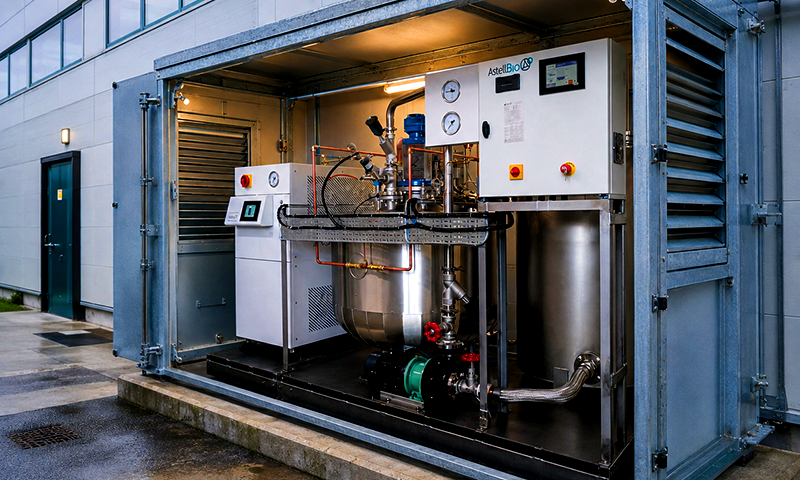
Sterilising the waste before it leaves the building

Thank you! We received your application.

Apply to Pitch or Demo at the Demo Day, May 2026
Apply to Pitch or Demo at the Demo Day, December 2026

Russ Farn joins eg technology’s Board of Directors
