Detecting blockages in transfer lines using sensors from outside the pipe
 Skalene Limited
The objective is simple: detect when the grain starts moving abnormally, rather than discovering the problem when the pipe is already blocked.
Skalene’s sensing technology measures the movement of grain and other materials directly, rather than relying on the speed or pressure of the air used to convey them. This is important when detecting blockages in pneumatic transfer pipes. While the air might still move, the grain can begin to slow down and often stop.
Blockages in grain pipes can be inconvenient, time-consuming and expensive to clear. Often, however, a blockage does not happen suddenly. Detecting changes in the speed of the grain could give operators an early warning before the pipe becomes completely blocked. Skalene Limited has developed a sensing system designed to identify these changes before they become a serious problem.
Nothing inside the pipe
One of the principal advantages of this system is that all the sensing components are fitted to the outside of the transfer pipe. There are no probes, paddles or other obstructions inside the pipe where grain could accumulate. The sensing equipment does not interfere with what’s moving through the pipe or introduce another potential cause of blockage.
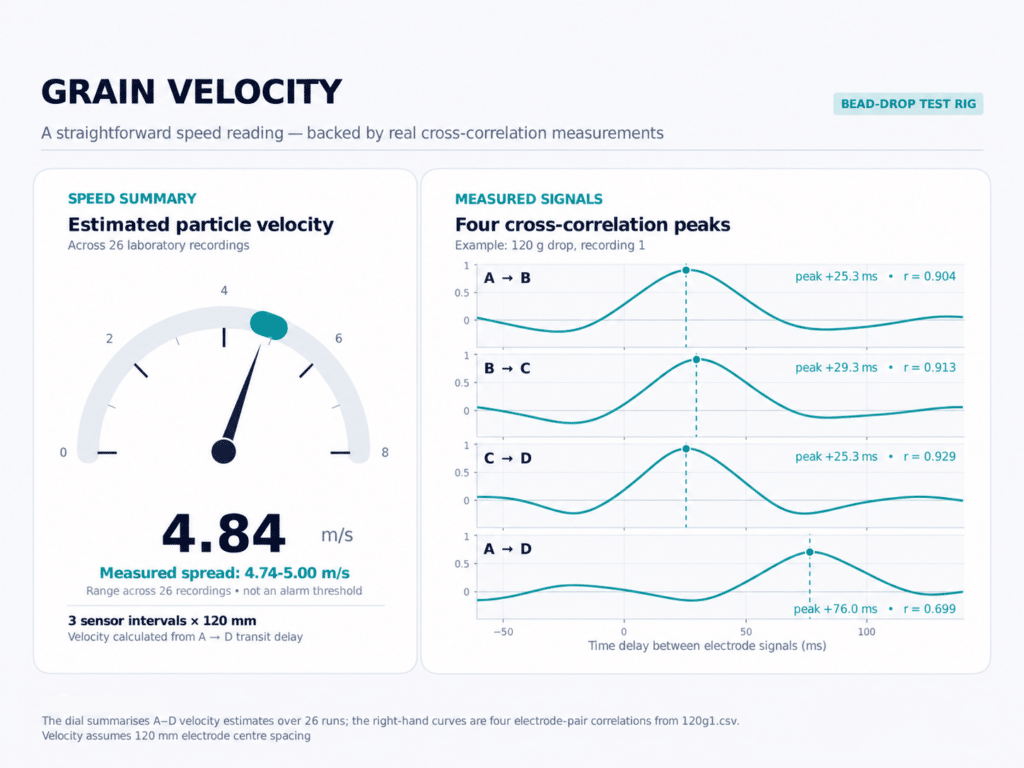
The system uses multiple sensors to detect the grains passing through. By comparing the signals from successive sensors, it measures how long the grain takes to travel between them. Knowing the distance between the sensors and the time taken, it calculates the speed of the moving grain. Under normal operating conditions, this gives a reference measurement of how the material is moving through the pipe.
Simple installation and remote monitoring
The sensor housing contains compact electronics and requires no batteries at the measuring point. A single cable connects the sensor to a small monitoring computer, with a proposed cable length of up to 100 metres using an industrial 4–20 mA interface, subject to testing. The computer can also be connected to the internet, allowing the system to be monitored remotely without requiring the operator to visit the sensor installation.
Recognising a developing restriction
If material begins to accumulate or a restriction develops, the grain may start to slow down or move less consistently. The sensing system can monitor changes in the measured speed and the consistency of movement. Relatively small changes could provide an early indication that something is interfering with normal conveying. Rather than waiting for a complete blockage, the aim is to give the operator an opportunity to investigate before the line stops working.
Development and testing
During development, Skalene used four external sensing positions along a vertical test tube to measure the movement of particulate material. The experimental results demonstrated repeatable measurements of the time taken for material to travel between successive sensing positions. The technology was also evaluated in an industrial pneumatic conveying installation, successfully measuring the transport velocity of different forms of particulate material.
Agricultural applications
The technology is intended for pneumatic grain transfer, animal feed handling and other systems conveying grain, pellets or similar materials. Because the sensing components are entirely external, the equipment can be incorporated into transfer systems without introducing an obstruction into the pipe.
Dr Julian White | Skalene Limited | E: [email protected] | M: +44 7789 691845 | W: www.skalene.com
- *I have permission from the copyright holder to publish this content and images.
Related Posts
Start-Ups to Scale-Ups: What happens after the big pitch?
Harnessing Heavy Rain: Wetlands as Nature’s Carbon Champions
Adrian Scripps – from cupcake machines to the UK’s Top Automated Fruit-Packing Facility

Free Open Online Course “Technological innovation in food loss measurement and management” launched
Melon Quality Improvements Continue