Growth in satellite networks set to boost uptake of precision agriculture
 Agri-TechE
 A record number of satellites were launched in 2023 and the UK Space Agency’s Connectivity in Low Earth Orbit (C-LEO) programme has just gained a £60 million boost*. LEO is a key enabler for precision agriculture and as more rural areas will have access to reliable broadband, Dr Belinda Clarke Director of Agri-TechE predicts this will accelerate digitalisation of agriculture and create a new market for developers of ‘space-tech’.
Precision agriculture
Precision agriculture is the farming equivalent of ‘just-in-time’ production that turned manufacturing on its head. Access to real-time information about crops, livestock, soil, and environmental conditions enables optimal decision-making for the timing of interventions. Advances in imaging and autonomous robotics are making it possible to tailor cultivation to the needs of the plant, animal or farm conditions and use inputs – fertiliser, feed, and plant protection products – strategically.
The market pull for digitalisation is becoming more intense in agriculture. As the cost of technology falls and shortage of seasonal workers becomes more acute, farmers are seeing automation as a business imperative. Agri-TechE has seen the rapid adoption of agri-robotics for scouting, cultivation and harvesting operations. Although this technology is still emerging, some vegetable and fruit growers are reporting that investment in technology is becoming essential to their survival.

The demand for automation is international, with the Western Growers Association, whose members produce 50% of the USA’s fresh produce, reporting a similar demand.
The industry is also seeing new types of collaborations. Tractor giant John Deere has recently announced a partnership with SpaceX’s Starlink that will see the first fully autonomous combine harvesters guided by satellites on farm trials in Texas.
Spacetech to support Agriculture 4.0
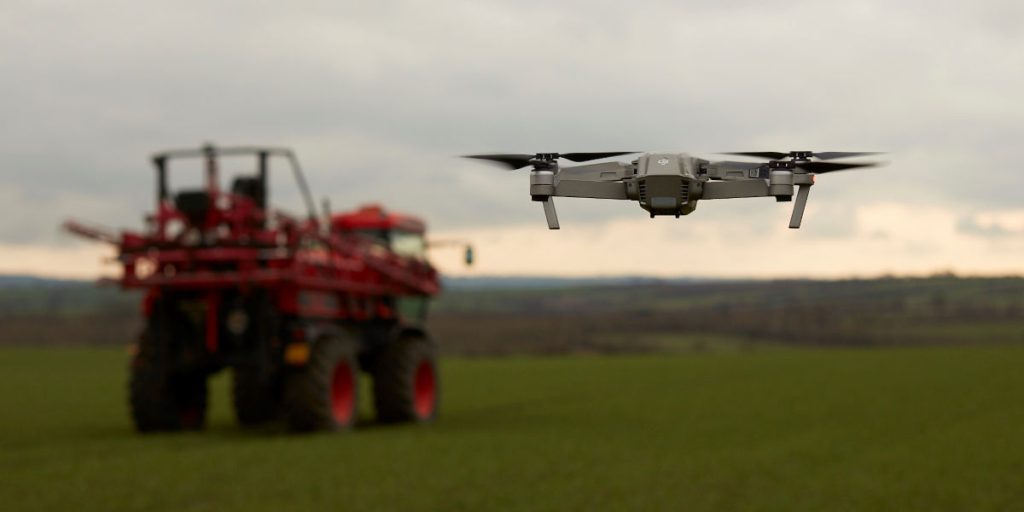
Underpinning Agriculture 4.0 are advances in Positioning, Navigation, and Timing (PNT) technologies, that have enabled auto steering of machinery to millimetre precision, and the introduction of satellite and drone imaging to support the remote monitoring of crop performance and disease risk. LEO satellites will literally take this to a new level.
However there are still obstacles, including:
• Robustness of tech to environmental conditions
• Safe operation of robotics in unstructured environments
• Bandwidth for transferring data
• Technologies for analysis of large data-sets in real time
• Reliable connectivity and accuracy for positioning
• Battery life and energy consumption
• Lack of standards and interoperability
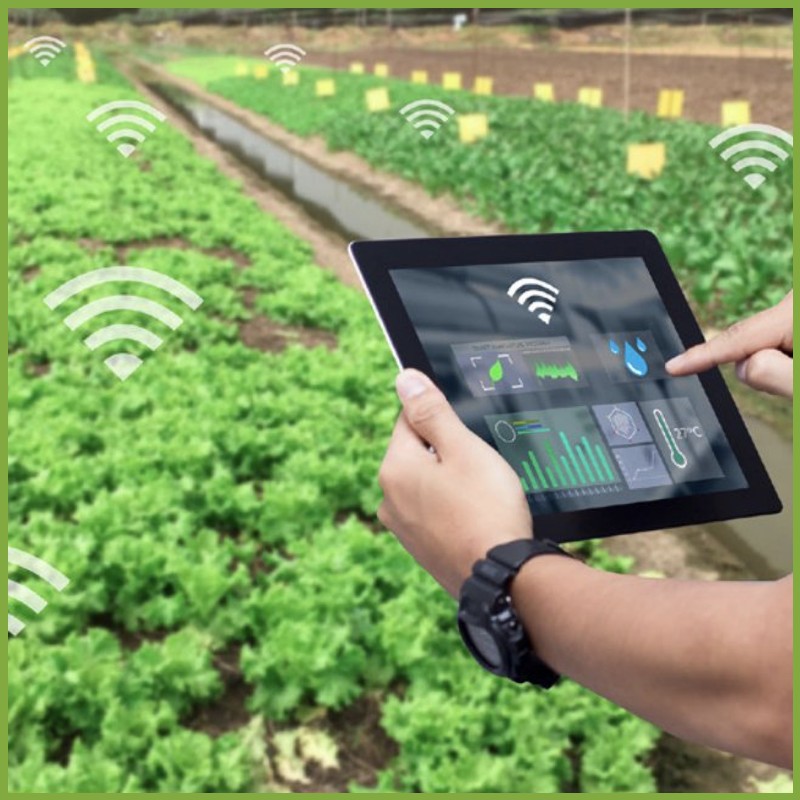
Tech developed for agriculture needs to withstand the elements and to operate safely in unstructured environments, alongside humans. Also farming has small windows of opportunity. Producers want real-time information about disease status, seedling emergence, soil moisture etc to decide on the operations for the day. However, the current applications struggle to upload large data sets to the cloud and to provide the insights required.
Opportunities in agri-tech for diversification

Rory Daniels of techUK, the UK’s technology trade association, sees edge computing – where data is processed close to where it is generated – as having an important role in the future of agriculture.
He says: “Many data-intensive industries, particularly manufacturing, are increasingly adopting a hybrid approach in which cloud is combined with edge computing. Doing so in agriculture would enable farmers to employ automation and conduct real-time data analytics on-site, removing the need to transfer large raw datasets to the cloud.
“Such hybrid solutions will only improve as telecoms providers continue to innovate in the field of multi-access edge computing.”
Battery life a key obstacle
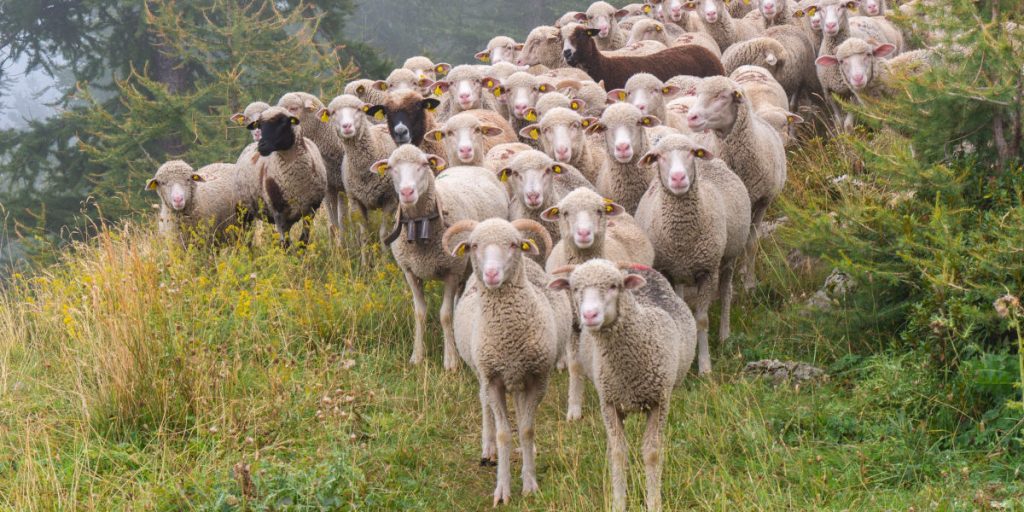
Remote monitoring and sensing have the potential to be a timesaver, but livestock applications, such as monitoring the health of sheep or deer on hills, require cheap, lightweight sensors with long battery life – current sensors seem to fail in all three areas.
Again, Daniels says a number of developments in sensor technologies that are set to transform the cost and physical properties of sensors across numerous industries: “5G-enabled sensors offer new levels of low latency (delays in transmission) and high bandwidth to transmit and receive data more quickly.”
For livestock he also sees the potential of flexible sensors to remove the need for fastening mechanism, reducing the weight and cost of the device. For plants, the combination of graphene and fibre optics has led to the development of ‘wearables’ – pieces of tape that can monitor the movement of water within the plant and enable a wide range of Agriculture 4.0 applications.
However, Daniels warns: “Battery technologies still need significant improvement to increase the device’s operational life.”
Interoperability is another obstacle for precision agriculture
The most widely used technology, such as tractors, harvesters and automated milking systems, use proprietary systems. As a result, it is not unusual for farmers to need several different computers to manage the lack of interoperability.

Agri-TechE member Charlie Lane of XD Innovation comments: “Part of the problem, as I see it, is the commercial element and the captive IP manufacturers retain. Ag is a standalone industry in the way it operates and although a large industry, not nearly on the same volume as its closest relative, automotive.
“We see a lot more collaboration in other industries to align the technology layer in their products. We don’t have such collaboration to my knowledge in Ag. It could be that there is an opportunity for software developers to develop an agnostic platform which can work with the different interfaces available.
“Again, the big difference is the other industries don’t have the complexity of a multitude of different tools requiring connectivity to their machine, all connectivity is managed at factory fit and not as an aftersales add on.”
Some Agri-TechE members are collaborating to overcome this challenge. David Aarons of Greenstalk sees huge potential for Internet of Things (IoT) to enable existing equipment to become ‘smart’. He says: “IoT enables data to be collected from ‘things’ – such as tractors, sprayers, irrigation systems, water tanks, weighbridges – regardless of their operating system and transmitted over the internet.
“IoT enables farmers to monitor things in real-time and react quickly to issues and changes, without leaving the office.” Aarons has been working with fresh produce grower Frederick Hiam to add new functionality to its existing machinery, including a dated weigh bridge which now automatically collects information about loads.
Technology must be appropriate on the road to Net Zero
For real-world application in agriculture it is important to consider the cost-benefit economics for basic commodity products.
Analysis by Imperial College London has shown that one medium sized datacentre consumes more water than three hospitals and Ireland’s Central Statistical Office says its datacentres use more electricity than all the rural dwellings in the country, according to a report in the Guardian newspaper.
Agri-TechE director Dr Belinda Clarke provides a cautionary word: “The strength of the agri-tech innovation ecosystem is that its members offer a diversity of perspectives, and it is farmer-centric.
“Technology cannot replace the human farmer’s ability to make context relevant decisions to avoid undesired impacts.
“Also, in the move towards Net Zero there are many types of low-tech modifications to farming practices that can improve soil and crop resilience for the long term.
“It is vital that technologists understand the on-farm challenges and engage with farmers to ensure future technologies do not have unintended consequences.”
More information
*The UK Space Agency Connectivity in Low Earth Orbit (C-LEO) programme will provide up to £160 million of grant funding and contract awards over the next 4 years to UK companies and researchers to develop innovative satellite communications technology. This call is now open, and the online Expression of Interest form should be completed by midday BST on Wednesday 8 May 2024.
Post Overview
Agri-TechE Related Posts
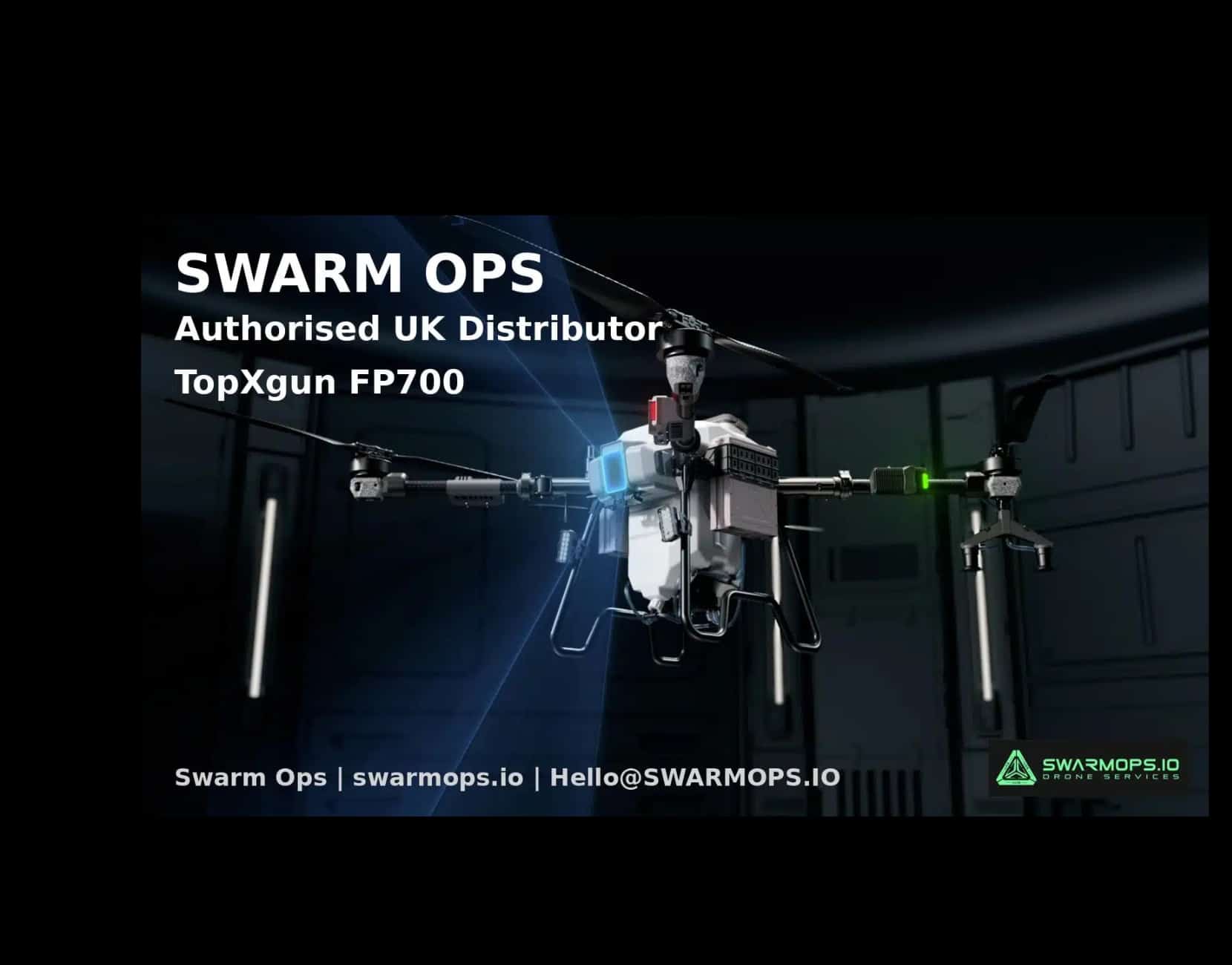
Swarm Ops is CAA Authorised for UAV Crop Spraying – and More!
University of Reading: VALUE4FARM Sustainable, renewable, energy value chains

New decision support tool launched for making ‘sustainable yet profitable’ land use changes

Climate change and agriculture – time for an agri-hackathon

Space the final frontier for agri-tech
 Agri-TechE
 ![Charlie Yorke, NFU [credit: NFU] discusses reducing rural crime](https://www.agri-tech-e.co.uk/wp-content/uploads/2023/09/Charlie-Yorke-NFU-web-1024x512.jpg)