Aerial monitoring is useful but ground-truthing is key – Delta-T Devices
 Agri-TechE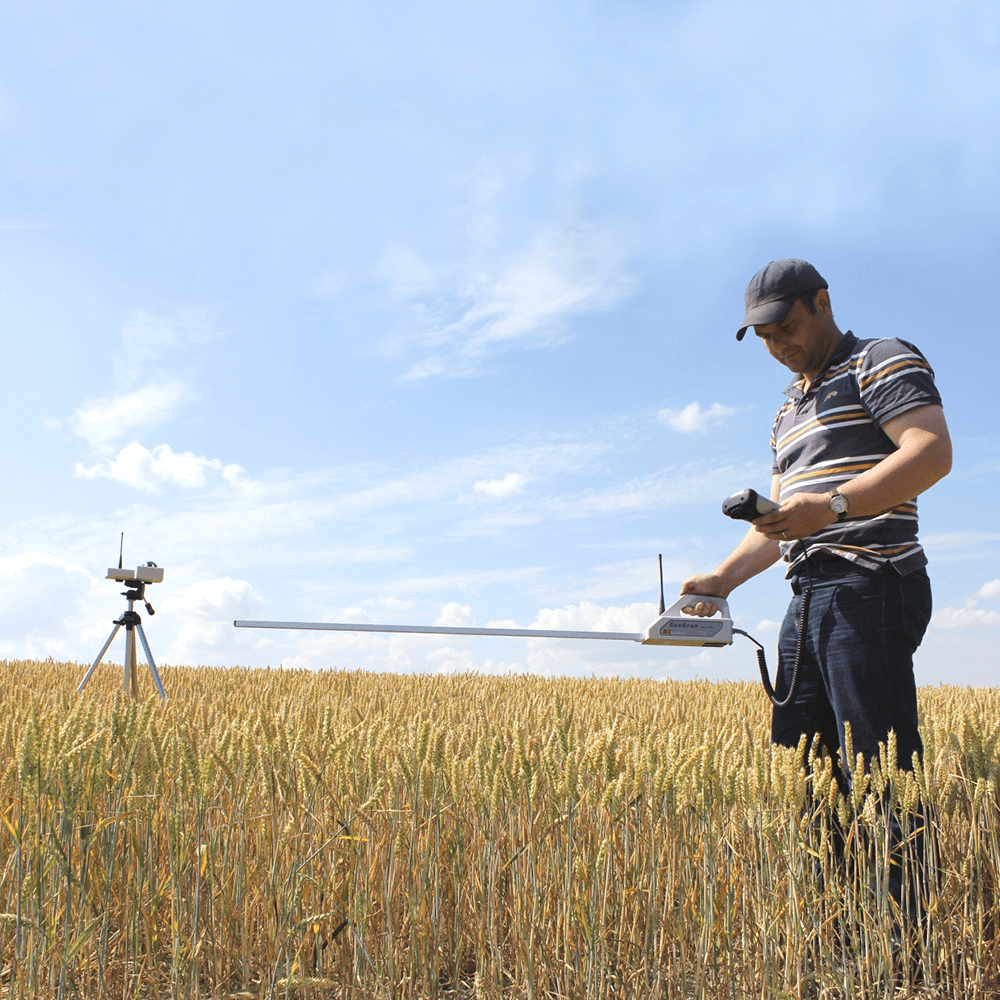
Despite advances in remote monitoring there still remains a crucial need for sensor data on the ground at higher resolution – closer to the crop, or under polytunnels, says Dr John Newstead, Soil Science and Technical Specialist at Delta-T Devices. The company provides real-time environmental data at soil level and has participated in REAP on numerous occasions and collaborates with many fellow members across the ecosystem.
Ahead of REAP 2022 we asked John how Delta-T was making sense of agriculture and where the opportunities are for improved decision support.
“Compared to 30 years ago, the technologies that now are available to growers are frankly incredible. Virtually all of the data needed to optimise crop quality, improve sustainability, limit water use, and eliminate needless environmental damage can now be obtained at realistic costs.
“There are a multitude of sensing systems in the market that can generate crucial real-time data, all of which is potentially transformational for the average farm. The key issue that we feel is holding progress back is one of interoperability – i.e. a way of ensuring that different data streams can “talk to each other” and easily be combined – enabling a grower to see a coherent picture on just one screen.
“To a large degree what we are currently lacking are industry-wide communications protocols for integrating and utilising this data easily.
Real-time measurement at soil level
“Although the recent use of ‘Big Data’ obtained from remote sensing and drone images has impacted positively on many farms, there is a need for sensors at ground level, as well managed and functioning soils are the foundation for all crop production. This is a critical element of an integrated solution and essential for improved agricultural practices.
“At Delta-T Devices, we specialise in precise real-time environmental measurement. Our soil sensors, often buried in the soil or substrate, measure right in the root zone, giving fast, accurate readings of moisture, temperature and pore water EC.
“Our sensors can facilitate minute-to-minute monitoring, to help refine models, support decisions, and enable powerful on-farm automation.
“For example, by measuring soil electrical conductivity (a strong indicator of the general nutrient level), our sensors enable growers to monitor and enhance their soil care regimes.
Cloud data provides improved data access

“Another aspect of Delta-T Device’s offering that ‘makes sense’ of agriculture is our cloud data management, display, and sharing platform – Deltalink -Cloud. The proliferation of affordable in-situ wireless sensor networks (that transmit real-time data to the cloud) will be a major new phase in the high tech horticulture revolution, allowing farms to have complete clarity in terms growing conditions and plant growth across their facility.
“Our solution enables growers to get instant remote access to their real-time soil and environmental data on desk based or mobile devices, so any potential issues with moisture and EC conditions can be identified and remedied fast – before they impact on crop health.
“Not only will growers have constant remote access to this comprehensive data on their smart devices, but they will also be able to monitor and control their irrigation/environment systems remotely, allowing them to instantly optimise growing conditions, regardless of their location.
Is the future high tech, frugal or diversified?
“Looking to the future, on-farm decision making and automation will mean acting upon a wealth of data from varied platforms and sources, most likely in real time. This will require more sophisticated and operationally elegant “back-office” resources working in tandem with fully compatible mechanical (irrigation and environmental control) systems.
“The simple answer to this question is ‘all of the above’. In order to successfully meet its challenging aim of sustainably feeding a growing global population, the agriculture sector will need to optimise every aspect of its operations. Mitigating against soil degradation, diligent use of grey water, and the active use of land previously considered unsuitable for agriculture, are all fundamental requirements to achieving sustainable crop production going forwards.
“Research to improve our understanding of soil processes will undoubtedly be key to achieving these goals – and this scientific activity will require more accurate, convenient and affordable measurement and monitoring systems.
“Diversification is yet another area that will benefit from advancing technology, with AI software and access to “big data” helping to achieve the best routes towards improved sustainability and optimised integration with supply chains.”
 REAP 2022: ‘Making Sense of Agriculture’ – Tuesday 8th November 2022
From yield mapping and precision livestock through to digital twins and cloud computing, at REAP 2022 we will be exploring the technology and looking at the implications from a field to landscape level. Making technology farm-centric is core to Agri-TechE ’s mission so a key feature of the conference will be a panel of farmers and producers discussing the emerging technologies and future scenarios.
Post Overview
Agri-TechE Related Posts
Improving productivity in the vineyard – Vidacycle speaks at Pollinator
Hutchinsons launch Helix project
Crop4Sight benchmarking enables potato growers to improve yields

Digital Sprint to support greener future post-COVID
Internet of Agri-Things set to unleash farmer innovation