The Silent Threat: Why Crop Disease Diagnosis Needs to Move Faster Than the Pathogen
 OptiGene Limited
On-site diagnostics can be used alongside decision support systems and agronomic expertise by providing direct evidence of pathogen presence or absence. Used alongside existing decision support tools, or where DSS information is unavailable or insufficient, these diagnostics could support more informed, targeted and timely disease management decisions.
Fungal diseases are among the greatest constraints on yields in agriculture globally, a challenge likely to be intensified by climate change and the increasing prevalence of fungicide-resistant populations. Worldwide, growers are estimated to lose 10-23% of crops to fungal diseases before harvest, with a further 10-20% lost after harvest, losses which are equivalent to enough food to feed between 600 million and 4 billion people annually (Fisher et al., 2012). In the UK, Septoria tritici blotch, a major disease of wheat, is estimated to cost the sector £110 to £220 million annually through yield losses and fungicide inputs (Fones et al., 2015).
Fungicides are widely used to control fungal diseases, but their use carries significant risk to human and environmental health (Cirillo et al., 2021; Geiger et al., 2010). A proportion of pesticide applications are lost through spray drift and runoff (Llorens et al., 2010; Damak et al., 2016), reducing application efficiency and contributing to environmental contamination. Pesticide residues can persist in the environment, depending on the active substance and environmental conditions. For example, courgettes were recalled in Belgium in 2026 after detection of the banned herbicide heptachlor at levels above the maximum residue limits believed to have originated from historic heptachlor contamination in the soil, despite the chemical having been placed under restrictions and subsequently banned in the EU in the early 1980s (VRT NEWS, 2026; European Commission, 1983).
Repeated use of the same mode of action increases selection pressure for resistant pathogen populations, while intensified or poorly timed applications can further accelerate resistance development (FRAG, 2024). Regulatory restrictions and increasing resistance have reduced the range of effective fungicides available to growers. The indirect economic cost of pesticide resistance in the US was estimated at $1.5 billion annually in 2005 (Pimentel, 2005) and the subsequent expansion of resistance across agricultural pests suggests that the current economic costs are likely to be much higher.
Climate change adds further uncertainty, with shifts in weather patterns and increased frequency of extreme weather events affecting pathogen and host ranges, disease dynamics and predictability of disease risk (Harvell et al., 2002; Clarke et al. 2022). Wheat stem rust, historically a disease of the tropics, was confirmed in the UK in 2018 for the first time in almost 60 years (Lewis et al., Communications Biology, 2018), and in Ireland in 2020 for the first time in five decades (Tsushima et al., Plant Pathology, 2022). The increasing risk posed by fungal pathogens has been described as a major threat to global food security, driven in part by their capacity to adapt to changing environments and control measures (Stukenbrock and Gurr, 2023).
Effective disease management therefore depends on timely and accurate assessment of disease risk. Current industry practice relies on crop walking and scouting for visual symptoms, but early disease detection through scouting is difficult to achieve without systemic, labour-intensive field surveys (Mahaffee et al., 2023). By the appearance of symptoms, yield potential has already declined, and inoculum is available to further spread disease. Uncertainty around disease risk can lead growers to make precautionary fungicide applications, meaning that conventional scouting methods can lead to more frequent and less well-timed applications and higher rates of fungicides than are required to achieve adequate disease control, compared with modern decision support tools (MacKenzie and Peres, 2012; Thiessen et al., 2017; Whetton et al., 2018). Disease diagnostic and prediction tools have been developed to aid in the fungicide decision process by quantifying and characterising pathogen populations in the field to enable more targeted applications, reducing unnecessary fungicide use while maintaining effective disease control.
Decision support systems (DSSs) support these decisions by integrating data such as disease epidemiology, crop characteristics and climatic data to predict disease risk and conditions conducive to disease development (Hardwick, 2006). DSSs can support disease control while reducing fungicide inputs (Lázaro et al., 2021), but their predictive accuracy can be limited by local environmental conditions and inter-field variability (Chaloner et al., 2019). Therefore, growers and agronomists often prioritise experiential and context-based knowledge (Rose et al., 2018), and emphasise the need for local evidence and validation of decision support tools (Akaka et al., 2024).
Diagnostic tools can complement DSSs and agronomic expertise by providing evidence of pathogen presence to improve confidence in disease risk prediction. Molecular methods can detect latent infections and inoculum from samples such as leaves or spores. Laboratory-based services, which often use PCR-based methods, can detect latent infection and inoculum, and can provide otherwise inaccessible information to guide disease management strategies, such as the identification of fungicide-resistant populations (Bellah, 2023; Selim et al., 2014; Chen et al., 2019). However, the time taken for sample transport and laboratory analysis can delay results, prolonging plant exposure to infection and hindering timely intervention.
Molecular diagnostic methods have been adapted for on-site testing, such as loop-mediated isothermal amplification (LAMP), a nucleic acid amplification technique. Compared with the conventional PCR-based methods used in labs, LAMP has a short reaction time and operates at a constant temperature, enabling the development of more compact and portable instruments. Although LAMP test design requires specialist expertise, the tests themselves can be highly sensitive and specific and can be performed by users with limited lab training. LAMP reagents can also be less sensitive to inhibitory compounds than PCR reagents (Francois, 2011; Kaneko, 2007), reducing the need for sample purification. By removing delays associated with sample transport and lab analysis, on-site testing can provide pathogen detection within one hour of sample collection, enabling disease management decisions to be informed by near-real-time field data.
Timely, targeted fungicide applications are essential for resistance management, reducing selection pressure and preserving efficacy of available modes of action. As climate variability alters disease prevalence and geographical distribution, rapid and localised disease surveillance will become increasingly important for effective disease control. On-site diagnostics can be used alongside decision support systems and agronomic expertise by providing direct evidence of pathogen presence or absence. Used alongside existing decision support tools, or where DSS information is unavailable or insufficient, these diagnostics could support more informed, targeted and timely disease management decisions.
What Faster On-Site Diagnostics Change Means
On-site amplification technology closes much of that gap. Because it doesn’t rely on thermal cycling, it can run on portable, battery-powered instruments in the field rather than needing a centralised lab. Some platforms need no separate extraction step at all, working directly from an untreated sample taken straight from the plant, and can return a result in under 30 minutes, a turnaround that used to be measured in days once transport time to a lab was included.
That speed changes the decision, not just the timeline. A grower or agronomist can get a straight answer on which pathogen they’re dealing with while still standing in the field, and act while the disease is still early and treatable, rather than after a lab result arrives or symptoms are already visible. Every mistimed spray adds to the resistance pressure described above; every accurately targeted one, the right pathogen, the right product, the right moment, helps preserve what’s left of the toolbox. On-site testing won’t replace the lab, particularly for the harder work of pathogen discovery and classification. Still, as a fast, in-field first screen, it turns fungicide use from a calendar habit into an evidence-led decision.
References
- University of Exeter (2023), news release on fungal disease and global food security, based on Stukenbrock, E. and Gurr, S., “Address the growing urgency of fungal disease in crops,” Nature, 617, 31 (2023)
- Fisher, M. et al., “Emerging fungal threats to animal, plant and ecosystem health,” Nature (2012); University of Oxford news release (2012)
- Fones, H. and Gurr, S. (2015), cost estimate for Septoria tritici in UK wheat, as cited by the Agriculture and Horticulture Development Board (AHDB)
- Pimentel, D., “Environmental and Economic Costs of the Application of Pesticides Primarily in the United States,” Environment, Development and Sustainability, 7(2), 229-252 (2005)
- European Food Safety Authority (2015), glyphosate soil persistence assessment
- Lewis, C. et al., “Potential for re-emergence of wheat stem rust in the United Kingdom,” Communications Biology, 1, 13 (2018)
- Tsushima, A. et al., “Wheat stem rust recorded for the first time in decades in Ireland,” Plant Pathology (2022)
- Frontiers in Plant Science (2022), review of LAMP for detection of wheat pathogens
- Phytopathology (2023), review of LAMP applications in plant pathogen detection
- https://www.vrt.be/vrtnws/en/2026/08/26/aldi-and-colruyt-recall-courgettes-due-to-excessive-levels-of-he/
- Harvell, C.D., Mitchell, C.E., Ward, J.R., Altizer, S., Dobson, A.P., Ostfeld, R.S., Samuel, M.D., 2002. Climate Warming and Disease Risks for Terrestrial and Marine Biota. Science 296, 2158–2162. https://doi.org/10.1126/science.1063699
- Clarke, B., Otto, F., Stuart-Smith, R., Harrington, L., 2022. Extreme weather impacts of climate change: an attribution perspective. Environ. Res.: Climate 1, 012001. https://doi.org/10.1088/2752-5295/ac6e7d
- FRAG‑UK (2024) Fungicide Resistance Management in Cereals. Fungicide Resistance Action Group UK. Available at: https://www.frag-uk.org/ (Accessed: [03/09/2026])
- Cirillo, P.M., La Merrill, M.A., Krigbaum, N.Y., Cohn, B.A., 2021. Grandmaternal Perinatal Serum DDT in Relation to Granddaughter Early Menarche and Adult Obesity: Three Generations in the Child Health and Development Studies Cohort. Cancer Epidemiology, Biomarkers & Prevention 30, 1480–1488. https://doi.org/10.1158/1055-9965.EPI-20-1456
- Geiger, F., Bengtsson, J., Berendse, F., Weisser, W.W., Emmerson, M., Morales, M.B., Ceryngier, P., Liira, J., Tscharntke, T., Winqvist, C., Eggers, S., Bommarco, R., Pärt, T., Bretagnolle, V., Plantegenest, M., Clement, L.W., Dennis, C., Palmer, C., Oñate, J.J., Guerrero, I., Hawro, V., Aavik, T., Thies, C., Flohre, A., Hänke, S., Fischer, C., Goedhart, P.W., Inchausti, P., 2010. Persistent negative effects of pesticides on biodiversity and biological control potential on European farmland. Basic and Applied Ecology 11, 97–105. https://doi.org/10.1016/j.baae.2009.12.001
- Francois, P., Tangomo, M., Hibbs, J., Bonetti, E.-J., Boehme, C.C., Notomi, T., Perkins, M.D., Schrenzel, J., 2011. Robustness of a loop-mediated isothermal amplification reaction for diagnostic applications. FEMS Immunology & Medical Microbiology 62, 41–48. https://doi.org/10.1111/j.1574-695X.2011.00785.x
- Damak, M., Hyder, M. & Varanasi, K. Enhancing droplet deposition through in-situ precipitation. Nat Commun 7, 12560 (2016). https://doi.org/10.1038/ncomms12560
- Llorens, J., Gil, E., Llop, J. and Escolà, A., 2010. Variable rate dosing in precision viticulture: Use of electronic devices to improve application efficiency. Crop protection, 29(3), pp.239-248.
- Hardwick, N.V., 2006. Disease forecasting, in: Cooke, B.M., Jones, D.G., Kaye, B. (Eds.), The Epidemiology of Plant Diseases. Kluwer Academic Publishers, Dordrecht, pp. 239–267. https://doi.org/10.1007/1-4020-4581-6_9
- Helps, J.C., van den Bosch, F., Paveley, N., Jørgensen, L.N., Holst, N. and Milne, A.E., 2024. A framework for evaluating the value of agricultural pest management decision support systems. European journal of plant pathology, 169(4), pp.887-902.
- Akaka, J.J., García-Gallego, A., Georgantzis, N., Tisserand, J.C., Vasileiou, E. and Ramsden, M., 2024. Decision support systems adoption in pesticide management. Open Research Europe, 4, p.142.
- MacKenzie, S.J., Peres, N.A., 2012. Use of Leaf Wetness and Temperature to Time Fungicide Applications to Control Anthracnose Fruit Rot of Strawberry in Florida. Plant Disease 96, 522–528. https://doi.org/10.1094/PDIS-03-11-0181
- Thiessen, L.D., Neill, T.M., Mahaffee, W.F., 2017. Timing Fungicide Application Intervals Based on Airborne Erysiphe necator Concentrations. Plant Disease 101, 1246–1252. https://doi.org/10.1094/PDIS-12-16-1727-RE
- Whetton, R.L., Waine, T.W., Mouazen, A.M., 2018. Evaluating management zone maps for variable rate fungicide application and selective harvest. Computers and Electronics in Agriculture 153, 202–212. https://doi.org/10.1016/j.compag.2018.08.004
- Bellah, H., Gazeau, G., Gélisse, S., Amezrou, R., Marcel, T.C., Croll, D., 2023. A highly multiplexed assay to monitor pathogenicity, fungicide resistance and gene flow in the fungal wheat pathogen Zymoseptoria tritici. PLoS One 18, e0281181.
- Selim, S., Roisin-Fichter, C., Andry, J.-B., Bogdanow, B., Sambou, R., 2014. Real-time PCR to study the effect of timing and persistence of fungicide application and wheat varietal resistance on Mycosphaerella graminicola and its sterol 14α-demethylation-inhibitor-resistant genotypes. Pest Management Science 70, 60–69. https://doi.org/10.1002/ps.3525
- Chaloner, T.M., Fones, H.N., Varma, V., Bebber, D.P. and Gurr, S.J., 2019. A new mechanistic model of weather-dependent Septoria tritici blotch disease risk. Philosophical transactions Of The royal society B: Biological sciences, 374(1775), p.20180266.
Source: Dr Lucy Mallard, Plant Pathologist at OptiGene. [email protected]
- *I have permission from the copyright holder to publish this content and images.
Related Posts

Long-range wireless that actually works
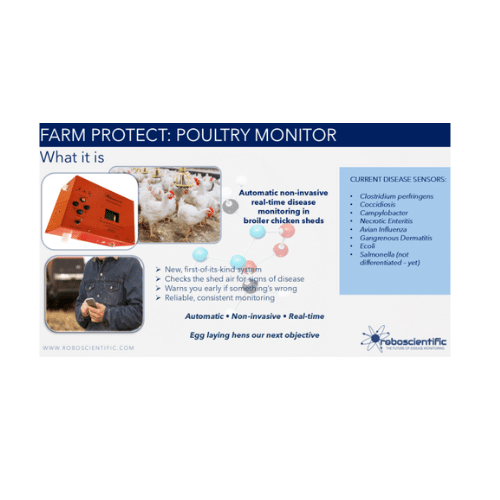
Discussing Early disease Detection in Poultry Flocks

Digital Data in UK Farming
ATW 2025: A Tour of Agrii’s Flagship Throws Farm Technology Centre

Evidencing Water Needs – how much water has your crop really lost this year?