Boosting Efficiency by 40% with Centralised Farm Data Management Software
 Agri-TechE
 Does new agri tech unlock the productivity gains it aspires to if farmers are left managing too much data to make sense of it all?
In this month’s member spotlight, Steve Bradstock of Live Farmer discusses consolidating data to realise the gains of new technology.
A 2020 survey of farmers in the US found that 62% did not use farm-level data management software, and among those who did, 70% believed their needs were not met by it. Although there has been undoubted progress in software adoption since then, managing growing volumes of data remains a major hurdle to farmer acceptance of new technology.
So, for all its technological sophistication, many agri-tech innovations may end up creating little more than more noise in a farmer’s already busy work schedule. There is a huge opportunity for solutions that help farmers manage increasing volumes of data to derive actionable insights.
It is this opportunity that led Steve Bradstock, managing director of First Base Solutions, to found a dedicated agricultural software provider, Live Farmer. This business was established with one goal in mind: to collect all that farming data from many sources and applications into one piece of software.
Created from software originally developed for wholesale trading, Live Farmer is designed to meet the demands of supermarkets and the needs of grower producers. It enables all on-farm data to be managed within a single application.
“Live Farmer has the latest application programming interface (API) integration that connects and brings all other farming data into one platform, where it can be analysed to see the knock-on effect of changes farmers have made to their growing and application methods,” says Steve.
Designed to minimise paperwork and enable real-time data collection, the software aims to consolidate the typical 10-13 different data collection apps and the 20-25 different spreadsheets a farmer uses into a single platform, increasing efficiency by about 30-40%, according to Steve.
The tool is now connected to three different artificial intelligence models for instant answers and automated inputs. However, as with all good things, Steve notes that historical data is necessary to train & refine the large language model and the AI reporting, since AI depends on historical data to identify patterns.
The other benefits of costings, yields, compliance, labour management & quality assurance are gained instantly on implementing the software.
The software allows users to create their own reports then add them to their dashboard to readily find KPIs that align with their department and business needs.
“In terms of reporting for KPIs, we’ve developed a system, which uses a front-end question like a ChatGPT or a Claude model, whereby you just type into the database what you want out of it, and it will deliver the numbers for you.
“So, if you want to know how much crop you’ve harvested on a particular farm or field this year, you can just type it in, and it will just give you the answer. It’s a really powerful tool,” he says.
A tool to support red tape, health and safety and traceability
There is an ever-increasing audit burden placed on farmers, especially those supplying fresh produce directly to supermarkets. Being able to easily access the information required for an audit is a huge benefit for a farmer and a must-have for supermarket compliance. It is an area Live Farmer has addressed much to the delight of auditors.
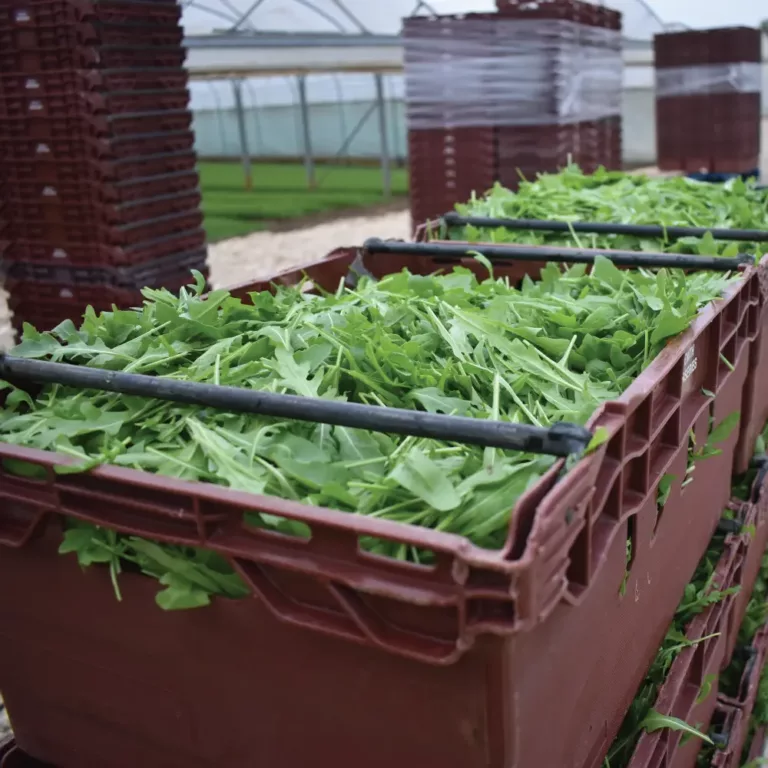
The platform enables the farmer to trace and assess produce from planting a seed, through the growing process and right through the packhouse, allowing precise targeting of issues along the food chain.
“When your pallet arrives at a supermarket with a label on, if there’s a problem with that pallet, the supermarkets can give the farmer the barcode number or the packing reference, and our software then provides a full backwards-compatible history of everything that’s happened to that crop; Whether it’s finding which original batch of seeds you used, which chemicals, fertilisers, how many times you irrigated and how much water you used.
“It will also give you a mass balance based on how you used the raw material. So, if your wastage through the packhouse is 10%, for example, that’s something the government is requiring you to report on for food wastage,” says Steve.
This extends beyond audit bodies’ requirements to ensuring the farm is a safe working environment. Creating safe systems of work is an often-neglected element for farms, and something which has contributed to agriculture consistently being the most dangerous industry in the country. In fact, it accounts for less than 1% of the workforce but over 20% of work fatalities. Steve hopes that Live Farmer’s software helps its users reverse this unwanted accolade.
“When using Live Farmer, the management team don’t have to wade through a load of paperwork to check to make sure every tractor has been checked, every person’s got the right PPE.
“It’s tailored to each business, and we can digitise on-farm questionnaires. So, when the auditor comes out to audit it, farmers can just give them a laptop or a tablet, and they can retrieve whatever information they want,” says Steve.
Moreover, the software is multilingual, enabling the diaspora of nationals working on UK farms to easily interpret what is needed of them.
“That’s quite a big benefit to us in the UK because, for example, I was at a strawberry farm yesterday and they’ve got 13 different nationalities picking strawberries, so that’s around six different languages,” he adds.
Easy set up and rural connection
Rural connectivity can be challenging for some farmers, which is why some still prefer to use pen and paper; however, Steve is confident that a new roaming SIM will provide connectivity wherever you are on the farm. Starlink is another technology breakthrough which has enabled internet in most locations both fixed and roaming.
Farmers can use their own iPads and mobile contracts; however, if farmers don’t have iPads, Live Farmer can provide these on a rental basis.
The company can also provide a roaming SIM that uses triangulation to get the best possible signal; the iPad may connect to Vodafone in one area and BT in another.
“We’ve just introduced roaming SIMs this season because all the iPads now are eSIM only, not a physical SIM card. These SIMs have been a huge benefit for us, to be able to supply a complete solution,” says Steve.
With this technology, farmers will be able to upload data in real time to a single central place and manage it from anywhere in the world.
Post Overview
Agri-TechE Related Posts

Connect, Co-Develop, Co-Exist: the REAP Report 2025 is launched
Food Safety Research Network Funding Call: AI pilots award
Implications of the Super El Niño for UK wheat farmers for the 2026/27 season
Discussing Early disease Detection in Poultry Flocks

From Efficiency to Innovation: The Role of Achiever LIMS in Modern Agritech Laboratories