In Conversation with Lancashire Wildlife Trust: What This Year’s Harvest Taught Us About Wetlands
 Ponda
PondaThis week, we were lucky enough to spend a beautiful few days at Goose Meadow Farming in West Lancashire with farmers Cam and Lisa Edwards and the Lancashire Wildlife Trust (LWT) team.
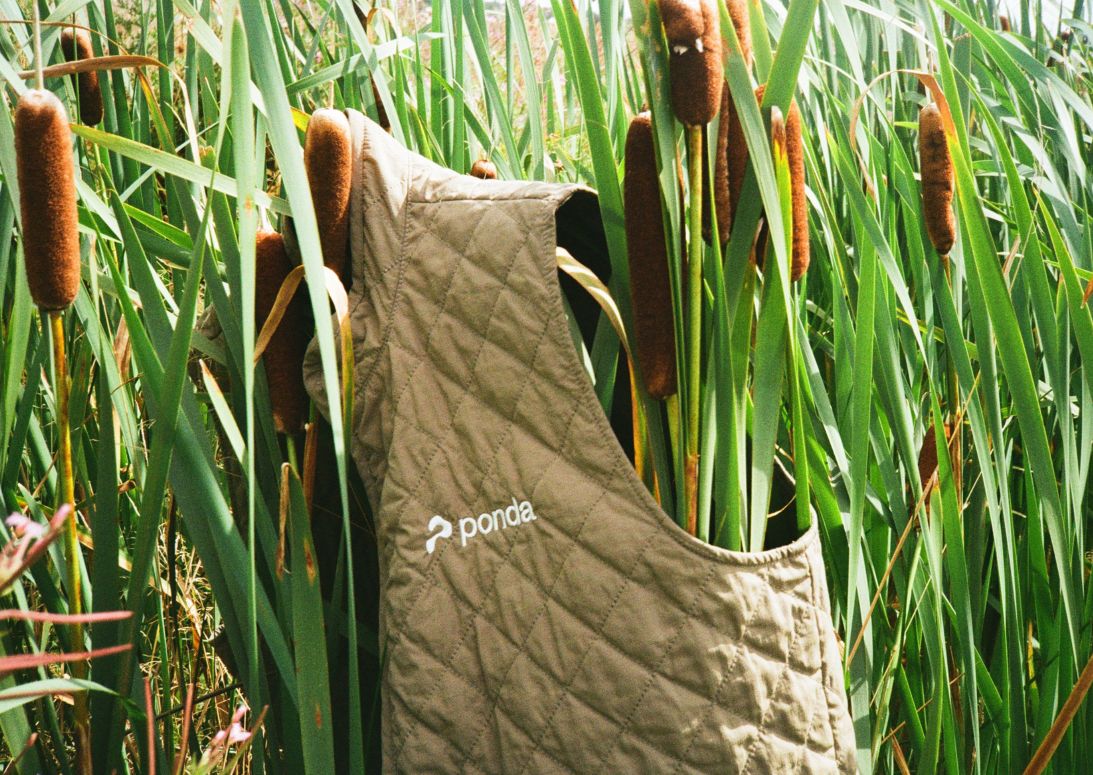
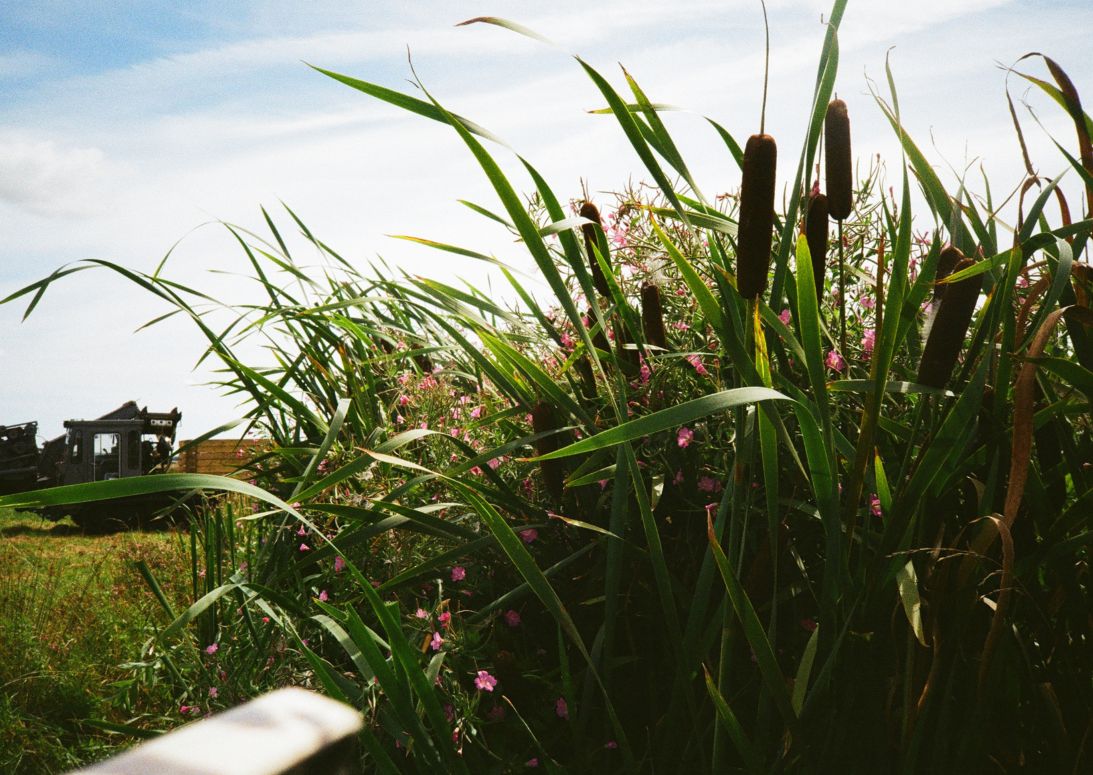
This summer’s heatwaves have brought new challenges across agricultural landscapes. But standing in a thriving green wetland, surrounded by bulrushes, it felt like stepping onto another planet. While the landscape around us was feeling the effects of extreme heat, this wet, vibrant ecosystem offered a striking reminder of just how important these environments can be.
When even the simple art of touching grass starts to feel impossible in the summer heat, perhaps it’s a sign that something needs to change.
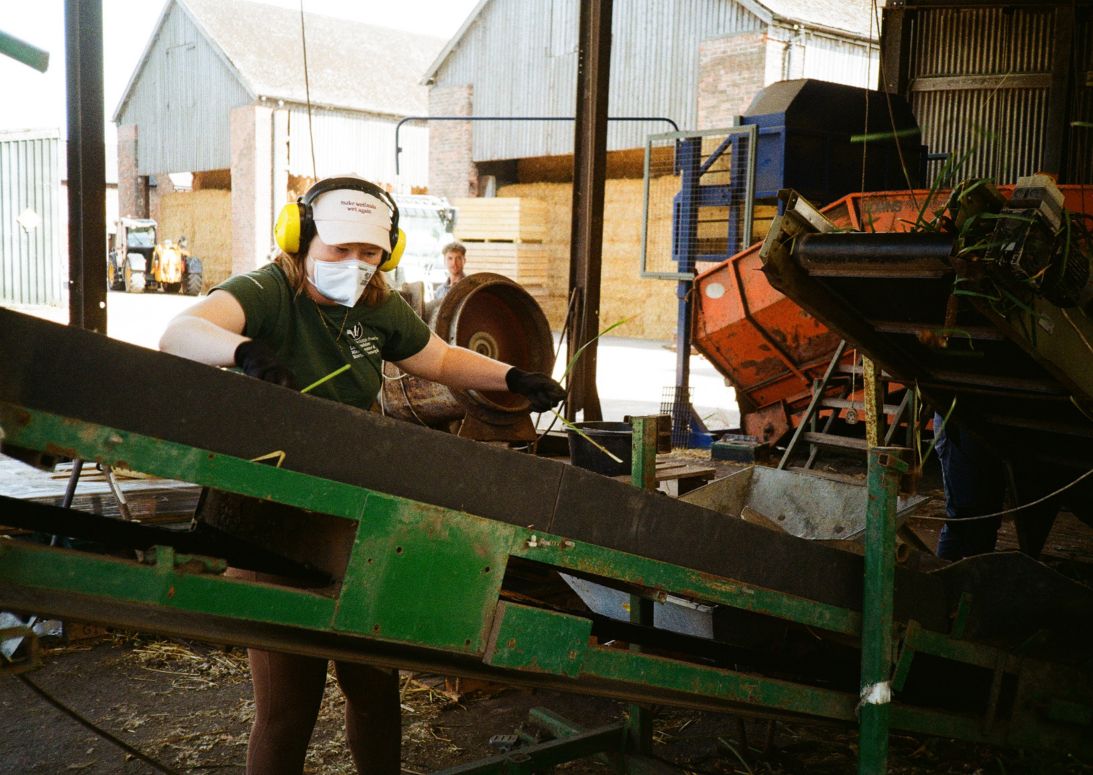
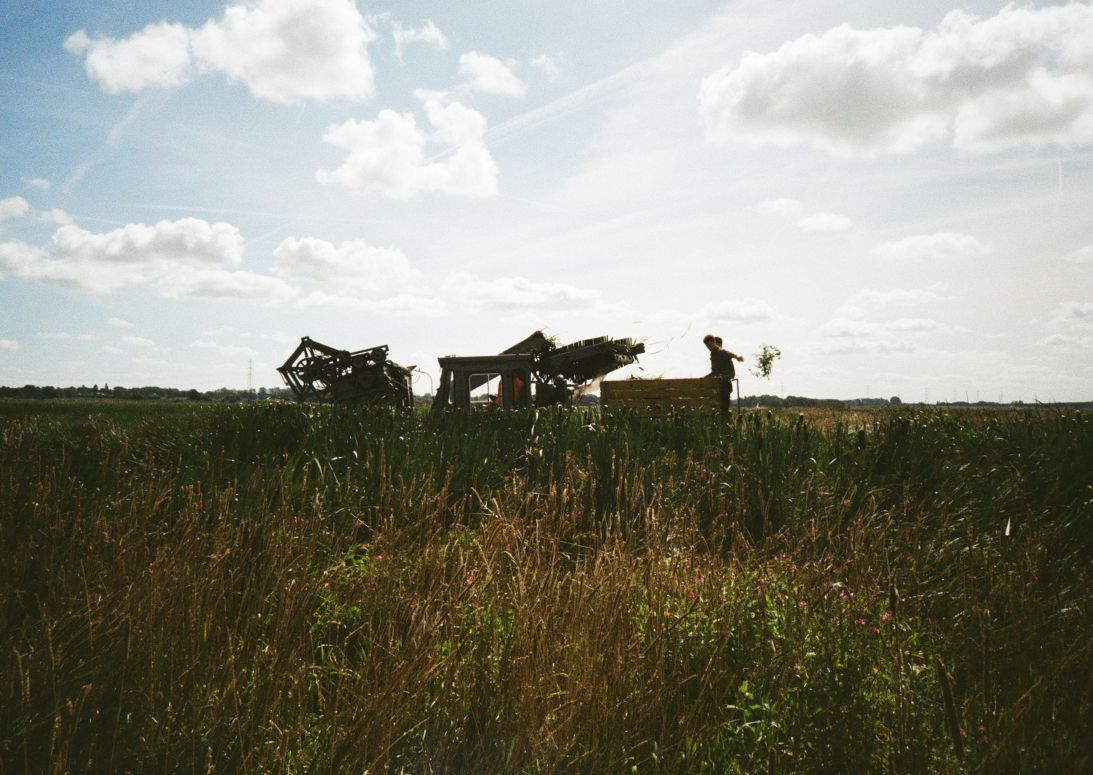
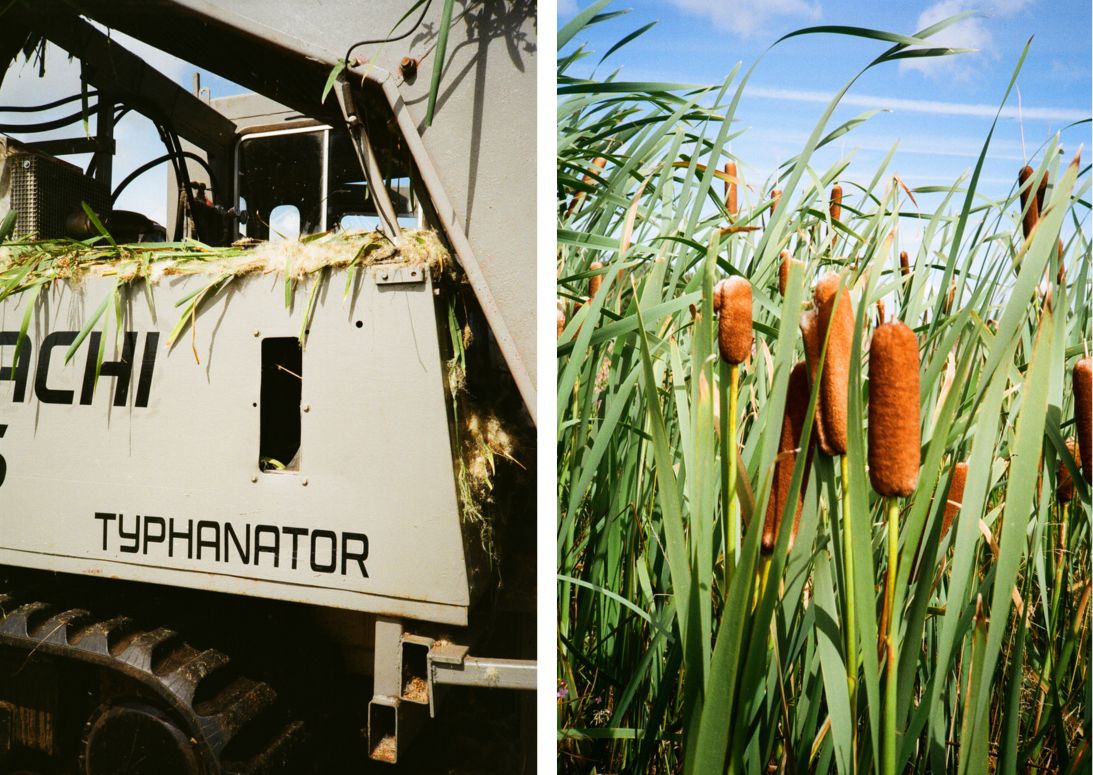
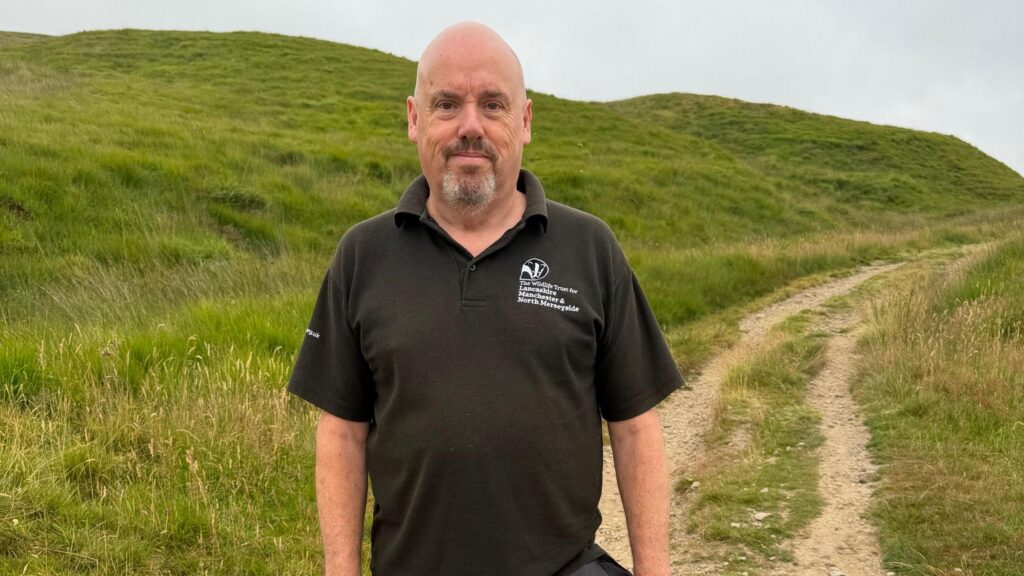
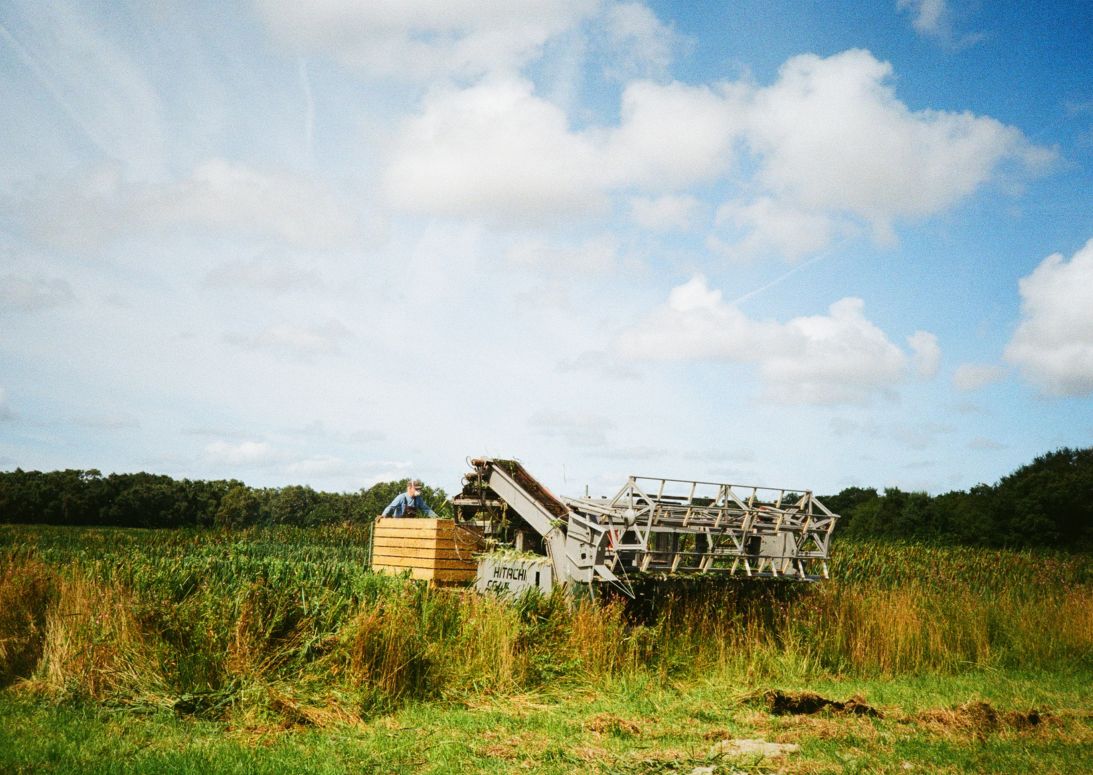
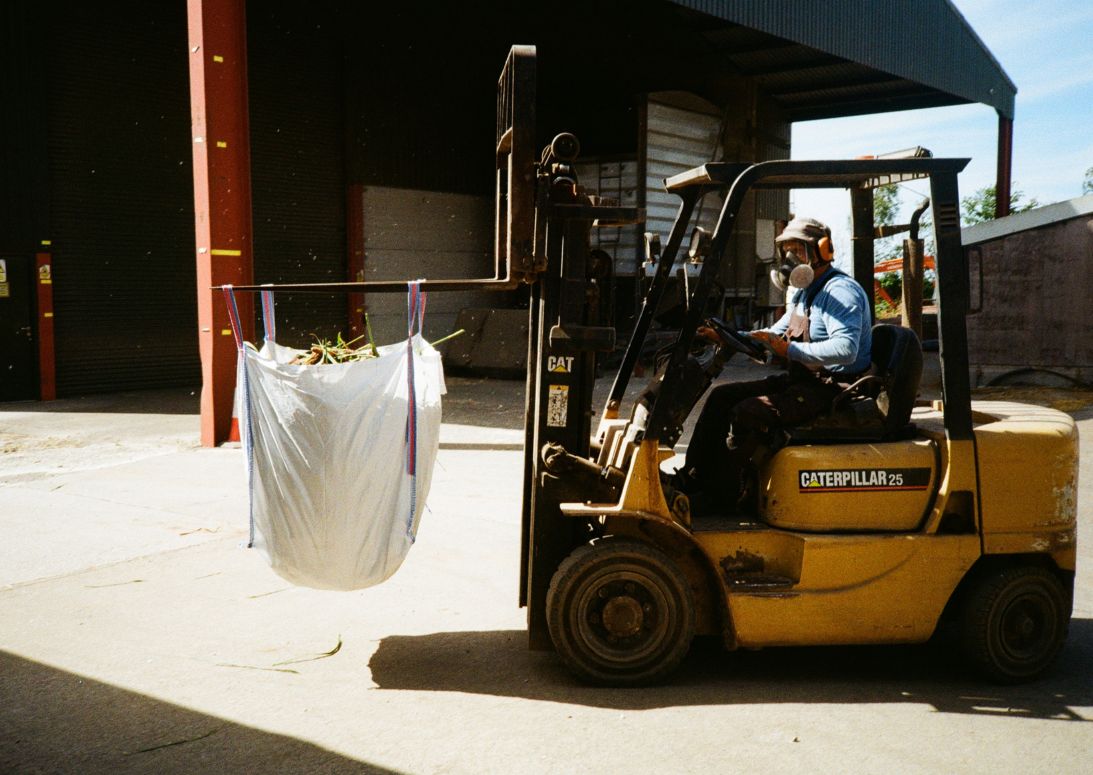
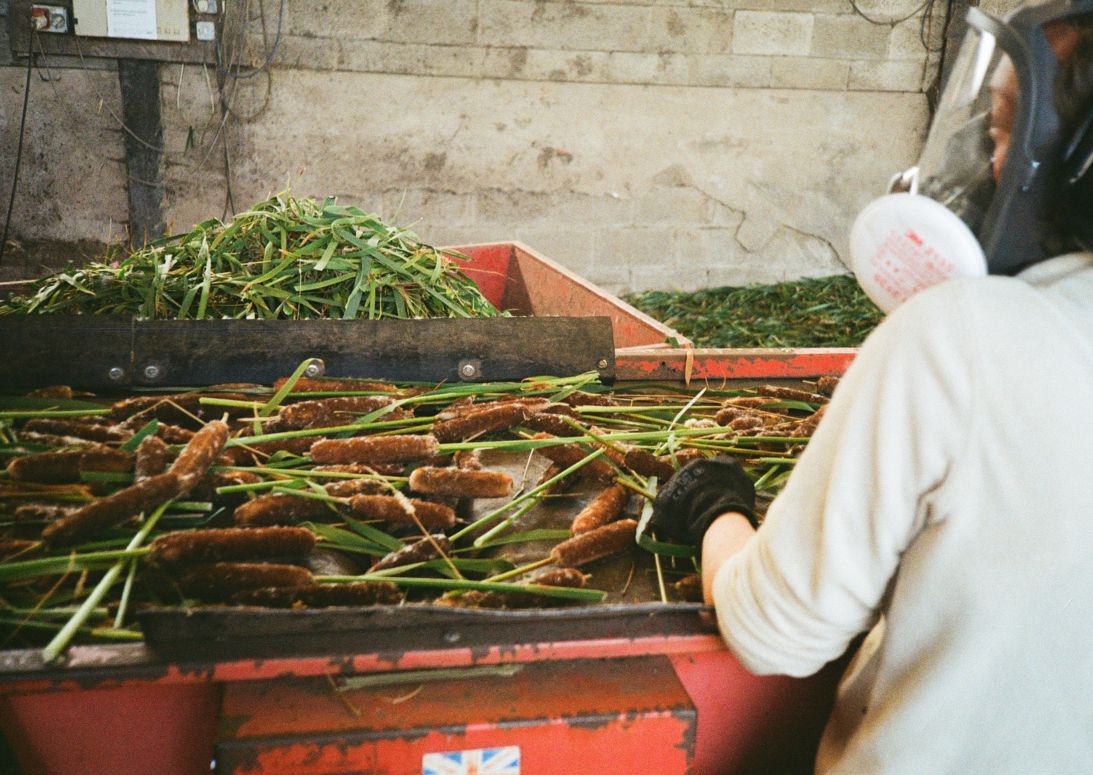
Young farmer Cam Edwards has been leading the charge from a farmer’s perspective, bringing a fresh and infectious energy to the way we think about farming wetland landscapes. This year, his latest innovation was turning an upcycled apple harvester into a low-pressure bulrush harvester – a brilliant example of the kind of practical problem-solving that will be needed as wetland farming develops. Our time on the farm, connecting with Cam and Lisa and the LWT team, left us with plenty of new ideas and energy to reflect on as another harvest season comes to a close. We sat down with Alan Wright, Head of Communications at Lancashire Wildlife Trust, to look back on the year, the wildlife returning to restored wetlands, and what the future of wetland farming could look like.
1. Creating a material from plants grown on land managed by Lancashire Wildlife Trust is a first for the Trust. How does it feel to see something grown to support nature transformed into a finished product that people can actually use and wear?
I can honestly say this is a first. I have seen people wearing sphagnum moss after falling into a bog, but never intentionally wearing plants we have grown!
Ponda’s project is a brilliant idea, growing a plant, providing a habitat for a lot of birds, bees, butterflies, and dragonflies – we spotted brown hares nearby – and then providing eco-friendly and high quality clothing is groundbreaking. I certainly haven’t heard of anything quite like this.
Seeing the fields of typha, or bullrushes as I call it, was breathtaking. And speaking to Cameron and Lisa, this might just open the door to farmers getting involved in agriculture that is good for wildlife and profitable. It actually moves you to think that farmers could continue traditional food farming supported by these wetter farming – or paludiculture – practices.
I am a bit of a “brand baby” when it comes to the clothes I wear for my job on mosses, moorlands, beaches and in forests, so to wear something smart and environmentally friendly is something I know a lot of people will respond to.
2. We’ve experienced some pretty extreme weather this summer, from intense heat to challenging conditions for farmers. What has this year shown you about the importance of wetlands in a changing climate?
When you speak to our conservation teams and especially those who specialise in specific species you really understand the importance of our work at the Wildlife Trusts. Obviously the fires on the moor have devastated wildlife and many habitats won’t recover for many years on dry moorland. It is upsetting to realise that we will have lost many fledglings and young animals to fire this spring and summer. I have a message to people who start these fires, “Imagine walking on the moors with your kids and grandkids and not hearing the beautiful cascading sounds of the skylark, because your actions have wiped them out.”
Our Darwen Moor reserve had been managed as a wetland by LWT and we had a fire but it didn’t spread and didn’t burn deep into the peat. It meant the incredible fire service could put it out and leave it after a couple of days.
Wildlife and plants need water to survive and we hear that it has been a tough year for farmers because there has been so little water for their crops. Obviously we manage a lot of wetlands and while water levels have been lower we still have water “in the bank” at Brockholes, Mere Sands Wood, Lunt Meadows and, most importantly, on our peatland nature reserves. While huge areas are dry, plants have survived on damp ground.
The typha field at Goose Meadow Farming looked healthy and Cameron had explained that creating areas to keep water in have been vital to this process. This has been a remarkably dry summer, yet he is still producing a crop.
3. If you could tell the public one thing about wetlands that you think is still misunderstood, what would it be?
There is still some suspicion in the farming community about creating huge areas of wet peat in an agricultural landscape, but this project is certainly helping farmers to look at an alternative. Over the past decade the antagonism between conservations and farmers (from both sides) is easing and we are all looking at ways of working together.
If the public can understand that wetlands are great for wildlife, the environment and can eventually benefit farmers, I am sure they will jump on board and support us all. We all know farming in the UK is vital to every one of us, we need to stress that nature is also important.
4. One of the most exciting things about restoring wetland habitats is seeing nature respond. What have you noticed returning to or changing across the sites you work on?
I know this is an obvious thing to say but nature is great. We have battered it for centuries but it keeps coming back. Yet we cannot be complacent. We have brought some species back to mosses at Astley, Cadishead, Little Woolden, Winmarleigh and Heysham, but many have returned because they see them as their home.
While we have replanted some flora, some was just hiding waiting for the right moment to return – I think that is a true miracle of nature. Nature is waiting for us to treat it with care and attention and then it will come back to make our lives better, because it is so beautiful.
I have to mention our Salford birding legend Dave Steel who goes onto the moss every day to record birds and other wildlife. He sends us a list of more than 70 species of bird every month, that’s a lot of birds. Recently he has seen birds that haven’t nested on the moss for decades – nightjar and crane – and recorded rarities like the white-tailed eagle, osprey and red kite, just 10 miles from Manchester city centre. That is special.
5. Lancashire Wildlife Trust has had some incredible successes with species reintroductions, including the Manchester argus butterfly. What does seeing a species like this return tell us about what’s possible when we restore the right habitats?
The Manchester argus or large heath butterfly was missing from Manchester for 150 years until it was reintroduced on Astley Moss by the Lancashire Wildlife Trust and partners five years ago. This butterfly relies on plants like hare’s tail cotton grass and cross-leaved heath for food. So the reintroduction could only happen if we had the right, wet habitat as a landing space.
Having spent years spreading news of a possible reintroduction, the day we released the butterflies was one of the best moments of my life. I am sure many of my colleagues will say the same.
Since then we have been working on many other peatland reintroductions like the white-faced darter dragonfly and the bog bush cricket, and we were involved in the release of sand lizards on the Fylde Dunes. It is exciting but I think the real thrill is going back five years later to see the Manchester argus has made this a home and they are still flying on the moss.
6. We’ve now moved from an initial trial into a much bigger collaboration, with Ponda and LWT recently awarded £2.4 million to develop a large-scale wetland farming demonstration. What could this project demonstrate for farmers and land managers across the UK?
This is pioneering stuff. It’s not just about informing farmers that there are ways to supplement the vitally important food production they are involved in, if they are willing and able to innovate.
We know farmers have always been custodians of the countryside and while they are growing crops or raising wildstock, they have been champions of important natural features like headgrows, woodland and meadow edges. They have so much knowledge to share.
If we can prove that there is profit in eco-friendly farming projects, like the Ponda project, it could really be a turning point for many farmers, their families and the communities around them. If we lose farms, we are losing variety, choice and locally sourced food, so projects that can lift business are critical.
7. Looking ahead, what are you most excited about for the future of our work together, and what could this partnership mean for wetlands, wildlife and farmers across the UK?
Standing by the meadow, watching Cameron harvest the typha crop I really felt this was the start of a revolution in how conservationists, farmers and business can work together. Why can’t we support our farmers and the environment at the same time?
It is important that businesses get involved in the environment, but there must be some benefit to that business. This project is an example of like-minded people coming together with diverse skills and making the world a better place.
On the day, I have to admit that I was most excited when I saw and heard a meadow pipit sitting on top of a bullrush singing and telling us that he was overjoyed – I knew that we were doing the right thing.
- *I have permission from the copyright holder to publish this content and images.
Related Posts
Fruit Focus hailed a success as sector looks to innovation, resilience and growth
Agri-TechE in conversation with Elsoms
UK Precision Breeding – Farming Futures Conference
Global experts meet in Cambridge to advance the future of the Bambara groundnut
Best Practices for Cutting and Managing Multi-Species Swards