Can farmers afford (not) to trial biological tools this season?
 Bactotech UK
To trial or not to trial?
A practical case for using 2026 as a year to test, learn and build nutrient resilience
For much of the past few seasons, farmers have had to navigate input volatility as part of normal business. But 2026 feels slightly different.
Nitrogen remains closely tied to gas and energy markets. Synthetic phosphorus fertilisers are also under pressure, not only because of cost, but because phosphate supply depends on sulphur and fragile global trade routes. Oil continues to influence the wider cost base through diesel, transport, plastics and logistics.
This is not just a nitrogen story. It is also a phosphorus-efficiency story.
None of that is good news in itself. But it does create a useful moment for the industry.
Instead of viewing this season only as another risk to manage, perhaps it makes more sense to treat it as a year to test practical alternatives that may improve nutrient efficiency and reduce exposure to volatility.
From input buying to nutrient strategy
This is no longer just a fertiliser purchasing conversation. It is becoming a nutrient strategy conversation.
When conventional inputs become harder to predict, harder to justify and more exposed to global disruption, the question shifts. The focus moves away from “How do we buy the same programme more cheaply?” and towards
“How do we make every unit of nitrogen and phosphorus deliver more value?”
That is an important change in mindset.
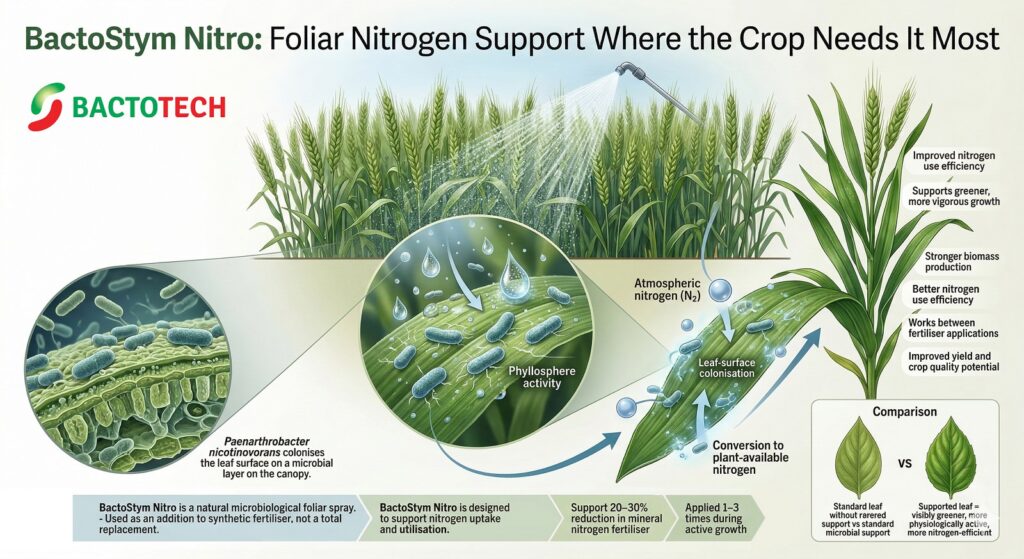
Nitrogen often gets the most attention because the price risk appears quickly. But phosphorus deserves just as much focus. On many farms, the issue is not simply whether phosphorus is present. The issue is whether the crop can access enough of it when it matters.
On many farms, phosphorus is not missing. It is present, but not fully available to the crop.
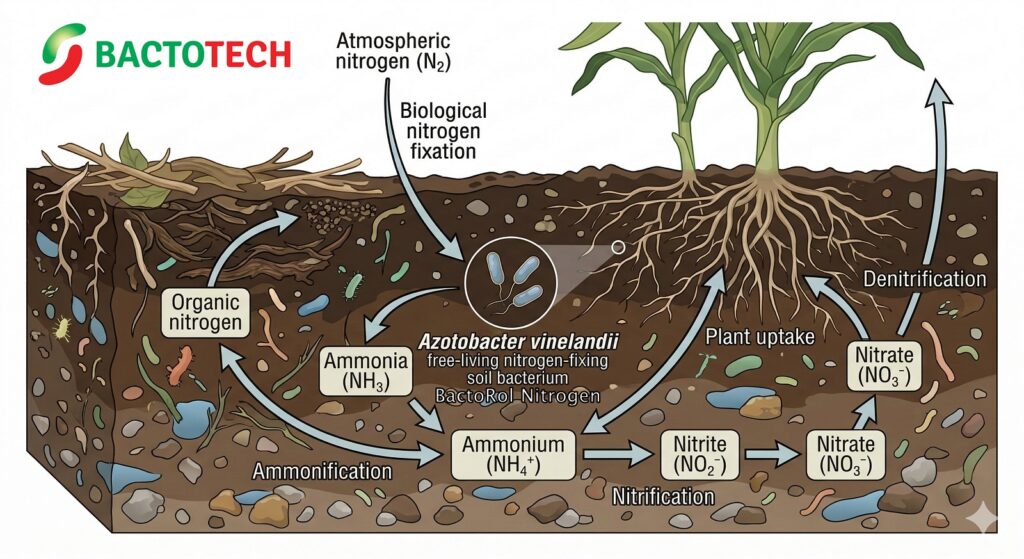
That means the industry is dealing with two separate but connected questions at once: how to protect nitrogen efficiency, and how to improve phosphorus availability.
Why this season should be use proactively
In years like this, it is easy to become reactive. Growers watch markets, delay decisions, worry about replacement cost, and try to limit risk. That is understandable. But it may not be the best long-term response. A better response may be to use this season proactively. To test. To compare. To gather evidence under real farm conditions.
Not because biology is a silver bullet.
Not because one product will solve every nutrition problem.
But because side-by-side farm trials can answer practical commercial questions before the next season arrives.
The questions worth testing now
Can a biological tool help unlock more phosphorus that is already in the soil?
Can it improve nitrogen use efficiency?
Can it support crop response during stress?
Can it help reduce dependence on the most volatile parts of the input programme?
Those are worthwhile questions in any season. In 2026, they look especially relevant.
This is a good year to test, not panic.
The case for trials, not hype
Farmers do not need to “believe” in a category first. They need to test it properly. That means keeping comparisons simple, changing as few variables as possible, and measuring more than yield alone. Crop consistency, rooting, visible response, timing, fertiliser rate, and margin all matter.
This is where biological products become more than an interesting idea. They become a practical part of on-farm learning. And that may be the real opportunity this season offers.
If a farm can run a fair strip trial in 2026 and learn something useful about phosphorus availability, nitrogen response or nutrient cycling, that knowledge may prove more valuable than waiting another year and facing the same volatility with no new evidence.
A more positive way to frame the biological conversation
Too often, the conversation around biology swings between two extremes. Either it is oversold as the answer to everything, or dismissed too quickly because it does not replace conventional fertiliser overnight.
Neither view is especially helpful.
But what if this is the year to test whether biological tools can improve nutrient efficiency and reduce exposure to volatile inputs?
The goal is not to replace everything overnight. The goal is to test what works under real farm conditions.
That is a serious, measurable and commercially relevant question that encourages innovation without abandoning practical agronomy.
Most importantly, it shifts the conversation from opinion to evidence.

Why this matters for the industry
No one wants farmers to reach next season and say, “We could have tested that when we had the chance.”
That is why this message matters now.
Not because the industry should panic.
Not because farms should make dramatic changes overnight.
But because they have an opportunity to use this season well.
There are now more biological tools on the market that target real nutrient-efficiency problems: locked-up phosphorus, inconsistent nitrogen response, stress-related underperformance, and nutrient tie-up in residues. The right response is not to assume they all work. It is to identify the right farm problem, run a proper trial, and measure the outcome honestly. That is how progress happens.
The smart question for 2026
The smart question for 2026 is not, “Why biology?”
It is, “Why not test it properly now?”
If nitrogen and phosphorus are becoming more expensive, more fragile and more politically exposed, then this season may be the right time to trial tools that could help crops make better use of what is already in the system.
This is not a message of fear. It is a message of opportunity.
And for a farming industry that has had to adapt quickly more than once in recent years, that feels like the right message to take into the season ahead.
READ MORE HERE: https://bactotech.co.uk/can-farmers-afford-not-to-trial-biological-tools/
- *I have permission from the copyright holder to publish this content and images.
Related Posts
Agri-TechE Week 2019: Developing to inspire
Bayer and Ecospray Reach Distribution Agreement for New Garlic-Sourced Biological Crop Protection Product
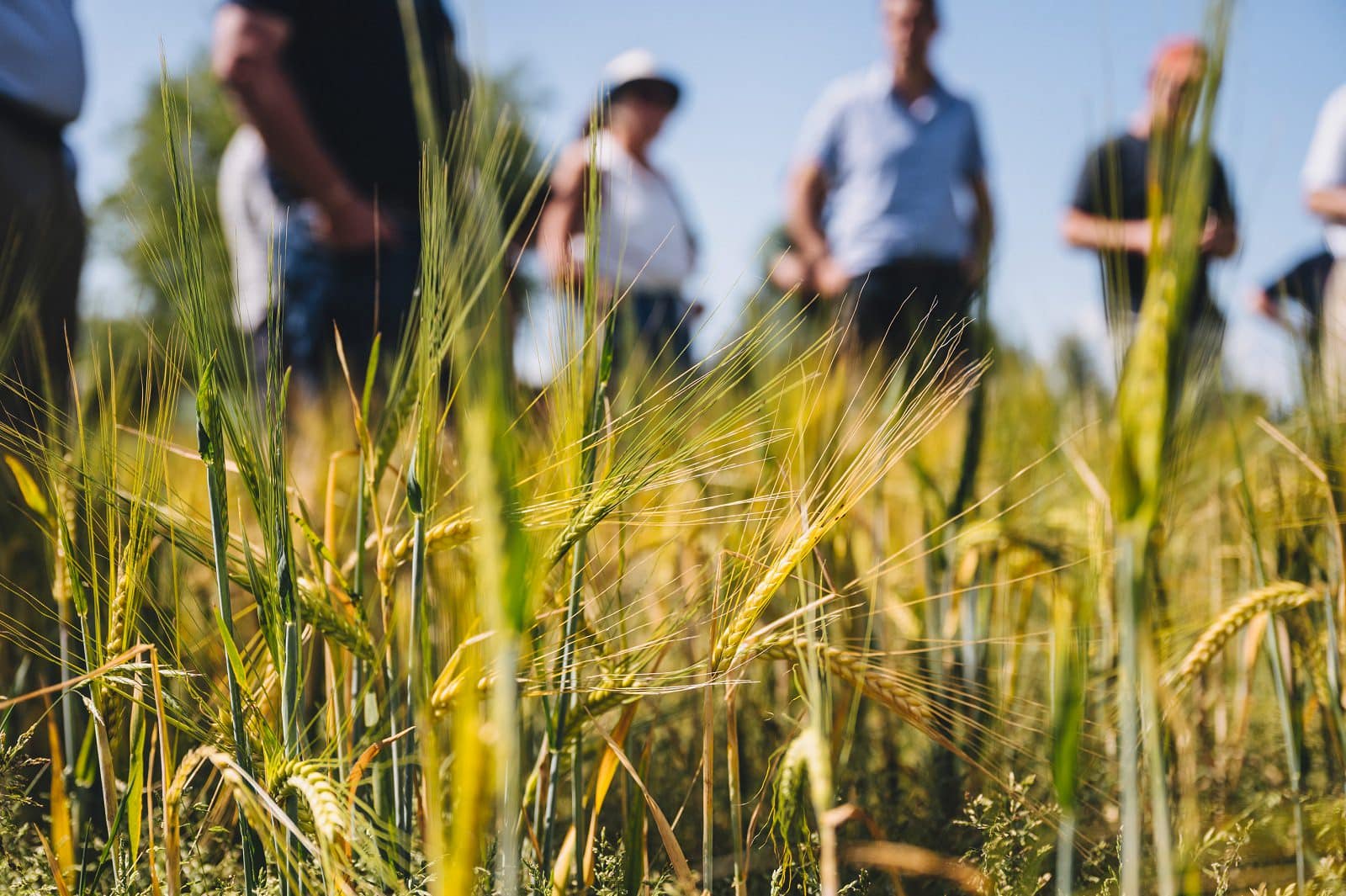
Fertiliser Price Spike 2026: Practical Fertiliser Alternatives to Cut Nitrogen Risk

Biostimulants: Current Outlook and Challenges Ahead
#ATW21 Monday: Precision Nutrition