Biological Delivery Is Not a Single Adjuvant Decision
 Bionema Group
Biological crop-protection products can show strong activity in laboratory and controlled trials yet deliver variable results in the field. The reason is often not the active ingredient itself. It is whether the product reaches the target, remains there and performs under real application conditions.
That is where delivery technology matters.
A microbial product may be lost before it can work. Droplets can drift, bounce from waxy surfaces, spread unevenly, run off leaves, dry too quickly or fail to penetrate hydrophobic soil layers. For living microbes and entomopathogenic nematodes, those physical losses can also mean a loss of viability and activity.
The industry is beginning to recognise the role of adjuvants in biological adoption. But the next step is more important: biological delivery cannot be treated as a generic tank-mix decision.
The right delivery aid depends on where the performance bottleneck occurs.
Three delivery bottlenecks
For biological products, there are three distinct challenges.
First, soil-applied biologicals need to move into the right zone and remain in an environment that supports their survival and activity. Hydrophobic soils, uneven wetting and poor infiltration can restrict the movement of water, microbes and nematodes exactly where they are needed.
Second, foliar biologicals need sufficient initial coverage. Many crop surfaces are waxy, hairy, vertical or otherwise difficult to wet. If droplets do not spread effectively, coverage is poor and too little active reaches the target.
Third, once a microbial product has reached the surface, it must remain there long enough to perform. Bounce-off, runoff, wash-off and rapid drying can all reduce persistence.
These are different problems. They require different solutions.
A delivery toolbox for biologicals
Bionema has developed a complementary delivery toolbox within its Adhesulex™ platform to address these constraints.
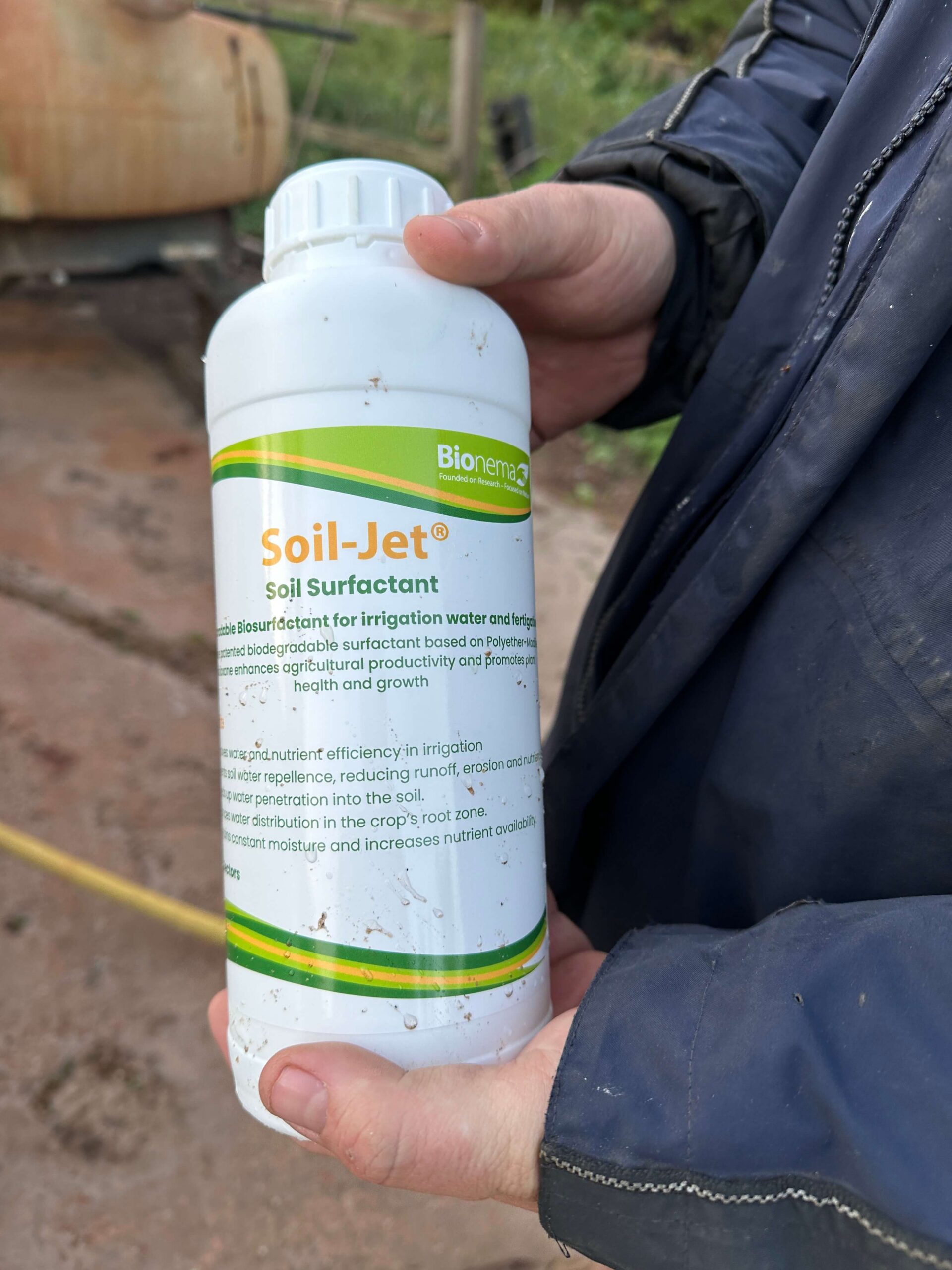
Soil-Jet® is designed for soil, irrigation and drench applications. Its role is to improve wetting and water movement through hydrophobic or unevenly wetted soil profiles. For soil-applied microbes and entomopathogenic nematodes, this helps create a more favourable delivery environment in the root zone.
Permeate™ addresses the first foliar challenge: wetting and coverage. It is used where the biological product needs to spread efficiently across difficult plant surfaces and improve contact with the target.
Boost-Bio™ addresses the next stage: adhesion and retention. It is designed to help more of the applied biology remain where it lands, supporting deposition and persistence where runoff, wash-off or poor retention would otherwise limit performance.
These products are not interchangeable, and they are not necessarily used together. Soil-Jet is selected for a soil-delivery problem. Permeate is selected where foliar wetting and spread are limiting. Boost-Bio is selected where adhesion and retention are the priority.
That distinction matters. A strong spreader does not automatically provide retention. A useful sticker does not solve a hydrophobic soil layer. And an adjuvant that performs well with a synthetic active may not be appropriate for a living organism.
Compatibility comes first
With biologicals, the question is not simply: does the adjuvant improve spray behaviour?
The more important question is: does it improve delivery while preserving the viability and activity of the biological active?
That requires compatibility testing at the intended concentration, in the intended formulation and under the intended application conditions. It also requires evidence that any gain in wetting, spreading or adhesion translates into improved field performance.
This is particularly relevant for microbial biopesticides, biostimulants and nematode-based products. The active is living. Poor compatibility can reduce viability before the product reaches the target. Poor delivery can mean that a viable active never has the opportunity to perform.
From application aid to performance technology
The practical objective is not to add more products to a spray tank. It is to remove the physical barriers that prevent a biological from delivering its full potential.
For a soil-applied nematode programme, the delivery question is whether the active can move through the soil profile to the pest zone. For a foliar microbial product, the question may be whether the spray covers the leaf sufficiently and remains on the target long enough to act.
This is why biological delivery should be designed around the application pathway:
| Application pathway | Delivery constraint | Appropriate focus |
| Soil, irrigation or drench | Water repellency, uneven wetting, limited movement | Soil conditioning and root-zone wetting |
| Foliar application | Poor wetting and incomplete coverage | Spreading and target contact |
| Foliar application under challenging conditions | Bounce-off, runoff or wash-off | Adhesion and retention |
The goal is consistent performance in the field, not improved spray aesthetics in the tank.
The real adoption test
Growers do not adopt biologicals because they are biologically interesting. They adopt them when products work reliably in their crop, with their equipment, under their field conditions.
That reliability depends on more than the active ingredient. It depends on formulation, shelf life, application timing, water quality, delivery and persistence.
The next generation of biological products will therefore not be defined solely by new microbes or natural compounds. It will be defined by the technologies that enable those actives to reach the target, remain viable and perform consistently.
At Bionema, that is the purpose of Adhesulex™: turning promising biological actives into more predictable field performance.
- *I have permission from the copyright holder to publish this content and images.
Related Posts

How open collaboration in agri-tech could help solve the farm profitability puzzle

Farmers and Scientists: Partners against Climate Change in Agriculture

We reveal the Top Eight Innovations in the REAP 2025 Start-up Showcase

Connect, Co-Develop, Co-Exist: the REAP Report 2025 is launched

Man vs machine: determining agri tech’s potential for agronomic decision making