Patenting, Trademarks, Copyright, Trade Secrets...
In the next installment of our micro-learning series, we’ll explore potential legal solutions to help you keep your ideas safe and sound.

New graduate Ben Chilman wins Farmers Weekly Agricultural Student of the YearHow far can vertical farming go?

Member News
The views expressed in this Member News article are the author's own and do not necessarily represent those of Agri-TechE.

“Ben impressed us with his enthusiasm for British farming and support for rural communities. His podcast shows what an effective communicator he is – which is an increasingly important skill to help promote our industry.”

Harper Adams University graduate Ben Chilman has been named as this year’s Farmers Weekly Agricultural Student of the Year.

Ben, from near Presteigne in Powys, secured the prize at the annual Farmers Weekly Awards ceremony in London last night.

Having graduated from his BSc (Hons) Agriculture with Farm Business Management degree at the end of September, the award added to an already highly successful final year for Ben, who has already been named winner of the Nickerson Cup and secured the Farmers Club Gold Pinnacle Award for farm business planning earlier this year.

Naming Ben as the winner, Farmers Weekly awards independent judge, Alex Dunn, said: “Ben impressed us with his enthusiasm for British farming and support for rural communities. His podcast shows what an effective communicator he is – which is an increasingly important skill to help promote our industry.”

Ben was further praised by the judges for his initiative, through the EweTurn podcast, to normalise conversations about mental health in farming, and for his successful year on placement with the Co-op – with the company quick to celebrate his success.

Fellow Harper Adams graduate Sam Allison, a BSc (Hons) Agriculture with Crop Management Top up student, was also shortlisted for last night’s prize.

Dr Russell Readman, Course Manager for Agriculture at Harper Adams University, said: “It was excellent to see Harper Adams Agriculture students selected as two of the three finalists for the Farmers Weekly Agriculture Student of the Year Awards.

“Both Ben and Sam were strong contenders and it was great to see Ben Chilman winning the award this year.

“This continues Harper Adams University’s strong track record track in this award and highlights the quality of Harper Adams Agriculture students.”

Both students were also praised by Agriculture Placement Manager, Terry Pickthall, who, alongside Dr Readman, was among the Harper Adams staff in attendance at the celebration.

He said: “Ben and Sam were extremely worthy candidates and did amazingly to reach the final. We are very proud of them both and it was great to be able to share a memorable evening with them. Ben’s commitment to his studies, career and wider interests is an inspiration and we look forward to keeping in touch with him as he makes his next step into the industry.”

Ben says: “Studying at Harper Adams has given me good memories with great people – I’m glad to have made the most of it.”

Speaking of his award on social media, Ben added he was both ‘still in a state of shock’ and ‘very proud to say the least.’

Zayndu argues that priming seeds with plasma-tech could provide resilience

Member News
Agri-TechE

Zayndu to discuss how its chemical-free process increases vigour of spinach seedlings at the Brassica and Leafy Salad Conference.

Vigorous seedling growth may provide an additional defence against ‘damping off’, a global cause of spinach loss. Trials by Zayndu suggest that priming spinach seed with its plasma treatment accelerates germination by 1.5 days increasing resilience in the seedlings. The company is exhibiting at the Brassica and Leafy Salad Conference on 25th October 2022.

Damping off is caused by Pythium spp. and Rhizoctonia solani, soil-infesting microbes that can build up rapidly and attack young germinating seedlings when soil is moist. There are a number of conventional and biological seed treatments for Pythium and the overall aim is to promote rapid and vigorous seedling growth.

Spinach is one of over 23 different crop plants that Zayndu has disinfected with its Aurora system. Aurora generates a plasma in its drum when an electric current moves through air, splitting oxygen and nitrogen molecules and creating a powerful disinfectant for the seeds without the need for chemicals or water.

Seed pathologist Dr Alberto Campanaro leads the R&D facility at Zayndu. He says that its trials have shown treatment with the Aurora Z10 model not only reduces the fungal load from the spinach seeds to about 4% but also primes the seed, stimulating plant growth.

He comments: “Germination was 15% higher in the spinach seed treated in the Aurora Z10 and the window shorter, with 70% of the seeds germinating within six days, compared to 60% of the untreated batch. The seedlings had increased vigour, which is key if they are to outgrow damping off.”

Damping off causes major crop losses and the keynote speaker at the Brassica and Leafy Salad Conference is Dr Catherine Eyre, Plant Pathology Consultant at ADAS Horticulture, who will be presenting findings of a grower-led spinach damping off trial, using current treatments.

Currently the Zayndu technology is designed to treat smaller batches of seed at regular intervals, and so is ideal for Controlled Environments and vertical farms producing baby leaves. However, the company is working to scale up its system and is looking forward to talking to seed breeders and vegetable growers at the conference about their requirements and the potential for inclusion in Integrated Pest Management approaches.

What are best practices to financial modelling for start-ups and scale-ups?

Member News
The views expressed in this Member News article are the author's own and do not necessarily represent those of Agri-TechE.

Financial management of a high-growth company can be as unpredictable as the weather. That’s why, at an early stage, you need to think about every potential financial scenario your business can find itself in. Optimizing your financial model is key.

A well thought out financial model gives you a clear and realistic view of your current situation and the future of your business. That insight into your business is crucial for success and important to show investors and partners that you have a clear idea of where you are headed.

8 tips how to optimize your financial model

Your financial model includes all three statements

Be sure your financial model includes all three statements: (1) profit and loss (P&L) statement, (2) balance sheet and (3) cashflow statement. A lot of entrepreneurs only show their P&L sheet, while cash is absolutely critical for making business decisions in the early days of venturing.

Work with formulas and clear input cells

Don’t hard code numbers into excel. This will hamper the flexibility of your model and no one can follow this logic except for yourself. Making the key assumptions visible (a legend can be useful), helps investors to read your financial model.

Make sure there is consistency with other business documents

Too often we see misalignments between the pitch deck, business plan and financial models. Preventing this saves a lot of time spent on damage repair and explanations towards investors.  

Create a model flow

A rule of thumb is to work from left to right and from top to bottom. For example, start with input assumption sheets, then calculations sheets, followed by output sheets. This avoids the famous ‘worksheet spaghetti’ where a reader is sent on a full scavenger hunt to figure out your formulas.

Reflect the desired ambition of a VC

Make sure your financial model reflects the desired ambition a venture capitalist (VC) is looking for. Investors are looking for a growth plan that yields them specific cash-on-cash multiples and/or an internal rate of return (IRR). If this is not a realistic outcome of your model, it is vital to understand what is lacking in your business case.

Apply a combination of top-down and bottom-up forecasting

This is the most diligent way to make sure your forecast is realistic. Especially top down forecasts have the tendency to overestimate revenues in the first years, plus they don’t reflect how you are going to drive that revenue.

Compare your forecast with your actual performance

Make an actual versus a budget analysis. This way you can see how you perform, whether your course of action needs adjustment and if your runway remains intact.

Make sure expenses follow the pace of your revenue development

Too often we see projected annual revenues reaching 40 million euros, with still pretty much a start-up cost structure. A 95% profit margin may look attractive, but lacks credibility.

See how it works!

Like to see how our financial model works? Check out this video that explains how financial modelling helps you and your investors.

Need some help with that?

By now, you might understand the importance of a well thought out financial model, but you also might feel overwhelmed. Don’t be afraid to ask for some help here: We know its difficult.

Reach out to me or F.INSTITUTE if you would like some support in creating your financial model and we will happily get back to you. Like more insights? Just subscribe to our new blogs here: https://f.institute/what-are-best-practices-to-financial-modelling-for-start-ups-and-scale-ups/

Light Science Technologies announces successful first phase completion of Zenith Nurseries contract

Member News
Agri-TechE

Milestone signals UKRI grant increase

AgriTech firm Light Science Technologies Ltd (LST) has announced the first phase completion of its project with Zenith Nurseries to develop advanceGROW, an ‘industry first’ cloche lighting and sensor technology system for the CEA market.

The first milestone, known as Gateway 1, which involved developing and demonstrating the viability of the system, is now complete, resulting in revenue of £51,000 for the company.

LST announced the commencement of the contracted project, with UK grower Zenith Nurseries Ltd aim of reducing the need for import substitution by extending the harvest window. Potentially worth up to £13.84 million, advanceGROW is the first retrofittable, semi-automated, all-in-one lighting and sensor solution, providing year-round harvests for growers across multiple plant varieties in polytunnel and glasshouse environments.

The project is broken into four gateways which are specified to prototype, develop, and commercialise the offering. Following the success of Gateway 1, Zenith has redefined its near-term priorities in response to ongoing energy and import conditions, and to increase focus on the lighting element of the rolling cloche. This will place further emphasis on growing more indoors, mitigating the impact of unpredictable and extreme weather conditions and climate change, with a view to increasing yields and extending the growing season.

This has resulted in the project gateways being re-ordered, bringing the first phase of Gateway 4 forward. This phase is now set to begin before Gateways 2 and 3 in the first half of 2023, with potential revenues of around £1.9 million, and will see the incorporation of the rolling cloche device within new polytunnels. LST is also exploring new potential revenue generating additions to advanceGROW in order to make the units more self-sufficient in terms of energy usage, using solar power and batteries.

The overall time scale and potential contract value of £13.84 million remains unchanged.

LST will now spearhead the development of the harvesting elements alongside specialist contractors, which means that the value of the UK Research and Innovation (UKRI) grant it received has increased to £621,077 for this project.  Awarded in February this year, the grant was awarded by UKRI, the UK’s innovation agency, as part of its Farming Initiative Pathway (FIP) consortium for more sustainable and efficient plant growth in the UK agricultural sector.

Simon Deacon, CEO and founder of Light Science Technologies, said: “We are delighted with the progress made on the project and the agility of our relationship with Zenith Nurseries, which has allowed a reordering of workflow to bring forward part of Gateway 4.

“The cloche lighting and sensor technology solution is as exciting as it is innovative. With applications across multiple plant varieties, we believe there will be significant demand for this solution as food security becomes progressively more crucial in a changing world.

“Importantly, given the numerous issues associated with climate change, which have and will severely impact growing conditions, our solutions enable growers to produce crops more locally, all year round.”

This comes after Light Science Technologies Holdings plc (LSTH), the holding company of LST, reported in its third-quarter trading statement that the recent series of projects under LST could bring in potential revenue worth £3m.

Food Tech Challengers finalists in AgriTech

Member News
The views expressed in this Member News article are the author's own and do not necessarily represent those of Agri-TechE.

At Food Tech Challengers, we are on a mission to pinpoint the most game-changing solutions that will transform the way we produce and consume food. If your company creates disruptive solutions, this is your chance to put your product or service in the spotlight.

From electric vehicles to electrified air, Zayndu appoints new Head of Engineering

Member News
Agri-TechE

This content is hosted by Agri-TechE as part of its service to its members. The views and opinions expressed are those of the individual/organisation that supplied the content and not those of Agri-TechE or its employees. This content is hosted by Agri-TechE as part of its service to its members. The views and opinions expressed are those of the individual/organisation that supplied the content and not those of Agri-TechE or its employees. Andrew Neil (Head of Engineering at Zayndu)As agri-tech start-up Zayndu looks to scale up its Aurora chemical-free seed disinfectant system it has appointed Andrew Neil in the new role of Head of Engineering to lead product development. Andrew joins from Jaguar Land Rover where he headed up a team supporting the company’s ambitions for an electrified and autonomous future. His knowledge of digital twins – virtual representations of complex real-world systems – will bring new insights into the optimisation and automation of Zayndu’s plasma technology.

Vertical farms and controlled environments offer the potential for intensive, year-round production of salads and other crops. As human contact is minimised and growing media sterilised, seeds become the main remaining vector for pathogens. Zayndu’s Aurora system addresses this by removing fungi, bacteria and other microorganisms from the seed using a plasma – air activated with an electrical current – this enables effective cleaning without the need for chemicals or water.

The company is seeing international interest in the technology and needs to ramp up production to meet customer need.

Ralph Weir, CEO of Zayndu, a spinout from University of Loughborough, says: “I’m delighted to be welcoming Andrew Neil to our team as Head of Engineering. Andrew is a veteran of the premium car industry and joins us from JLR, where his career saw him take responsibility for key systems in high performance powertrains*, including leading the team responsible for delivering powertrain build and test operations for JLR’s recent prototype electric and hybrid vehicles.

“His experience in precision manufacturing and the demanding standards for quality and environment expected of the automotive industry will be key to driving Zayndu’s product development and manufacture.”

Andrew is exchanging management of a team of 150 automotive engineers for a smaller multidisciplinary team of physicists, software developers and engineers, and will be working alongside Zayndu’s biologists and plant scientists.

He comments: “The opportunity to work with this dedicated team to deliver a high-quality product that addresses an issue with impact across the agriculture industry, is inspirational.”

The Aurora system is currently available in two sizes: Z10 and Z25. Expanding the range to enable greater volumes of seed to be treated would significantly increase the market opportunities.

Additionally, remote management of the system would support further automation of controlled growing environments. Andrew’s knowledge of using digital twins to model and prototype complex control systems will accelerate new product development.

Andrew continues: “There is potential for significant growth through existing and new product offerings. My initial focus will be to work with the team to deliver a product that is robust and ready for the global market, including certification. To achieve this, we will be developing and deploying advanced data management tools to ensure the in-service reliability of the product and working closely with end-users to achieve a high level of customer satisfaction.

“Looking to the future, I see opportunities for collaboration with the wider engineering industry, and the scientific and academic communities, to advance understanding of plasma agriculture. This is a very exciting opportunity that I am proud to be part of; it links with my values and activates my creative interest.”

 Read more about Zayndu.

ROTHAMSTED JOINS LEAF’S NETWORK OF INNOVATION CENTRES

Member News
The views expressed in this Member News article are the author's own and do not necessarily represent those of Agri-TechE.

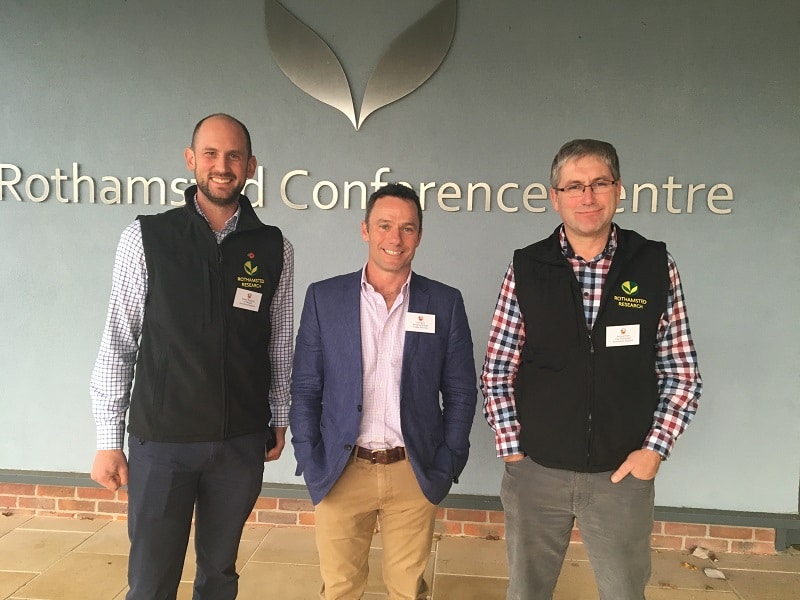
Rothamsted’s 400-hectare site in Harpenden, Hertfordshire today became the latest site to join a network of innovation centres and demonstration farms which include some of the UK’s leading research establishments and most progressive farmers.

The move further strengthens Rothamsted’s strategic partnership with LEAF (Linking Environment And Farming) which aims to accelerate the scientific knowledge exchange around more sustainable, regenerative farming systems.

Working with farmers, the food industry, scientists, environmentalists, teachers, young people, and consumers, LEAF are looking at new ways to deliver productivity and prosperity among our farmers, enrich the environment and engage young people and society in a valuable and meaningful way

Speaking at the launch earlier today, Philip Wynn, Chairman of LEAF said: “Rothamsted is a vibrant hub for global science, underpinned by history, innovation, and fresh thinking, working across different scales and disciplines to improve crop and livestock performance, resilience, and value. 

“We are honoured to be forging even closer links with them at this crucial time for agriculture and hugely excited about the opportunities this partnership will offer our members and the wider farming community to access the latest research, ideas, and innovations to advance more resilient global farming and food systems.

“The role of the LEAF Network could not be more important at this time.  We look forward to building on our partnership with Rothamsted to help inform, inspire and equip farmers with the tools, know-how and confidence to realise their sustainable farming ambitions.”

LEAF Innovation Centres are research organisations whose work supports the research, evidence, development, and promotion of Integrated Farm Management and Rothamsted’s North Wyke farm, specialising in sustainable grazing livestock systems, has been a LEAF Innovation Centre since 2015.

Professor Angela Karp, Director and CEO of Rothamsted Research said that extending the collaboration with LEAF signals a major step in driving forward the uptake of more integrated, holistic approaches to crop and livestock farming.

“Partnerships, innovation, public engagement, and knowledge exchange are woven into our new science strategy.  By working with both public and private sector partners our aim is to turn excellent research into impactful, sustainable outcomes. Being a LEAF Innovation Centre will better enable our wide-ranging research to reach farmers on the ground.

“It is partnerships such as this that will help accelerate the capabilities of farmers to raise the productivity of their crop and livestock systems, tackle weed, disease and insect resistance, improve soil health, enhance natural capital, and reduce their carbon and nutrient footprint.

“Developing closer ties between researchers and practitioners will refine and improve performances for both. We are extremely honoured to become a LEAF Innovation Centre and, alongside our North Wyke site, look forward to the opportunities it will bring to advance fresh, dynamic, and responsive approaches to knowledge development and exchange that are aligned with the needs of farmers.”

Rothamsted Research joins 14 other LEAF Innovation Centres – Agrii Throws Farm Technology Centre, Bangor University, Bayer Crop Science, the University of Reading’s Centre for Dairy Research, The Game and Wildlife Conservation Trust, Harper Adams University, The James Hutton Institute, Newcastle University Farms, Niab EMR, Rothamsted Research North Wyke, The Royal Agricultural University, SRUC’s The Dairy Cattle Research and Innovation Centre, SRUC’s Hill & Mountain Research Centre, and Stockbridge Technology Centre.

More information about Rothamsted Research and the LEAF Network can be found here.

Drought: five ways to stop heavy rains washing away parched soil

Member News
The views expressed in this Member News article are the author's own and do not necessarily represent those of Agri-TechE.

When William Blake described England’s “green and pleasant land” in his poem Jerusalem, he was actually writing during a prolonged drought. Two centuries later, much of Europe is withering under successive heatwaves amid one of the most extreme droughts ever recorded.

The latest satellite image of England captured by Nasa shows not a green and pleasant land but one which is brown and parched. Under all that dry vegetation is sun-baked, dusty and desiccated soil.

Heavy rain and thundery showers are now forecast for much of the UK. No doubt the promise of a good downpour will please farmers, for whom the drought has been particularly punishing. Bizarrely though, heavy rain may not be what their thirsty soil needs right now.

A soil normally acts like a sponge which soaks up moisture when it rains. Having been baked for weeks by intense heat with little respite, soil surfaces have hardened.

As a result, the soil’s infiltration capacity (the maximum rate at which soils can absorb moisture) has diminished. If rain falls at such an intensity that this rate is exceeded, the water will run off the soil surface, potentially triggering flash floods and other hazards downslope.

When heavy rain falls, tonnes of soil can be eroded into the flow and rushed out of farm gates. There, it is washed into rivers, and spat out to sea in a brown plume that can occasionally be seen from space.

Likewise, flash floods can leave thousands of households with thick carpets of sand, silt and clay. Cleaning up after extreme rainfall can drain wallets very quickly, but there is a larger and longer-term cost.

Soil erosion is a major threat to the resilience of the environment. Proactive measures to curb erosion are essential to ensure soils continue supporting food production, sustaining habitats and biodiversity, cycling nutrients and safely storing the carbon fuelling climate change.

Here are five options for preventing soil running off the land.

1. Don’t leave soils bare

A bare soil is particularly vulnerable to erosion. Extreme heat can make some harvests come early, leaving soils bare for longer. Farmers can grow cover crops such as brassicas, legumes and grasses to protect soils from being exposed between periods of crop production.

As well as shielding the soil from rain splash, some cover crops can suppress weeds and fungal diseases, replenish carbon and offer food and habitat to wildlife. 

2. Adapt tillage practices

Soil tillage (digging, stirring and overturning it) is one of the most practised methods of preparing the land for growing crops. But tilling the soil too vigorously can damage its internal structure.

A healthy soil has a continuous network of pores and channels capable of storing and transporting air and water. Lining this network are mineral and organic aggregates. Maintaining the soil’s structure is vital, not only for bolstering its resistance to erosion, but for enhancing how much water can infiltrate it.

Shifting towards less intensive tillage practices – reduced or zero tillage farming – has been shown to be effective at curbing soil erosion. Ploughing across slopes rather than down them can reduce it even further.

3. Watch out for overgrazing

Grazing livestock like cattle can maintain grassland habitats and support native wildlife, but overgrazing can be a problem. If vegetation is stripped from the land faster than it can naturally recover, soils are left bare and prone to erosion.

Overgrazing can also compact the soil, making it less effective at soaking up moisture and increasing the likelihood that water will run off the surface. 

4. Consider terracing steep slopes

Steep slopes funnel water downhill fast. Building a series of level steps into the slope where food can be grown, a practice known as terracing, is an effective engineering solution.

Hillslope terracing has been adopted by farmers for millennia, and can be particularly good at reducing water runoff and sediment erosion, especially if regularly maintained. Levelling the slope can also help water infiltrate the soil and increase how much water it can hold. 

5. Grow a buffer strip

For fields bordering rivers and streams, planting buffer strips of vegetation on the boundary with the watercourse can offer multiple benefits beyond reducing soil erosion.

Comprised of grass and shrubs, buffer strips increase the roughness of the land which slows the water running off it. Planting trees in buffer strips can help stabilise riverbanks, shade livestock and reduce the runoff of agricultural chemicals into rivers. As well as combating soil erosion, buffer strips feed and shelter pollinating insects, enriching a farm’s biodiversity.

Be proactive not reactive

It only takes a second to open an umbrella and protect yourself from a downpour. Protecting soil from erosion demands more proactive measures.

These five recommendations can build a soil’s resistance to erosion, particularly during the spells of heavy rain which often follow heatwaves. If implemented and maintained, these strategies can have lasting additional benefits for soil fertility, biodiversity and slowing climate change.

Dan Evans, 75th Anniversary Research Fellow, Soil and Agrifood Institute, Cranfield University

M&S adds buzz to York bio-tech firm AgriSound

Member News
The views expressed in this Member News article are the author's own and do not necessarily represent those of Agri-TechE.

A York company that aims to boost pollination in crops is to get some buzz thanks to a three-year deal with Marks and Spencer.

AgriSound is to supply in-field sensors to two M&S Select Farms, which will see the farms use the devices which measure the numbers of bees and other insect visitors.

The company, based in York St John University’s Enterprise Centre, has developed specialist listening devices which can collect and send data concerning key pollinators, such as bumble bees and honey bees.

At one farm, in Plumford, Kent, the sensors will be placed in an orchard to assess how well spaced flowers must be to attract bees and other pollinators.

Meanwhile, G’s Growers of Cambridgeshire, will place its sensors in hedgerows, pollen and nectar mix and wild bird seed mix. The aim is to assess how well these are at attracting bees at different times of the year.

What is learnt will be shared with the wider industry.

Casey Woodward, Founder and CEO of AgriSound, said: “The development of our PollyTM device has taken years of dedicated research and it is really exciting to see our technology beginning to deliver unique insights into pollinator activity.”

The collaboration is part of M&S five-year Farming with Nature programme, launched last year, to support the retailer’s Select Farmers to become more resilient to environmental challenges spanning climate change and biodiversity loss.  

As part of the programme, M&S has partnered with specialist industry partner LEAF (Linking Environment and Farming) to strengthen pollinator-friendly farming practices across M&S’s grower base in the UK, such as setting aside areas for plants and wildlife.

M&S has also collaborated with the Game & Wildlife Conservation Trust, FERA and Kings Frontier to test different wildflower seed mixes on some of its M&S Select Farms aiming to enhance yield and reduce costs through pollination and reduced pests.

Andrew Clappen, Technical Director at M&S Food, said: “Pollinators are the unsung heroes of British farming – helping to improve yields and quality while benefitting the wider environment.  

“Since we launched Farming with Nature, we’ve been hosting workshops offering advice to our M&S Select Farmers on the best ways to attract more pollinators. Now, by partnering with AgriSound, the farms will have real-time data and valuable insights into what’s working and what’s not. 

  “We’re also working closely with farmers on land use and different wildflower mixes to boost pollinator numbers, alongside crop health and pest management.” 

Gill Perkins, CEO of The Bumblebee Conservation Trusts, added: “To help wild pollinators, we need to work across the wider countryside and farmland is the key to that.  It’s great to see M&S working with farmers to thoroughly integrate monitoring and pollinator-friendly management into these systems.” 

DeepPlanet featured in BBC Click

Member News
The views expressed in this Member News article are the author's own and do not necessarily represent those of Agri-TechE.

Deep Planet featured on BBC Click Documentary “Agri-tech and Future of Farming Programme” discussing the impact of climate change on wine. Premium French wine producers Bernard Magrez and Chateau Haut-Bailly share insights on how they are adapting to changing weather conditions and the future of wine. Watch on the link: https://www.bbc.co.uk/iplayer/episode/m001b72y/click-agritech-and-the-future-of-farming

Research, Innovation, and Advanced Farming in Missouri

Member News
The views expressed in this Member News article are the author's own and do not necessarily represent those of Agri-TechE.

Missouri is the global leader in agtech. With research taking place across the entire state in dozens of our innovation communities, companies are utilizing our exceptional resources to grow their business.

The use of drones, satellites and data is transforming farming as we know it. Missouri companies are leading the way in investment and innovation in advanced farming.

  • 2ndMOST FARMS IN THE U.S.
  • $94BAGRICULTURAL INDUSTRY

World-Leading Innovation With a Local Touch

Agriculture is a $94 billion industry in Missouri, and our agtech workforce consists of more than 460,000 people. So much agricultural product is shipped via river barge from the St. Louis region that a 15-mile section of the Mississippi is known as the “Ag Coast of America.”

Agtech Innovation…It’s Growing Here

Our state has seen tremendous investment from the agtech industry in recent years. The United States Department of Agriculture moved two of its key agencies’ headquarters to Kansas City, Missouri. The University of Missouri College of Agriculture, Food and Natural Resources recently announced that it is the home of the first Center for Regenerative Agriculture in the Midwest. The Donald Danforth Plant Science Center in St. Louis is the world’s largest independent research institute focused on plant science, and there are more than 1,000 plant scientists conducting research in the region. The industry is growing rapidly in Missouri, and we’re prepared with the talent and resources to support this growth.

CAMBOND, UKRI AND CONSORTIUM TO DELIVER WORLD CLASS GREEN ECONOMY WITH £7.3M BONDIFI PROJECT

Member News
Agri-TechE

This content is hosted by Agri-TechE as part of its service to its members. The views and opinions expressed are those of the individual/organisation that supplied the content and not those of Agri-TechE or its employees.

CAMBOND, UKRI AND CONSORTIUM TO DELIVER WORLD CLASS GREEN ECONOMY WITH £7.3M BONDIFI PROJECT

BONDIFI is an ambitious, world-leading innovation to build a green chemistry industry in the UK. The project will launch the UK’s first circular economy system for making construction and metal products.

The Project is an initiative to reduce the carbon footprint in multiple industries through its circular economy system. BONDIFI intends to prime the future expansion and growth of an innovative “green” chemistry industry, combining low carbon manufacturing processes with a sustainable technology base to embed bioresin technology within manufacturing facilities across the UK. The funding has been won in the competition for the Transforming Foundation Industries Challenge -Demonstrators awarded by UK Research and Innovation’s (UKRI).

BONDIFI will deliver a partnership between the UK brewing, foundry, panel and chemical industries to scale manufacture of sustainable resins and introduce them into the processes of making furniture, construction panels and casting metal. The £7.3M Innovate UK supported project will link Cambond technology to pioneering groups, including:
1. Foresso and WI International (panel manufacturers)
2. Biocomposites Centre, Bangor University (Wales) (global expertise in biocomposites)
3. Lunts Castings (leading foundry)
4. Materials and Engineering Research Institute, Sheffield Hallam University (casting chemistry)

Dr Gareth Roberts, Project Director, noted: “This is a very ambitious project to deliver a commercially viable circular economy system by linking UK entrepreneurship, manufacturing innovation and scientific expertise to existing UK brewing industry excellence.”

Prof Xiaobin Zhao, Cambond CEO, said: “Each partner alone cannot deliver the change needed to decarbonise and transform UK industries. BONDIFI will catalyse change and open the way to massive carbon reductions in manufacturing.”

About:
Resins are critically important chemicals in many manufacturing industries. However, their oil-based and energy intensive manufacture requirements mean products containing resins have a large carbon footprint.

Cambond has invented a plant-based resin system using by-products from the world’s oldest industry – brewing.

• Panels and metal products use more than 1.3M million tonnes of resin a year – oil-based carbon emissions of > 4MT CO2e
• Cambond resin replace these with resin made from plant-based brewing by-products
• Cambond’s plant-based resins require 45% less energy per tonne to manufacture
• A further benefit comes from the additional use of brewery and paper mill wastes to partially replace virgin wood
• BONDIFI will create a productive symbiosis between chemical, metals and paper industries and manufacturing – reducing carbon and delivering sustainable products