Patenting, Trademarks, Copyright, Trade Secrets...
In the next installment of our micro-learning series, we’ll explore potential legal solutions to help you keep your ideas safe and sound.

Opportunity to join the Biofortification Hub now open for membership and funding applications

Member News
The views expressed in this Member News article are the author's own and do not necessarily represent those of Agri-TechE.

A new innovation hub on the Norwich Research Park focused on research into biofortification is now open to membership applications from the industry and academic research community in the United Kingdom.

Anyone working on biofortification, at any career stage, is welcome to join this network by applying to become a member.

Whether you’re in a university or research institute, in a company involved in the biofortification of food or animal feed, a policymaker, or a member of a professional organisation you can benefit from joining this community. Applying for membership of the Hub is simple and free.

The Biofortification Hub will provide support and research grants for innovative projects, with a mission to promote interactions, collaborations and research projects between industry and academia. It will also support the UK biofortification community by disseminating opportunities and information in the broader area of health and nutrition.

Biofortification Hub Manager, Dr Philippe Vain said: “We hope that we can bring together and support the fantastic biofortification community in the UK and spark new innovations and collaborations. I’d invite anyone working in this exciting area to become a member and join us in helping deliver more nutritious food.”

A new website https://biofortificationhub.org/, is now live and gives access to a range funding opportunities for research and mobility between academia and industry, as well as opportunities to attend workshops and meetings, all with the aim of developing fruitful partnerships.

Professor Cathie Martin from the John Innes Centre and hub co-lead said: “Research and investment in biofortification will encourage productive collaboration between research, the food industry sector, and regulatory bodies. The Biofortification Hub offers support for key steps to reduce the economic and societal burdens of health care, especially in aging populations.”

Further collaborations will be nurtured through partnering opportunities in the hub’s Researcher Meet Industry initiative that links primarily early career researchers with companies and organisations keen to host them.

Dr Jon Clarke, Head of Business Development at the John Innes Centre said: “This is a really exciting opportunity for researchers to develop new concepts and accelerate their translation into new food and feed products with wide ranging health and wellbeing impacts. This Hub will fund placements for early-career researchers, enabling them to build relationships and develop the skills required to transition into roles in industry.”

Biologics are the future for agriculture, but collaboration will drive commercial development and success

Member News
The views expressed in this Member News article are the author's own and do not necessarily represent those of Agri-TechE.

Blog from Niall Mottram, Cambridge Consultants

When I attended the World Agri-TechE Innovation Summit seven years ago, about 500 people showed up. When I landed in San Francisco for this year’s event, I knew that around 2,500 growers, business leaders, technology pioneers and investors would be joining me. It’s now the thriving go-to meeting place for the global agritech ecosystem – yet familiar issues persist. Despite transformative opportunities like biologicals and biofuels sitting on the horizon, there’s still a need for greater industry collaboration to instrument meaningful change.

My theme for this article – the need to get together to do more doing and less talking – was seeded as soon as I headed to the first-morning keynote by Chuck Magro, CEO of Corteva Agriscience. Here we heard about initiatives in sustainable fuels and the need for agriculture to be central to the green energy transition.

The keynote alluded to the role of winter canola in a renewable fuel collaboration between Corteva, Bunge and Chevron. There was a call for better collaboration across the industry – including in key areas like data sharing. With biologics predicted to make up 25% of the total crop protection market by value within 10 to 15 years, there’s no time to waste when it comes to seizing commercial advantage and helping the environment.

There were plenty of representatives around from the big seed and chemical companies, including Bayer and Syngenta, but comparatively few from the equipment and machinery side. This left me chewing over the potential disconnect in collaboration when much of the debate in the sessions and around the hall was about scaling not only the production of biologics, but also the application method – which needs both sides working in tandem if it is to truly fly.

Biological fertilisers and pesticides

Rightly, this emerging paradigm of next generation biological fertilisers, fungicides, herbicides and pesticides is seen as the future. From a regulatory standpoint and the lay of the land set by the initiatives like the EU’s European Green Deal, traditional synthetic chemicals are gradually being consigned to history. But the challenges of bringing complex large molecule products to market at scale are complex and costly.

Indeed, many of today’s biological products are expensive and there is plenty of work to be done to optimise the bioreactor technology needed to produce them. When it comes to building a biological business for scale, bioengineering might be well understood, but bioprocessing is less so. Here at CC, we’re well aware that AI has a big role to play in both. It is used very successfully in trait selection and breeding today – insilico design – but there is less evidence of it being applied successfully in processing and production.

The industry could certainly be working together more to advance traditional bioreactor design, which is not cost competitive and does not scale in a straightforward way. The bioreactor providers need to innovate with solutions that go well beyond the fundamentals of computational fluid dynamics (CFD) and basic engineering. For me, there are plenty of discussions to be had around the interplay between the equipment, sensors and the potential of AI to really improve the state of the art.

Precision spraying for biologicals

Expanding on the theme, precision spraying is a must for biological farming products, so delivery mechanisms are key. Yet certain spray nozzles are not compatible with live microbes, not least because of the shear rate and pressures involved. Essentially, biology is a little more delicate than chemistry. The problem is that if you subject biologics to the same physical stresses that you do to chemical products, there’s a good chance they might rupture and die. Which brings me back to the collaboration point. If biologicals are the future, we must have greater cooperation between those who make the product and those who make the kit to dispense it. And on the evidence of World Agri-Tech, there’s not enough of this happening.

Before I close, a quick word on carbon. It was great to speak at the session that explored opportunities to improve carbon sequestration and scale both carbon markets and smart farming practices. I’ve spoken and written widely on this – including on key areas such as sensing and measurement – so it’s an issue close to my heart. So, although carbon and soil health are still a hot topic, I was a little disappointed that the overall conversation hadn’t moved on by much from the session I chaired the previous year. All of this despite the injections of cash from the Inflation Reduction Act and the USDA’s Climate Smart Commodities fund. I’m confident this will change in time, but we still need greater standardisation in approach, reduction in cost and greater confidence in our measurement technologies to properly move the needle here.

This could also be down to a lack of partnerships with agricultural retail organisations and it’s a recurring theme that I see – not enough consideration of the channel to market. Looking beyond this year’s World Agri-TechE Summit to the changing landscape, my big hope is this. That the industry can avoid getting bogged down in technology for technology’s sake. Shaping innovation with a focus on the business model and the channel to market are the real keys to progress and commercial success. Please drop me an email if you’d like to discuss that topic in more detail, it’ll be great to hear from you.

Harvest AI have partnered with farms in Germany and Canada

Member News
The views expressed in this Member News article are the author's own and do not necessarily represent those of Agri-TechE.

Transformative innovation happens when people from different disciplines work together and share their knowledge and experience. 

With the support of RentenbankAndreas Hermes Akademie invited us to visit farms in the Berlin area. Among other things, we talked about what keeps farmers busy, what challenges they face, and what motivates them. Above all, however, an understanding of each other’s mentality was created.​

As a software company with an AI and CV approach to the indoor farming industry, it is especially important to continually test our technology in the field and get feedback from people with “dirt under their nails”.

That’s why at HarvestAi, we’re partnering with farms in Germany and Canada and making it part of our mission to share knowledge and experience with the people who grow our food to develop products that solve real pain points.

Are you a grower, investor, or looking for a job? We are always interested in exchanging ideas, and discussing collaboration requests and job opportunities. Reach out to Clemens Moeller or send a mail to info@harvest-ai.com   ​

#indoorfarming    ​
#forecasting    ​
#cropgrowthprediction    ​
#yieldprediction  ​
#tomatoes ​
#lettuce ​

https://lnkd.in/gd-RrnT2 ​

New farmer-led group champions insecticide-free wheat

Member News
The views expressed in this Member News article are the author's own and do not necessarily represent those of Agri-TechE.

Wheat growers who want to leave behind the use of insecticides on their crop are invited to join a new farmer-led group that will develop the tools and the knowledge so they can do so with confidence, and benefit from new Sustainable Farming Incentive (SFI) payments.

Anyone with a resolve to support the abundance of beneficial insects in arable crops can join the Genserus Circle that will come together at a webinar on Thursday 20 April at 8:30am, hosted by the British On-Farm Innovation Network (BOFIN).

The initiative brings into perspective new genetics that offer protection to wheat crops from the day they’re planted to the date of harvest. It highlights practices that both build a thriving biodiversity and support productivity in the field.

The Genserus BYDV-resistant trait removes the need to apply insecticides to wheat early in the season, which for many farmers is the only time insecticide is used on the crop.

Coupled with other Integrated Pest Management (IPM) techniques proven to boost beneficial insects, this allows growers to go insecticide-free without risking losses from pest damage, and to benefit from the new £45/ha incentive available through Defra’s SFI.

“Growers who want take advantage of this payment can de-risk themselves by growing a Genserus variety,” says Lee Bennett of RAGT Seeds who have brought the BYDV-resistant trait to market.

At the webinar on Thursday 20 April, Lee will give an insight into the genetics and the UK field trials that have scoped their performance.

“We’ve also been investigating the use of companion crops, examining their effect on the performance of a range of RAGT winter wheat varieties,” he says.

“This will help growers looking to benefit from the additional £55/ha payment included in the new IPM standard of SFI.”

Joining Lee on the panel for the webinar is Martin Lines, UK Chair of the Nature Friendly Farming Network, who will highlight ways in which enhancing habitats to boost beneficial insects can bring business, as well as environmental benefits.

Neil Potts, an independent agronomist in the south west of England, offers a practical perspective on insecticide-free wheat. And Norfolk grower Kit Papworth who’s grown BYDV-resistant RGT Wolverine, relays where he is on the journey to going insecticide-free.

Webinar attendees will get the opportunity to suggest activities and initiatives that will make the most of the move to insecticide-free wheat. “We’re keen to support on-farm trials that will help inform how the genetics are best utilised, for example,” says Lee.

“The ultimate aim is for the Genserus Circle of growers to be at the forefront of a farming system that’s in harmony with nature as well as profitable and rewarding for all involved.”

The Genserus Circle is a BOFIN initiative supported by RAGT Seeds. AHDB Recommended List Group 4 candidate RGT Grouse combines the Genserus BYDV-resistant trait with resistance to orange wheat blossom midge.

Spray-on polymer could cut food waste and increase incomes for Kenyan smallholders

Member News
The views expressed in this Member News article are the author's own and do not necessarily represent those of Agri-TechE.
  • 60% of fine bean exports from Kenya are produced by over 50,000 smallholders – but rain splashing soil onto bean pods causes them to become contaminated 
  • New study shows spraying an environmentally friendly polymer onto soil surfaces can reduce ‘soiling’ of fine beans by almost 65 per cent
  • This gives greater financial security for Kenyan smallholder farmers and will increase the resilience of the UK food supply chain.

Spraying a safe and environmentally friendly polymer onto soil surfaces can reduce the ‘soiling’ of fine beans by almost 65 per cent, a new study from Cranfield University shows.

Focusing on vegetables produced in Kenya, the reduced food waste could bring greater financial security for smallholder farmers as well as increasing the resilience of the UK food supply chain.

The study, funded by Innovate UK, was carried out by Cranfield University in partnership with AGS Ekology Ltd, Vegpro Kenya and Provenance Partners Ltd. It demonstrated that low-cost commercially available polymers can reduce soil splash by more than 90% and ‘soiling’ of beans by more than 65%.

Dr Rob Simmons, a reader in sustainable soil management at Cranfield University, who led the project, said: “Our trials demonstrated that this polymer can stabilise the surface of the soil and stop soil splash. At least a quarter of all fine bean rejects are associated with ‘soiling’ of beans, but during the rainy season this can be 100%.”

With fine beans accounting for 70% of Kenya’s vegetable exports, the crop is hugely important to the livelihood of farmers and the country’s agriculture sector which contributes almost 30% to the national GDP. But the threat of climate change and increased frequency of extreme rainfall events could exacerbate the problem of soiling, and have a devastating impact on smallholder farmers.

Greater income security for Kenyan farmers

Dr Simmons says that big improvements can potentially be achieved through the polymer spray: “Soil splash can transfer plant pathogens such as Halo Blight and Bean Anthracnose to the growing crop, which can result in yield losses. But if you can prevent soil splash, then you will see a 40% – 65% improvement in marketable yield. That’s huge for smallholder farmers.

“This work is very innovative – there’s never been an effective spray application of these polymers before.”

Researchers are now involved in a follow-up project which will see smallholder farmers receive training to cost-effectively apply the spray-on polymer to their fields.

Cranfield University has the largest group of soil scientists in the UK, with expertise spanning basic soil physics, chemistry and biology, to soil management and conservation, to soil informatics and resource evaluation.

Cranfield University is at the forefront of imagining and delivering a sustainable green planet. You can find out more about our Sustainable Development Goals here.

UKRI launches new people and teams action plan

Member News
The views expressed in this Member News article are the author's own and do not necessarily represent those of Agri-TechE.

New action plan will support world class research and innovation teams and help to build a diverse and inclusive research and innovation (R&I) system.

Building on insights

UK Research and Innovation (UKRI) is delighted to publish a new people and teams action plan. It builds on insights from implementing our existing Researcher Development Concordat and Technician Commitment action plans and reviewing of our progress against them.

UKRI published an action plan to implement its obligations as a research funder under the Researcher Development Concordat in July 2020. Our Technician Commitment plan was published in February 2021 and considers our role as both a funder and employer of technicians.

The new people and teams plan will consider our obligations under both initiatives and replaces both plans going forward. It aligns to a range of related programmes across UKRI, including:

The plan forms part of UKRI’s response to the independent review of research bureaucracy and UKRI’s strategic objective to become a world class organisation.

Developing the future R&I workforce

People are the bedrock of the UK R&I system, key to delivering the societal benefits of research and innovation and essential for our ambition to be a world leader in research and innovation.

In every sense, skilled people, the knowledge and experience they gain working on our projects, and the networks they make, are a core output of UKRI’s investment in research and innovation.

Shift research culture

Our new plan aims to support our priority to shift research culture to support talented people and teams in pursuing their ideas and building connections across disciplinary and sector boundaries.

The action plan sets out how we will:

  • support the talented people and teams working directly for UKRI across our science sites
  • incentivise workforce development and a diversity of staffing models
  • set clear expectations of how UKRI funding can be used to develop the diversity of roles and career paths the sector needs
  • engage with the sector to support our stakeholders to build a thriving, diverse and inclusive R&I system

Across UKRI, in our councils and institutes, colleagues are taking forward their own plans to build a supportive, inclusive and developmental culture and environment, aligned to the new action plan.

Reinforcing UKRI’s commitment

Melanie Welham, UKRI’s executive champion for People, Culture and Talent, said:

This revised plan reinforces UKRI’s commitment and ambitions for the Researcher Development Concordat and Technician Commitment. I’d like to thank our communities for their essential input to this, and their broader ongoing engagement with our People, Culture and Talent portfolio.

Taken alongside the recent announcement of a new Institute for Technology Skills and Strategy, this demonstrates significant progress in ensuring the huge range of roles which contribute to the delivery of UKRI investments are recognised and valued.

Barenbrug UK has acquired seed specialists, the Watson group of companies

Member News
The views expressed in this Member News article are the author's own and do not necessarily represent those of Agri-TechE.

A seed specialist in the Scottish market for more than 30 years, the family-owned Watson Group, comprising Watson Seed, Seed Logistics and GroGreen, is well-known in the industry with a reputation for integrity, quality, trust and customer service – values that align strongly with those of Barenbrug UK.

The acquisition allows us to continue our growth and build the strength and appeal of our offering not just in Scotland, but throughout the United Kingdom – maintaining Barenbrug’s highly regarded position as a global grass breeder and producer, and strengthening our position in agriculture and the wider industry as a leading seed house.

With that reputation for breeding excellence, and our consistent efforts to deliver a wide range of grass solutions for farmers and turf managers, we are committed to applying our growth and knowledge in the continued support of key partners and customers. 

The acquisition does not affect our trusted and long-standing partnerships. We will continue to work with our key industry partners to deliver high-performance solutions for farmers and turf managers across the UK.

SugaROx joins the Innovate UK’s Global Incubator Programme

Member News
The views expressed in this Member News article are the author's own and do not necessarily represent those of Agri-TechE.

SugaROx has been selected by Innovate UK to enter its Global Incubator Programme which includes participation in the AGTECH ACCELERATOR in Canada. The accelerator supports the growth of agri-tech start-ups built to solve global problems and was founded by Cultivator powered by Conexus (Cultivator), Emmertech, and Economic Development Regina (EDR).

Biostimulants are emerging as one of the most promising solutions to help farmers improve the productivity, resilience, and sustainability of cropping systems, and demand for these products has been growing at nearly 12% CAGR.

SugaROx is bringing a precision technology to a market dominated by products that are ‘soups of ingredients’. Whilst most biostimulants deliver 2-5% yield gains, UK field trials show that the SugaROx approach has potential to deliver yield gains of up to 22% on wheat.

‘Our secret lies in using a single active ingredient (AI) whose mode of action is well understood’, says Bianca Forte, Business Development Director at SugaROx. ‘Our AI is inspired by a natural molecule found in all plants, so our potential for growth is huge’.

Participation in the AGTECH ACCELERATOR comes at a perfect time for SugaROx. The venture has recently secured some private equity and non-dilutive funding to expand wheat trials internationally and launch work on four other crops in the UK and abroad.

‘Through the AGTECH ACCELERATOR, our goal is to connect high-growth companies from Canada and the UK with 1M acres and agricultural producers and experts across our country’, says Jordan McFarlen, Incubator Manager at Cultivator powered by Conexus. ‘Our 2022 cohort has already raised over $30M in private capital, and we expect similar successes from this new cohort’.

The AGTECH ACCELERATOR starts on Monday and is packed with interactions with experts who will help the selected ventures develop plans to engage effectively with market opportunities in Canada and beyond. If you are interested in the development and commercialisation of innovative biostimulants, reach out to Bianca Forte on LinkedIn.

Agri-TechE leader Rothamsted Enterprises celebrate the opening of the Russell Building and Innovation Labs

Member News
The views expressed in this Member News article are the author's own and do not necessarily represent those of Agri-TechE.

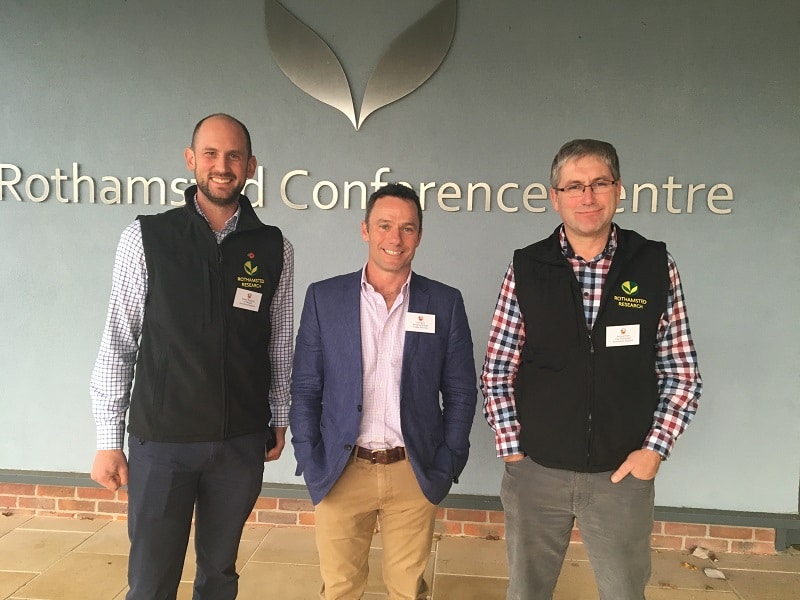
Rothamsted Enterprises saw the Launch Event for the Russell Building and Innovation Labs on Tuesday 14th March 2023, signifying the culmination of four years’ hard work.

During the event, the attendees heard speeches from Graham Birch, Chairman of Lawes Agricultural Trust, Adrian Hawkins OBE, Incoming Chairman of Hertfordshire Local Enterprise Partnership, and Richard Whitehead, Chairman of Hertfordshire Innovation Quarter – all of whom have been pivotal in accelerating Rothamsted campus’ growth.

This was followed by a ribbon cutting ceremony at the entrances of both buildings, with Adrian Hawkins OBE officially opening the new facilities.

Sitting within a green belt, Rothamsted Enterprises continually identifies opportunities of underutilised buildings within the Rothamsted campus, with both developments highlighting this. The beautiful red-brick Russell Building has been an iconic landmark in Rothamsted for generations and had lain empty since 2014. In addition to this, the now Innovation Laboratories were previously a goods-in warehouse that had not been in use since 2019.

Both projects were supported by Hertfordshire Local Enterprise PartnershipHertfordshire Innovation QuarterBBSRC and the Lawes Agricultural Trust, with a combined total of £3.5m investment. This funding enables the two buildings to have a new lease of life as a world-class base for businesses in the growing Agri-tech sector, creating jobs and boosting the local economy.

New tenant companies join a thriving ecosystem of Agri-tech, food tech and innovation businesses that are located on site with the world leading research expertise at Rothamsted Research.

A notable new tenant to the site is SugaROx, a SHAKE Climate Change spin-out from Rothamsted Research and Oxford University, set up to help farmers feed a global population expected to reach 9.8 billion people by 2050. When asked why they chose to be a part of Rothamsted’s tenant community, SugaROx stated: “the opportunity to co-locate with world-leading scientists from Rothamsted Research and access the excellent scientific facilities and services available on their site and the strategic location of the site – 30 minutes to central London by train and just over an hour’s drive to science and innovation hubs in Oxford and Cambridge”. 

Adam Wood, Enterprise Zone Manager, at Hertfordshire LEP, said: “We are delighted that our investment is enabling greater numbers of Agri-tech and food-tech innovators to take advantage of the world class expertise available at Rothamsted Research. We are pleased to welcome the new tenants of the Russell Building and Innovation Labs to Herts IQ and look forward to supporting their future success in Hertfordshire.”

Claire Wolstencroft, Agri-tech Business Development Manager at Rothamsted Enterprises, said: “The whole team and I are delighted by the recent developments. Rothamsted’s world-class agricultural research expertise and rich ecosystem of businesses makes it the ideal home for Agri-tech and food-tech innovators, offering valuable opportunities to collaborate and grow together. We are all looking forward to expanding the campus further in order to continue to foster and accelerate innovation.”

The Agri-tech Business Centre focuses on start-up businesses within the Agri-tech industry, offering business support and scientific services, where tenants can collaborate with each other as well as Rothamsted Research scientists, to tackle the major challenges facing today’s society, including climate change and food security. The Rothamsted campus offers excellent road and rail links to London and beyond and is located a 15-minute drive from Luton Airport.

Businesses looking for new lab or office premises in Hertfordshire should contact Claire Wolstencroft on 01582 938500 or email claire.wolstencroft@rothamstedenterprises.com

Olmix: Boost animal health and productivity the natural way

Member News
Agri-TechE

Prevention is better than cure when it comes to animal health – and British producers can now access cutting edge global technology to reduce the need for antibiotics and other medicines.
French firm Olmix, which specialises in marine biotechnology and uses algae to improve animal, plant and human health, recently acquired Nottinghamshire-based Micromix, to offer a complete package of animal and plant care.
“The key to good animal health and productivity is providing optimum nutrition and a clean, hygienic environment,” explains Robert Hamilton, animal care manager at Olmix UK. “Olmix has a complete range of natural products which are scientifically proven to aid digestion, strengthen immunity, and improve hygiene – and now British farmers have access to all of that technology.”
Producers can learn how research into biosolutions is feeding through to practical benefits on farm at the Dairy-Tech show, Stoneleigh, on 6 February, where Olmix and Micromix are exhibiting for the first time.
“Micromix has received a lot of funding for research and development – most recently from Innovate UK – and when combined with Olmix’s research budget of €8-9m (£7-7.9m) a year, the benefits to farmers are considerable,” says Wilson Boardman, managing director at Micromix. “I’ve never come across a company anywhere in the world that is so dedicated to algae and prepared to spend so much on research and development.”
By isolating different active ingredients derived from sustainably sourced algae, the firm can target specific areas of animal health. Solutions include Diet – a micronised clay mixed with algal extracts and electrolytes, which both protects against digestive disorders and revives calves suffering from diarrhoea.
Other products include MMi.S – which binds a wide range of mycotoxins in feed, thereby preventing mycotoxicosis – and Mistral; a clay-based sanitiser which reduces incidence of mastitis, digital dermatitis and calf infections.
But it’s not just about the animal – nutrition is derived from plants, and Olmix offers a truly holistic approach to animal and plant health, with a range of biostimulants and foliar nutrients proven to boost crop yields and quality.
“Instead of feeding low quality grass or silage, topped up with expensive supplements, surely it’s better to grow better quality forage in the first place,” says Chris Gamble, sales manager at Micromix. “For example, applying Micromix Essential – a foliar fertiliser containing all the essential micronutrients required for animal health and growth – to pasture is proven to increase forage quality, leading to higher blood nutrient levels in the livestock, alongside better growth rates and feed conversion efficiencies.”
Other solutions enable farmers to boost plant resistance to disease, reducing the need for chemical intervention.
“Farmers are rightly sceptical about the benefits of alternative health products, but we now have the science to explain and prove the benefits of algae,” says Mr Hamilton. “At a time when producers are under immense pressure to reduce chemical and antibiotic use, this technology will prove vital in maximising animal health and productivity in a sustainable way.”
For more information visit www.olmix.com.

A Food Rethink: Lessons from a Food Shortage

Member News
The views expressed in this Member News article are the author's own and do not necessarily represent those of Agri-TechE.

From energy to seasonality, Dan Saladino explores the big ideas prompted by the recent shortage of fresh produce in supermarkets. Is the now time for a major food rethink?

BBSRC-funded research outputs featured on BBC Radio 4 following a successful event co-hosted with Agri-TechE disseminating the learnings from projects.

Listen to the recording on the BBC website here: https://www.bbc.co.uk/programmes/m001k0cr

You can read and watch more about the event and the featured projects here: https://www.agri-tech-e.co.uk/novel-crops-have-real-promise-for-arable-rotation/

Shortages “tip of iceberg” if UK’s food security not tackled now, warns AgTech specialist

Member News
The views expressed in this Member News article are the author's own and do not necessarily represent those of Agri-TechE.

An industry leader has warned that the latest food shortages are “in danger of becoming the norm” and threaten to be merely “the tip of the iceberg”, if the urgent need to commit to more alternative, sustainable means of farming homegrown produce is being ignored.

According to Simon Deacon, the founder and CEO of AgTech specialist Light Science Technologies, the UK remains at the mercy of “a litany of global factors disrupting the food supply chain” unless “reliance on imports is dramatically cut to avert a long-term food crisis”.

Food shortages look set to be a continuing theme in 2023, as a combination of bad weather and transport problems in Africa and Europe has resulted in dwindling stocks of fresh produce. Empty supermarket shelves have made an unwelcome return, although issues with the food supply chain have been ongoing since the start of the pandemic in March 2020.

The latest shortage, which has affected fruit and veg supplies including tomatoes, cucumbers, peppers and potatoes, has seen supermarkets rationing items, with both the environment secretary and retailers warning that the problem could last for weeks.
It has been caused by a colder, wetter climate in Spain and Morocco – and even cancelled ferries – all of which have affected the volume of fruit reaching Britain. Although not so, according to Save British

Farming chair Liz Webster, who has cited this as “absolute nonsense”, pointing the finger at Brexit, and a “disastrous Conservative government that has no interest in food production, farming or even food supply.”

Supermarkets that have chosen to import cheaper produce over British suppliers have also been blamed by some, forcing growers to delay planting so crops will not be ready until March.

Simon said: “Whatever the reasons, what is becoming clearer is that food shortages are now in danger of becoming part of the norm, and what we’re seeing to date may just be the tip of the iceberg. A “perfect storm” has been gathering for the past three years – Covid, Brexit, climate change, geopolitical events, soaring energy costs, labour shortages, you name it – resulting in continual disruption. While all are valid factors, it’s a repeated narrative that is growing wearisome for consumers, because we still need to adequately address the problem concerning our food supply chain with a long-term solution, one which will increase our food security.

“Even before the war in Ukraine, industry leaders were warning of soaring energy and labour costs threatening the UK’s food security. Now, with China-Taiwan tensions rising, this has further, potentially far worse, ramifications for the supply chain as a whole.

He continued: “The long and the short of it is, we have found a solution, in indoor farming. But it needs to be implemented and rolled out for us to leverage anywhere near the level of benefit it promises. As food costs continue to soar, the call to improve agricultural practices has never been so loud.

Strategists have also been saying for some time now that agriculture tech will be key to feeding a fast-growing global population, expected to reach 8.6 billion in 2030 and 9.8 billion in 2050. Only last week, the NFU warned that the “clock is ticking” for the government to protect homegrown food supply. Yet it needs to also boost, not just protect, to ensure the UK’s reliance on imports is dramatically reduced and we avert a long-term food crisis.

He urged: “This can only be done by harnessing the innovation found in AgTech, the possibilities of which are endless – less energy, reduced waste and more efficiency to name a few. However, this must be backed up by more investment and commitment by the government and the industry at large to make it happen. In terms of the future of our food, sustainable is obtainable, but only if we act now.”

Visit http://www.lightsciencetech.com for further information