Patenting, Trademarks, Copyright, Trade Secrets...
In the next installment of our micro-learning series, we’ll explore potential legal solutions to help you keep your ideas safe and sound.

How digital twins can help confront the challenges of scaling up cultured protein

Member News
The views expressed in this Member News article are the author's own and do not necessarily represent those of Agri-TechE.

Blog from Steve Thomas & James Westley, Cambridge Consultants

For companies developing cultured meat and other cultured ingredients, each step up in scale presents both technical and financial challenges. Predicting the performance of a cell expansion and differentiation process when climbing the process scale ladder from lab to pilot to commercial scale is an expensive and uncertain affair. At each stage, the investment in plant equipment grows exponentially, as does the volume of media required to run each development and optimisation culture. 

Increasing the volume of the culture process can completely change the physics of key process behaviours such as fluidic mixing, gas transfer, damaging turbulent energy dissipation and laminar shear. The biology’s response to these hard to predict changes is at best non-linear and at worse, chaotic. All this adds up to an uncomfortable high financial risk, low-certainty situation that technology leaders and investors thoroughly dislike. The challenge for bioprocessing engineering 

This begs a key question for bioprocessing engineering: what can cultured protein ventures do to gain insight into the behaviour of their processes before placing a bet on CAPEX and development costs? The GFI has highlighted the ability to better computationally model behaviours of these processes at scale as a top priority for cellular agriculture and have funded some projects with the Cultured Meat Modelling Consortium to address the question.   We at CC also believe that sophisticated predictive models – digital twins – that couple biology, heat transfer, mass transfer and fluid dynamics can shed light on potential issues when scaling up. These biofluidic digital twins are capable of:  Rapidly gaining insights into process behaviour across a wide operational, geometric, and fluidic parameter space  
  • Enabling ‘virtual’ sensors   Using a combination of the above to test control regimes, ultimately feeding into highly stable model-based control 
  • Exploring process behaviours to inform investment decisions 

Engineering biology is never straightforward. There is an enormous number of variables that influence the behaviour of a cultured meat process, ranging from media composition to aeration and agitation rates. Understanding the scaled process behaviour response across this vast design space far from economically viable, especially for expensive to change parameters like plant specifications.  

Digital twins trained with real data from lower-cost lab experiments and thermofluidic physics can be used to explore the design space much more economically. As an example, we have trained a digital twin to give us insights into the local volumetric oxygen mass transfer rate (KLA) , damaging viscous dissipation energy, and corresponding local biomass growth rate of S. cerevisiae for a range of bioreactor operating conditions and geometries.  

Below you can see a matrix of animations showing cell damaging zones around an impeller (left) and the local oxygen transfer rate (KLA, right) across a range of impeller tip speeds (top) and media viscosities (bottom). 

More visibility, with no added cost 

The control of a cultured protein bioprocess often depends on careful monitoring of process variables such as dissolved oxygen, glucose and lactate, via sensors. However, as processes scale up, the distribution of these variables widens in the reactor. A solution to this is to simply to increase the number of sensors, but his will have economic limits. Digital twins can unlock this trade-off via the creation of virtual sensors. Using the digital twin we developed in the previous example, we can infer the distribution of dissolved oxygen content, glucose and biomass growth rate throughout the bioreactor.  

Maximising yield and identifying problems early 

Cell culture bioprocesses are inherently complex and nonlinear, making it difficult to predict and control the behaviour of the system. Multivariate interactions, metabolism variability and spatial distributions all contribute to a very difficult control engineering problem.  

Digital twins can improve upon typical feedback control regimes and alleviate these issues by acting like dynamic reduced order models of the system. This approach can dampen out the instabilities and slow response time associated with typical closed-loop feedback approaches, ultimately improving performance.  This approach would be possible with the digital twin we have built but would require testing and validation using a real bioprocess. An added benefit is that it enables the detection of unexpected conditions in the cell culture, for example elevated oxygen uptake rate due to contamination. 

Delighting the consumer and reaching profitability 

The team here at CC believes that these types of approaches can address some of the biggest challenges with delivering cultured protein products. We can see a future for industrial biotechnology where these approaches can be extrapolated to enhancing product taste and texture by also considering the expression of volatile metabolites, proteins and lipids as part of the digital twin. Doing so will accelerate cultured protein companies towards delightful consumer experiences within a viable and sustainable business model. 

Ultimately the world needs to meet a significant challenge. At its heart is the commercial imperative to deliver a final product that meets not only the desired levels of quality and purity, but that also provides a company with a viable business model. Not only that, but food with bio-derived components must be put on consumers’ tables that is acceptable to their sensibilities and reflects the demand for sustainability. If you are looking for ways to revolutionise your approach to bioprocessing engineering and want to know more about how we can help, email Steve Thomas or James Westley. It’ll be great to hear from you. 

SCI Partners: Dafydd Wright Speaks on Early Careers in Agri-tech

Member News
The views expressed in this Member News article are the author's own and do not necessarily represent those of Agri-TechE.

Dafydd Wright, our Managing Partner spoke at Agri-TechE ’s virtual event on career paths across the
agi-tech ecosystem.

Intended for those with nascent careers in agri-tech and agriculture, Friday’s event was developed to
support delegates in their decision making, providing examples of professional career trajectories.

Delivering the keynote speech, Dafydd launched the core content with his usual energy, giving case
studies of individuals who have enjoyed rewarding careers. His speech was followed by a panel
discussion from experts in areas that included consultancy, investment, agri-engineering, research,
knowledge exchange and marketing. The presentations were then followed by an audience Q&A.

“The level of engagement and quality of questions demonstrated the skill and confidence of the
cohort entering the agri-tech and agricultural sector,” comments Dafydd. “I was delighted to be
involved in this event and to share our experience of career progression with a highly engaged
audience.”

Eagle Genomics and the Earlham Institute demonstrate excellent example of knowledge partnership

Member News
The views expressed in this Member News article are the author's own and do not necessarily represent those of Agri-TechE.

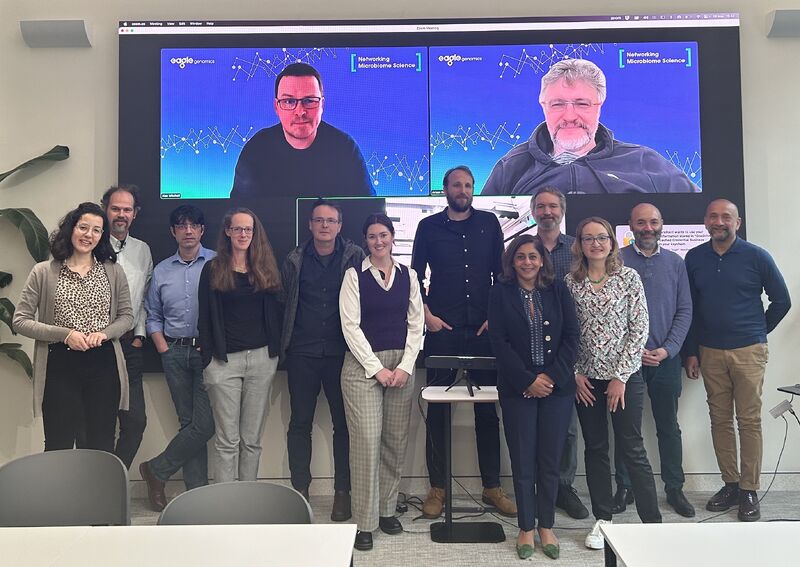
We had the pleasure of welcoming our colleagues from the Earlham Institute in our London office at the Knowledge Quarter! The Earlham Institute is one of our foundational knowledge partners, and collaboratively we aim to identify novel avenues to analyze, explore and exploit complex microbiome data.

The Earlham Institute brings a wealth of expertise in genomics and bioinformatics, as well as developing and testing laboratory methods and computational biology pipelines to study microbial communities.

Coming Soon from Farmscan AG: New Remote Load Cell Monitoring System

Member News
The views expressed in this Member News article are the author's own and do not necessarily represent those of Agri-TechE.

For more than four decades, FarmscanAg and our sister company in Australia, SmartAg Systems, have collaborated closely with manufacturers, engineers, and farmers to design and provide technology that meets the demands of the industry and delivers tangible efficiencies in the field. We are thrilled to announce the development of our latest innovation – a remote load cell monitoring system that caters to the needs of farmers who wish to track the weight of the bin from afar, even when they are not within the proximity of the operating system.

What is remote load cell monitoring?

Remote load cell monitoring is a system that allows farmers to monitor the weight of their crops, livestock, or equipment from a distance using load cells and wireless technology. Load cells are devices that convert a physical force or weight into an electrical signal, which can be transmitted wirelessly to a remote monitoring system, such as a smartphone, tablet, or computer.

Here’s how our new remote load cell monitoring system works:

  1. Our load cells are often installed beneath or adjacent to the equipment or structure that needs to be weighed, such as a grain bin or livestock scale.
  2. The load cells usually communicate with our rate controller using CanBus but we have also connected a wireless transmitter that sends the weight data to our remote monitoring system application.
  3. The remote monitoring system displays the weight data in real-time, allowing the farmer to track the weight of their crops, livestock, or equipment without having to physically be present. In the latest version of the APP, it is also possible to TARE the bin or weighbridge remotely.
  4. The system can also be set up to send alerts if the weight exceeds a certain threshold. This can be very helpful where fill times are long and you would like the system to automatically stop.

How does this help farmers?

A remote load cell monitoring system can help farmers save time and improve their operations by allowing them to remotely monitor anything being weighed using their load cell system.

Remote load cell monitoring can be a valuable tool for farmers in several ways:

  1. Enable easy and safe calibration of seeders: Load cells can be fitted to seeders enabling farmers to not only fill accurately but also calibrate the drill – without leaving the cab! Simply start the calibration process and wait until 5% or more of the load has been dispensed, next time you stop for longer than 5 seconds, press ‘finish calibration’. The new calibration is displayed and you are then able to accept or reject the calibration. Presto – calibration without leaving the cab.
  2. Prevent overloading of farm vehicles: Load cells can also be installed on farm vehicles, such as trucks and trailers, to monitor the weight of the load being transported. This helps farmers avoid overloading their vehicles, which can cause damage to roads and bridges and result in fines. By monitoring the weight of their loads remotely, farmers can ensure they are within legal weight limits during the load/fill process and avoid costly penalties.
  3. Improved safety: By monitoring the weight of farm equipment and vehicles remotely, farmers can ensure that they are operating within safe limits. Overloading equipment or vehicles can cause accidents, which can be dangerous and costly. Remote load cell monitoring can help farmers avoid these risks and keep their workers and equipment safe.

Overall, remote load cell monitoring can help farmers optimise their operations, increase efficiency, and reduce costs, while also improving safety and environmental sustainability.

Does the system require software updates?

Throughout the development of this new product, we have focused on what farmers truly want: simplicity. With this in mind, we are designing the system to contain one line of numbers for each BIN or set of load cells being monitored, which means updates are not required for this set-and-forget app!

What products is it compatible with?

It is designed to be used exclusively with the FarmscanAG Load Cell interface. However, its versatile design allows it to be fitted to many other load cell summation products, providing that the system can communicate on a RS 232 serial port.

Want to learn more?

We’re here to help you achieve real-time efficiencies in the field. Get in touch with our friendly and knowledgeable team to find out more.


Small Robot Company feature on Farmers Weekly Podcast

Member News
The views expressed in this Member News article are the author's own and do not necessarily represent those of Agri-TechE.

Small Robot Company speak to Farmers Weekly Podcast about their battle for survival.

Listen Here

Small Robot Company feature in Farming Today on BBC Radio

Member News
The views expressed in this Member News article are the author's own and do not necessarily represent those of Agri-TechE.

A British farm robot firm fights for survival after a major investor pulls out and highlights the difficulties of raising investment in the agritech sector to expand a business.

Listen Here

Eagle Labs Launch AgriTech Bridge Programme

Member News
The views expressed in this Member News article are the author's own and do not necessarily represent those of Agri-TechE.

Digitising the food supply chain

AgriTech Bridge powered by Barclays Eagle Labs funded by UK Government

In collaboration with CodeBase, we have developed a new programme, AgriTech Bridge, that brings together some of the UK’s leading corporations and most promising startups. This programme allows some of UK’s biggest firms to share experiences and connect and learn both with peers and startups working in the industry.

The Challenge

Whether it’s farm gate solutions, supplier forecasting, waste management, or sustainable packaging – data and digitisation are key to understanding and securing the food supply chain.

In today’s fast and sometimes volatile food supply chain, disruptive innovation is necessary from field to fork in order to help the industry to survive.

How is the programme delivered?

The programme is delivered via a combination of virtual and in-person sessions once a month over a 10-month period through a series of themed meetups that brings together business and industry experts as well as leaders from established food supply or agriculture companies and startups to work towards a sustainable food supply chain.

Each of the ten modules is designed to expose food supply chain businesses and the AgriTech start-ups to core strategic thinking and best practices and will cover relevant topics that ensure a valuable exchange about innovation.

Why join?

Technology can help redefine food production systems, however we understand how hard it is for larger food supply chain companies and startups to work together to help tackle some of the challenges the industry faces. Through the Eagle Labs AgriTech Bridge programme, we help surface these challenges to collectively come up with new solutions to age-old problems.


Who’s it for?

The programme is aimed at corporates and startups involved at any stage of the food supply chain, from field to fork.

Through monthly physical & virtual meetings in a safe, innovative space we’re able to share ideas and combine expertise around specific shared challenges to work towards a sustainable solution.

Startups

Food supply or AgriTech startups or startups whose products, services or innovations can be applied to the food supply chain will be able to build deeper domain expertise and meet larger businesses from the industry to expand their network and potentially provide solutions or proofs-of-concept for larger businesses.

Established businesses

Incumbent businesses are introduced to new technologies, practices, skills and cultures to help transform and accelerate innovation in their business.

Apply Here

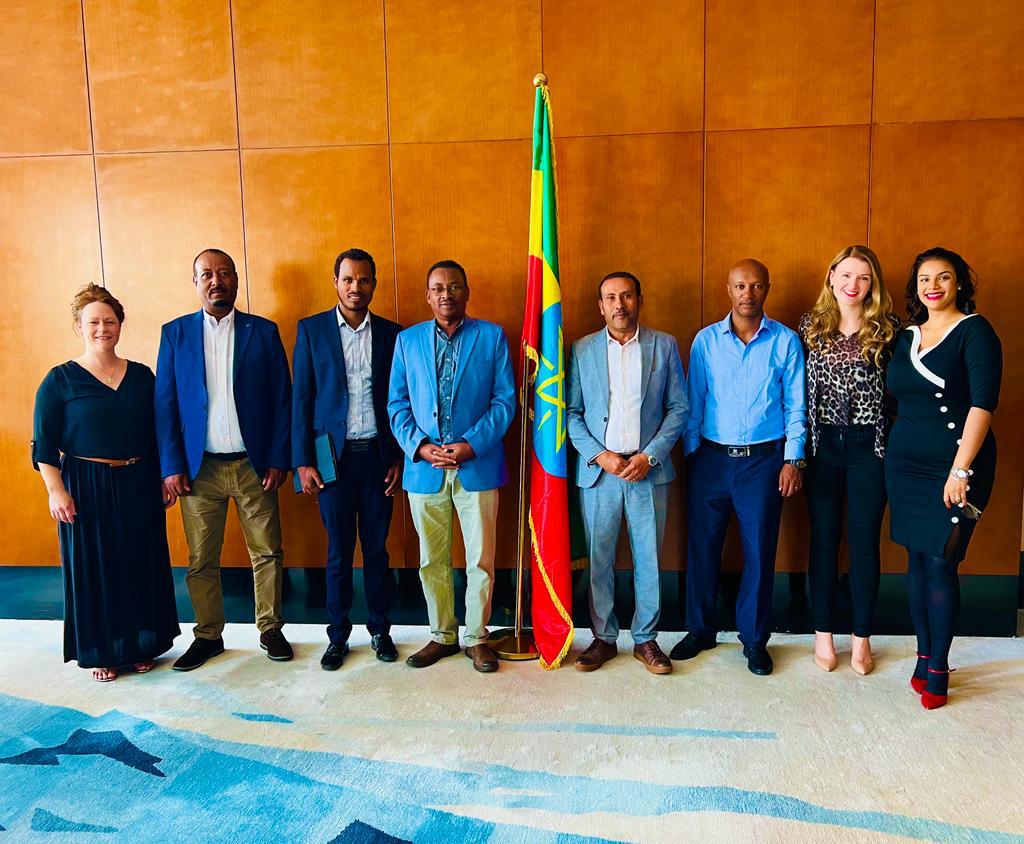
CHAP: A UK-ETHIOPIA collaborative project aims to deliver a game changing solution to improve energy access and food security in Ethiopia

Member News
The views expressed in this Member News article are the author's own and do not necessarily represent those of Agri-TechE.

SWIFT response to energy challenges in Ethiopia

A UK-ETHIOPIA collaborative project aims to deliver a game changing solution to improve energy access and food security in a rural and off-grid region in Ethiopia through the use of satellite data.

The project, funded through Innovate UK Energy Catalyst Round 9, involves a cross-sector consortium including Crop Health & Protection (CHAP)LENKÉ: Space & Water SolutionsArba Minch University and CABI.

In Ethiopia, rural communities make up 70% of the population yet currently have less than 20% energy access compared to urban areas. The need is accentuated by the current energy crisis, with increasing fossil fuel costs crippling the use of stand-alone diesel generators for irrigation. This, coupled with extreme drought, has made it near impossible for many farmers to grow and harvest crops, resulting in significant food insecurity across many parts of Ethiopia.

One of the challenges of providing electricity to rural communities is estimating the energy demand for the likes of irrigation. For mini-grid developers and renewable energy providers, having access to accurate demand forecasting technology is critical to avoiding under or over investments.

This project therefore focuses on estimating energy demand for small-scale hydro, wind and solar mini-grids that would power irrigation systems in rural areas by utilising LENKÉ: Space & Water Solutions’ state-of-the-art technology, SWIFT (Soil Water Index Forecast Technology). SWIFT is developed by modelling a combination of satellite, climate and statical data to predict soil moisture concentration at different soil depths.

CEO of LENKÉ, Dr Lensa Jotte, said: “The objective of this project is to provide a decision support tool for the application of renewable, affordable, and sustainable energy sources to off-grid, marginalised communities in Ethiopia.”

“We will use earth observation data to identify, plan and monitor mini-grid installation. The upscaled SWIFT will act as a powerful tool within the growing Ethiopian energy market in order to de-risk mini-grid investment in communities.”

Senior International Business Development Manager for UK Agri-TechE Centre CHAP, Dr Jenna Ross OBE, said: “I am proud to be leading a fantastic international multidisciplinary team to deliver this game changing solution that will improve energy and food security in Ethiopia.

“The project will be targeted towards Garda Marta, Southern Nations Nationalities and Peoples Region, a community based 140km from Arba Minch town. Historically, farmers in the area have used diesel pumps to drive irrigation, however, due to the current energy challenges and extreme droughts, have been unable to afford this. The impact of this is significant, with many farmers unable to harvest their crops for the last six seasons leading to sever food insecurity.”

An associate researcher at Renewable Energy Technology Research Center at Arba Minch University, Eng. Beyene Feye, said: ‘‘The project will contribute a significant role in response to the sustainable development goal of zero hunger and access to affordable energy. The adoption of renewable energy sources such as small/mini-hydro, wind and solar are identified as eco-friendly energy sources, and optimal utilization of these resources can minimize environmental impacts.

“The proper design and optimisation of energy sources by using on-ground truth data can be validated via the application of cutting-edge technology of SWIFT. I am delighted to be a part of this fanciful international team with diverse education background working on the same goals to solve the problems of rural communities.”

Research Scientist and Programmes Manager with CABI, Dr Negussie Efa, said: “The project aligns very well with the government’s aspiration and plan to mitigate challenges related to reliance of the agricultural sector on rainfall, as well as complements the green economy development efforts of the country. The project will be piloted among a farming community who have been experiencing frequent crop failure due to shortage of rain and are in dire need of interventions that promote affordable energy sources and irrigation technologies.

“It is my sincere belief that bringing together international and local teams of experts will undoubtedly lead the project to success. The lessons and experiences from the pilot area have great potential to be scaled up and out to other regions or the country.”

To find out more about this project, contact CHAP at enquiries@chap-solutions.co.uk or visit www.chap-solutions.co.uk

B-Hive Innovations: Potato crop radar test on track for a successful final season

Member News
The views expressed in this Member News article are the author's own and do not necessarily represent those of Agri-TechE.

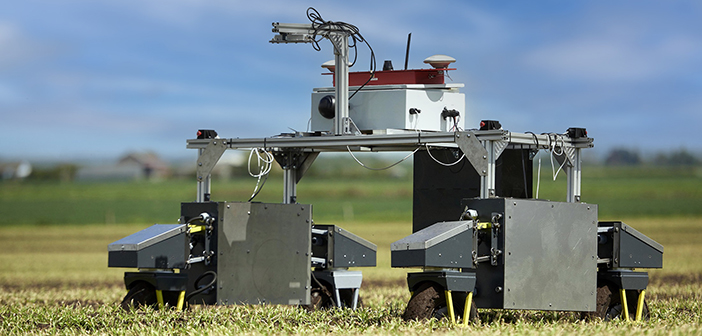
Ground sensing technology TuberScan – developed by agri-tech business B-hive Innovations and partners – is entering its final phase of testing both overseas and now in the UK following the start of this year’s weather-delayed potato growing season.

In its current iteration, the TuberScan system comprises of a bespoke ground penetrating radar (GPR) system, GPS units and in-field and remote sensors, backed up by computer vision and AI, which provide detailed information on potato crop growth characteristics and performance.

The system also detects where each potato has been planted, to go beyond traditional sampling methods conducted by growers.

The four-year research and development project has been funded by Innovate UK across two different research programmes. B-hive has collaborated with nationwide potato supplier Branston Ltd, The University of Manchester and Harper Adams University to create demonstration units.

Effie Warwick-John, project manager on TuberScan at B-hive Innovations, is confident that the project is on track for a successful final season, which has commenced with field trials in Mallorca and Lincolnshire.

“The trials in Spain enable us to check that our equipment is working accurately, with enough hardware stocked ahead of the UK growing season to allow for damage to prototypes during testing. It allows us to determine which hardware choices are best suited to the start or end of the season as conditions change and foliage develops.”

“We are experimenting with ground-penetrating radar systems (GPR) that can operate to a high accuracy despite having a relatively large air gap between the sensor and the soil, providing a great balance between ease of mounting and quality of data.”

In the UK, trialling has been in three fields owned by David Armstrong Farms in Lincolnshire to collect additional testing data.

David Armstrong said: “As a grower, I would like to learn as much about my produce as possible. Ensuring its quality, variety and yield size is crucial to help me make informed decisions around the growing process and understand the marketable yield.

“It’s exciting to see how modern methods of monitoring root crop performance could soon become the norm and it’s imperative that we keep waste to a minimum. From first-hand experience we believe that TuberScan can be a key component to achieving this.”

SugaROX: A new home and a growing team

Member News
The views expressed in this Member News article are the author's own and do not necessarily represent those of Agri-TechE.

The recruitment of a Plant Biologist and Synthetic Organic Chemist comes at a key time for SugaROx. Enabled by recent success with its Seed Round and two grant applications, the new appointments to the R&D Team will be based in Harpenden and Oxford for access to cutting-edge research facilities.

‘The addition of Dr Soheila Bayat to our team increases our capacity to expand our wheat field trials to international markets and launch work on four additional crops’, explains Dr Cara Griffiths, SugaROx CTO. ‘After a few years developing my knowledge and skills in academia, I was looking for an opportunity to turn science to impact’, says Soheila. ‘The chance to make a real difference to farming practice is one of the key things that attracted me to this role with SugaROx’.

‘Dr Rob Jenkins will work on the refining and upscaling of the synthesis process for our active ingredient (AI) and test new AI concepts in our pipeline’, complements Cara. Since completing his PhD, Rob worked for 4 years in pharma designing key building blocks and developing and scaling up synthesis routes for active ingredients. ‘The challenge of ensuring sustainable world food production is a monumental one, and I am excited to apply my knowledge and skills to help solve that’, says Rob.

‘On the more commercial front, our new board members bring additional experience and connections to augment and complement our team’s capabilities’, says Bianca Forte, SugaROx Business Development Director. For Mark Robbins, SugaROx CEO, the combined experience in science-based and agri-tech ventures of the new board members is also invaluable for fund raising.

Paul Rous, Founder and Managing Director of Regenerate Ventures, has founded four VC funds launching, scaling, and exiting tens of companies. He is also actively involved in his family’s 4000-acre arable farm in Suffolk. ‘Biostimulants have a key role to play in helping farmers increase crop productivity and resilience, and I know from my farming activities how important that is’, says Paul. ‘SugaROx has a team with the commitment and experience to make a real difference in this space’.

Dr Andrew Muir, Fund Principal for the £100M UK Innovation & Science Seed Fund, is a chemistry alumnus from the University of Oxford. Andy started his career in research and business development in industry then pivoted into the venture capital space where he specialised in launching and scaling spin-outs from academia. ‘I am excited to work with a technology that span-out of my home university to deliver global impact on food security and climate change’, says Andy.

Rob Hill, Director of Innovation and Commercialisation at Rothamsted Research, manages the commercial activities of the Institute and its interest in SHAKE Climate Change, the UK’s research-led seed investment programme for agri-tech start-ups with a positive impact on climate change. Before joining Rothamsted four years ago, Rob worked in the private equity and venture investment sectors. ‘Having closely followed SugaROx, both as a Rothamsted spin-out and a SHAKE portfolio company, I am delighted to join the board at such an exciting stage of development’, says Rob.

MMP Tax explains the details behind the R&D intensive tax credit

Member News
The views expressed in this Member News article are the author's own and do not necessarily represent those of Agri-TechE.

At the time of the Autumn Statement, MMP voiced its concerns regarding the scheme-wide reduction in generosity of the R&D Tax Credit for SMEs.

The fear was that genuinely innovative businesses would be punished for offences committed by others. To some extent, those concerns have been acknowledged in the Spring Budget 2023.

In the Budget Statement, the Chancellor announced that for expenditure from 1 April this year, loss-making SMEs with a minimum R&D intensity of 40% will be eligible for an enhanced payable credit of 27p for every £1 spent on eligible R&D. This is a big increase over 18.6% net benefit rate for other loss-making SMEs.

In this instance, the 40% benchmark for R&D intensity will be calculated as the ratio of the company’s qualifying R&D expenditure set against its non-Corporation Tax deductible total expenditure over the same period.*

The qualifying R&D expenditure is defined as expenditure that is eligible under the existing R&D tax schemes.

Once the legislation is in place, eligible SMEs will be able to claim the credit at this higher rate through their CT return but the legislation may not be voted into law until Summer 2023. In the meantime, however, claimants will have to initially claim the payable credit under the lower 10% rate and amend the claim at a later date or delay submission of their claim until the Finance Bill is enacted.

This new measure equates to a 27% net benefit that will have a positive impact on some of the UK’s most innovative businesses. MMP warmly supports this move, but remains disappointed that genuinely innovative SMEs continue to remain unprotected from the slashing of the R&D Tax Credit announced in the Chancellor’s Autumn Statement, ostensibly to reduce fraud and abuse.

The large scale abuse of the R&D tax scheme is a significant problem that requires addressing but to continue to do so at the expense of those who are compliant is not only short-sighted, it is unnecessary. There are far more effective tools the government has at its disposal for targeting fraudulent claimants and MMP will continue to seek for their consideration and inclusion.

*Total expenditure for this purpose will be calculated from the total expenses figure in the profit and loss (P&L) account, adjusted by adding any amount of expenditure used under s1308 Corporation Tax Act (CTA) 2009 and by subtracting any amount not deductible for CT purposes.

BBRO and The Morley Agricultural Foundation: Measuring Emissions- The Morley Flux Towers

Member News
The views expressed in this Member News article are the author's own and do not necessarily represent those of Agri-TechE.

Visitors to Morley and people who live locally are noticing a new arrival in one of our fields. Dr Georgina Barrett, the research scientist from BBRO overseeing the project hosted and funded by TMAF, describes what’s going on, why, and how.

“The UK government has set a Net Zero target for 2050. Net Zero is when the amount of greenhouse gas emitted is equal to that captured. Agriculture has a key role to play in reaching this target as plants and soil can capture and store large amounts of carbon.

Measurements Matter

Measuring emissions in agriculture is important to understand how close to Net Zero we are and what can be done to reduce emissions and increase carbon capture. Some aspects are straightforward such as using more efficient tractors and less fertiliser. But understanding the emissions from crops and soil is much more challenging. This is because the emissions are on a field scale and can be heavily influenced by the weather and soil properties. At a small scale, chambers the size of a lunchbox can be used to measure emissions. But this doesn’t really capture the scale and variability of a whole field.

Field work for the real picture

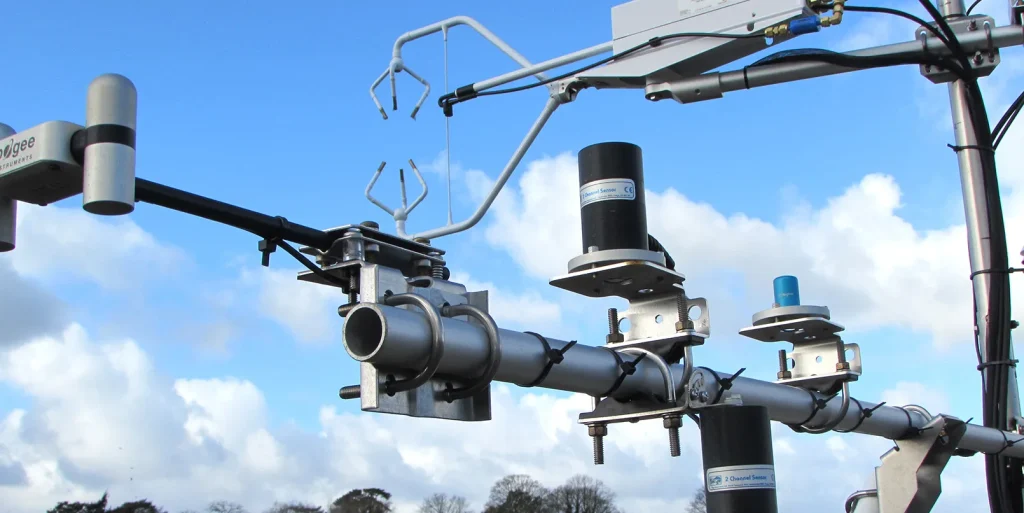
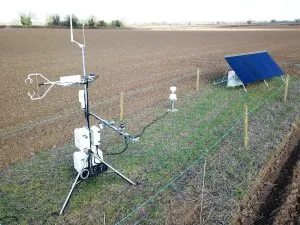
To measure emissions at field scale we use flux towers. These look like a met office weather station but have more sensors. In addition to standard weather sensors measuring rain, temperature, humidity and windspeed, the flux towers measure a range of soil parameters including soil temperature and wetness as well as the light intercepted by the crop.

Most crucial is the gas analyser which measures the amount of CO2 in the air and coupled with the rest of the sensors, and using some complex calculations, can give a measure of the CO2 being emitted or taken up across a whole field.

This is all remotely recorded and uploaded via a phone network so data can be analysed and checked regularly. The large number of sensors means that the system requires a lot of power, and this must be generated on site as the towers are not in a location that enables access to mains power. For this reason, a large solar panel is required to ensure the system has the power it needs to reliably run.

Carbon emission changes with the season

A typical crop cycle will see CO2 being emitted from the bare soil before the crop emerges. This then declines as the plants grow and take up CO2 for photosynthesis. This uptake increases further as the crop grows and produces more biomass.

This baseline measure of CO2 will be used to understand emissions from different crops as there is data lacking on crop emissions on a field scale. In addition to this there is another flux tower in a neighbouring field at Morley which will be used to compare emissions from different management practices. To start with, ploughing and a cover crop (a crop grown purely to enhance soil health) will be compared. In addition to this the sugar beet crop will be monitored to ensure it remains healthy and yields well.

Team work with towers over time

The towers will be in place for 18 months to capture emissions from the sugar beet crop and into the following wheat crop. They will then be relocated to capture another sugar beet crop, with this process happening 3 times in a 6-year period. By the end of the project the data will be used to guide best practice with regards to greenhouse gas emissions on farm and help direct future agricultural policy concerned with Net Zero and soil health.”

Find out more about TMAF’s Carbon Monitoring in Sugar Beet.