How should businesses be preparing for the new strategic partnership with Europe?
 Agri-TechE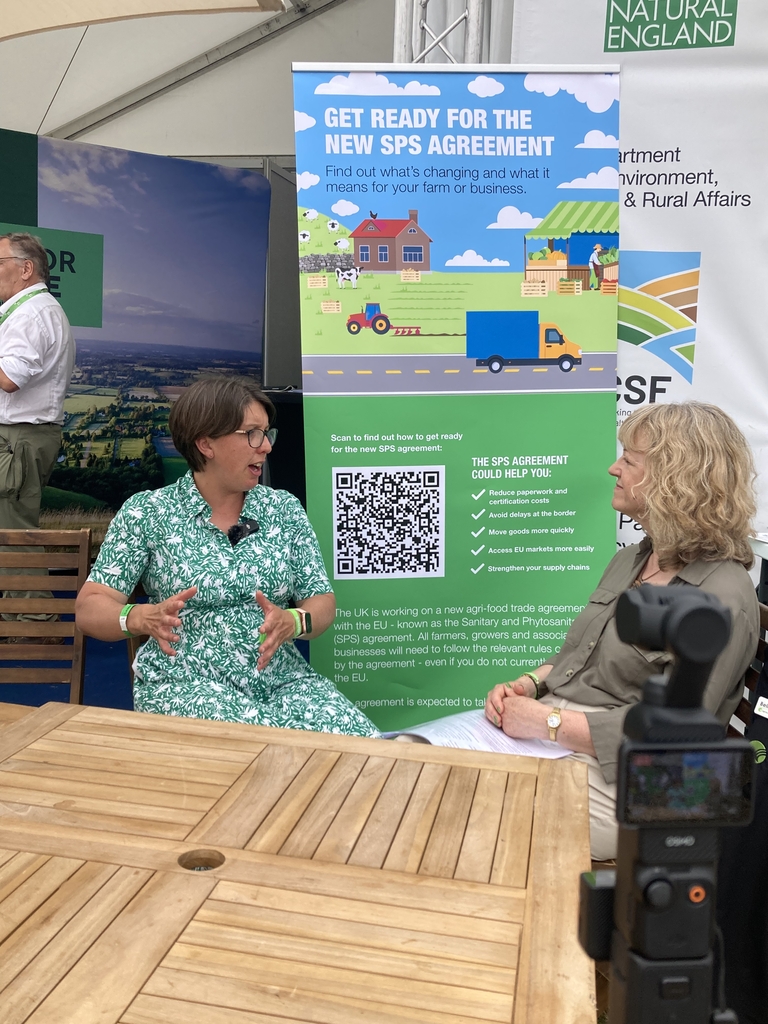
We need to make sure all farmers recognise that the SPS deal will mean that they need to make alterations to their business practices and be ready for what those rule changes are going to mean.
Some of the aspects of the SPS agreement will be around livestock tracing and disease. There will also be changes around plant protection products, which will obviously have big implications for both arable and horticulture.
But also, if you import and export, obviously there will be big opportunities because we’ll be removing that friction at the border. That’s what the SPS agreement is there to do.
The UK government is negotiating an agreement with the EU on the regulations for trade and movement of plants, plant products, animals, animal products, feed and food. This is called a sanitary and phytosanitary (SPS) agreement, known as the UK-EU ‘SPS Agreement’.
How should businesses be preparing for this new strategic partnership with Europe?
Part of ‘resetting’ our relationship with Europe involves ‘dynamically aligning’. This means Great Britain (England, Scotland and Wales) and Northern Ireland will apply certain rules in line with the EU as they happen. The process of becoming aligned is currently being discussed by businesses, Defra and government.
Negotiations were due to conclude and there was going to be a UK-EU summit on the 22nd of July. That’s been pushed back while we wait for the new Prime Minister, Andy Burnham, to arrive. In the interim, discussions continue.
While we don’t have the final, comprehensive instructions from government yet, we know where the changes are heading: if you grow arable crops, brassicas, or horticulture, or if you manage livestock and poultry, your daily practices are going to change.
We sat down with Sarah Evered from the Department for Environment, Food and Rural Affairs who is heading up a unit that’s supporting primary production sectors get ready for the new sanitary and phytosanitary (SPS) agreement to map out what you can do right now to prepare your business for the eventualities ahead. The advice is to keep tracking the latest Defra updates and keep your eyes, ears, and minds open.
For more information, see Defra’s: Food production, plants, animals and associated sectors: preparing your business
Post Overview
Agri-TechE Related Posts
Free Business Mentoring for UK Start-Ups

The Discipline of Creating Space

Connected Space Economy: Space East Capabilities Report
The Farming Roadmap 2025: A new government but the same farming blueprint
Bridging the Gap Between Innovation & On-Farm Adoption