Defra’s Science Chief Announced as REAP Conference keynote
 Agri-TechE
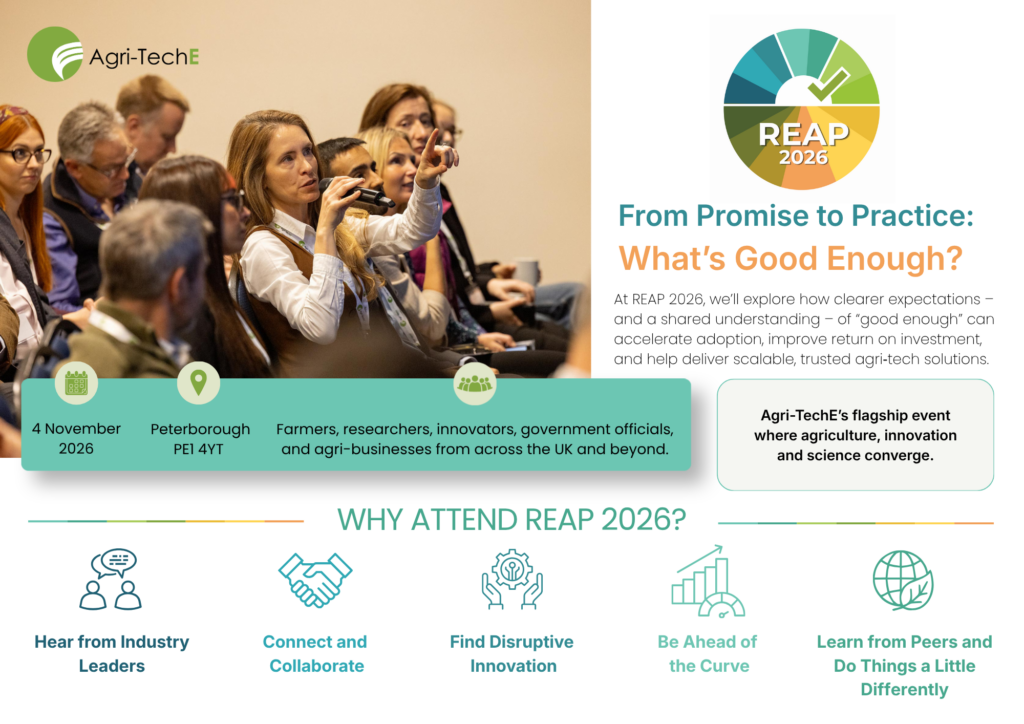
Professor Anjali Goswami FRS, Defra’s Chief Scientific Advisor (CSA) has been announced as the keynote speaker for Agri-TechE’s REAP Conference, to be held in Peterborough on the 4th November 2026.
The role of the CSA is to advise Ministers on the evidence base to support policy decisions, as well as ensuring quality and “fit-for-purpose” science. In addition to her role as Defra’s CSA, Prof. Goswami is also Director General for Science, Data and Analysis.
The theme of REAP 2026 is understanding the balance between the “perfect” and the “practical” when it comes to the evidence required for decision-making and tech adoption in agriculture and horticulture. We asked Prof Goswami her views on the REAP 2026 Conference theme, and as Defra CSA how she judges “how good is good enough?”
1. What are your initial reflections on this year’s conference theme – “how good is good enough?”
It’s an important question. Since starting this role, I’ve been very focused on the impact our policies and research have on the ground. We need to keep asking whether we have the right tools, data and analysis in place to give us the best possible insight, and to support informed decisions that make the best use of the resources available. That is just as true for the farming community as it is for government.
As we continue to develop the innovation pipeline, there is a real need to think about how we move from innovation to adoption of new technology on farm. Better coordination of test and trial sites will be a key part of that. Evidence of what works, whether from formal evaluation or from practical examples such as case studies, is important to Defra in informing decisions and promoting approaches that can deliver in practice.
2. How is Defra embedding science-led policy thinking into its decision-making – how do you decide “how good is good enough” when gathering evidence?
Defra relies on a mix of rigorous evidence from formal evaluations of funded programmes, and emerging evidence of what works through case studies of projects that have successfully moved from innovation to commercial application. The standard of evidence also depends on the issue.
Government must be especially rigorous where the risks are high, such as animal disease or chemicals, and that is absolutely essential. But we also know that we need innovative ideas to achieve our challenging outcomes. In farming, there is space to experiment and take measured risks.
That’s why we are so keen to focus on testing and trialling, and on improving communications and outreach to farmers about what works.
3. Defra is arguably one of the most important government departments within which science informs policy – is the scientific evidence that you need available keeping pace with the questions to the industry is seeking answers?
Defra is a major science department, with around 5,000 scientists across the group, including our arm’s-length bodies. We also deal with an exceptionally broad agenda, and no science team can keep pace with the full volume of emerging evidence across every area on its own.
One of the biggest challenges is not simply accessing that evidence, but understanding it, testing its relevance, and translating it into a form that can support policy change. That is why strong links between science, analysis and policy teams are so important.
4. Given there is a likely spectrum of views in the agri-innovation ecosystem about “how good is good enough” – from farmers, researchers, tech developers, investors, planners etc – how would you like to see these views aligned to advance productivity and Nature-based recovery?
I’d like to see a clearer interface between agri-tech SMEs, researchers, investors, advisers and farmer-facing services.
Different parts of the ecosystem will always have different thresholds for what counts as “good enough”, but they need a shared understanding of the evidence needed to move from promising idea to practical adoption. That would support better coordination, help develop technologies that can be scaled, and make it easier for farmers to identify approaches that are credible, affordable and relevant to their businesses.
5. Where is the balance between scientific rigour and enough practical evidence to inform decision-making?
It is important to have both. Practical evidence, including case studies and farmer experience, can provide a richer picture of how a particular technology works in a specific sector or context. Formal evaluation is needed to understand the performance of a programme as a whole, and to assess its longer-term impact.
The balance depends on the decision being made. For high-risk decisions, we need a very strong evidence base. For lower-risk innovation, we should be prepared to learn through well-designed trials, clear feedback loops and honest assessment of what is, and is not, working.
In its 13th year, REAP is Agri-TechE’s flagship event where agriculture, innovation and science converge.
The Conference attracts researchers, innovators, government officials, farmers, and agri-businesses from across the UK and beyond, with farmers and agri-businesses making up an average of 30% of the audience.
REAP 2026 tickets are available now through the Agri-TechE website. Agri-TechE members are eligible for discounts according to their tier of membership.
Post Overview
Agri-TechE Related Posts
Why agri-tech adoption is usually a people challenge, not a technology challenge
Space4Climate Agriculture Market Breakthrough Showcase, 26 January 2026
The first International Innovation Meeting for Pangaea and distributors
What should technology solve next for growers?
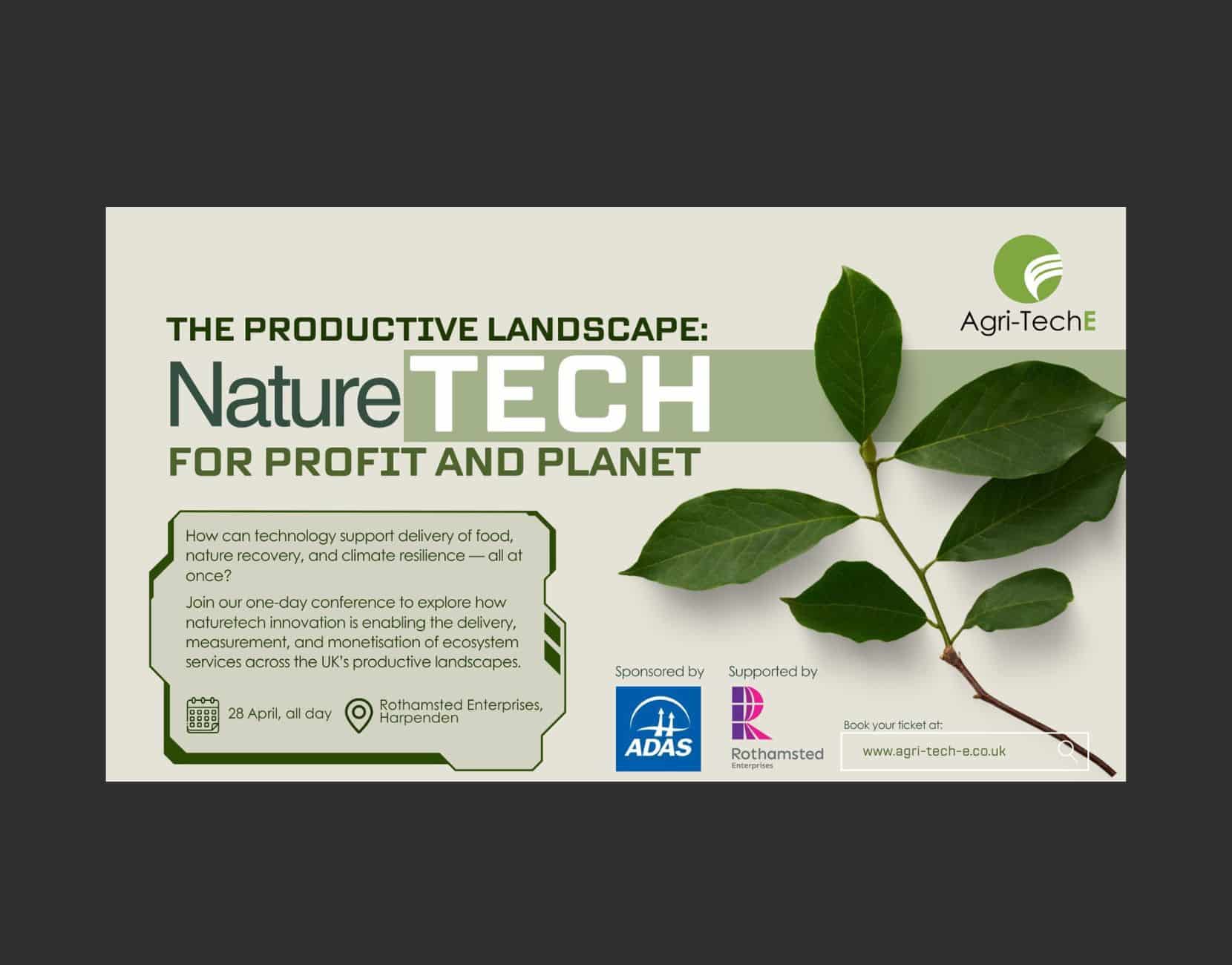
NatureTech: Supporting Businesses to serve both Profit and Planet