Could plastic waste be recycled to use on-farm?
 Agri-TechE
 Where 3D printers were once reserved for design engineers and researchers, plummeting prices have cut the cost to around £300 for a basic model and opened them up to a mass market. These could also have valuable applications for farmers seeking to design solutions or prototypes for machine tooling. However, at £50 each, the printing filament can quickly offset the bargain price of the printer.
Students studying engineering at Harper Adams University (HAU) have been researching ways of recycling plastic waste to create consumables for 3D printers, which they will demonstrate at the Innovation Hub at this year’s Royal Norfolk Show.
Since HAU positions itself as the university for food production and technology, it is no surprise that agricultural engineering is its most popular engineering course, and the students’ projects have a distinct agricultural focus.
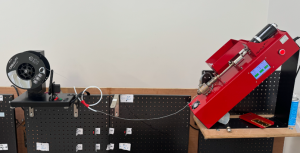
“It’s a bit like an inkjet printer,” says Peter Barnes, senior lecturer in mechanical engineering at HAU. “The 3D printer costs £300 and a kilogramme of filament costs £50. It doesn’t take long to exceed the value of the printer.”
Extruding their own plastics for 3D printers is an attempt at limited-scale circularity, as well as a means to reduce costs.
Students at HAU tend to use 3D printing for initial visualisations and prototyping, says Peter. He cautions that 3D printed plastics are not fully mechanically functional, especially in a rugged agricultural environment. However, there is a place for home-printed parts.

“A lot of agricultural solutions now are based around autonomy and robotics; the subsystems that people make need boxing and fittings, as well as often intricate intermediate components.
“These can be made from 3D-printed plastics.
“It’s also great for seeing if something will fit into a situation before you go to a machinist to produce the actual part from a more durable material.”
How to recycle plastic into 3D printer filament
The idea to explore plastic extrusion originated from two students as a final-year project, both of whom were engineering students from a farming background. The first student looked into its feasibility, and this was followed by the second student experimenting with the process.
Plastics are collected, washed and shredded. This produces chips, which are fed into an extruder that softens and melts the plastic, then compresses it into a hole at the end. This creates a filament that cools as it exits the extruder.
What plastics can be recycled?
| Plastic type | Which items are typically made from these? | The ease of recycling | Suitability for 3D printing |
| Polyethylene (PE) | Milk cartons | Easy | Very difficult |
| Polyethylene Terephthalate (PET) | Single use drinks bottles | Very difficult | Good |
| Polylactic acid (PLA) | Food packaging and many farm plastics | Difficult | Good |
Harper Adams University will demonstrate the plastic recycling process at The Royal Norfolk Show Innovation Hub, curated by Agri-TechE and sponsored by BBRO.
Post Overview
Agri-TechE Related Posts
Record attendance for the 11th REAP Agri-TechE Conference

Lincoln Agri-Robotics to establish first global centre of excellence

John Deere focused on precision technology

Paul Coleman, Crop4Sight, on the challenges of time…

Agri-TechE members at CropTec 2022