ATW22: Monday: field applications and opportunities using genetic technologies
 Agri-TechE
The Genetic Technology (Precision Breeding) Bill returned to Parliament last week, so the Norwich Research Park event for Agri-TechE Week was very timely.
The first two talks described what can be done with genetic technology and that both gene editing and genetic modification should be seen as tools, not as a silver bullet, for addressing key challenges such as drought, plant diseases and productivity. Then a number of real life applications of tech with the power to improve farming were discussed.
Advanced breeding
Genetic technologies are ways of understanding, making or adapting genetic material. This can be achieved by a number of methods and there are differing opinions over how these can be regulated.
The two key categories are:
- Genetic modification is when genetic material is introduced from a different organism to achieve a preferred characteristic.
- Gene editing involves changing or altering the original base pair arrangements within the genome of an organism so there is no introduction of foreign genetic material. Techniques include CRISPR/Cas-9.
The key debate here is whether the new characteristic or trait could have been achieved eventually through classical breeding.
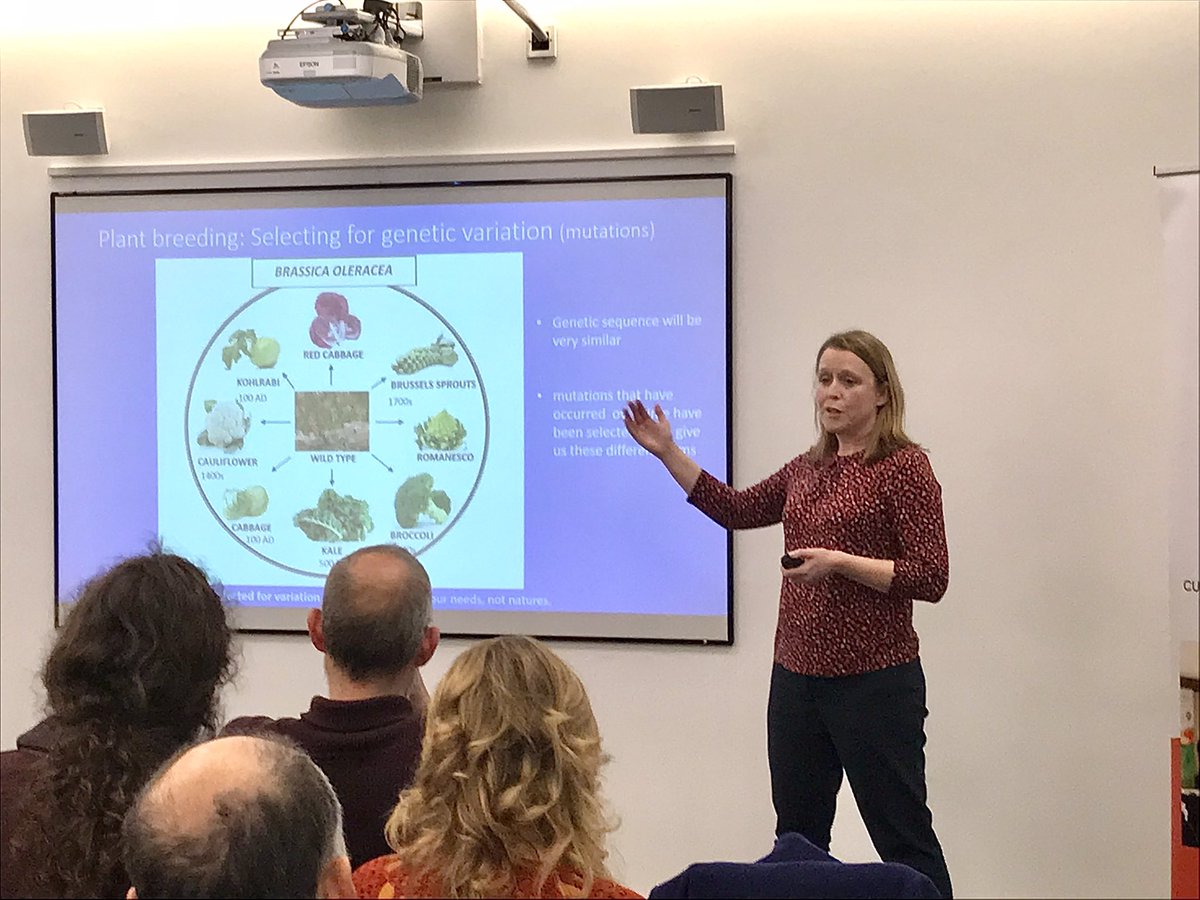
Penny Hundleby of the John Innes Centre explained how gene editing works, highlighting some of the cool things that can be done with it when growing crops:
“Before gene editing, random mutations were induced and then the results selected to make new crops with desirable traits.
“The issue is that the breeder does not have control over where the mutation is; now with gene editing, we acquire a tool to gain control on which mutation is induced and where and to validate gene functions.”
Nick Talbot from The Sainsbury Laboratory discussed ‘the power of gene editing’. He explained how using wild relatives as a gene pool can provide a source of genes that can be used to make more resilient crops. With the introduction of the precision breeding bill it will become easier to run field trials for research purposes with GE plants.
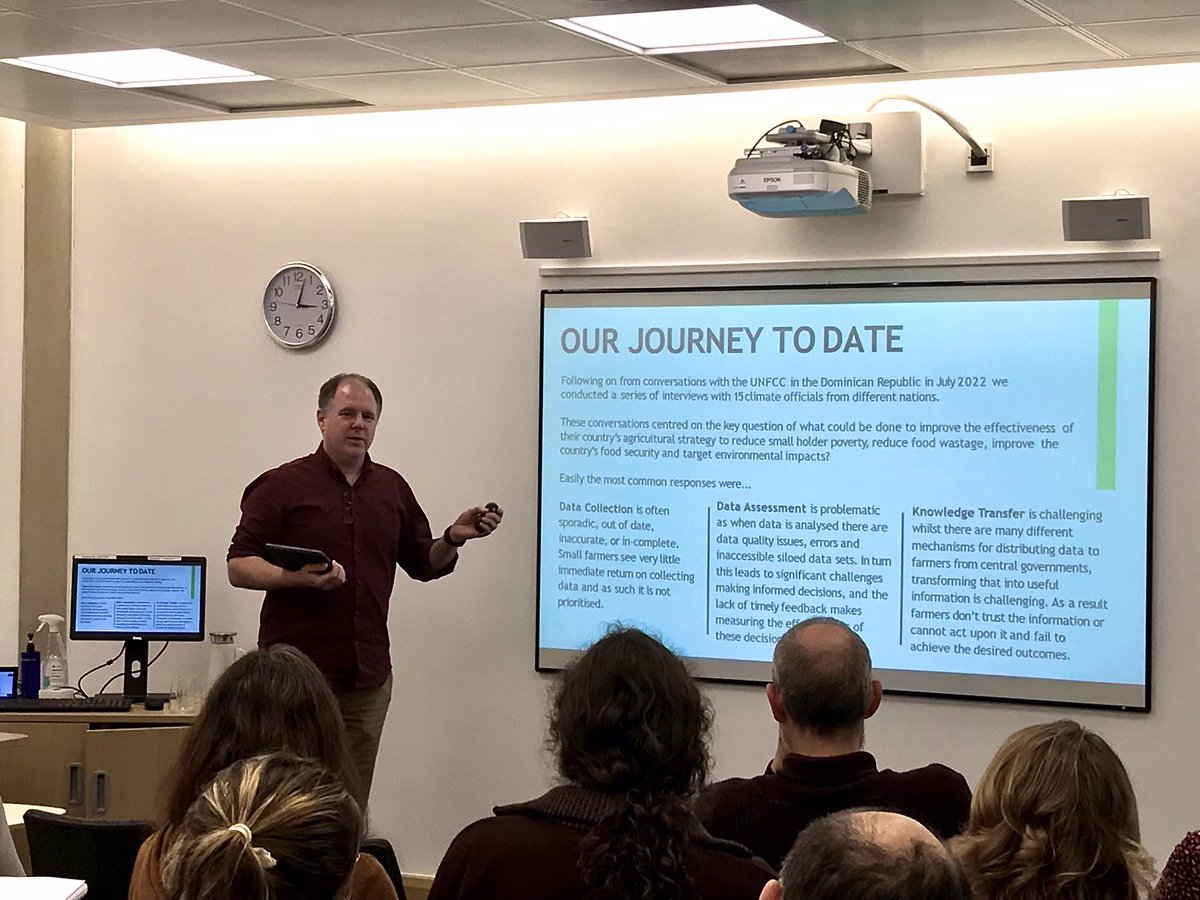
Tim Teece from MKAI talked about the importance of collecting farm data to inform good farming decisions and how their blockchain solution works. He explained there are still challenges over data ownership and sharing.
Dr Darren Heavens from the Earlham Institute discussed AirSeq, which uses DNA sequencing to detect airborne pathogens near crop fields. He explained how it provides unbiased detection of airborne pathogens. The pocket-sized real-time sequencing creates the potential to screen in-field for the presence of pathogen, informing the farmer if and when to spray plant protection products.
There was also an interesting discussion about innovation at the interface between precision agriculture and precision breeding. By using drones and spectral imaging and AI, disease pressure can be identified early and a number of start ups are already leveraging these techs to achieve this.
 Agri-TechE Week 2022: 7th – 11th November 2022
Agri-TechE Week is a partnership initiative founded in 2014 by Agri-TechE with the Royal Norfolk Agricultural Association. It features a mix of in-person and virtual events that are designed to showcase exciting developments in agri-tech.
It is coordinated by Agri-TechE working closely with partners across the innovation ecosystem and aims to provide opportunities to attract new customers and partners and to broker collaborations and international connections.
Post Overview
Agri-TechE Related Posts
Diageo sees positive impact of regen agriculture
‘Nutrient superhighway’ can boost maize yields
First field trial of genome-edited wheat a success, ahead of Precision Breeding Bill
Crop17 to support development of medical cannabis

How an Act of Parliament has transformed the future of banana technology in Norwich