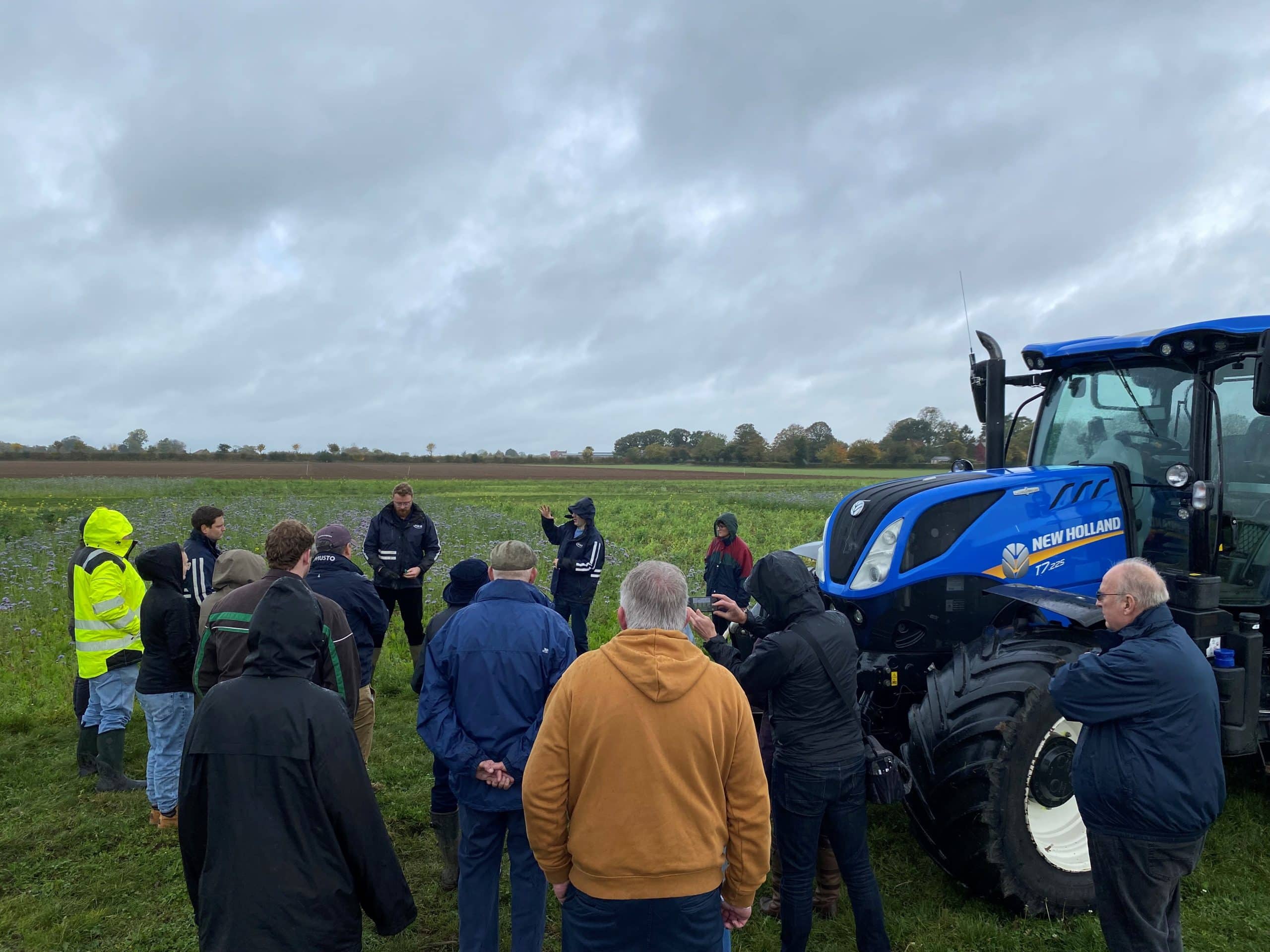
Agri-TechE Week 2020 Niab: Soil health and the circular economy – a sustainable future for agriculture
 Agri-TechE
 Sustainable farming systems
The sustainability of agriculture is a hot topic. When considering our farming systems, the three main pillars of consideration are the impact on society, the economy and the environment. As we transition into the Environmental Land Management Scheme (ELMS), sustainable practices are becoming a greater focus for farmers. Benchmarking different farming systems by utilising farm business data from over 99,000 farms, Prof. Adrian Collins (Rothamsted Research) and his team have worked with farmers to explore the best management practices in respect to the environmental performance on farm. Utilising the known information about comparable farming systems across the country, areas are identified for attention, simulations can be carried out to show the impact of what could happen. “This data is really useful as a benchmarking tool for farmers, particularly in the context of ELMS. The data can then be used to provide support and advice on suitable interventions” said Prof Collins. The focus could include the range and number of livestock or energy use.
We heard from a number of research projects investigating various sustainable practices throughout the event, provided a bigger picture of practical solutions on offer to farmers.
How can we increase soil organic matter?
The importance of having healthy soils has never been more greatly understood. Ensuring a high level of soil organic matter results in better soil structure, feeds beneficial microbes, and has a knock-on effect on the crop. Adding organic soil amendments can contribute to the improvement of soil health. “These amendments can range from highly nitrogenous organic wastes such as farm animal manure, to lower grade amendments for mulches” explains Dr Ralph Noble, Technical Director at Microbiotech Ltd. Introducing anaerobic digestate or compost may be seen to increase the risk of contamination and introduction of pest and disease. Ralph demonstrated that due to the heat involved in the processing of such products most pests and diseases cannot survive and the only risk is then due to surface contamination during storage. In fact, adding organic amendments can suppress some pests and diseases, with diseases such as apple replant disease and in pests such as Black vine weevil. This also provides the opportunity to add in other beneficial organisms such as mycorrhizal fungi and biocontrol agents which when combined with compost had the most beneficial impact
The use of certain plants in different leys in a crop rotation is also emerging as another way to add to the soil organic matter. Patrick McKenna, Postdoctoral Research Associate, discussed a Niab trial in which early results have indicated a higher level of dry matter and organic matter from the diverse herbal ley treatment in comparison to the simple grass treatment.
Farmer Insight – ‘try everything and preclude nothing’
Craig Livingstone, Farm Manager of Lockerley Estate, gave an insight into the journey he is on to develop his farm practices. “Our approach to developing a more regenerative system is to be flexible across our varied soil types on the farm, try everything and preclude nothing”. By exploring min till, introduction of livestock, greater diversity in the rotation, use of cover crops and a more focused assessment of the soil health, we’ve seen an increase in key nutrients, a reduction in the use of fertilisers and pesticides and a noticeable difference in the health of their soils. Looking to the future, work with the Small Robot Company could open up more possibilities but current practices allow for solutions to today’s problems.
How can we better manage nutrients for the benefit of crops and soils?
Ensuring the right levels of plant nutrition contributes to good soil health and minimises environmental impact. The use of digestate is one way farmers can add nitrogen back into their soils. A group of farmers have been part of an Innovative Farmers project to explore how they could make digestate work harder for them and have a reduced environmental impact. Laura Bouvet, Agri-TechE Knowledge Exchange Manager, oversaw the project which found that cover crops reduced leaching of the nitrogen after digestate application. Adding bacteria alongside nitrogen fertiliser has also been proven to support a higher crop yield. Having developed the SR3 bacteria, Natalia Gulbis, Technical and Arable Farming Lead – Plantworks Ltd, shared trials that have been carried out trials to explore the benefits of this product finding that SR3 reduced the level of Nitrogen needing to be applied on Winter Wheat increasing the crop yield and final profit.
But maybe looking elsewhere for a sustainable alternative to crop nutrition and create a greater circular economy, designing out waste, re-using more product and lowering our carbon footprint. Batteries could be the answer. 80% of an Alkaline battery is Manganese & Zinc, this can be extracted and purified which can then be used to for crop nutrition according to David Harrod of Payne Crop Nutrition Ltd.
Is growing in soil still the best way of growing?
Leafy salads have increased in demand over the last 10 years but are still impacted by numerous challenges including climate, pests and disease, distance to market and seasonal consumer demand and consistency. So is the answer to take control and grow another way?
Graham Taylor, Research Scientist – Niab explained the Hy4Dense project in which hydroponics is being trailed as a ‘hospital environment’ for growing salad crops as it provides a contamination free environment in which all elements of the process can be controlled as well as the opportunity to plant in higher density. The research will also explore other mediums alternative to soil to offer the same filtration, algal mitigation and water retention that soils does.
Farmer Insight – ‘the problem is we have to harvest every day, we can’t say to Mr Tesco we can’t cut today’
Balancing improving soil health alongside the requirements of babyleaf salad production is a challenge. “Unlike cereals, growing salads crops are more constrained in how soil health can be enhanced due to the need to produce safe food which removes some of the more widely used practices.” explained Adam Lockwood, Managing Director of Lockwood Salads Ltd . There are still ways: soil enhancements are being made through the use of cover crops; better weather forecasting, irrigation infrastructure and investment in equipment.
The future outlook would favour controlled environment growing to overcome a number of the current challenges, maintain demand and this will likely include the use of robotics.
Niab hosts: Soil health and the circular economy; A sustainable future for agriculture
Friday 13th November, 10:00am – 12:30 pm
Soil structure, health and performance can be improved and enhanced in a variety of different ways. From farm waste to cover crops, bacterial inoculum and more, this practical and evidence-based webinar will be sharing the outputs of a number of strategic projects in soil health and the circular economy.
The use of farm waste to improve soil structure, health and performance are key themes for this practical, evidence-based seminar. The outputs of a number of strategic projects will be discussed. The programme will be as follows:
Session One 10:00 – 11:30
- Use of farm waste, valorising for farm, soil inputs – Lydia Smith, Niab
- Benchmarking your farm – where are the pinch points? – Adie Collins, Hydrologist, North Wyke
- Effects of organic soil amendments on crop and pest diseases – Ralph Noble, Microbiotech Ltd
- Herbal leys for structural health and productivity – monitoring the results – Patrick McKenna, Niab
- Working with a complex variable soil – how to mix up treatments and amendments – Craig Livingstone, Lockerley Estate Manager
Session Two 11:40 – 12:30
- Cover crops to optimise the use of digestate – Laura Bouvet, Agri-TechE
- Hy4Dense technology – understanding soil monitoring – Graham Taylor, Niab
- Bacterial consortium mixes – inoculum to use on farm – Natalia Gulbis, Plantworks
- Recycling waste minerals – providing sustainable crop nutrition – David Harrod, Payne Crop Nutrition
- Salad and soil – challenges and resolutions – Adam Lockwood, Lockwood Salads Ltd.
2 BASIS points
For more information about Agri-TechE Week
Post Overview
Agri-TechE Related Posts
Agri-TechE Week 2020 NRP: Crops and non-chemical pest control – genetics, environment and biodiversity

60 Harvests Left: Debunking the Myth – Daniel Evans

Agri-TechE – hotting up to cool us down

How does this agri-tech revolution affect me in the Fens?
Soil sampling vs soil station data