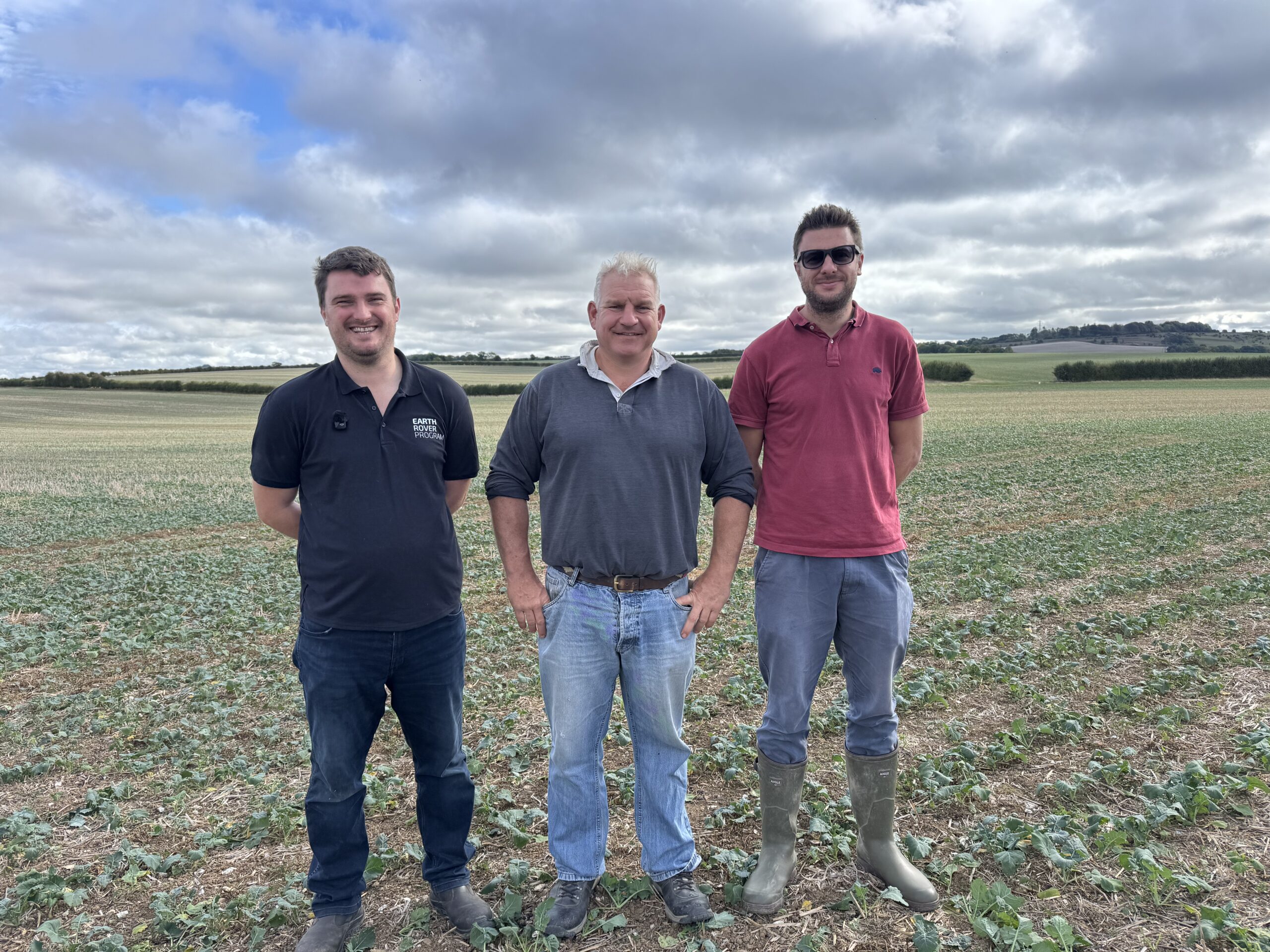
Embracing Game-changing Technology
 GreenStalk
As part of our “Back to the Future” project, we’re asking Agri-TechE members to reflect on how the agri-tech industry has evolved over the past decade and to share their vision for the next ten years. By compiling these insights, we aim to create a powerful outlook on the future of agriculture, a compelling call to arms for the industry driven by the diverse perspectives of our community.
This submission is part of the collection of reflections and predictions from our members, offering unique perspectives on the industry’s past milestones and future directions. Each contribution adds to a broader dialogue about the innovations and challenges that will shape the next decade in agri-tech.

What is the biggest game-changing development you’ve seen in the last ten years?
The key development for me is the improvement of microcontrollers and application processors. It might sound strange to pick these devices, but we have seen them increase in speed and capability, which has a direct effect on what larger plant and assets can do. These devices will be revolutionary once they are used in more and more products. However, they haven’t appeared in force in the agriculture sector yet and we’re still seeing manufactures using older technology.
Seeds of technology
The other real innovation is the range of sensors. We have seen these develop from a box containing one sensor and a large amount of electronics, to a signal device the size of a nail head which is calibrated and has digital interfaces. These tiny computers are the technology seeds which enable larger assets and equipment to become smarter and faster.
Whether you use the software to drive your tractor, measure soil health and nutrient levels, monitor your production line or link your phone so you can see everything operating and make precise decisions about resource allocation, the list of possibilities is endless.
What is the biggest challenge to widespread adoption of your technology in this industry?
The biggest challenge is fear of the unknown – the technology to do whatever farmers need is already here so everyone needs to embrace it and make it work for them. Looking at other sectors, you will see these sensors being used already, for instance with Pulse Width Modulation (PWM) fluid controls and laser image detection (LIDAR).
So, the biggest challenge to widespread adoption in this industry is us. We need to educate and work with the farming community and show them what is possible and relatively simple to achieve, to create solutions for their problems and implement the technology in a way which makes it easy for farmers to use.
Robust solutions
Developers like us have to deliver robust technology products that are fit for purpose and not ‘techo-dreams’. That’s why, at Greenstalk, we always start by really finding out what the farm needs. We don’t offer a ‘one size fits all’ solution, we look at how to implant our technology into existing systems and machinery to make it smarter.
The farming community needs to embrace technological advances and understand how their existing products can be transformed. Putting all this into practice will enable us to develop additional functions and quickly create something which is feature rich. So, let’s embrace the technology and see what happens. It’s coming anyway so we might as well make it work for us.
What do you think is the most exciting thing you think we’ll see in this area in 10 years’ time? OR what do you think this technology will enable in the next 10 years?
Some of the biggest technological innovations will be the use of artificial intelligence (AI) and machine learning (ML). There is a lot of discussion and hype about AI and ML at the moment. A lot of articles claim AI will do everything, but it is really just a sophisticated tool which enables complex algorithms to be calculated very quickly – and that could be great for the farming industry.
When you think that, in seconds, AI can analyse vast datasets, including weather patterns, soil conditions, and historical crop performance and provide recommendations that could optimise a farm’s performance, why wouldn’t we want to use it?
Enhanced yield and reduced cost
In the next 10 years, the systems we design and build will become locked into the core of what we do, so I see technology enhancing yield and reducing the cost base of farming. Making the processes a lot more repeatable and consistent will take the guesswork out of the business and enable food to be produced efficiently.
Using technology from other sectors such as space research and the automotive industry, farm machines will become smarter, smaller and more cost effective – but this is not a new concept. We only need to look at history to see how this has taken place in the manufacturing and car industries and, in some respects, with agriculture itself. It all started with the plough and grew into where we are today.
What is your vision of the future and how will you be responding to that?
I can see technology working in a really positive way for the farming community, with robots being used across the industry for tasks such as selective harvesting, precision planting, and weed control. I also foresee that the workforce will be enhanced by these types of products. The workforce which embraces this revolution will grow and there will be a range of skilled teams supporting and servicing the technology across the board, from software systems to autonomous vehicles.
Information exchange
If farming companies enable their computer systems to talk to each other and exchange information, then their devices, sensors, and platforms could be linked to enable farmers to manage their operations more efficiently, monitor crop health in real-time, and make data-driven decisions. Then you add on top AI, which can bring everything together from vehicles, sensors and the data to predict what needs to be done to get the best results. The future is exciting as long as we work together. If we carry on as stand-alone silos, other players will come into this sector and take control but, if we collaborate, the possibilities are infinite
Related Posts
New hyperspectral satellite imagery crucial for lowering nitrogen use amid rising fertiliser costs
Long-range wireless that actually works
The Inevitability of AI Quality Control
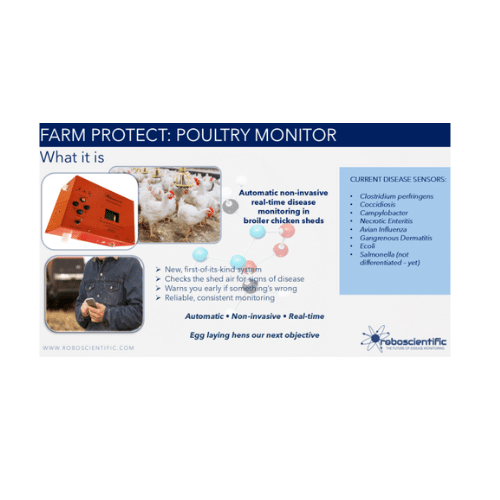
Discussing Early disease Detection in Poultry Flocks
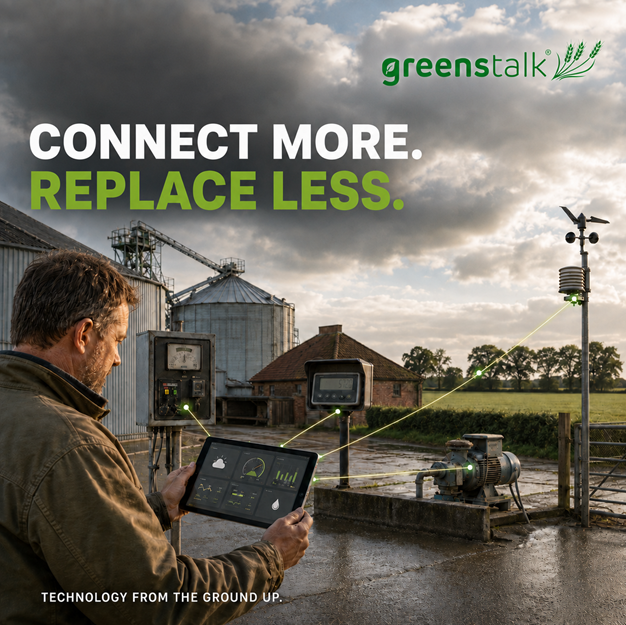
Connect More. Replace Less