Consumer Acceptance of Navel Oranges Significantly Improved
 Delytics Limited
Minimum maturity standards recommended by Delytics have improved the consumer acceptability of New Zealand navel oranges for 10 seasons in a row, with an immediate lift from 67% to 96% in the first season.
The retail monitoring data Delytics analyses for Citrus New Zealand has shown a consistently high consumer acceptance for navel oranges since the industry adopted the new standards in 2016. The navel orange maturity standards are an integral part of the independent clearance process that Delytics designed for Citrus New Zealand in 2015.
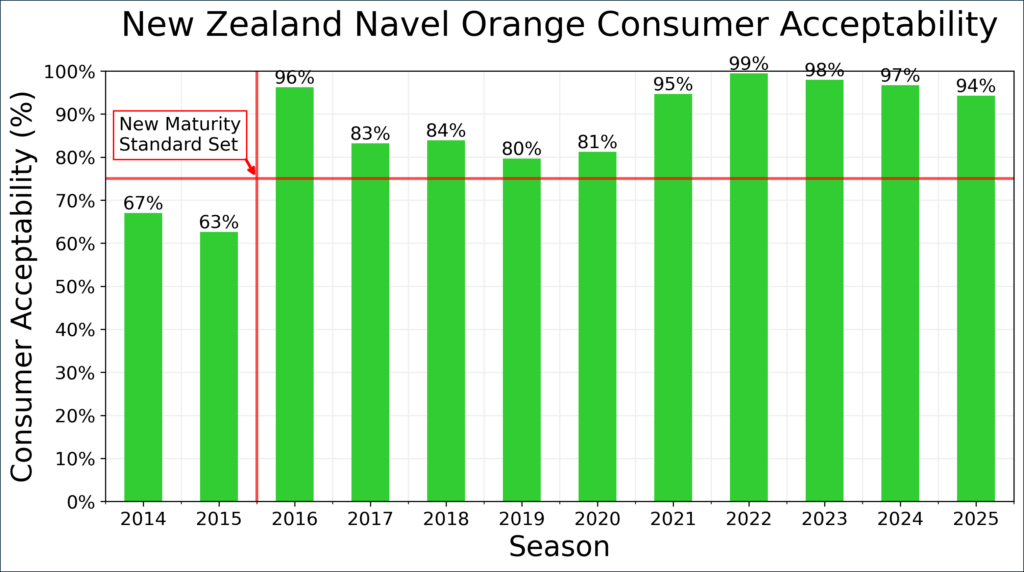
This graph shows that the retail compliance of New Zealand navel oranges has never dropped below 80% since the new standards were adopted, despite some very challenging growing seasons.
Citrus New Zealand Research Manager, Sally Anderson says, “These results are a really great outcome for New Zealand citrus growers. It shows the investment that we’ve put into developing, organising and managing our quality programme is paying off for growers by having a positive affect at the retail level. Delytics’ analysis of the retail monitoring data we collect has given the sector insight into how maturity functions every season and shown that there is real value in harvesting when the fruit is ready.”
Delytics Managing Director, Mark Loeffen says, “This is a great example of the long-term value gained from putting processes in place to make sure fruit is harvested and sent to market at the right maturity. We’ve seen many examples where the investment made to set and adopt maturity standards has provided continuous benefits in each successive season the standards are followed. These benefits flow through the whole supply chain to the end consumer and the return on investment is typically very high.”
Delytics specialises in designing maturity standards and clearance processes that match consumer taste preferences in specific markets. They are currently focusing on helping marketing companies with licensed growers in multiple growing regions make sure their branded fruit delivers a consistent high quality eating experience, no matter where it is grown or bought.
Mark says, “Ensuring fruit consistently provides the taste experience that consumers want is definitely worth the investment. Putting processes in place to prevent immature fruit from entering the supply chain will help drive demand, increase repeat purchases, and enable branded fruit to be marketed as premium.”
- *I have permission from the copyright holder to publish this content and images.
Related Posts

How the EU is re-shaping the regulation of gene-edited plants

BOFIN Webinar: get involved with a new OSR project and knowledge exchange community

£2.5m project launches first precision-bred oilseed rape on commercial farms in Europe
Revolutionising potato breeding through viral gene editing

AbacusBio believes the Precision Breeding Act presents a ‘huge opportunity’