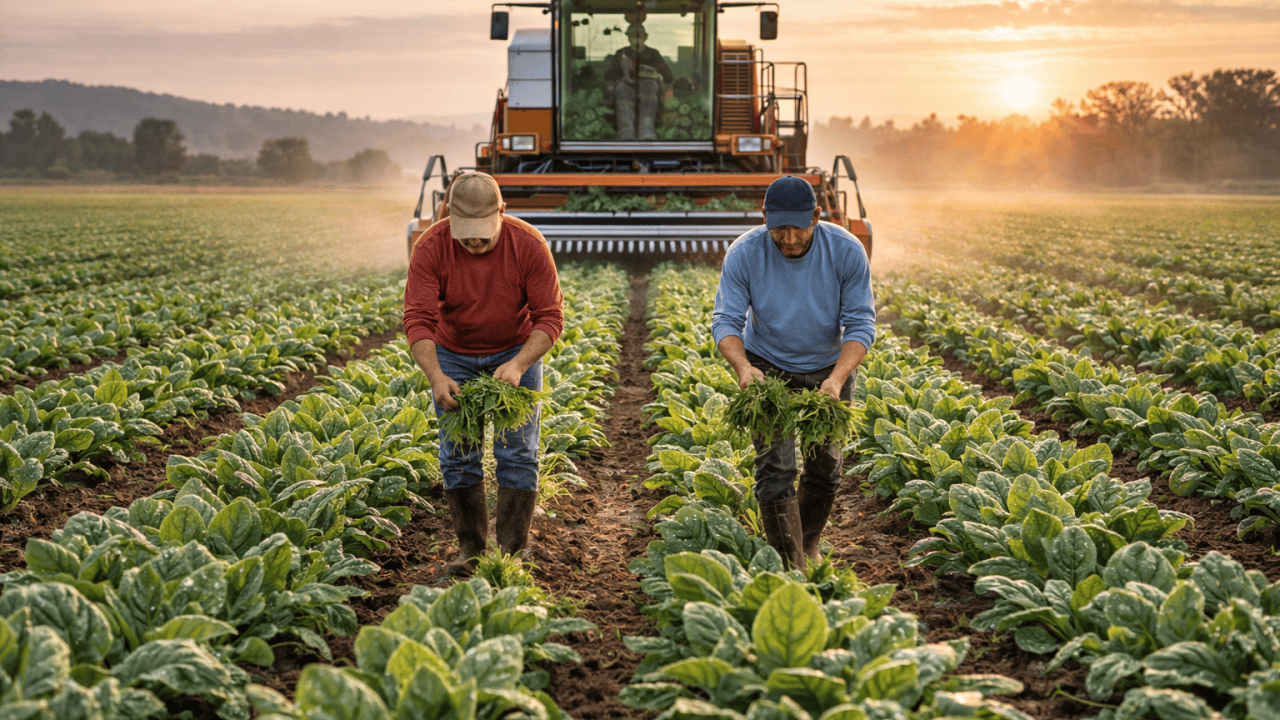
Does crop sensing data correlate with improved yields?
 Agri-TechE
 Almost 50 field experiments are being set up across Europe as part of the INNO-VEG project, developing innovative methods for vegetable and potato crop research that can be easily upscaled and adopted by farmers. The four-year project, which aims to produce an overarching protocol for integrating crop sensing data into field research methodologies, is being led by ADAS in the UK with partners in Belgium, France and the Netherlands.
Reliable research methods are crucial to underpin the evidence base needed to meet the challenges of sustainable intensification of field vegetable and potato production. The project, originally set up in 2018, will evaluate the suitability of using crop sensing data to assess treatment differences in field experiments.
ADAS soil scientist and project lead Lizzie Sagoo explains, “We know that crop sensing data, for example, from drones or tractor-mounted sensors can show up differences in crop performance across a field. We want to see whether these techniques accurately assess final crop yields. If they do, they can be used instead of the labour-intensive and expensive standard field assessments.”
Traditional crop research relies on replicated treatments in small plots and intensive measurements. It is usually led and delivered by agronomy, consultancy or academic organisations meaning that farmers are not asked to play active roles in research and, typically, only host experiments.
“If we can show that crop sensing data can be used to assess differences in crop treatments, we can upscale to split-field or tramline comparisons. Then, we can adopt a farmer-led approach to delivering research in this sector. The model will enable farmers to apply treatments to different areas of a field using their own farm equipment and carry out accurate measurements using high-resolution crop data,” says Sagoo.
ADAS head of agronomics Daniel Kindred continues, “We have developed approaches to bring scientific rigour to farmer-led research in combinable crops like wheat. Treatments can be set up in line trials and statistically compared using yield maps from a combine harvester.
“The main barrier to adopting this approach is that yield mapping, although technically possible, is very rarely used for field vegetable crops. However, high-resolution spatial crop imagery can be easily collected during the growing season from all field vegetable crops. If this can be used as an indicator or a proxy for the final crop output, it can also enable field-scale research.”
In 2020, field validation experiments will test the protocol being developed during the 2019 field-scale research experiments to develop a framework for farmer-led research. The framework will then be tested in farmer-led field experiments during 2021.
Information collected from farmer groups and field testing will be used to refine the framework to ensure the outputs are presented in formats that are easily understandable and written in sufficient detail to facilitate the adoption of the farmer-led approach.
This project brings together an internationally respected group of researchers with extensive experience of field vegetable and potato production systems, crop sensing techniques, spatial data analysis and on-farm advice.
Sagoo says, “Our ultimate aim is to provide farmers with a methodology for carrying out research on their own farms, where they can test new approaches such as varieties, establishment techniques or fertiliser management.”
In addition to the field experiments, the project team is setting up a cross-border network to facilitate innovation between the precision farming/sensor technology industry, research organisations and the field vegetable and potato crop sectors. The network is being developed by Delphy in the Netherlands and is due to launch later this year.
“The INNO-VEG innovation network will focus on facilitating innovation by realising the value of crop sensing technology in the delivery of field vegetable and potato research. We invite anyone with an interest in this area to join to network,” says network lead Cor Van Oers from Delphy. Other project partners are Inagro in Belgium and ARVALIS – Institut du vegetal in France.
The INNO-VEG project has received funding from the Interreg 2 Seas programme 2014-2020 co-funded by the European Regional Development Fund under subsidy contract No 2S05-032.
Post Overview
Agri-TechE Related Posts
Global market for ‘measure to manage’ technology co-developed with farmers
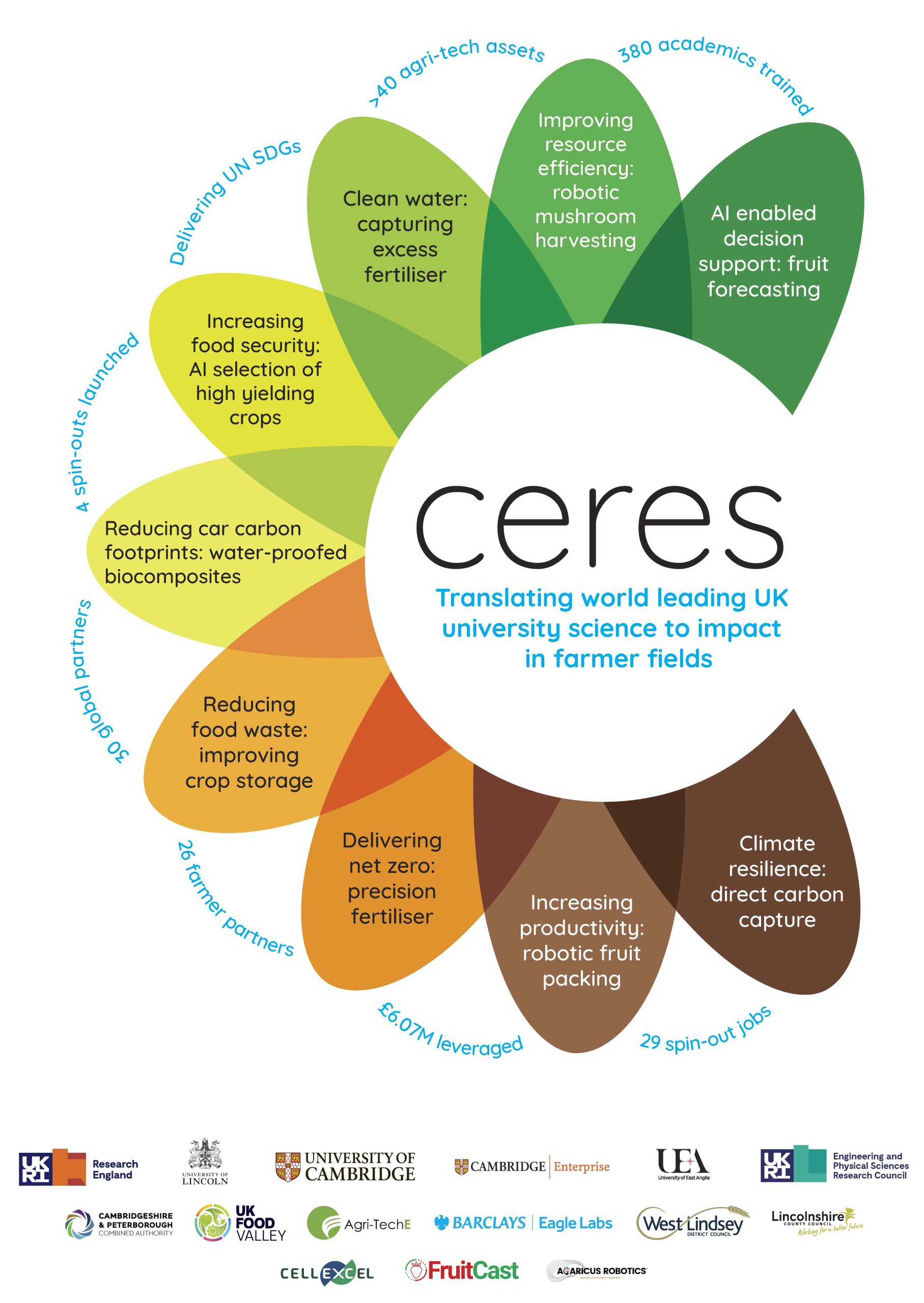
Ceres Agri-TechE and the University of Lincoln showcase Agri-TechE Innovation in Parliament
Prodata take on new role as direct importer for Davis Weather Stations.
Using photosynthesis insights to optimise plant performance – Gardin
Unveiling the theme for REAP 2024