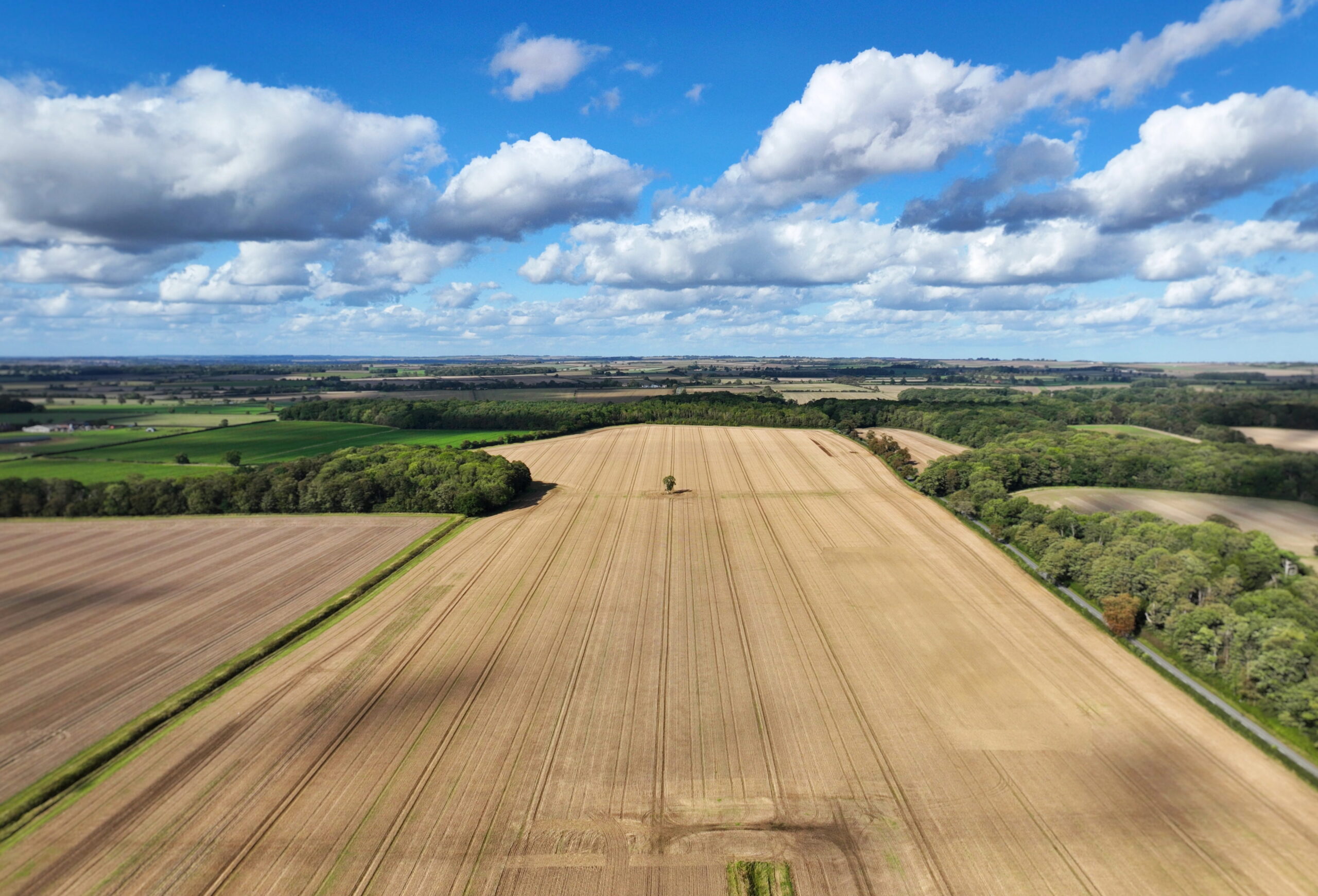
Do high-input farming systems still make sense?
 Agri-TechE
 This season’s suite of trade shows got us thinking about agricultural inputs. The UK harvest is likely to be early, and plans are already underway around next year’s cropping regimes – all with associated costs.
This topic was at the core of the Great Debate at the Royal Norfolk Show, as well as lots of discussions at Groundswell and Fruit Focus. And with the (albeit postponed) UK-EU Summit pending, the approval of agrochemicals in alignment with EU regulations will be under discussion.
Agricultural inputs range from products to boost growth (fertilisers, feed and supplements), to genetics (seed and semen), to machinery, energy and labour – mostly heavily regulated and all expensive.
It is, therefore, perhaps no surprise that increasing price volatility, regulatory changes and an increasing movement towards more “regenerative” practices are raising questions about high input farming systems.
Needy but not weedy?
High input systems have become mostly mainstream – although the mindset under discussion at Groundswell is looking to change that.
But still new varieties are tested for their performance under relatively high input conditions. As Harry Barnett of Holkham Emerald commented at the Norfolk Show Great Debate, “customers have no appetite for quality imperfections.”
This clearly answers the long-standing debate about land “sparing” or “sharing” – coming down on the side of “sparing” – where some land works hard to generate higher quality, higher volume outputs, while lower potential land is put to alternative uses.
Difficult decisions – informed by data
Market and price volatility has led to more selectivity about what to grow and where.
Increasingly farmers are looking at a profit-and-loss account on a per field basis, meaning tough choices are needed to decide not to cultivate a particular field, or breed from a particular animal if it’s not going to deliver top returns.
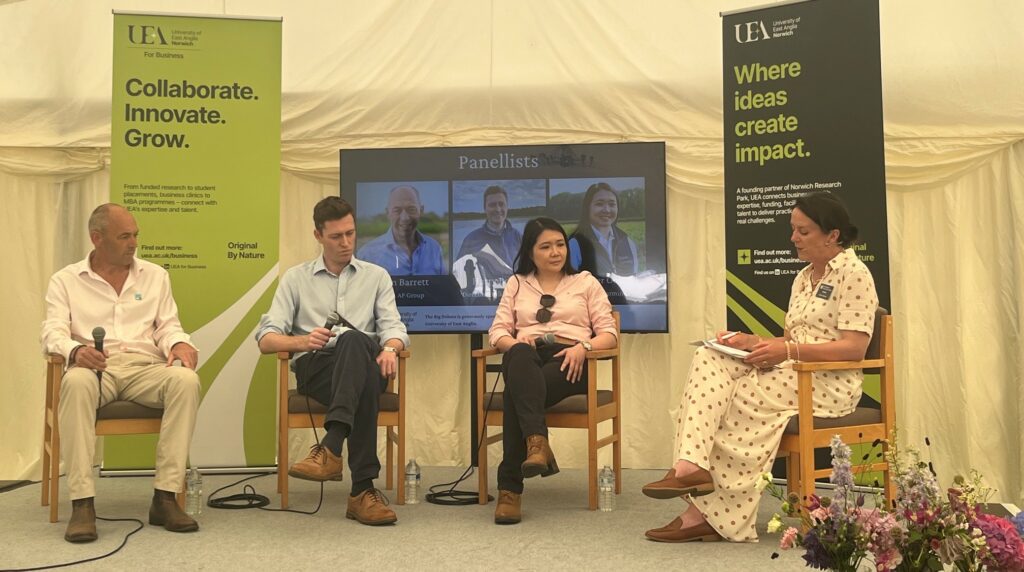
As Sheener Ooi, CFO at Dyson Farming pointed out, the only way to sensibly navigate these decisions is to be heavily guided by data. With a business that grows 28 different crops, complex data analytics is helping Dyson calculate yield potential on a per crop, per field basis and ensure greater selectivity in planning the rotation.
High-tech for high input?
One of the questions asked by Debate Chair Emily Norton, (Chair of the AHDB) was whether technology was preserving or reducing the dependency on high inputs. The panel (which also included John Barrett, Chief Agricultural Officer of AF) agreed it was both – in that it helped target and leverage high potential areas on the farm.
But it’s not just about machinery, sensors and other clever kit, it’s about the mindset to capture the right data to enable the right decisions to be made.
“You can’t buy high outputs; you need to earn them”
Is throwing more money at inputs likely to generate higher outputs? To an extent… yes. But in addition, high performing farms also need the latest genetics, investing in soils, generating your own inputs where possible, and having a tech-literate team keen to adopt new approaches. Underpinned, of course, with market collaborations and partnerships.
Groundswell has shown yet again the passion and appetite to use inputs in a different way, coupled with innovations to help report, inform and monitor. Perhaps the question is no longer whether high-input systems still make sense, but whether every input is working hard enough to justify its place.
High outputs are no longer about using more inputs – they’re about using better information.
In an era of tighter margins and greater scrutiny, precision may prove to be the most valuable input of all.
Post Overview
Agri-TechE Related Posts
Foliar nitrogen fixing spray: what our first BactoStym Nitro results show
New BioTransitions global scale-up programme launched at Norwich Research Park for agri-food biotech businesses
New hyperspectral satellite imagery crucial for lowering nitrogen use amid rising fertiliser costs

New decision support tool launched for making ‘sustainable yet profitable’ land use changes
Global study shows the power of POLY4 to increase crop yields