Azotobacter vinelandii: a practical look at free-living nitrogen-fixing biology in crop production
 BactoTech UK
Nitrogen efficiency is one of the biggest challenges in crop production.
Growers want reliable performance, lower losses, and better value from every unit of applied nutrition. At the same time, the industry is under growing pressure to cut waste, improve resilience, and find practical biological tools that fit real farm systems.
One species that deserves more attention is Azotobacter vinelandii.
Azotobacter vinelandii is a free-living nitrogen-fixing bacterium found in soil. Unlike Rhizobium, it does not need to form nodules on legumes. Instead, it lives in the root zone and is known for helping convert atmospheric nitrogen into forms linked with plant growth. Research also links Azotobacter species with root support, plant-growth effects, and better nutrient availability.
Why this matters
This makes it interesting for more than one reason.
First, it brings value to the nitrogen-efficiency discussion. Second, it supports the wider shift from purely chemical input thinking towards systems that combine biology, soil function, and crop nutrition. Third, it raises important questions about how free-living microbial species can fit into practical crop programmes without overclaiming what they can do.
A practical view, not hype
At BactoTech UK, we have been looking closely at this species because we believe biology needs to be discussed in a more practical and evidence-led way.
The key point is this: Azotobacter vinelandii is not a magic replacement for agronomy. It will not solve compaction, poor drainage, or weak nutrition planning on its own. However, in the right setting, it may help support better nitrogen use, stronger root-zone activity, and a more resilient soil-plant system.
That is why we think the conversation around biological inputs needs to move beyond hype.
The more useful questions
Where does this biology fit best?
What field problems is it really helping with?
How should growers assess success?
And how do we connect microbial products to real crop outcomes rather than broad promises?
What we have explored
We have written a practical overview of Azotobacter vinelandii to explore those questions in more detail, including how it works in soil, how it differs from Rhizobium, where it may help most on farm, what it will not solve on its own, and why mixed microbial systems are becoming more interesting in current research.
Join the conversation
We would be very interested to hear from growers, advisers, researchers, and agritech businesses working on nitrogen efficiency, biological inputs, and root-zone performance.
What role do you think free-living nitrogen-fixing biology can REALISTICALLY play in future crop nutrition programmes?
Read the full article via the link: https://bactotech.co.uk/azotobacter-vinelandii/
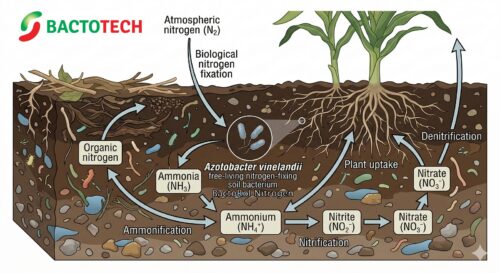
- *I have permission from the copyright holder to publish this content and images.
Related Posts

SugaROx secures £2.5M investment from fertiliser multinational to accelerate its first product launch

A survival capsule for tree seedlings that boosts germination by up to 40 per cent

From electric vehicles to electrified air, Zayndu appoints new Head of Engineering

Biostimulants: Current Outlook and Challenges Ahead
Looking forward to Agri-TechE Week 2023