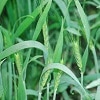
Cut Synthetic Nitrogen by 50% on Wheat? What Our Field Trial Showed
 BactoTech UK
Why this trial matters
Nitrogen remains one of the biggest costs on farm. At the same time, growers face more pressure to improve nutrient efficiency, protect water, and cut waste. That creates a simple but important question:
Can you cut synthetic nitrogen and still protect yield?
We wanted to test that question in the field, not just discuss it in theory.
What we tested
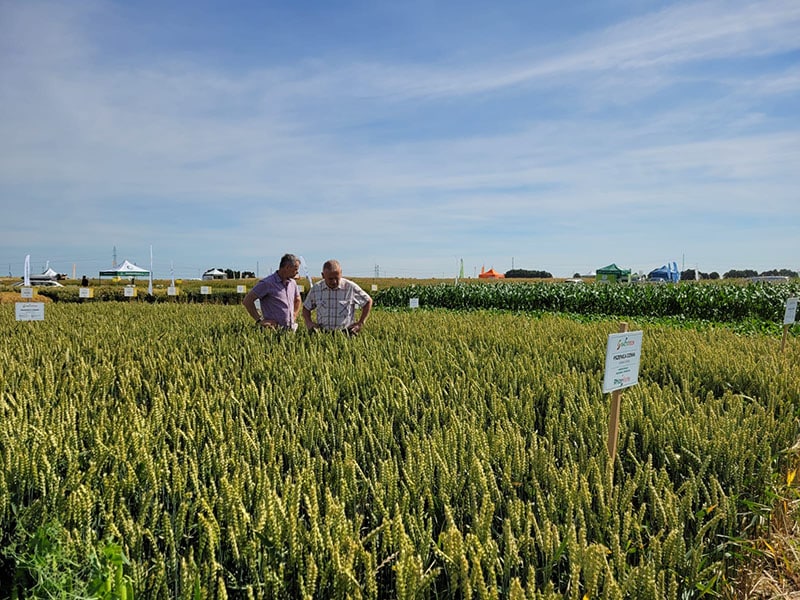
We compared two wheat fields under the same general conditions:
Control field: full standard synthetic nitrogen rate
Test field: 50% less synthetic nitrogen
We kept the variety, soil type, drilling, crop protection, and general management the same. On the reduced-N field, we also used biological support:
BactoRol Nitrogen
BactoStym Nitro
RhizoForte
The aim was not to remove fertiliser completely. The aim was to see whether biological support could help the crop perform well with less synthetic nitrogen.
What happened
At harvest, the result was clear:
The field with 50% less synthetic nitrogen matched the yield of the full-rate control.
That also meant lower fertiliser cost per hectare on the test field.
This is what made the trial so encouraging. On this field, under these conditions, a large cut in synthetic nitrogen did not reduce output.
What this does – and does not – mean
This result matters. However, it does not mean every farm should cut synthetic nitrogen by 50% next season.
This was a real field trial, but it was still one field, one setup, and one season. Soil type, rooting, crop stress, weather, and grain-quality targets all affect the risk.
So the real takeaway is not “halve nitrogen everywhere.”
The real takeaway is this: reduced synthetic nitrogen is worth testing more carefully than many growers assume.
Why we would start lower on real farms
For most growers, a smaller first step makes more sense.
Instead of jumping straight to 50%, we would suggest testing around a 30% reduction on a small area, with a proper control beside it.
That gives growers:
a lower-risk starting point,
a fair field comparison,
and real farm data before making a bigger decision.
Which fields suit this best?
This kind of test suits fields that are:
even, well rooted, in decent soil structure, and not already under heavy stress.
We would be more cautious on fields with:
compaction, patchy establishment, shallow roots, high stress, or uncertain soil nitrogen supply.
Milling wheat can also carry more risk, because protein matters as much as yield.
What should growers measure?
If you want to test a reduced synthetic N approach, keep it practical.
Measure:
crop evenness,
root depth,
soil structure,
total N applied,
crop colour and vigour,
final yield,
and grain quality where relevant.
Most importantly, compare the reduced-N strip with a proper control.
Why this matters now
This trial is not just about fertiliser units. It is about nitrogen efficiency, margin, and risk.
If a crop can hold performance with less synthetic N in the right situation, that gives growers another way to think about input pressure. Not by cutting blindly, but by testing properly and scaling what works.
Conclusion: this trial showed that wheat can, in the right conditions, hold yield with far less synthetic nitrogen than many growers expect. The safest next step for most farms is not a 50% jump, but a smaller, measured trial that proves what works under their own conditions.
Read the full trial breakdown
We have published the full field-trial breakdown on our website, including the setup, the limits of the result, and what farmers should check before trying a reduced-N approach themselves.
Cut Synthetic Nitrogen by 50% on Wheat: Field Trial Results and What We Learned, here’s the link.
-


- *I have permission from the copyright holder to publish this content and images.
Related Posts
Bayer and AlphaBio introduce revolutionary bioinsecticide

Glaia awarded Deep Tech Investment of the Year for yield boosting sugar tech

Trials of Germains Seed Treatments new Xbeet enrich 200 show yield benefit

ATW23: Embedding entrepreneurship in research
INNO-VEG launches – chance to hear more at REAP