How Truth Travels in Healthy Organisations-what strong leaders build so reality reaches the top intact
 Populi Consulting Ltd
What strong leaders build so reality reaches the top intact
In my last piece, The Fog at the Top, I explored why senior leaders and boards so often make decisions based on distorted or overly positive information.
Information that is softened, simplified, or selectively optimistic by the time it reaches boards and executive teams. This article focuses on the flip side.
Some organisations do get this right, truth does travel. Issues surface early enough for leaders to respond, rather than react. But the difference is rarely systems or reporting packs. It is behaviour, trust, and design.
Truth does not flow upwards by default
One of the biggest myths in leadership is that truth naturally rises.
It does not, truth only travels when organisations actively create the conditions for it to move. In healthy organisations, leaders assume that:
- Reality will be uncomfortable
- Signals will be incomplete
- People will hesitate before speaking
So, they design for honesty rather than hoping for it.
What healthy organisations understand
Organisations where truth travels share a few common beliefs.
Truth is fragile It is easily diluted by hierarchy, status, fear, and incentives.
Silence is data A lack of issues being raised is treated as information, not reassurance.
Messy input beats polished answers. Leaders value early, imperfect signals over late, well-rehearsed explanations.
This mindset shapes everything that follows.
How truth actually moves
In practice, truth travels through multiple, intentional channels. Not just formal reporting or the CEO updates. But a combination of structured and informal mechanisms.
Here is what I consistently see working:
1. Leaders go where the work is
In healthy organisations, senior leaders do not rely solely on summaries.
They spend time close to operations, customers, and teams.
They listen more than they talk.
They ask open questions and resist the urge to solve immediately. This does two things:
- Leaders gain unfiltered insight
- People learn that honesty is genuinely welcome
Presence reduces distortion.
2. Questions matter more than answers
Truth travels faster in organisations where leaders ask better questions.
Not performance questions, sense-making questions. Questions such as:
- What feels harder than we expected right now?
- Where are we quietly compensating to make this work?
- What worries you that is not in the plan?
- If this fails, where will it fail first?
These questions signal that reality is valued over reassurance.
3. Middle managers are supported, not squeezed
Middle managers are the single most important carriers of truth.
In unhealthy systems, they are squeezed from above and below. In healthy ones, they are supported to:
- Escalate early without blame
- Share uncertainty without judgement
- Say “I do not know yet” without fear
When middle managers feel safe, truth flows, then they feel exposed, it stops.
4. Bad news is separated from blame
Healthy organisations are explicit about this.
Bad news is treated as information, not failure.
Leaders respond to issues with curiosity first, not consequences.
They are slow to judge and quick to understand. Over time, people learn a simple lesson: Raising problems makes things better, not worse.
5. Boards create space for reality
Boards play a critical role.
In organisations where truth travels, boards:
- Invite dissent and alternative views
- Ask what has been left out of the pack
- Request direct exposure to people below the executive level
- Treat culture and behaviour as seriously as numbers
Good boards reduce pressure to perform certainty.
They make it safe to say, “This is still unclear.”
What this looks like in practice
When truth travels well, you see different behaviours.
- Issues surface earlier
- Fewer surprises reach the boardroom
- Decisions feel calmer and less reactive
- Leaders talk openly about trade-offs
- People trust the system, even when decisions are hard
This is not softness.
It is a strength.
A Populi reflection for leaders and boards
If you want truth to travel in your organisation, start here:
- Where does information currently get polished?
- Who is carrying risk silently on behalf of the system?
- What behaviours do leaders reward without realising?
- Where are people choosing silence over honesty?
And the most important question of all: What would change if people trusted that telling the truth would not cost them?
Healthy organisations do not eliminate fog. But they notice it sooner.
And they act before it becomes dangerous.
A practical call to action
If you want truth to travel more reliably in your organisation, treat this as something to design, not something to hope for.
Over the next 30 days, choose one deliberate intervention:
- Ask one leader or manager for an honest view of what is harder than it looks right now
- Invite a dissenting perspective into a live decision before it is finalised
- Review a recent board or leadership discussion and ask what was not said in the room
- Spend time closer to the work or the frontline and listen without correcting or reassuring
For Chairs and CEOs, make one expectation explicit:
Early, imperfect truth is more valuable than late, polished certainty.
If you would benefit from an independent perspective to help boards or senior teams design healthier information flow, surface reality, and strengthen decision-making, that is exactly the work I do.
You are welcome to get in touch for a confidential conversation.
Populi works with boards, CEOs, and senior teams to improve clarity, decision-making, and people-led performance.
- *I have permission from the copyright holder to publish this content and images.
Related Posts
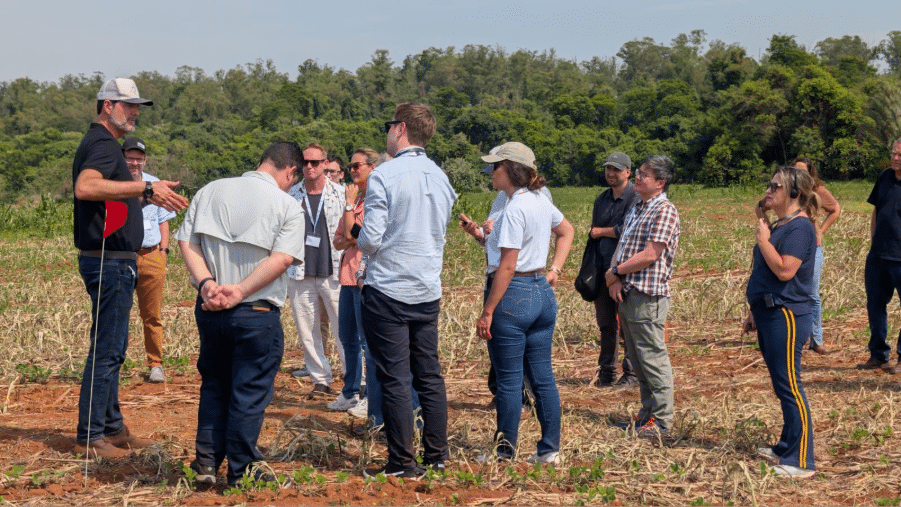
ARISE: Launching a Trilateral Agri-Tech Collaboration for Climate-Resilient Agriculture
The ‘Ambiguous Requirement’ calculator – tackling a key challenge in hiring
When Everything Comes to the Top
The Discipline of Creating Space

Patent Box tax reduction scheme