Four-way collaboration leads to nature recovery at Wendling Beck
 Wilder Sensing
A tributary of the River Wensum has lent its name to a radical nature recovery project spanning 2,000 acres near Dereham in Norfolk.
Established in 2021 the Wendling Beck project focuses on habitat creation, nature restoration and regenerative farming, building financial and environmental resilience for farmers, and delivering access and education for people. Essential to success is data gathering.
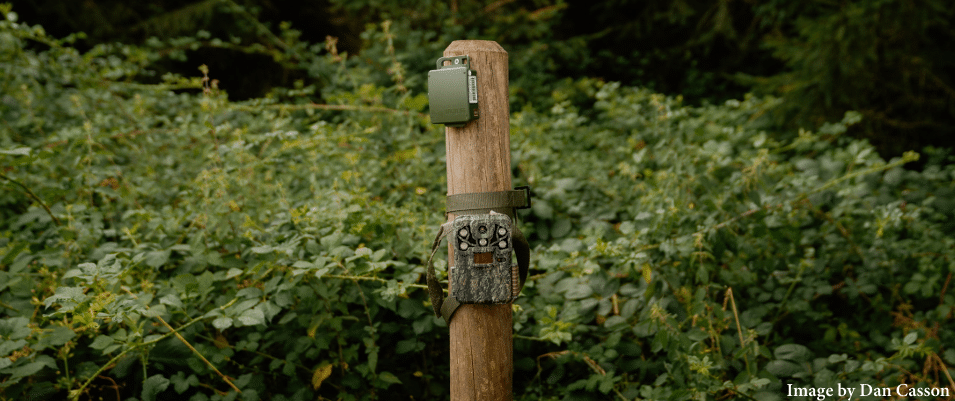
Wilder Sensing has been deployed to monitor bioacoustics across the project. Its powerful machine learning algorithm allows the team to automatically identify and classify bird species and build a dataset to help track species recovery.
Key triggers that created Wendling Beck
Three key factors acted as catalysts.
Firstly, post-Brexit the Basic Payment Scheme (farming subsidy) was reduced, and subsequently removed. The land which now makes up Wendling Beck was poor arable quality and without the support of subsidies had become marginal. Landowners needed new ways to increase financial resilience in their businesses, whilst delivering environmental improvement.
Secondly, the Covid pandemic in 2020 provided an opportunity to take a step back, consider traditional land uses and co-design a new land-use model. Importantly, it enabled four neighbouring landowners to collaborate and pool their land to deliver something very different.
The final catalyst in this trilogy was the 2021 Environment Act. This included Biodiversity Net Gain (BNG), a policy that seeks to ensure habitats lost through development are replaced and provide a measurable gain on what existed.
“The BNG aspect of the Environment Act enabled us to think about doing something quite radical and to come together to deliver it at scale – we started changing our mindset from farming to under standing more about nature restoration within the landscape.” said Glenn Anderson, Landowner and Founder, Wendling Beck.
New ways of working and monetising land use
Wendling Beck began to think about catchment level management, a process of managing land to improve water quality and the environment. To achieve this, they needed to revert poor quality land from arable production and find a business model which would monetise the delivery of nature through ecosystem services. Working closely with The Nature Conservancy (TNC), along with other project partners, they created an investment model to deliver landscape level change and transform unviable farmland to a mosaic of high-distinctiveness habitats.
“It has been a learning curve – we have had to retrain ourselves and understand how the new policies work, we have become well informed in a nascent market.” said Anderson.
The team created a project operating company, owned and managed by the four landowners, and have entered into long-term legal agreements; they are now at the delivery and implementation stage and are actively trading the ecosystem services.
Other stakeholders include the Norfolk Rivers Trust; Norfolk Wildlife Trust; Norfolk County Council, Breckland Council and Anglian Water.
“Selling a few environmental credits has given every one a little bit of confidence, there was a massive amount of risk taking most of the land out of production, constant shifts in Government policy have added to the lack of certainty – but the business model is working.” added Anderson.
What happened on the ground?
Wendling Beck was selected by Natural England to be one of its statutory BNG pilots. The aim was to take 800 hectares of grade 3 arable land and create a mosaic of species-rich meadows, lowland heath, wetlands, woodlands, and restored chalk streams sit alongside 30 hectares of retained regenerative black currant farming.
The team undertook a Defra test and trial project, which engaged dozens of other farmers regionally to look at different monitoring methods used in conservation and gauged their effectiveness, relevance and validity within the farming sector. The team were introduced to bioacoustics experts Wilder Sensing by eCountability, the ecologists leading the monitoring strategy.
“We wanted to dovetail monitoring techniques with technology – bioacoustics, environmental DNA, and remote sensing solutions.” said Lizzie Emmett, Project Lead, Wendling Beck.
Working with Wilder Sensing provided the opportunity to try a new method of monitoring, the project currently has 22 monitors spread over 2000 acres. These, alongside camera trapping and manual bird recordings are maintained by Wendling Beck’s ecologist who changes the data cards and uploads to the Wilder Sensing platform.
“The obvious benefit of the monitors is that it’s all remote and you don’t need to be there.” explained Dave Appleton, Ecologist, Wendling Beck “You can get some false positives, but it’s a very low percentage. I have checked against manual observations, and it was as low as 1 in 1000 recordings.”
The system has proved an effective way to understand species presence in the landscape over time. As expected, there are a lot more species in the areas that have been left to nature than in the arable control points. The monitoring devices provide the baseline data from which Wendling Beck can demonstrate that the interventions on the ground are responsible
for the species recovery curve.
“We have rare breeding birds back on the land which we have not seen for years. We hope that with more sensors and time we will hear and identify turtle doves and nightingales – if we can, that will be off the scale.” said Emmett.
With the change of habitats from arable to rich grass land there have been substantial changes in invertebrate and on the ground species and an increasingly varied bird species list. Key is not the length of a species list picked up by monitors but finding out which species currently exist and the fluctuations in the presence of different species. This data has helped Wendling Beck with its ground management.
“Using the bioacoustic monitors has become a really useful tool in understanding the presence of different bird species. Crucially, it allows us to track species types and population changes as habitats are created and land is restored across the project.” said Glenn Anderson.

Going forward – measurement and data
Wendling Beck are determined to go above and beyond the minimum requirement for ecosystem services. Although not legally required to use bioacoustics as part of the process, they wanted to understand how the species assemblage changes and whether species recovery is more effective at a landscape scale, with a rich mosaic of habitats, rather than small areas of fragmented habitat. The demand for bioacoustic data is only expected to expand over the coming years.
“We see ourselves as ecosystem engineers, measurement and data is the most important part of the process – it underpins the project – we are effectively selling data – measuring the uplift of habitat value and using the habitat as a proxy for species recovery. This is a minimum 30-year project, and it is a lot more complex than farming!” concluded Glenn Anderson.
- *I have permission from the copyright holder to publish this content and images.
Related Posts
We reveal the Top Eight Innovations in the REAP 2025 Start-up Showcase
Connect, Co-Develop, Co-Exist: the REAP Report 2025 is launched
A Well‑Adapted UK signals a shift in British farming
In Conversation With: Ponda Head of Agriculture
Fields of the Future: Episode 5 – Can Regenerative Agriculture Stand Up to the Evidence?