Get the latest agri-tech news, events and opportunities direct to your inbox
Increasing Nutrient Efficiency From Anaerobic Digestate
Agri-TechE Article
Agri-TechE
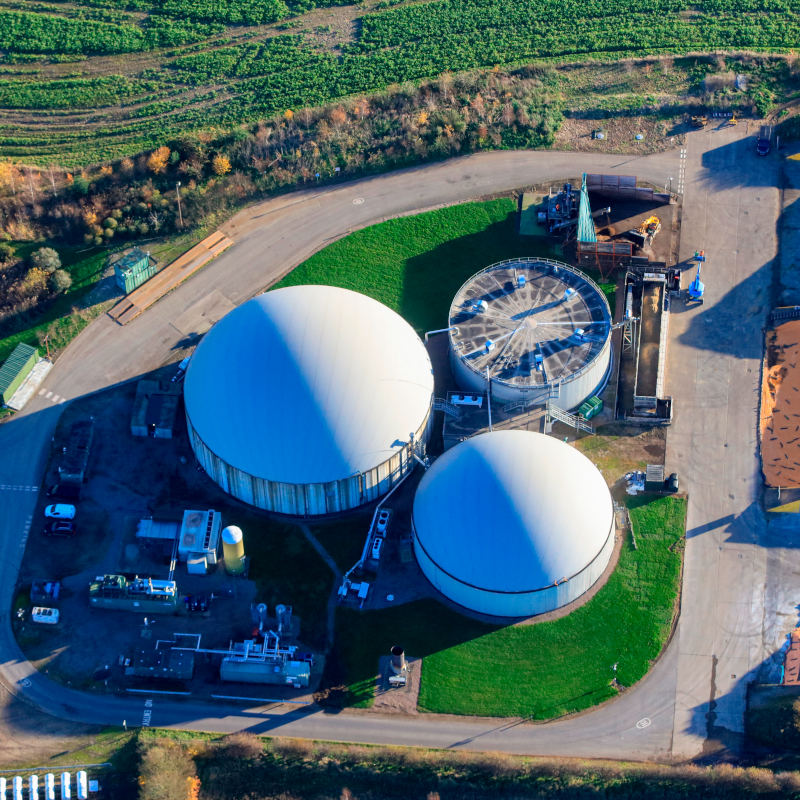
Anaerobic digestion has become an attractive technology for many farmers, enabling them to convert biomass as feedstock into biogas and digestate (ADD), both of which are valuable resources.
To support its members explore this subject, Agri-TechE sponsors and coordinates the ‘Increasing Nutrient Efficiency From Anaerobic Digestate’ field lab on behalf of Innovative Farmers.
The field lab is investigating how to stabilise N and reduce loss in AD. This includes improving absorption and soil structure using cover crops.
All farmers in the group produce their own digestate on-farm and are specifically interested in exploring how to stabilise its nutrient content and decrease loss through leaching or volatilisation when applied as a fertiliser.
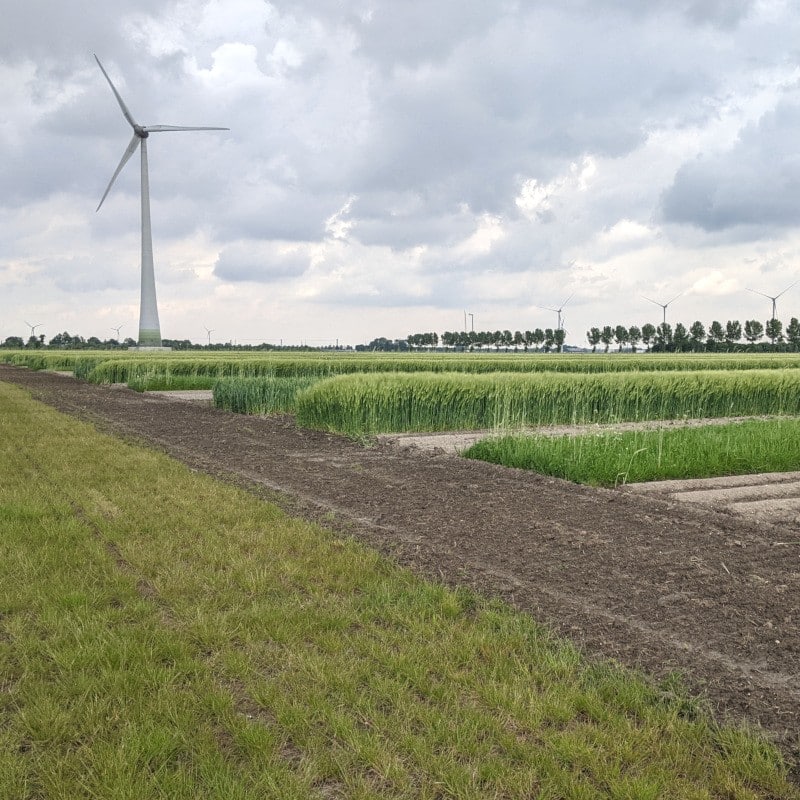
The field trials were set up in collaboration with research partner Niab and are running over two growing seasons with four different treatments that explore N fixation with cover crops:
digestate + cover crop mix
digestate only
cover crop only
control.
Data collected from the trials, including soil health measurement, nutrient content and yield, will provide a better understanding on the role of cover crops in maximising the value of digestate.
Alongside the field trials, one of the farmers in the project, a keen agricultural engineer, is building a DIY digestate acidifier to reduce volatilisation.
A detailed progress of the project can be found on the dedicated field lab page on the Innovative Farmers website. Agri-TechE sponsors and coordinates this project.
Research partners include Niab and Cranfield University.
Get the latest agri-tech news, events and opportunities direct to your inbox
Start-Ups showcase exciting agri-tech opportunities at REAP
Agri-TechE
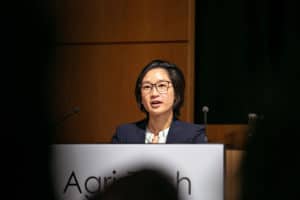
Nicole Sadd, RoCRE, chairing the Start-Up Showcase at REAP 2018
Improving consistence of products in alignment with customer specifications was one of the themes at REAP this year.
Increasing accuracy in managing and predicting quality of products and using digital technologies to understand and connect with markets will both improve productivity and reduce waste.
Both the technology exhibition and the Start-up Showcase featured new ways of achieving this.
A number of exciting early-stage agri-tech companies seeking support, advice, connections and investment were invited to appear in the showcase.
In previous years this opportunity has been the launch pad for business growth for a number of companies including: Small Robot Company, Olombria, Hummingbird Technologies, PBD Biotech and 30MHz.
The session was introduced by Nicole Sadd, Executive Director at RoCRE. This innovation centre at Rothamsted Research has also provided support for several of the companies featured.
Selective harvesting? New drone app identifies best potato plants for crisps
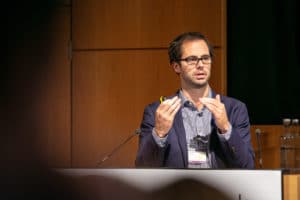
Keith Geary, Axomap
The best crisps are made from potatoes that have higher dry matter content – Axomap’s remote sensing drone makes it easier to spot the individual plants that are producing spuds with these desirable qualities.
“Higher dry matter means potatoes absorb less moisture and oil during frying, and are also less likely to caramelise so they don’t go brown and look burnt,” Axomap founder Keith Geary explains.
He comments that strategic harvesting is the next big opportunity: “It is difficult to get potatoes to grow uniformly. Given the variations across a field, inevitably your crop is going to be inconsistent.
“Selectively harvesting high value produce at just the right time offers huge potential.
“We’re interested in trying to improve the quality of potatoes harvested so producers are confident in their saleable yield.”
Beef producers to meet changing consumer preferences
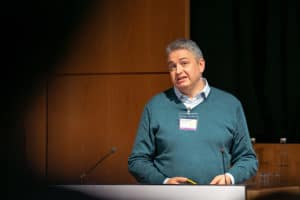
Ian Wheal, Breedr
Changing customer tastes mean that almost half of prime beef now fails to meet ideal market specifications, resulting in lower prices for producers and waste in the value chain.
Breedr co-founder Ian Wheal explains: “There is a big consumer drive towards steaks and burgers, however the EU-wide EUROP grading system used to value beef was designed when rump was the main piece of beef consumed.
“As a result farmers are flying blind when trying to meet the specifications of retailers for meat with less fat and improved taste.”
Breedr has developed an easy-to-use app that will help farmers finish cattle to retailers’ specifications with greater precision, underpinned by the data to evidence this. The company launched the Field to Yield trial with Rothamsted Research at North Wyke to improve the metrics available to farmers.
Chalante developing new weapon against cattle nematodes
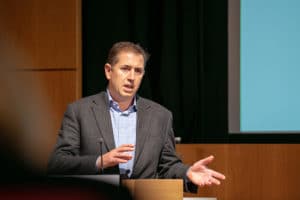
Simon Aspland, Chalante
Increasing resistance to anthelmintics, anti-parasitic drugs used to treat worms (nematodes) in cattle and other animals, is threatening the viability of the international livestock industry. There have been no new drug families with novel modes of action in cattle for 30 years.
Now early-stage company Chalante has developed a parasiticide with a novel mode of action that promises a new approach to tackle this problem which impacts productivity.
General manager Simon Aspland explains: “Most anthelmintics disrupt neuromuscular transmission in the nematode by focusing on a specific molecular target. This has put the nematode under evolutionary pressure and it has been able to develop resistance.
“Our drugs target different molecular targets, so this will be a new resistance breaking product.”
DryGro offers arid regions high protein sustainable alternative to soy
Sean Peters, DryGro
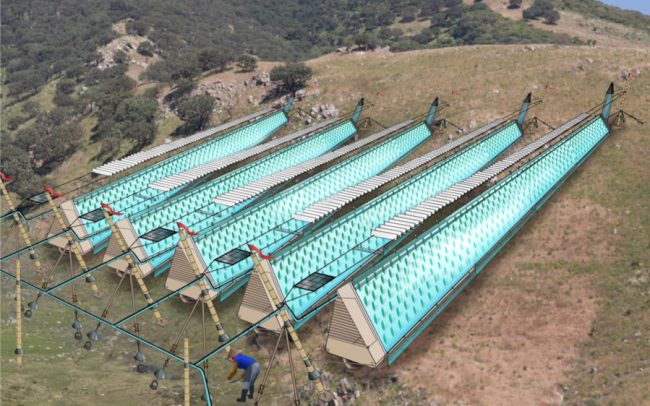
It might be considered a nuisance by pond owners, but ‘duckweed’ offers a high protein alternative to soy that can be grown in arid countries with very little water. Start-up company DryGro is set to disrupt a huge global market, with a growing system for Lemnoideae that promises to revolutionise animal production in sub-Saharan countries
DryGro founder Sean Peters explains: “Lemnoideae is a simple round-leaved pondweed that multiplies quickly on the surface of water, is rich in protein and is a viable alternative to soy which is widely used in animal feed.
“We have developed a technology that would allow it to be grown in an enclosed environment using recycled water. This creates the opportunity for a sustainable source of high-grade animal feed to be grown close to livestock producers and their local markets.”
FOLIUM Science’s new ‘guided biotic’ triggers salmonella self-digestion
Ed Fuchs, FOLIUM Science
A feed additive that will protect young chicks against common bacterial infections such as salmonella and E.coli has been developed by early-stage company FOLIUM Science. Initial trials of its ‘Guided Biotic’ were seen to restore the natural balance of the healthy microbiome and revealed unexpected improvements in wellbeing.
The highly specific anti-bacterial technology can trigger a natural process in the target pathogen that guides the bacteria’s own enzymes to digest its cell material.
Co-founder Edward Fuchs says it provides a potential solution to the growing problem of antimicrobial resistance.
“Our patented approach is highly specific; by removing only the pathogenic bacteria it leaves the animal with an intact healthy microbiome.
“Preliminary trials in chickens indicate that reducing the disease burden improves the weight gain of the birds and removes the need to use antibiotics.”
Farming’s fatal record – could new farm safety app save time and lives?
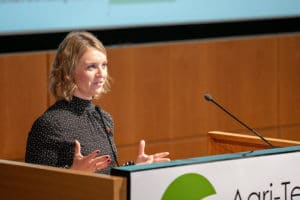
Lizzie Creed, Receptive Technologies
One person is killed every 11 days in agriculture despite an overwhelming volume of information and process. Farm365 is a new app-based tool that uses a mobile phone to read QR codes on equipment, making it easier to fit health and safety checks into everyday practice, and creates electronic reports that help compliance.
Lizzie Creed, founder of the agricultural consultancy Receptive Technologies, developed Farm365 after a decade working in agriculture and realising that every mention of health and safety was met with a groan, despite agriculture’s fatal injury record being 18 times higher than all other main industries. The app launched at REAP.
Nova Extraction launches world’s first industrial off-grid essence extractor
Alex Novitskiy, Nova Extraction
Increasing interest in the use of herbal essences and cannabis oil for health and wellbeing has created a demand for high quality, pure botanical extracts. Early-stage company Nova Extraction has developed the world’s first industrial, off-grid, clean-tech extractor.
It is now available for flower, herb and food producers to rent, providing producers with affordable and consistent technology to extract flavours or fragrances in-field.
Nova Extraction’s new autonomous extractor uses supercritical carbon dioxide (CO2) technology, originally developed for decaffeination of green coffee beans.
Company co-founders Alex Novitskiy and Sergey Soshin re-engineered the process and have designed a unique piece of equipment that can be deployed almost anywhere in the world, without the need for electricity or water.
Digital marketplace to help Colombian farmers trade without intimidation
Jacqui Poon, Farming Data
A complex supply chain and violent middlemen can mean that the price difference between the farm gate and local store can be as much as 300% for small Colombian farmers.
Farming Data has developed of an integrated digital marketplace accessed through Android phones that provides a virtual marketplace for two-way information sharing. It supports trading by geotagging or setting a proxy location for producers and capturing specific requests from buyers on the frequency or varieties of crops they are seeking, level of ripeness, and other variables that enable producers to better meet demand.
Farming Data co-founder Jacqui Poon announced that 1,000 farmers will be piloting the platform. She said: “Our digital marketplace is about arming producers – often women – with information about current market demands to bring about healthy competition.”
Get the latest agri-tech news, events and opportunities direct to your inbox
Niab says gene editing shows promise
Meet the Network
Agri-TechE
Gene editing has the potential to underpin the next agricultural revolution. As a quicker, more accurate way of selecting desired genetic traits in plant breeding it offers the promise of a step-change increase in agricultural productivity, more durable pest and disease resistance, improved nutrition and resilience to climate change.
Gene editing is a new technique which allows a specific gene to be altered, but only at a very specific point, sometimes without the introduction of any new DNA. It means that plant breeders could precisely improve specific crop traits, for example disease resistance or drought resistance. This technique has been widely used in human, animal and plant cells.
Niab research has shown that genetic innovation (in the form of new crop varieties) accounts for around 90% of yield gain over time in our major arable crops. No amount of investment in robotics, artificial intelligence, satellite and digital technologies can increase a crop’s basic genetic potential. In contrast, gene editing is the latest tool in our wheat breeding research which offer step-change increases in yield.
Niab has recently published its latest findings showing that efficient gene editing in wheat is now possible with similar efficiencies of wheat transformation alone (BMC Plant Biology journal: Efficient generation of stable, heritable gene edits in wheat using CRISPR/Cas9).
Get the latest agri-tech news, events and opportunities direct to your inbox
KisanHub expands weather station network
Meet the Network
Agri-TechE
KisanHub now has 90 weather stations installed across its grower base, recording weather data at a 15 minute intervals.
The network now runs from North Yorkshire to Cornwall, with another 30 stations yet to be installed in 2018. Although every weather station has been allocated to a grower and positioned on farm, any KisanHub platform user can access the live weather information.
The weather stations that have been deployed are the Davis Vantage Pro-2 Plus. These are capturing:
Rainfall
Temperature
Solar radiation
Relative humidity
Wind speed
Wind direction
Pressure
Dew point
Wind chill
Heat index
If you would like more details or are interested in becoming a KisanHub Crop Intelligence Platform user then please contact the team at business@kisanhub.com
Post Overview
26th November 2018
Agri-TechE
Agri-TechE Article
Data: Collection to Management
Share this Page:
Related Posts
Map of Ag acquires precision farming company Precision Decisions
Get the latest agri-tech news, events and opportunities direct to your inbox
Fungal threats stored under liquid nitrogen
Meet the Network
Agri-TechE
CHAP’s team at CABI is focusing on the maintenance, by storage under liquid nitrogen, of collected microbial (particularly fungal) threats to major UK crops. Part of this capability is a MALDI-TOF mass spectrometer, originally purchased for characterisation and quality control of material going into and out from the National Reference Collection.
Since the commissioning of the spectrometer, early in 2017, CABI scientists at Egham have been developing new sample-preparation and data-analysis methods to simplify the workflow and to expand the usefulness of the mass spectrometer within CHAP and CABI.
These efforts have, so far, resulted in three peer-reviewed publications (details below). Another three papers are currently submitted and under peer review, and a further four are in preparation.
Anyone interested in collaborative opportunities within CHAP using this MALDI-TOF mass spectrometer should contact either Mike Reeve (M.Reeve@cabi.org) or Alan Buddie (A.Buddie@cabi.org).
Post Overview
26th November 2018
Agri-TechE
Agri-TechE Article
Inputs: from Chemical to Biological
Share this Page:
Related Posts
Trials of Germains Seed Treatments new Xbeet enrich 200 show yield benefit
Get the latest agri-tech news, events and opportunities direct to your inbox
Colin Morgan joins ADAS as business development director
Meet the Network
Agri-TechE
Boxworth, UK. His appointment as business development director comes at an exciting time of growth for the team and enables expansion of the current client base by developing new client relationships and increasing our service offering to existing clients.
Colin joins the team from DNV Global. His 15 years’ experience in sustainability includes global supply chains in food and commodities, as well as working with global food brands to support them in developing and strengthening responsible sourcing strategies.
With broad experience across all aspects of sustainability, Colin’s recent projects have included working in food and farming businesses across the world. This encompasses projects in Burkina Faso with the shea sector, in Bangladesh on human rights in farming, and in Saudi Arabia using sustainability frameworks with food production businesses. He has also worked extensively with UK food producers. Colin is interested in new and emerging food and farming systems and approaches, including novel crops, and is highly competent in understanding the challenges in modern farming and the opportunities open to the sector to improve wellbeing in society. He will be responsible for implementing a growth strategy to enable the Sustainable Food and Farming business to expand its offering in the corporate food sector.
You can find out more about the team’s service offerings on the Sustainable Food and Farming section of our website. For more information, please contact Sarah Wynn. Interested in joining the ADAS team? You can view our current job openings here.
Post Overview
26th November 2018
Agri-TechE
Agri-TechE Article
Business Support
Share this Page:
Related Posts
J A Kemp: Retained EU Plant Variety Rights – 29 Feb 2024 Deadline
Get the latest agri-tech news, events and opportunities direct to your inbox
A central signal sorting hub has been revealed for plants
Research Digest
Agri-TechE
In the wild plants are constantly sensing and responding to a multitude of signals by appropriately coordinating biological processes.
Seasonal cues such as day length and temperature influence how quickly plants grow and how well they can fend off pests and pathogens. This remarkable ability is enables plants to thrive in their local environments.
Until now the mechanism that controls this process has not been well understood. New research from the John Innes Centre, which appears in the journal Cell Reports, sheds light on this fascinating question.
Dr Vinod Kumar of the John Innes Centre explains: “Our study reveals the existence of a central signal sorting hub, which fine tunes growth and immunity in line with key seasonal cues.”
At the centre of this signaling hub are DET1 and COP1, two key proteins known for their role in light signalling and growth control. This study exposes a novel role of these proteins in plant defense. DET1 and COP1 along with the transcription factor PIF4 control the coordination of growth and immunity in response to day length and temperature.
“We used Arabidopsis in our study. Given the evolutionary conservation there is a strong likelihood that this could also be true for other systems including important crops, ”added Dr Sreeramaiah Gangappa, the first author of the paper.
The next stage, says Dr Kumar, is to explore in greater detail to understand how the hub functions. “We have shown that a common signalling machinery is in operation for environmental signalling. The next exciting challenge is to understand the molecular mechanisms by which it operates.”
Understanding the mechanisms by which plants interact with their environment to define adaptive traits, such as growth and immunity, could be important in crop breeding in the long run – especially in the context of global climate change.
Read the full article; DET1 and COP1 Modulate the Coordination of Growth and Immunity in Response to Key Seasonal Signals in Arabidopsis
Get the latest agri-tech news, events and opportunities direct to your inbox
Phytoponics gains funding for hydroponic scale-up trials
Meet the Network
Agri-TechE
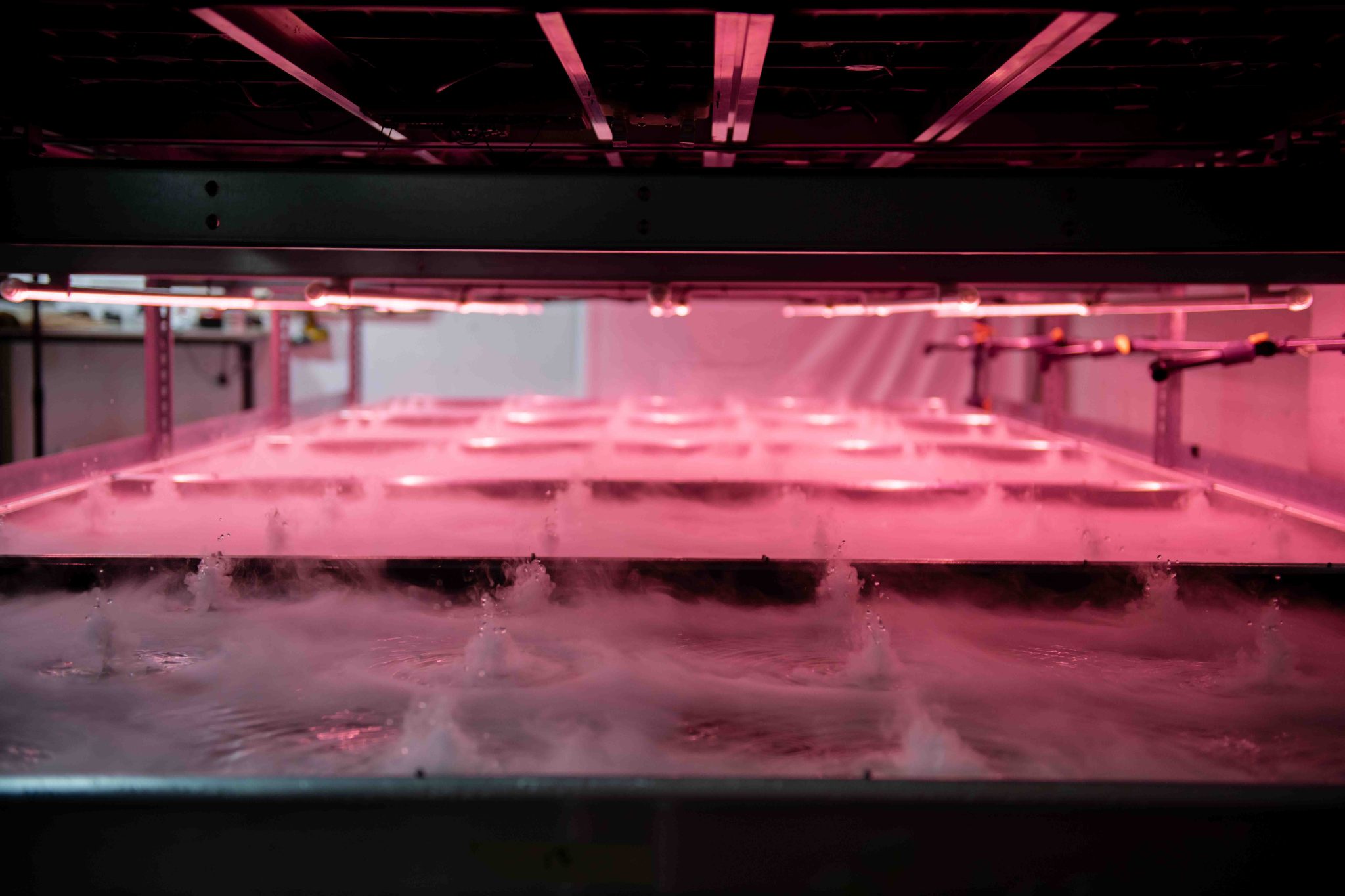
Phytoponics, a multi-award winning start-up specialising in the development of hydroponic deep-water culture technology for sustainable agriculture has secured £300,000 in new funding following on from the £200,000 it raised earlier this year. The funding comes from existing investors and a number of new angel investors lead by Smart Anchor Capital.
The company based in Aberystwyth was co-founded by Adam Dixon and Luke Parkin during Adam’s studies at Cardiff University with the aim of delivering highly optimised hydroponic systems designed to produce better crop yields than traditional systems and with the potential to meet global food demand with sustainability in mind. Phytoponic’s patented Hydrosac technology is ready for high volume commercial growing having proven itself by producing two tonnes of high quality tomatoes through a pilot project housed at the company’s glasshouse facility at Aberystwyth University.
Phytoponics CEO & Co-Founder Adam Dixon says. “We’re so pleased to have secured this funding from such prominent supportive investors. These new funds will provide us the necessary operating cash to scale up trials of our technology whilst experimenting with other high value crop types. We recently signed a contract with a major commercial grower that will use our technology to grow tomatoes for two major
supermarkets early next year. We’re also planning to hire new employees to help with technical and commercial development”.
Existing investor David Kremer commented, “When approached I was more than happy to follow-on fund the team having experienced the progress they’ve made over the last 6 months, not only successfully bringing their concept to market but surrounding themselves with credible industry experts and picking up awards and accolades along the way”.
Incoming Angel investor entrepreneur Melisa Lawton says. “The decision to invest in Phytoponics was quite simple once I’d met Adam and Luke. Their vision is compelling, as is the potential for their Hydrosac technology, especially the ability to deploy it in countries where water is scarce or in humanitarian aid situations”.
“The team have achieved an amazing amount in the last 12 months and with little resource. Despite that they have attracted the attention of potential partners and customers from the US, India, UAE, Africa, Canada and many other countries”, said Mark Hindmarsh Founder Partner of Smart Anchor Capital. “As new shareholders we are all excited to see what the future holds for the company considering the opportunity that lies ahead and as recently appointed Chairman I personally look forward to playing my part in helping Phytoponics achieve its next milestones in advance of a larger fundraise within the next 12 months”.
The Phytoponics investment process was facilitated and managed by Smart Anchor Ventures with legal support provided by Acuity Legal.
Additional information on Phytoponics can be found at http://www.phytoponics.com
Post Overview
26th November 2018
Agri-TechE
Agri-TechE Article
CEA and Vertical Farming
Share this Page:
Related Posts
How Earth’s earliest photosynthesizers could offer farmers a new commercial – net zero – opportunity
Get the latest agri-tech news, events and opportunities direct to your inbox
“Game-changing” funding success for European research alliance
Agri-TechE Article
Agri-TechE
A major grant to fund curiosity-driven research into plant communication has been awarded to a John Innes Centre researcher and colleagues from two European institutes.
Professor Richard Morris, programme leader in plant health at the John Innes Centre, is part of an interdisciplinary team which includes Dr Friedrich Kragler from the Max Planck Institute of Molecular Plant Physiology in Potsdam, Germany, and Professor Julia Kehr from the University of Hamburg.
The successful team, which receives €6.1m over six years, is one of only 27 from across Europe to be awarded a European Research Council (ERC) Synergy Grant. “It’s been a highly rewarding experience to develop new ideas within such an excellent team,” said Professor Morris.
“The synergy was apparent early on and, of course, we’re super-excited about what we’re proposing to do. We’re absolutely delighted to have been selected for funding.” Professor Richard Morris – full credit given to the originator of this image
The philosophy of the ERC Synergy programme is simple, said Professor Morris: “They encourage researchers from different disciplines to come together think freely and develop a research programme ‘bottom up’ following their curiosity. He continued: “In my view, it’s a recipe for success and innovation. Scientific progress is driven by the free flow of ideas, data and people and the ERC Synergy programme promotes exactly that.”
John Innes Centre Director, Professor Dale Sanders congratulated the team and said: “The ERC Synergy programme fits really well with the philosophy of the John Innes Centre, achieving excellence in fundamental research and giving scientists the freedom to follow their curiosity. This is a fantastic achievement for the team and it is encouraging to see European partnerships coming together to answer key questions which will push the boundaries of our understanding.”
The highly-coveted grants, worth €250 million in total, enable groups of 2 to 4 lead researchers to bring together complementary skills, knowledge and resources to address research problems at the frontiers of knowledge.
Carlos Moedas, European Commissioner for Research, Science and Innovation, said: “The purpose of this EU funding is to group together top scientific talents and bring out their best. It equips researchers on their quest to put European science on the global stage and make discoveries that will ultimately improve European lives.”
Professor Morris’s research uses mathematical modelling and computational approaches to solve problems in biology. His focus is on how plants encode, transmit and decode information about their environment. He believes the ERC funding is a “game-changer” for his long term scientific goals.
“This grant will be game-changing for my interest in biological information processing in that it brings together leading groups from across Europe in the areas of cell biology, protein biochemistry and mathematical modelling to unravel the mechanisms of RNA-based communication. This funding gives us the freedom to build and develop truly interdisciplinary research teams and train the next generation of researchers. It’s very exciting,” he said.
The fundamental research, explained Professor Morris, will have broad implications in helping to understand how plants adapt to their environment and how grafted plants may use communication strategies to increase specific traits such as disease resistance.
“This is blue skies science that will shed light on how plant cells can talk to one another over long distances to co-ordinate development,” he said. The grants are part of the EU’s research and innovation programme, Horizon 2020. Ends
Get the latest agri-tech news, events and opportunities direct to your inbox
Scale, Disruption and Brexit
Agri-TechE Article
Agri-TechE
A new dawn for the UK food supply chains?
The UK grocery sector is undergoing a period of unprecedented structural change. The growth and adoption of technology, evolving behavioural trends, fiercer competitor dynamics and momentous industry consolidation has caused a fundamental shift in the power differential between wholesalers, retailers and consumers. Despite the uncertainty of the coming years and Brexit looming on the horizon, one thing is for certain – a new paradigm for the grocery sector is dawning.
Our new report examines how the fast-paced evolution of consumer preferences has left retailers struggling to adapt business models to meet customers’ heightened expectations. Successful strategies and the ability to capitalise on new trading opportunities as they arise will be key to maximising the potential opportunities. The race is on to pivot business models fast enough to be fit-for-purpose in today’s digitally-driven age.
More at https://www.barclayscorporate.com/insight-and-research/industry-expertise/scale-disruption-and-brexit.html
Get the latest agri-tech news, events and opportunities direct to your inbox
Work better together with agri-data feeds in ZENSIE
Meet the Network
Agri-TechE
30 Mhz has recently updated its platform’s interface, look and feel.
A spokesperson says” “We wanted the experience of ZENSIE to reflect how our customers (growers, consultants, store managers, irrigation specialists, to name a few) work, and enable them to get even more out of their crop data. The result? New and improved features that make communication and collaboration simple, from anywhere.”
ZENSIE users (or anyone who’s had a glimpse of the platform) will be familiar with widgets, the modular building blocks used to put together custom dashboards based on users’ needs. From single value widgets and charts to tagged images and animated heatmaps, these building blocks can be explored interactively and annotated with comments.
Your feed helps you stay up to date on the conversations happening around your crop data, with an updating timeline of those comments.
Closing the data gap in horticultural research: in conversation with Chris Need
A few weeks ago, we spoke to horticultural consultant Chris Need about the role real-time data plays in helping growers prevent disease (in this specific case pansy mottle syndrome), and discussed how remote monitoring of plants and their environment can help drive more informed, immediate decision-making.
Q. Now that you’re working with a crop data platform with your customers, what impact have you seen?
For communication between myself and the customer, the 30MHz platform has worked brilliantly. We see historical context, the current status of plants, and can make confident decisions based on a combination of live data and an understanding of what’s been going on previously. We’ve been able to take preventative measures to avoid disease in crops, while communicating from anywhere in the world. I’m really enthusiastic for the opportunities for collaboration and data exchange that groups and comments offer customers as well.
I see some growers taking the next step and forming interdisciplinary project groups within the nursery. These groups features— the ability to share sensor data with any stakeholder, and have an ongoing conversation about that live data– are powerful, so I’d like to see more of them!
Take the example of two growers I’m working with: one grows small plants, and then hands them over to the other. There’s no competition here. The growers work in separate buildings, at separate nurseries, and operatrate reasonably separately, but they’re part of the same chain— same ecosystem. And they happen to share the same overall management. A mutual understanding of the plants’ experience as they move from one stage to the next would be of great benefit to both growers, not to mention the plants themselves.
So how do growers move to this next level of digital collaboration? (Well, they need to just log into the dashboard!)
In horticulture, everyone’s busy. And management at the top needs to see the impact on productivity and margins. Everyone wants innovation, but these organisations want to run as efficiently as possible— there isn’t a great deal of time for “free play.” That’s what makes 30MHz such a great fit: it’s easy to deploy and use, and the benefits are evident very quickly. It’s not risky for the business. That’s why it’s such a massive opportunity. Working together to create horticultural strategies based on real, live data has tangible benefits. Even in extreme conditions— one of the hottest summers the UK has seen in years— we managed to produce a number of batches with no signs of pansy mottle syndrome (PaMS.) We looked at plant stress, environmental conditions, and took action.
Screen settings and irrigation timings were manipulated to reduce leaf and air temperatures and reduce VPD peaks. 30MHz tech allowed us to go beyond a traditional approach of just looking at the environment— we could actually monitor the plants themselves and identify and minimise stress, something you wouldn’t spot using other tools.
At one point, something went wrong: very strong winds (over 15 m/s) led the climate computer to shut the vents based on thresholds set to prevent weather damage. High radiation and closed vents raised the temperature and VPD dramatically.
Two weeks later, we saw that PaMS had developed. From my point of view, this experience confirmed that we had been taking the right approach to prevent pansy mottle syndrome to begin with. And if we didn’t take this approach, we would see the problem.
We now have evidence to back our approach: we know we need to focus on what we need to control stress, and we see that if we don’t control those factors, we’ll have a negative result, with a delay of about two weeks. (We also know that changing wind speed settings will be able prevent this occurring in the future.) So, we’ve already seen some great results, but granular real-time monitoring like this can have an impact in so many other areas of horticulture.
There are real opportunities to leverage this kind of data to push forward on the R&D front— particularly in nurseries. Traditionally, R&D is done in research stations, so there isn’t really access to commercial conditions. There aren’t opportunities to manipulate the environment or the plants the same day— technology like 30MHz closes this gap. I’ve seen pansy mottle trials with traditional data logging, where data was solely historic, and nothing could be improved in real-time. The environment simply couldn’t be manipulated quickly or effectively.
What we’re doing at Newey Roundstone is the next step. The potential for responsive R&D in real, changing and changeable conditions is absolutely massive. I can’t wait to see the innovation that will come from collaborative, interdisciplinary collaboration based on live data. And it’s all possible in this platform.
Follow Chris’ views on the horticultural industry via LinkedIn, or contact him chris@needconsulting.co.uk
Post Overview
26th November 2018
Agri-TechE
Agri-TechE Article
Data: Collection to Management
Share this Page:
Related Posts
Hummingbird Trinity drone offers improvements to data capture
Get the latest agri-tech news, events and opportunities direct to your inbox
Could satellite be the answer to rural broadband?
Meet the Network
Agri-TechE
We are still in an era of not having fast internet by mobile sim everywhere in the UK. In these situations, satellite works well, and can be easily set up (with a farmer’s toolkit and built in tools) and moved from site to site. Speeds of up to 30Mbps and 6Mbps upload are achievable now and by 2019 we could be looking at 100Mbps or more from new European satellite launches.
Sims ideal for agri-tech
Rural Broadband (an offshoot of Rural Computing) was started by Richard Dix in 2011 and is based on the family farm at Heacham in West Norfolk.
Richard trained at Easton College during the late 80’s just as the early computer management systems were being introduced on to farms. He was also involved in on farm trials of computerised sow feeding using transponders on collars, giving him an early introduction to agri-tech.
4G networks are spreading over the UK and along with this increase of coverage, data costs are reducing. Rural Broadband work with the main UK mobile networks in supplying data and SMS sims ideal for agri-tech.
From a data sim with a few megabytes of data to large gigabyte plans and SMS only sims.
Rural Broadband’s services include:
Communication and internet on remote sites (including homes and businesses) by 4G network or satellite
Remote device monitoring and control (IOT) using a mix of low use data sims on GPRS, 3G or 4G, or using SMS/Text messaging.
As satellite and mobile technology moves on, Rural Broadband stays ahead of others by working with the very latest technology and the best technology partners for their agri-tech connectivity projects. Solar farm monitoring
These currently include water level and sunlight level monitoring for potato crops as well as solar farm monitoring and remote meter reading.
This year Rural Broadband hope to add LoRaWan (farm wide) networking to the technologies offered, and they are seeking partners in this area.
Other services provided by the company include dealing with the slow internet and lack of it, in some homes, businesses and farms. We understand the problems of living and working in the country side, with the benefits of clean air and the problems of communication.
Unlike many other communications companies Rural Broadband supply a range of high grade mobile and satellite solutions so that we can provide the customer specifically with their needs rather than just one size fits all.
For more information visit ruralbroadband.co.uk
or contact Richard Dix
E: richard@ruralbroadband.co.uk
T: 01485 572253
Post Overview
26th November 2018
Agri-TechE
Agri-TechE Article
Digital Farm Management
Share this Page:
Related Posts
Focus on fruit – technologies moving into the sector

 Agri-TechE


 Agri-TechE
































 Rural Broadband (an offshoot of Rural Computing) was started by Richard Dix in 2011 and is based on the family farm at Heacham in West Norfolk.
 Rural Broadband’s services include: