The Internet of Agri Things: watch this space
 Agri-TechE
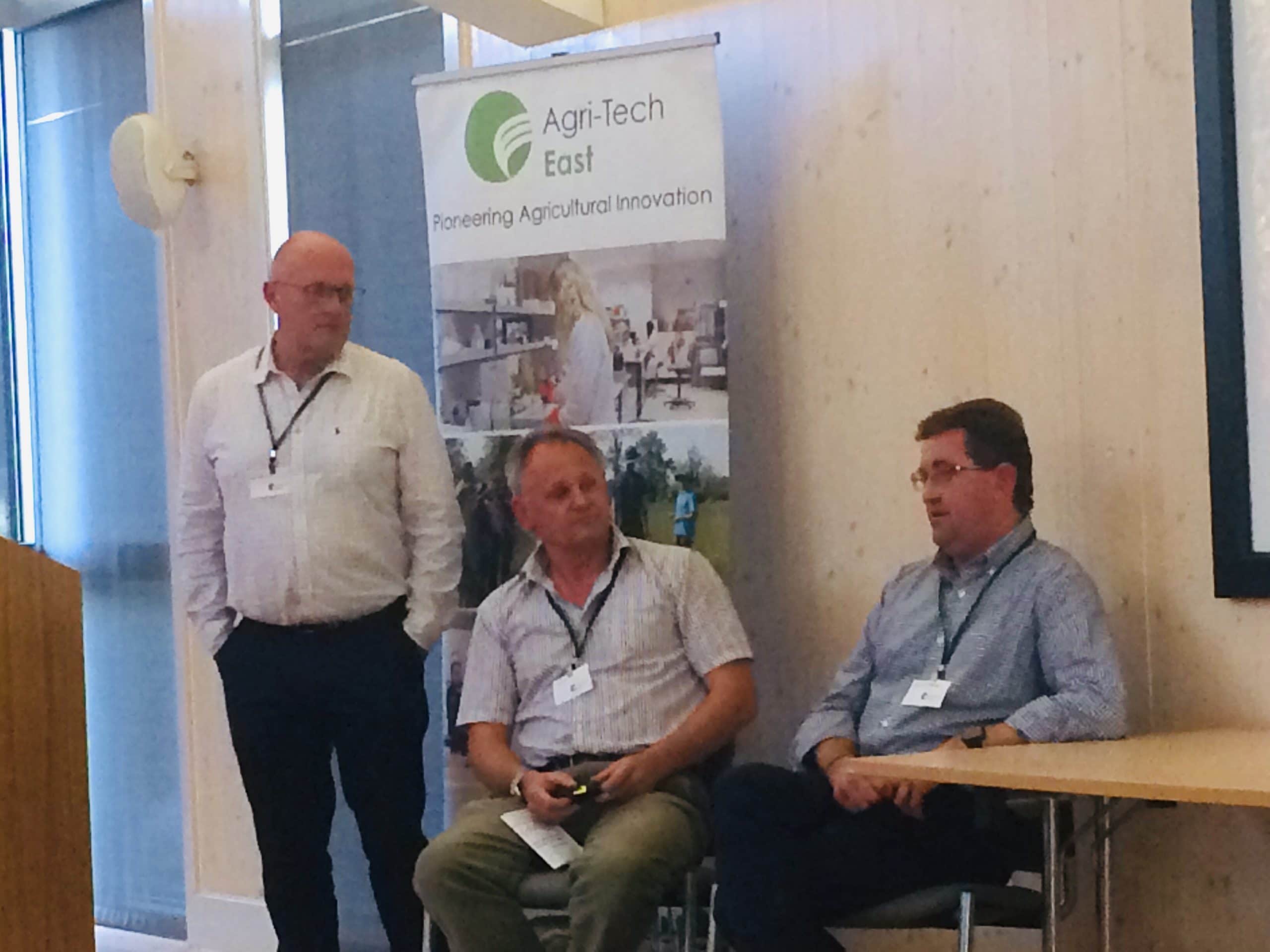
“Something big is on its way but we are not quite sure what form it will take” was one of the messages from the Pollinator “Internet of (Agri-)Things” which brought together companies such as Microsoft Research, nWave and RedBite who at the forefront of this technology with the agricultural community.
The Internet of Things refers to objects communicating with each other and this is becoming more feasible with the development of low cost, low energy, electronic devices.
This is creating the opportunity for new types of decision-support for farmers but technologists need to have feedback from the agricultural community on applications that would bring the greatest benefit.
The Pollinator is timely as a big development happening this year is a new open standard for a Low Power Wide Area Networks (LPWANs) which will enable small devices – sensors or actuators – to be placed 10km or further away from the base station.
Typically a device will be a sensor, such as soil moisture sensor, that sends small messages every hour, day or maybe not until something changes – so the bandwidth requirements are very small.
A benefit of an open standard is that the devices would be interoperable, which would encourage competition, therefore keeping the operational cost as low as possible.
Some real case studies
A number of case-studies were discussed of how the technology can be applied:
- Track and trace – sensors on farm machinery and assets
- Monitoring health and location of livestock – smart ear tags contain information about individual animal
- Nutrition – a ‘bolus’ located in the stomach of a cow monitors feed quality, pH and output of greenhouse gases
- Smart water irrigation – pivot water irrigation is a fixed structure where sprayers rotate around a central pivot. Linking water application to soil moisture can reduce water usage by up to 40%
- Remote monitoring – fertiliser tank level and status were monitored remotely removing the need for local asset management. This improved logistics, increasing ROI and offered new insights into usage.
Other examples were shared from the floor, including that of a farmer who wanted a way of remote monitoring his pigs so that he could see when they bit off the nipple used to deliver water. Loss of the nipple caused flooding, which not only wasted water but also cost €20 per tonne to pump out the slurry. A simple text message to alert the farmer would quickly pay for itself.
Industry interest
Chairing proceedings were Matthew Smith and Drew Purvis, computational ecologists from Microsoft Research who are working on a number of agricultural challenges to which computational modelling can be applied.
They discussed how a changing climate, extreme weather events, increasing CO2 emissions and the need for increasing availability of resources, such as water, are all challenges where IoT can help.
For example, better real time information can lead to better prediction of extreme weather events. New ways of modelling data for crop performance can help inform more efficient crop management and field scale monitoring will allow optimal management of resources (water, fertilizer, pesticides), all of which will improve yields.
The phrase “Internet of Things” was first coined by Prof Duncan McFarlane from the IfM at the University of Cambridge, who is also a founder of RedBite Solutions.
Adrian Segens, Chief Technology Officer of RedBite Solutions, pointed out that “things” are very difficult to identify uniquely by software systems. So RedBite is turning “things” into “smart” things by making them uniquely identifiable and able to communicate by using technologies such as RFID and QR codes.
These codes, when located on objects such as packing trays or cattle ear tags, are easy to scan with a hand held reader making data capture very easy.
The ability to connect devices straight to the cloud has allowed fixed infrastructures such as servers to be removed. So there is now an opportunity to use the technology in the field.
NWave’s Vice President Matthew Bailey discussed how LPWANs, by using frequencies currently used by radio, will make it possible to have connectivity over long distances.
The importance of standards can’t be under-estimated as this will enable compatibility between devices and allow the development of global markets. This is the reason why a number of big players in the industry have formed the Weightless™ Special Interest Group to create the first global open standard for the IoT networks.

IoT isn’t only about the devices
Alastair Taylor, CEO of the Institute of Agricultural Engineers, brought an additional dimensions to the discussion, reminding delegates that “Agri-Things” also includes the wider agri-ecosystem including plants, animals and soil, as well as the agri-people (the farmers, machinery technicians and the agronomists, for example).
A big challenge for the future will be changing perceptions, to encourage young engineers who think motor racing is an exciting career choice to consider the opportunities in agrifood instead. Perhaps a new job description is needed, describing the “precision farming technician” which will demonstrate the levels of complexities and new skills involved in harnessing IoT opportunities.
Bringing the tech to the field
The merits of bringing innovators and farmers closer together was again reinforced by comments from the speakers and audience, with Adrian Segens welcoming the chance to “really get deep” into the problems needing solutions.
A note of reassurance
Finally, a key point about terminology was made by Drew Purvis:
“Everyone, it appears, is wrestling with the new ‘buzz-words’ such as ‘big data’, ‘machine learning’, ‘the cloud’ and ‘wearables’. So if you are feeling unclear about how the wealth of opportunities relate to you as a farmer, grower or producer, that’s quite normal – so is everyone else right now!”
As Alastair Taylor concluded “I’ve never been so excited about the future – we now have technologies that previously didn’t exist to bring autonomous, intelligent, useful and productive innovations to the field.”
You can read more about the discussions held at the Pollinator in the full report, which is available free to members on our Publications page.
Post Overview
Agri-TechE Related Posts
Innovation Insights at Cereals – an overview of agri-tech
Wheat roots respond to blackgrass

Follow the money
From ideas to on-farm reality Agri-TechE Week 2014
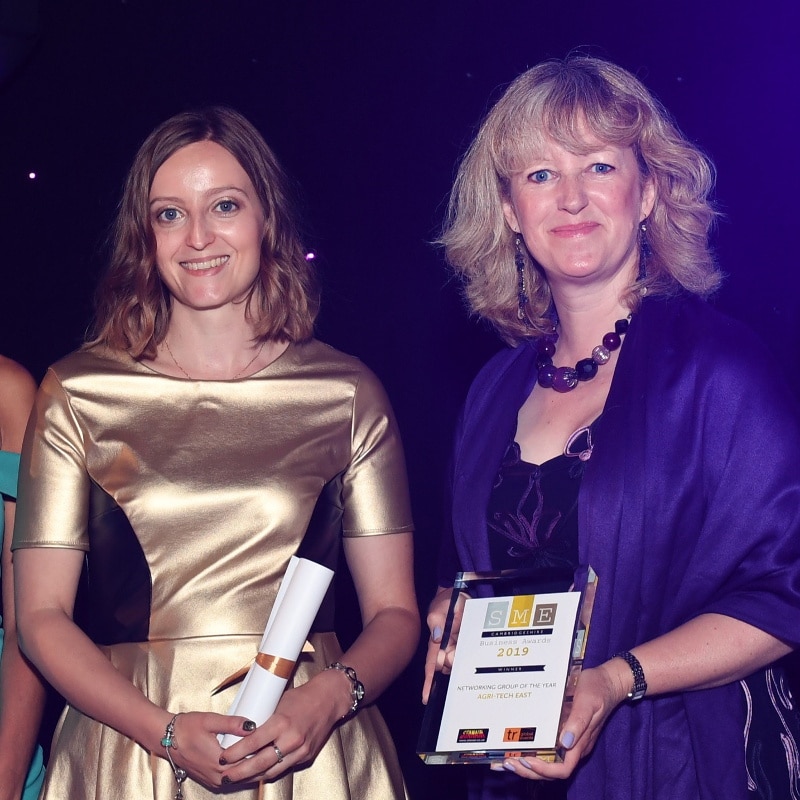
Agri-TechE named Networking Group of the Year at SME Cambridgeshire Business Awards