Skills for the Future: do I have what you need?
 Agri-TechE
 When it comes to skills for agri-tech, students and industry are often saying the same thing, just from opposite sides of the table.
“Do you have what I need?”
It’s a question the agriculture and agri-tech industry is increasingly asking its future workforce.
But perhaps we should turn it around to “Have I got what you need?”
That was one of the questions explored when students and industry came together to talk honestly about the skills needed for the future of agriculture.
Students talked about the challenge of “knowing what to do in a quickly changing industry” and building the ability to adapt. Industry said adaptability is one of the most important qualities they look for because, quite simply, “you don’t always have clear answers… you have to be comfortable sitting with that.”
Perhaps the skills gap isn’t quite as straightforward as we sometimes think. Many technical skills can be learned through education and training, but some of the most valuable understanding can only be gained through experience of the industry itself. If we’re looking for people with that understanding, we need to create opportunities for them to develop it.
Why agriculture needs cross-disciplinary thinkers
Agriculture is increasingly being asked to demonstrate and measure its impact – whether that’s carbon emissions, biodiversity, water or energy use. It’s also facing new, complex challenges – from climate change impacts to supply chain disruption.
To rise to these challenges, industry needs cross-disciplinary engineers who understand both technology and agriculture. Agriculture needs people who can think across disciplines, who can communicate across different sectors and skill sets, understand engineering processes, consider functional safety and systems thinking, work as part of a team and, importantly, be comfortable out in the field; people who understand what information is useful, how it fits into an existing farming system and, ultimately, whether it creates value and behaviour change.
And this is where students highlighted one of their biggest challenges: access.
They want to use their knowledge in the real world. They want access to farmers and people working in agriculture so they can understand problems, test ideas and see where their skills can make a difference.
Industry wants exactly that experience – people with field understanding, practical deployment experience and a willingness to work in-field.
There is a clear opportunity here – but making the most of it requires effort from both students and industry.
Agri-Tech: meaningful work with a tangible impact
Agri-tech spans technical, scientific, operational and policy roles, creating opportunities for people from a wide range of disciplines – from analysing farm data and flying a drone, to understanding autonomous tractors, implementing sustainable energy solutions, working with biologicals, navigating regulations, or developing AI and robotics.
And agri-tech offers many of the things early-career professionals are looking for: meaningful work, tangible impact, exciting innovation and a career that’s not tied to a desk. But attracting talented people is only part of the challenge. As well as showcasing the benefits to new entrants, we need to provide opportunities for them to experience the industry first-hand to understand how agriculture works in practice.
Many of the technical skills employers are looking for can be developed through education and training. But developing an understanding of how agriculture operates day-to-day is different. That comes from time spent in the industry: on farms, working alongside growers and producers, seeing how decisions are made and understanding the day-to-day realities of farm operations. If we want to attract the best talent into agriculture, we need to allow the time and space for that learning to happen before expecting people to apply their skills at full value.
Similarly, on the candidate side, there needs to be some recognition that farming is a time sensitive activity; some curiosity and initiative are needed to learn what’s needed, and flexibility is especially important.
Creating pathways into Agri-Tech
We’re lucky in the UK to have some excellent schemes to support this. The agriculture focussed Centres for Doctoral Training (such as AgRiFoRwArdS) are enabling talented people to develop technical skills alongside industry placements. Knowledge Transfer Partnerships offer funded PhD student placements to work on a project for a business at minimal cost. These students can be from any discipline – the expectation is the host supports exposure to agriculture. But these schemes all rely on employer engagement to build our talent pipeline.
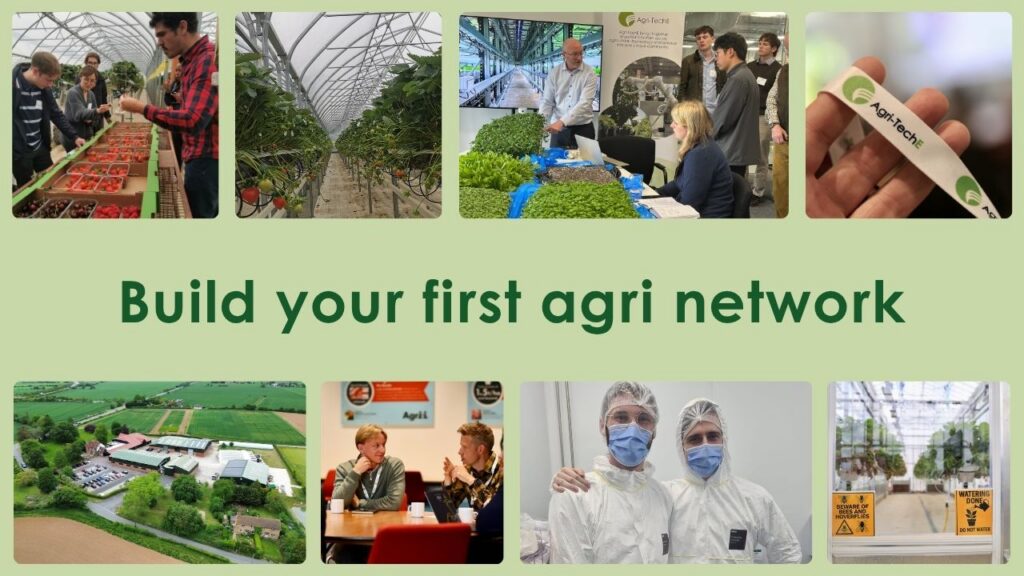
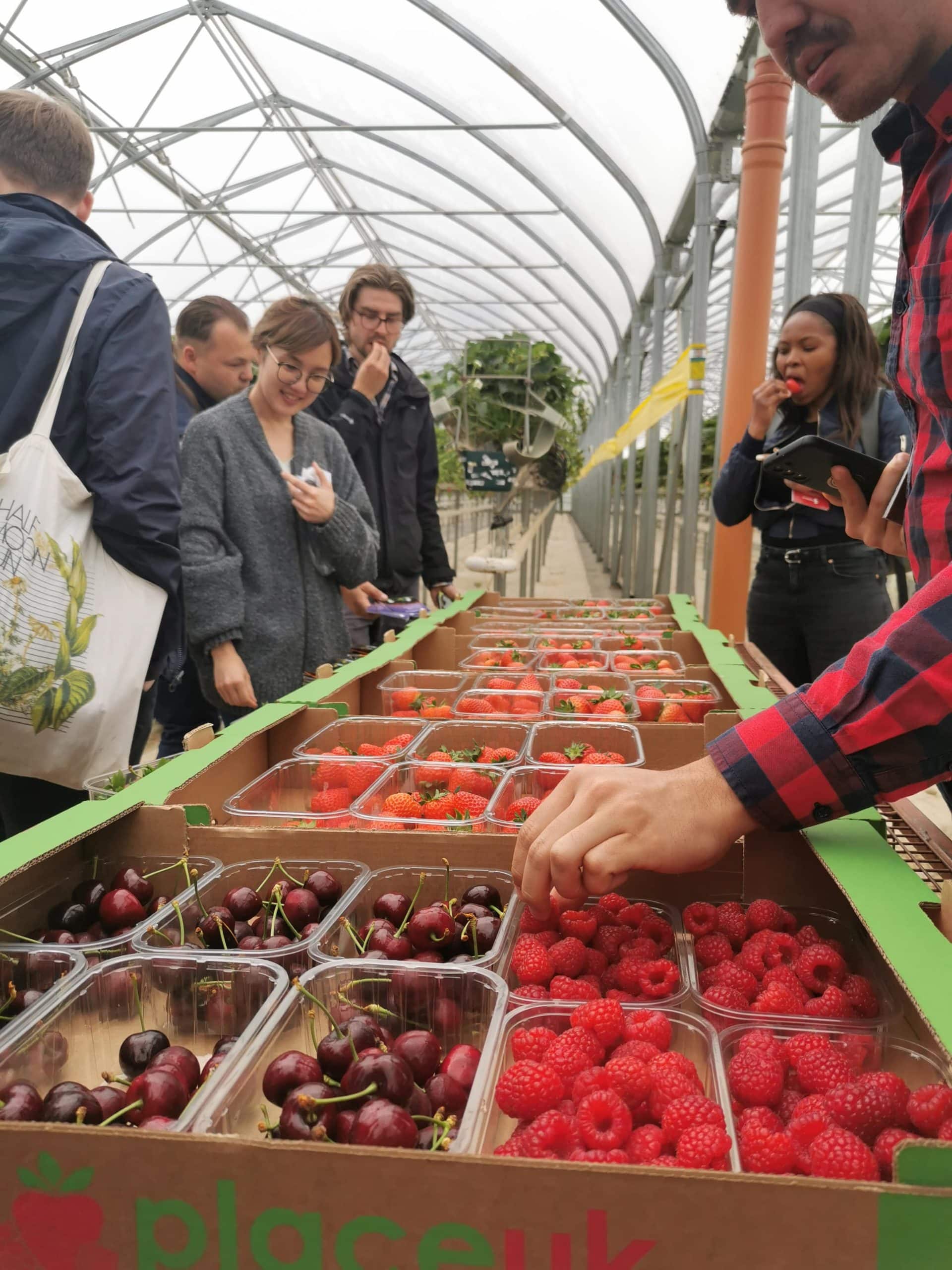
For students, there are opportunities to start building those skills now – through mentoring, networking, bursaries, volunteering, field experience and programmes such as the Early Careers’ Innovation Forum.
These kinds of schemes help us tackle some of our communication issues; students told us that the industry is “not very good at explaining the roles people can do in ag technology.” They talked about unclear career pathways, poor communication about available roles, and uncertainty about what employers actually want.
Perhaps we need to get better at explaining not just which jobs exist, but what those roles actually involve, what skills are needed and how someone can get started.
Industry, meanwhile, talked about expectation mismatch between employer and candidate and the fact that “you don’t know what you don’t know.” Placements and industry work experience help tackle both sides of these challenges.
The future of agriculture won’t be built by one discipline, one technology or one type of person.
So perhaps the real question isn’t “Do you have what I need?”
It is “What have you got – and how can we put it to work?”
Post Overview
Agri-TechE Related Posts
Agri-TechE and Society of Agriculture continue to strengthen their early-career communities

Student placements – voice from the industry
Agri-TechE partners with MDS to give members access to skilled trainees
ECIF Lab visit: The Leaf Lab @ GrowUp Farms
Discovering Innovation and Sustainability at Place UK’s Berry Farm