Microsoft and ARM head up “Internet of Agri-Things” Pollinator
 Agri-TechE
  Smart food packaging that tracks its temperature and environment through the supply chain to ensure it remains fresh, water sensors cheap enough to distribute across a field, smart audit documents that update themselves from data about inputs. These are all applications for the Internet of Things which will enable objects to communicate with each other. To ensure that the agri-food applications are relevant and beneficial to farmers and growers, Agri-TechE invited world-leading technologists in this area to present at the February Pollinator called appropriately the Internet of Agri-Things.
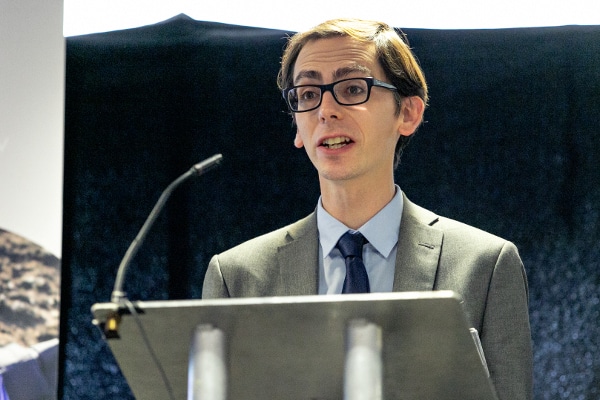
Gary Atkinson, Director of Emerging Technologies for ARM was one of the presenters and Matthew Smith and Drew Purvis from Microsoft chaired the discussion. Others included: Alastair Taylor, Chief Executive of IAgrE (Institute of Agricultural Engineers) and Adrian Segens of RedBite Solutions.
It may come as news to hear that Microsoft Research in Cambridge employs ecologists. The Computational Ecology and Environmental Science Group (CEES) within Microsoft aims to develop the new concepts, methods, and software tools needed to produce useful predictive models of ecological systems.
Ecologist and computational scientist Matthew Smith explains: “Our group has been operating for about 8 years and increasingly we have directed our scientific research and software development towards improved environmental modelling.”
One example is FetchClimate, a fast, intelligent, climate information retrieval service. It is designed to make it easy to retrieve information for any geographical region, at any grid resolution ranging from a few kilometres to a global scale. Data can be retrieved for any range of years, months and days within the year and even for specific hours within the day.
Matthew explains that over recent years agriculture has become a particular focus: “Recently we produced new process based agricultural models for wheat and maize. These can be calibrated to predict crop properties using heterogeneous datasets that include satellite imagery, historical ground based data and live feeds from devices.
“Now we’re looking to get some of these systems trialled to establish whether we can provide genuine impact for businesses. The Agri-TechE Pollinator in February will be a great opportunity to engage with farmers and growers and others with an interest in this area. We have very keen interest in seeing where the discussions go and seeing if we can help orchestrate them in useful directions.”
A report from the Internet of Agri-Things Pollinator will be available shortly.
We are delighted that S-Tech kindly agreed to sponsor the event. S-Tech provides insurance, risk and financial management to the biotech and life science sectors among others and makes a valuable contribution to the technology cluster
Post Overview
Agri-TechE Related Posts
Defra’s new farming rules for water drive need for valuing natural capital
Food for thought at the Royal Norfolk Show

Wheat crisis opens door for huge indoor farming potential, says AgTech specialist

Cereals 2014 Agri-TechE seminar: Innovation for agriculture
Watkins landrace collection resource for bread wheat