Innovation That Sticks – from field to food (and everything in between)
 Ceres Research
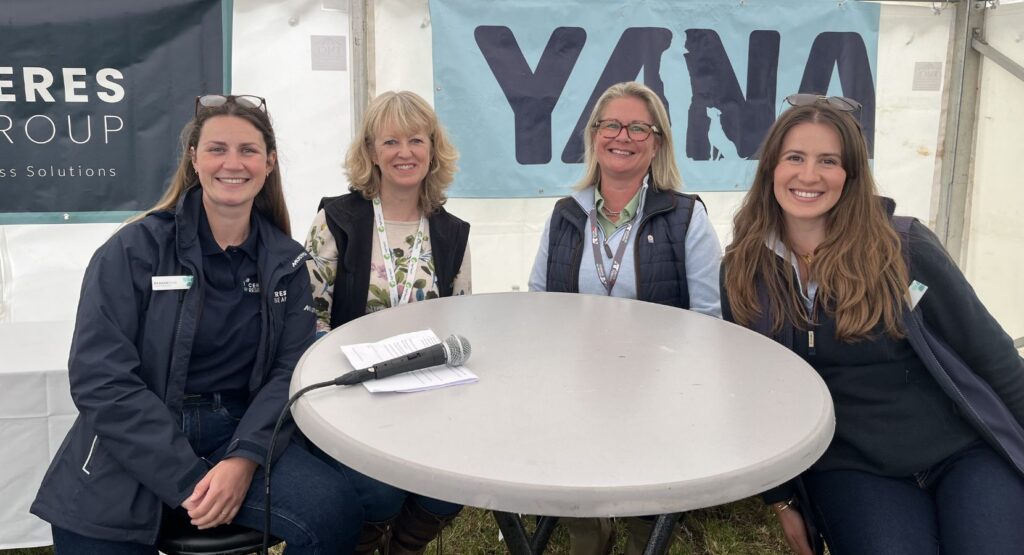
This week’s Women in Food and Farming panel at Cereals, sponsored by Ceres Group, wasn’t short of ambition. Titled Innovation That Sticks, I set out to tackle a deceptively simple question – why do some technologies transform farming overnight, while others never make it past the trial phase?
As ever, the answer wasn’t a single breakthrough technology. In fact, when pushed on what’s genuinely transforming agriculture today, Belinda Clarke – Director of Agri-TechE – took the conversation amusingly aside from the usual drones, AI and robotics… and landed squarely on the smartphone. A reminder, perhaps, that the most powerful innovations are often the ones already in our pockets – simple, accessible and quietly embedded into everyday decision-making.
That theme of practicality ran throughout. Louise Penn – Associate Partner and Agronomist at Ceres Rural, Agri-TechE Ambassador & Influencer (!) – grounded the discussion in what adoption actually looks like on farm – not shiny trials, but tools that solve real problems. If a technology makes life easier, improves margins, or answers a clear need, it sticks. If it doesn’t, it quietly disappears.
And in fresh produce, as Veryan Bliss – Food Intelligence Director – highlighted, that decision-making is refreshingly ruthless. If something doesn’t work, it’s dropped early. No sunk cost fallacy. No emotional attachment. Just a clear focus on what delivers. It sounds obvious, yet in agriculture we often hang onto “potential” far longer than we should. The biggest takeaway? We might need to get more comfortable with failing fast.
Of course, no conversation about innovation is complete without the “data question”. Are we generating too much of it? Almost certainly. But more importantly – are we using it well? Probably not.
The discussion circled back to a key point – better decisions, not more data. Through the Ceres Innovation Group and Ceres Research’s Define > Develop > Demonstrate approach, we’re trying to bridge that exact gap. It’s not about flooding farms with new tools, but systematically and robustly working out which ones actually deliver value in real-world conditions.
Which leads neatly to the thorny middle ground between innovation, evidence, and commercial reality. Research plays a critical role here, but timing is everything. Too early and it risks irrelevance. Too late and innovation stalls. Reflecting on my own research experience, there is huge value in controlled science – but without real-world validation, it can only take us so far. Farms are messy, complex systems. If a technology doesn’t work there, it doesn’t work.
Looking ahead, what will define a successful grower in 2050? Not one single thing. The consensus was clear – success will come from using the right combination of tools, in the right way, at the right time. Not chasing every new idea, but being strategic enough to know when to say no.
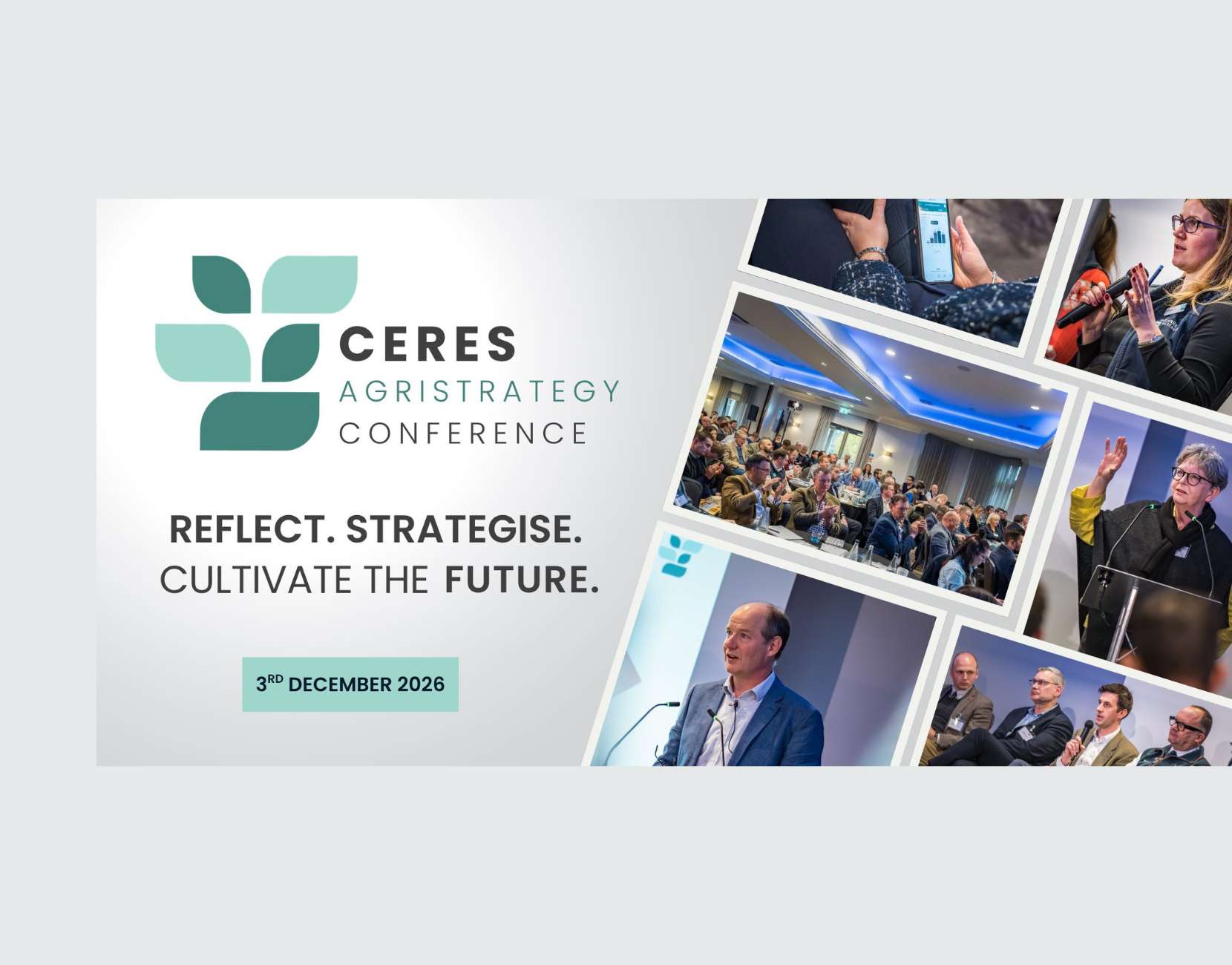
And for those wondering where to start? I mentioned a few key resources, like our Ceres AgriStrategy Conference in December focusing on progressive and innovative farming businesses in their entirety, or our memberships for Ag Innovators – providing Ag professionals and Ag-Tech Innovators access to powerful insights to support their business development and understanding of real-world farming. The closing advice was strikingly consistent – stay curious, stay open-minded, and keep learning. Whether you’re a grower, agronomist, or innovator, progress won’t come from standing still.
Perhaps the most reassuring takeaway from the session was this – innovation isn’t reserved for the biggest farms or the most high-tech businesses. It’s happening everywhere, just in different forms.
The challenge now isn’t to innovate more. It’s to make innovation stick.
If you’ve got this far, thank you so much for reading. To those who attended the session, thanks so much for coming along! It’s great to see the WiFF Network reach far and wide, with the wider support of those on the panel.
Dr Danni Robb.
WiFF Committee Volunteer.
Research & Knowledge Exchange, Ceres Research.
- *I have permission from the copyright holder to publish this content and images.
Related Posts
How good is “good enough?”
John Innes Centre at Groundswell 2026
Innovate UK – Unlocking the future of engineering biology regulation
Join us on 3rd December 2026 at the Ceres AgriStrategy Conference