Global experts meet in Cambridge to advance the future of the Bambara groundnut
 University of Cambridge
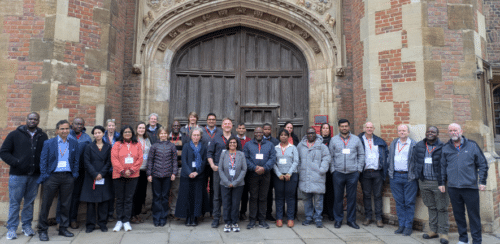
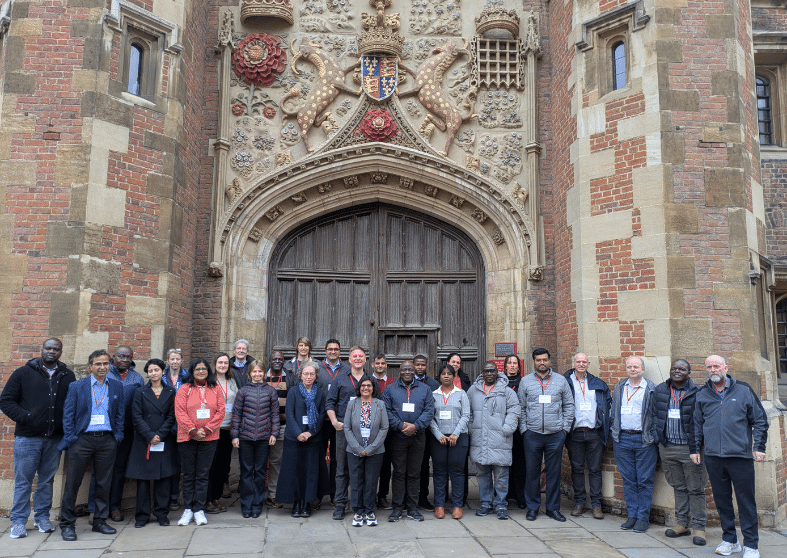
On 12-13 February 2026, the Crop Science Centre (CSC) welcomed world-leading researchers and development partners for the inaugural UK-CGIAR Bambara groundnut consortium meeting at St John’s College, Cambridge.
The two-day event brought together members of the UK-CGIAR Centre project for the genetic improvement of Bambara groundnut for future nutrition and climate resilience – a global alliance dedicated to unlocking the potential of Bambara groundnut (Vigna subterranea) as a flagship crop for climate resilience, nutrition and smallholder livelihoods.
Bambara groundnut is a crop with huge potential to address global food and nutrition security challenges. It thrives in poor soils, supports soil health through nitrogen fixation, and provides a highly nutritious food source – especially valuable in areas affected by poverty, malnutrition, and water scarcity.
This UK-CGIAR project aims to create genomic resources and tools to accelerate breeding innovation and develop new varieties of the crop to encourage its wider use. Project teams are working in Ghana, India, Kenya, Nigeria, South Africa and Tanzania with a focus on addressing the needs of farmers in Bambara groundnut growing areas in West and Southern Africa.
Strengthening connections for Bambara groundnut improvement
The Cambridge meeting brought together project partners to strengthen collaborations, address some of the challenges in Bambara groundnut breeding, and explore new opportunities.
It was attended by representatives from consortium members including CSC, the International Institute of Tropical Agriculture (IITA), the International Crops Research Institute for the Semi-Arid Tropics (ICRISAT), the Alliance Bioversity International and CIAT–Tanzania, Niab, the University of Nottingham, the Kirkhouse Trust, the University of KwaZulu-Natal (UKZN) in South Africa, and the CSIR–Crops Research Institute in Ghana.
The meeting was coordinated by Christian Rogers, CSC Head of International Partnerships, Aga Alexander, CSC Impact Manager, and Dr Natasha Yelina, Head of the Crop Breeding Technologies group at CSC and Co-Investigator on the project.
Dr Yelina said: “Bambara groundnut is an underutilised African gem — a highly nutritious, drought-resilient crop with huge potential to strengthen food and nutrition security in a warming climate.
“It was incredibly valuable to meet in person, strengthening connections across the project, enabling deeper discussions and helping us see how we can work even better together.
“What really stood out was seeing such diverse expertise come together around a shared vision — creating real energy, collaboration and momentum towards meaningful breakthroughs in Bambara groundnut improvement,” she said.
Addressing regional bottlenecks
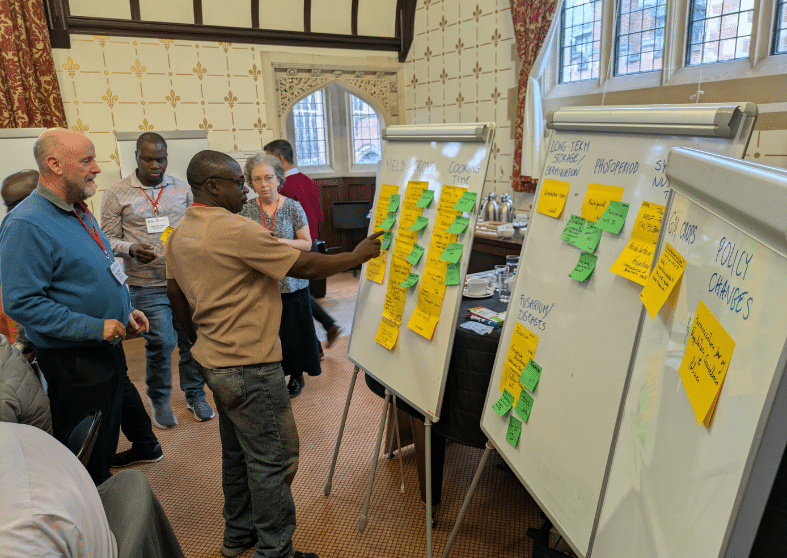
A recurring theme was the ‘Bambara wish list’ – a set of goals aimed at addressing production, breeding, and adoption bottlenecks.
In a series of local perspectives, delegates highlighted hurdles in Bambara cultivation in their regions including low production rates and slow adoption by farmers.
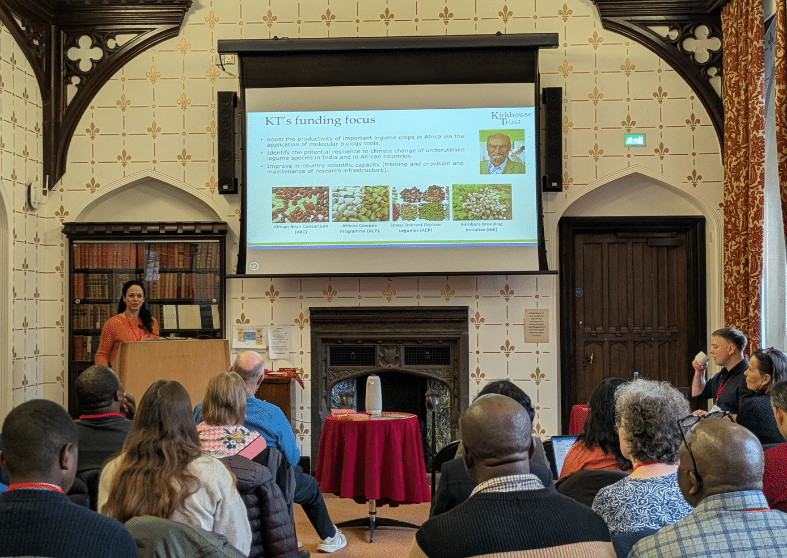
The meeting also focused on three work packages designed to modernise Bambara groundnut breeding with a focus on smart breeding and field trials, genomics and trait discovery and precision breeding and gene editing.
Dr Kennedy Agyeman, Senior Research Scientist at the CSIR-Crops Research Institute, Ghana, said: “The two days of discussions in Cambridge were truly inspiring and broadened my perspective on the global momentum behind Bambara groundnut.
“It highlighted the crop’s untapped potential in breeding, value chain development, and farmer adoption, and reinforced that Bambara groundnut is evolving into a strategic climate-resilient crop with strong nutritional and commercial value.”
Dr Phil Howell, Research Lead for crop genetic resources at Niab said: “It was great to meet so many colleagues for the first time, hear of their experience working on this important underutilised crop, and feel part of an exciting set of projects working together to bring its improvement a step closer.”
Dr Yelina thanked the participants for their commitment to this ‘forgotten’ crop. While the challenges are significant, the consensus in Cambridge was clear: through integrated smart breeding, genomics, and international cooperation, the Bambara groundnut can become a cornerstone of sustainable agriculture in the face of a changing climate.
Professor Uta Paszkowski, CSC Acting Director and Cambridge lead for the project said: “There was a wonderful team spirit throughout the event as we shared complementary expertise across the African and British partners to advance Bambara for greater agricultural potential in a changing climate.”
Funding
The UK-CGIAR Centre brings together scientists from the UK and CGIAR to form impact-focused research collaborations.
It is funded by UK International Development and the Biotechnology and Biological Sciences Research Council (BBSRC).
The UK-CGIAR Centre’s Secretariat is hosted by CABI, an international, intergovernmental, not-for-profit organisation that improves people’s lives worldwide by providing information and applying scientific expertise to solve problems in agriculture and the environment.
You may also be interested in:
Unlocking the potential of Bambara groundnut for food security and climate resilience
Image: UK-CGIAR Bambara groundnut consortium members outside St John’s College, Cambridge. Credit: Aga Alexander / Crop Science Centre, Cambridge.
-
- *I have permission from the copyright holder to publish this content and images.
Related Posts
Increased funding for sustainable pulse crops in the UK
Innovation in salad propagation by Crystal Heart improves resilience in horticulture
Wine growing areas in the UK identified by UEA and Vinescapes

From Farmer to Pharma: A Teaser of Things to Come – Event Highlights
Pulses could deliver half of UK agriculture’s carbon reduction target