FLYTHRIVE uses AI to drive natural defences and deliver value to growers
 Niab
NiabNew research aims to tackle rising insect pest infestations in common berry crops using advanced AI, natural lures and selected species of aphid-feeding hoverflies to continuously monitor the crop and trigger earlier intervention.
UK berry growers are threatened by increasing pest infestations which drive down yields and increase costs; aphids can reduce berry crop yields by more than 30%. Growers are urgently searching for new ways to deal with pests at a predictable cost and with better environmentally sound results.
A consortium of commercial growers, leading applied researchers, and an innovative agritech solutions business including the crop research organisation Niab, The Natural Resources Institute, University of Greenwich, Asplins Producer Organisation Ltd, The Summer Berry Company Ltd, and agritech start-up Olombria, have already developed a system to deliver innovative natural pest management solutions in soft fruit.
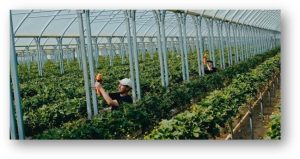
FLYTHRIVE (Fly-Led Yield Thriving in Horticulture with Integrated Vision and Ecology) is the next step and the £1.3 million match-funded project, supported by InnovateUK, will enable the system to be trialled and optimised in full-scale commercial environments. The unique hoverfly-led control system is expected to be commercially effective in all commonly used berry-growing environments and has broad application across other fruits.
Dr Sarah Arnold, research lead in applied entomology at Niab commented, “There is an urgent need for integrated pest management solutions in commercial horticulture that do not depend on new pesticide approvals. Beneficial insects such as predators and parasitoids are an increasingly important part of growers’ toolkit to manage priority pests like aphids.”
The goal is early automated detection through active monitoring and highly efficient rapid targeting of aphids with select hoverfly species at a much lower cost and without negative environmental impact. FLYTHRIVE aims to reduce aphids by over 70% within two weeks of deployment. New Machine-Learning Vision Systems and active lures will be developed to monitor and direct hoverflies at a much earlier stage of aphid infestation, reporting their performance directly to growers and providing AI training data for future optimisation. The project will prove the viability at scale for the system.
Tashia Tucker, founder and CEO of Olombria explained, “This project is tackling one of the toughest challenges berry growers face, and we’re confident it will deliver real solutions. Building on our success with pollination systems, we’re excited to collaborate with our incredible partners, whose expertise and dedication are vital to developing a natural, effective way to protect crops from pests like aphids and support growers in achieving healthier, more sustainable harvests.”
Dr Steven Harte, senior lecturer in chemical ecology at NRI, commented, “This project combines chemical ecology techniques commonly used in IPM with new technologies such as machine learning to do something novel in biocontrol research and offers fruit growers a sustainable pest control solution.”
Chris Rose, chief operating officer of Asplins, added, “The UK soft fruit sector has been a great success story providing delicious, healthy fruit to a high standard; yet growers are struggling to remain profitable with rising costs, increasing pest and disease challenges and customer lead need for pesticide reduction. This exciting and innovative project has the potential to significantly ameliorate all these challenges.”
Camilla Langmead, senior production coordinator at The Summer Berry Company, said, “This project is exciting for us as it will help us reduce our pesticide use, and it will create an additional pollination route which can increase our fruit size and reduce wastage. We have natural biologicals on the farm, but this will increase the biodiversity further, complimenting the direction we want to be heading in.”
Related Posts
Launch of the Crop Science Centre – the start of a special journey
Fogging improves packhouse hygiene and controls contamination
Resilience, resistance and reduction in fungicides – The Sainsbury Laboratory demonstrates how it can be done

Creating a natural defence to Yellow Rust
Latest on integrated slug control