
Ceres AgriStrategy Conference 2025
 Ceres Research
The Ceres AgriStrategy Conference, held on 4th December 2025, brought together farmers, agronomists and industry leaders for a full day of insight, challenge and practical discussion. Chaired by Tim Issac, CEO of Ceres Research, the conference focused on helping farming businesses navigate change, build resilience and seize emerging opportunities.
With the lessons of the 2025 harvest still fresh, the event explored crop strategy, environmental performance, agri-tech innovation and business planning — all grounded in the realities of running farming enterprises today.
Morning Sessions: Setting the Strategic Direction
The conference opened with a powerful address from Sir Peter Kendall, Rothamsted Research, who set the scene by examining the challenges and opportunities facing UK agriculture and the critical role of science and innovation in shaping the sector’s future.
Charles Ireland, Ceres Rural, followed with a forward-looking Farming Outlook, urging delegates to approach uncertainty with confidence, optimism and proactive decision-making. His message was clear: the future of farming lies in adapting to volatility rather than resisting it.
Attention then turned to the realities of the 2025 season. Dr Alex Setchfield, Ceres Research, reflected on the successes and pressures of the recent harvest, while Jock Willmott explored practical and resilient crop rotation options for 2026 and beyond, highlighting the need for flexibility as climate and market pressures intensify.
Environmental performance and efficiency featured strongly. Chloe Timberlake, Ceres Rural, examined the evolving role of funding, Countryside Stewardship and the Sustainable Farming Incentive, while George Badger, Ceres Rural, focused on improving input efficiency to balance profitability with sustainability.
The morning concluded with future-facing innovation. Dr Aoife O’Driscoll, NIAB, shared insights into next-generation Integrated Pest Management, and Dr Dannielle Robb, Ceres Research, introduced emerging biological innovations that are reshaping farming systems. An engaging panel Q&A, chaired by Andrew Meredith, Farmers Weekly, brought these themes together, with speakers responding to a wide range of audience questions and sparking lively debate.
Afternoon Sessions: Turning Strategy into Action
Continuing the momentum from the morning, the afternoon sessions focused on business strategy and real-world application, providing clear, actionable insight for farming businesses.
Edward Hutley, Ceres Rural, opened with the latest Contract Farming Survey Results, providing a snapshot of current trends, opportunities and pressures across the sector. Richard Means, Ceres Rural, addressed Labour and Machinery Planning in Changing Times, helping businesses think strategically about efficiency, workforce challenges and capital investment.
Demonstrating how innovation is already delivering results, Mark Hall, Waldersey Farms Ltd, explored The Role of Technology in Future Profitability, showcasing how data, AI and precision tools are driving efficiency and margins on farm.
John McLarty, Ceres Property, discussed Diversification and Development Opportunities, outlining routes for unlocking value and building resilience beyond traditional farming income. With finance firmly in focus, Martin Hanson, HSBC, provided expert guidance on Funding in a Challenging Environment, offering practical strategies for managing cash flow and investment risk.
The session concluded with a Farming Profitability Review from Richard Sanders, CAAV, giving context to current performance and future resilience. A thought-provoking panel Q&A, chaired by Julie Robinson, Roythornes Solicitors, allowed delegates to challenge speakers and explore key issues in more depth.
Closing Reflections and Looking Ahead
The conference closed with final reflections from Professor Quintin McKellar CBE and Tim Isaac, reinforcing the importance of adaptability, confidence and long-term thinking. Delegates then continued discussions at a networking drinks reception and dinner, bringing a collaborative close to the day.
A Call for Confidence and Maximising Efficiency
Managing Partner Charlie Ireland urged farmers to face change with confidence and realism. “Change is hard. There’s no denying there are challenges ahead for some sectors, particularly now that the BPS cushion has gone. But the future is in your hands.” Rather than trying to preserve outdated systems, he encouraged delegates to focus on what they can control — productivity, efficiency, cost management and strategic direction — noting that “the risk of standing still is now greater than the risk of making changes.”
A key theme was producing more from less through smarter use of data, technology and innovation. “We’re on the cusp of an agri-tech revolution. The potential efficiency and financial gains are significant,” Charlie said, highlighting how technology can sharpen insight and support change. While acknowledging the immediate pressures on arable farms, he offered cautious optimism: “For most arable farmers, the coming year will be tough. But we’re seeing some of the best crops for half a decade. Making the most of those crops will be key to protecting margins.” Reflecting on decades of adaptation, he concluded, “As confidence returns, investment will follow. Be ready to benefit from it.”
Engagement, Insight and Shared Learning
One of the standout features of the conference was the exceptional audience engagement throughout the day. Slido was used extensively, with a high volume of thoughtful questions and strong participation in live voting. This interaction helped shape panel discussions and highlighted the key concerns and priorities facing farming businesses today.
Questions clustered around four main themes:
1) Technology, Data & Productivity
- Why productivity remains flat despite optimism around technology
- Barriers to adoption, including cost, knowledge gaps and funding
- The role of AI and predictive agronomy alongside human expertise
- How to prioritise which innovations to adopt first
2) Environmental Performance, Soil Health & Land Value
- Monetising biodiversity and soil health improvements
- Challenges around Biodiversity Net Gain and natural capital markets
- Incentivising environmental performance within contract farming agreements
- Long-term implications for land values and stewardship
3) Crop Strategy & Resilience
- Alternative crops such as sorghum, millet and miscanthus
- The role of cover crops and biochar
- Break crops and their impact on subsequent yields
- Building resilience to drought through crop choice and market development
4) Policy, Finance & Risk
- Succession planning and inheritance tax
- Funding opportunities for innovation and technology
- The future role of contract farming agreements
- Diversification versus planning restrictions
- Ethical and reputational considerations in agri-finance
Further Reflections: Addressing Unanswered Questions
While Slido and panel sessions were highly interactive, time constraints meant some questions went unanswered on the day. These were grouped into the same four themes, with Ceres Group reflections shared following the event.
Technology, Data & Productivity
AI is increasingly acting as a co-pilot in agronomy, rapidly analysing datasets to identify savings and yield improvements. However, human expertise remains essential. Farmers and agronomists are still the pilots, ensuring insights are relevant to individual soils, climates and business goals.
When prioritising innovation, the focus should be on solutions with clear, proven benefits and easy integration. Not all improvements require major capital investment; AI-driven analytics can unlock efficiencies even on smaller farms. Over time, costs will fall and grant support may widen access.
Environmental Performance, Soil Health & Land Value
Environmental performance is not cost-free. Success within CFAs depends on collaboration, shared objectives and recognition of investment in specialist equipment. Biodiversity and natural capital markets are still developing, but baseline data capture is critical to future monetisation.
Crop Strategy & Resilience
Alternative crops such as sorghum, millet and miscanthus offer promise, particularly under climate pressure, but require reliable markets and careful financial analysis. Whole-rotation performance matters more than individual crop yields.
Policy, Finance, Diversification & Risk
Policy uncertainty continues to complicate planning, particularly for labour and machinery. Despite pressure, CFAs still offer flexibility and tax advantages. For diversification, early engagement with planners and farming groups is essential, with further planning reform anticipated.
A Clear Message
The Ceres AgriStrategy Conference 2025 delivered a consistent message: while uncertainty remains, opportunity is real. Through innovation, collaboration and proactive decision-making, farming businesses can adapt, invest and position themselves for a more resilient future. Change is inevitable — but with the right strategy, it can be a catalyst for progress.
Registered Your Interest for tickets to the Ceres AgriStrategy Conference 2026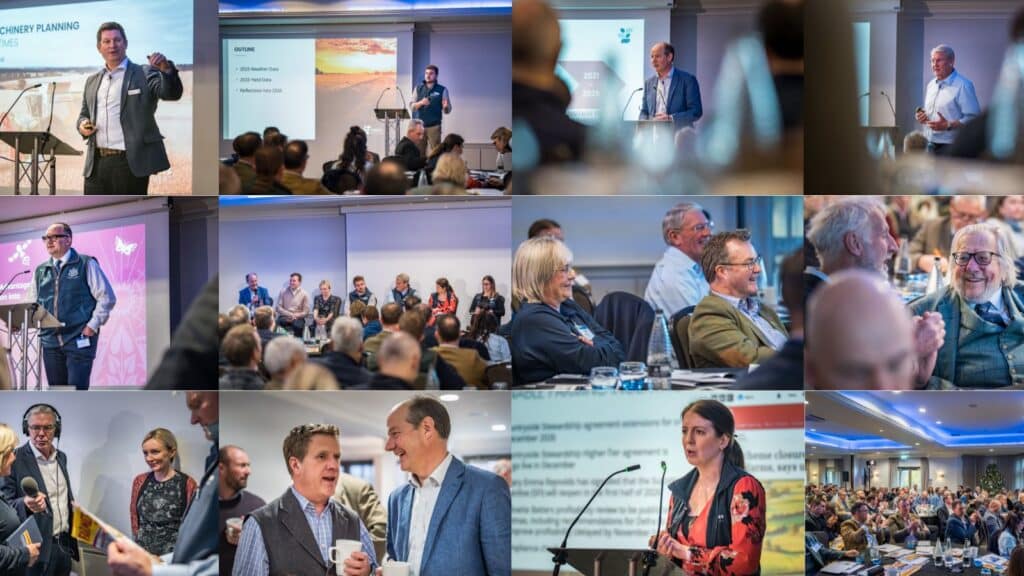
- *I have permission from the copyright holder to publish this content and images.
Related Posts

REAP 2016 tech innovations on show

ADAS Webinar: Optimising crop nutrition through in-season ‘checks’ and ‘adjustments’

Behind-the-Scenes at REAP 2025
Ponda creating novel textiles from regen fibres and paludiculture
ATW22: Thursday: Scaling of agricultural innovation
