CASE STUDY: Development of a Handheld Soil Health Measurement Device
 eg technology Ltd
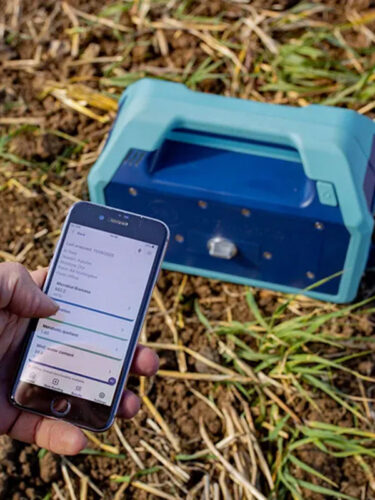
In this case study we share how Cambridge-based product design, engineering and development specialist, eg technology worked with PES Technologies to develop their Handheld Soil Health Measurement Device from concept to commercialisation.
Background
PES Technologies, a family-founded start-up, set out to revolutionise how soil health is measured. Building on a PhD in experimental solid-state physics, they developed a sensor capable of detecting biological, chemical and physical indicators of soil health within minutes, directly in the field. This was a significant leap from traditional lab-based methods that typically take days.
With early prototypes in hand and a vision for scalable impact, PES approached eg technology to help refine their concept and bring a commercial product to life.
By reducing the friction of data collection, PES empowers farmers and advisors to make informed decisions.
Soil health is at the core of effective agronomy, shaping recommendations, guiding research and influencing long-term sustainable land management strategies.
From Concept to Commercialisation
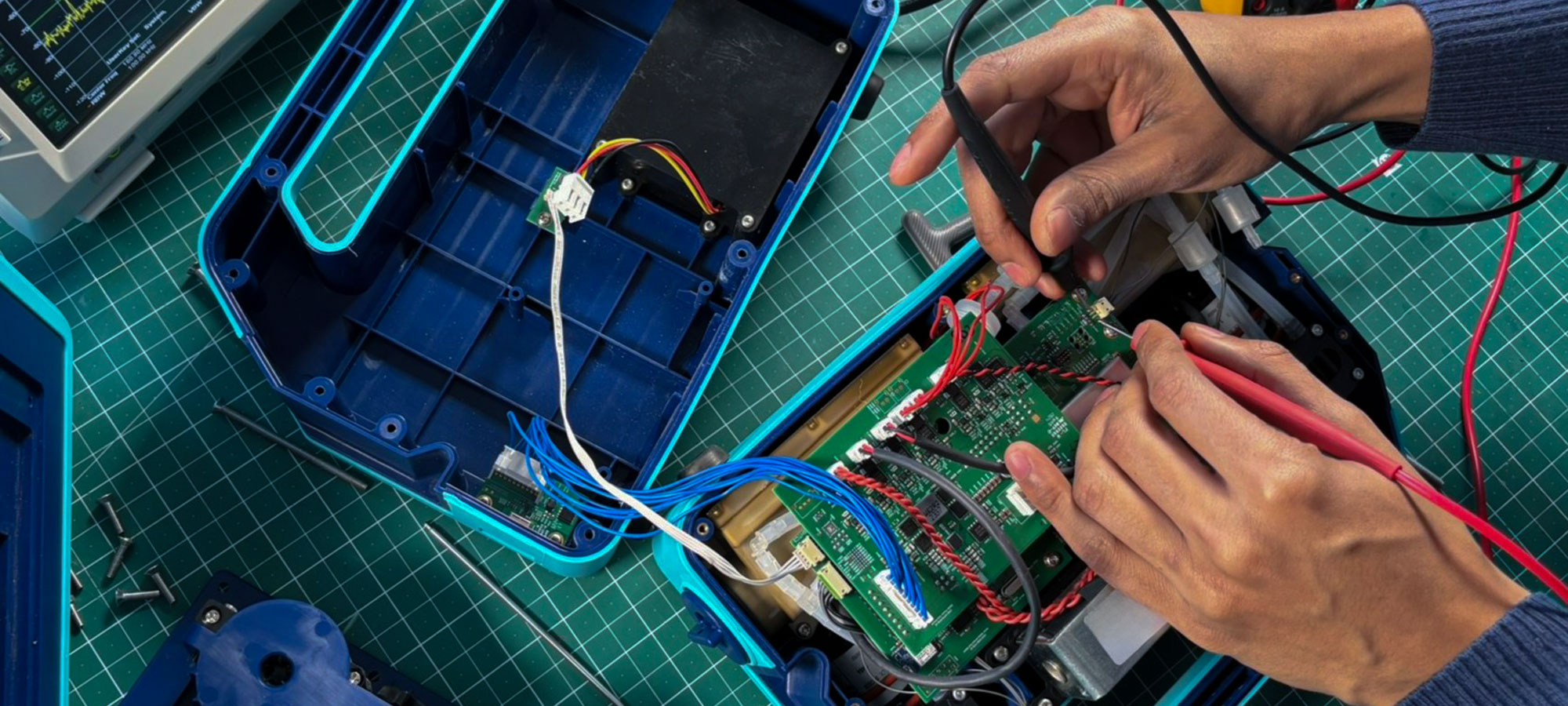
Our initial engagement focused on the critical technology – developing a sensitive, accurate and robust measurement circuit, so that reliable measurements could be taken, using PES Technology’s sensors in the field. This foundational work helped PES secure funding and build an alpha prototype. As the company grew, they returned to eg technology to develop a fully integrated, Bluetooth enabled portable soil testing device and to support its transfer to manufacture.
With investor timelines looming and limited internal resources, PES needed a partner who could deliver a marketable product for use by agronomists, in just six months. We assembled a dedicated, cross-disciplinary team to meet this challenge head-on.
“Time, cost and complexity can prevent meaningful engagement from farmers and land managers.” – PES Technologies
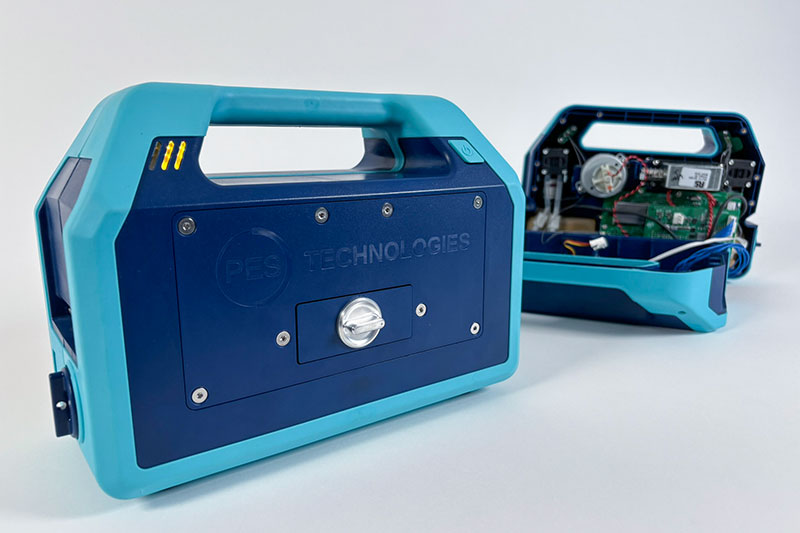
The PES device measures 12+ key indicators of soil quality in minutes, including microbial biomass, organic matter & pH levels
Designing the solution
There were many moving parts in this development, and considerations had to be made for the environment in which the final device would be operated. The unit needed to be physically and aesthetically robust, not only to protect the sensitive components inside, but also to give the user confidence in its successful operation in harsh environments. The client also specified the final device should be intuitive, simple to use, easily paired with the accompanying mobile application and should hold a sufficient charge to last for a full day’s use in the field.
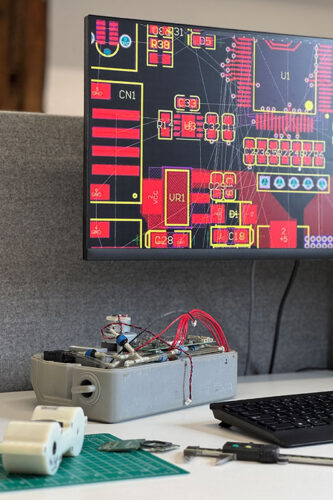
Significant use of prototyping and development of test harnesses allowed us and PES to efficiently test and debug the real-world performance of the device, cassette and app, prior to finalising the design for manufacture and releasing data for an initial small batch build, assembled by the client.
The development journey consisted of:
- Concept generation and proof-of-principle model
- Alpha and beta prototypes
- Pre-production prototype
- Performance testing
- Transfer to manufacture
Throughout this phased project, we supported PES in solving technical challenges and aligning the product with commercial goals.
A variety of prototyping methods were used across the development process to de-risk different elements of the design
A Scalable, Field-Ready Solution
eg technology’s collaborative approach and technical expertise were instrumental in turning our vision into a reality. Their team helped us move from a promising prototype to a field-ready product, in an accelerated and challenging timeframe. eg delivered a robust, intuitive device that empowers agronomists with real-time soil health insights. We’re excited to continue working with eg technology as we scale our impact.
Steve Lock | PES Technologies
“Collaborating with PES Technologies to transform their pioneering soil health sensor into a robust, field-ready device was a rewarding journey. Our engineering team worked across disciplines, from concept generation through to transfer to manufacture, advancing their technology readiness significantly, and we’re proud to continue supporting PES as they scale their product and vision.”
Ollie Godbold | eg technology
Are you ready to develop your innovation?
Related Posts
The water balancing act in East Anglia
Water for Agriculture hot topic at Anglian Water event

Using natural products in conventional farming
Low pressure tyres boost yields by 4 percent say researchers at Harper Adams
Water stewardship tool gives field specific advice