ATW 2025: You have to start somewhere
 The Morley Agricultural Foundation
Agri-TechE Week 2025 celebrates its 12th year! Our largest yet, featuring 11 events curated by Agri-TechE and hosted by our incredible member community, followed by the REAP Conference on 4th November. This week exemplifies innovation, collaboration, and forward-thinking in agri-tech.
Each event reflects the strength of our ecosystem, showcasing what our community can achieve and bringing together our growers, researchers, and technology developers. A big thank you to our members for hosting – we wouldn’t have an agri-tech week without you and we are very proud to have your membership.
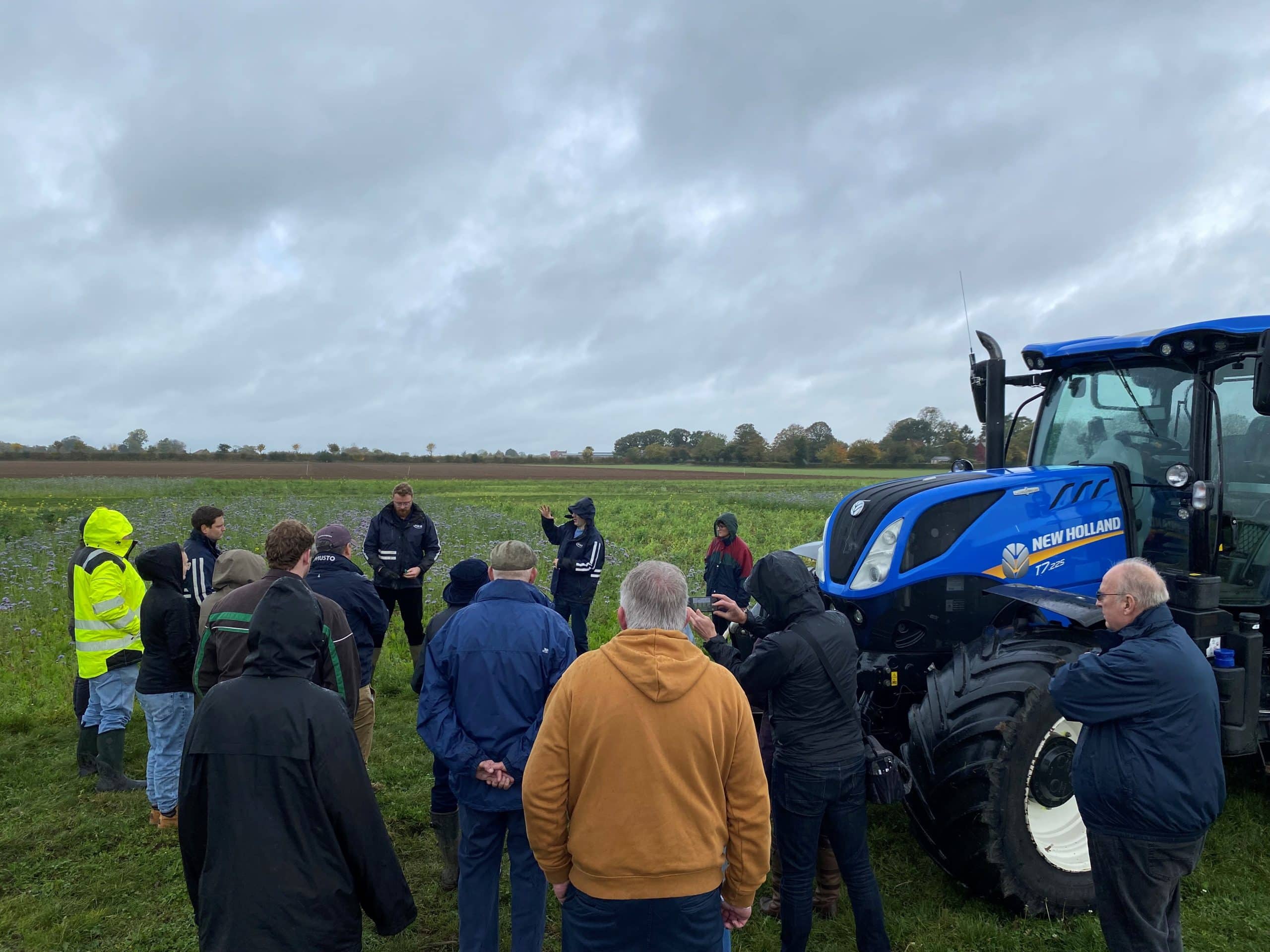
After months of relatively dry weather Agri tech week started at The Morley Agricultural Foundation (TMAF) with an outdoor meeting in the rain, be careful what you wish for.
18 years ago TMAF commissioned then TAG (The Arable Group) now Niab to run a series of long term experiments. With the price of feed wheat at £60/tonne fresh thinking was needed to see a future in cereal production. A number of multifaceted experiments were started and now with 18 years of data it is difficult to sum it up in 2 hours.
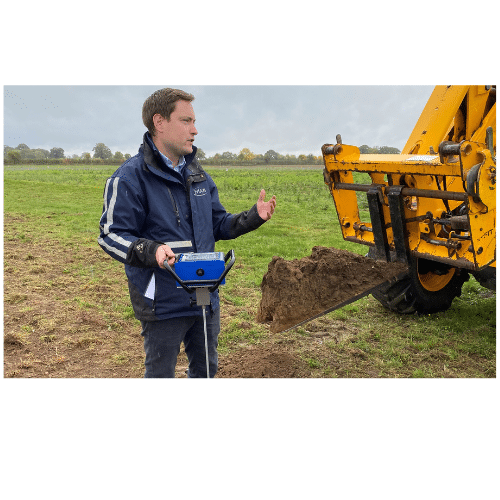
First the guests took a tractor and trailer ride to the field where David Clarke explained the cultivations trial. This is a fully replicated trial using farm scale machinery, the plots are 12 x 36m. The treatments are plough, deep non inversion, shallow non inversion and a managed approach where we do what we think is best each year. Later back in a dry room Nathan Morris explained that generally the wheat and barley years gave good reliable data with break crops less so. The data shows that there are only slight differences in the 4 methods in the early years. The plough often gave slightly better yields but not always the best margin. You might expect the shallow cultivations to get tighter over time to the point where crops would suffer, this has not happened. In the last 6 years the shallow approach has show good growing conditions as the soil has restructured itself without the need for mechanical movement.
Nathan Morris and Jack Poulden demonstrated the various cover crop mixes of the Rotations Trial , including a permanent understory of clover. The aim is to improve soil structure, water infiltration, soil biology and nitrogen availability. The plots are split into 3 with treatments of 0% , 50% and 100% nitrogen fertiliser. The clover did not survive well with the farm standard 100% N dose and showed little benefit. In the 0% N plots the clover gave a improved yields although over all it was disappointing overall.
As mentioned there is a lot of data. For more information please look in the Morley Library on www.tmaf.co.uk for New Farming systems. Alternatively contact TMAF via website Nathan.Morris@niab.com or David.Clarke@niab.com
Post Overview
This story has been submitted by an Agri-TechE member.
Related Posts
Harnessing Heavy Rain: Wetlands as Nature’s Carbon Champions
ATW 2024: Soil Microbiome: exploring challenges and finding real time solutions to improve soil health

Climate smart agriculture

How would you manage demand for water?
Downforce Becomes Leading Harvest Activator