ATW 2025: Pioneer Gene-Editing in Agriculture
 Royal Norfolk Agricultural Association
Agri-TechE Week 2025 celebrates its 12th year! Our largest yet, featuring 11 events curated by Agri-TechE and hosted by our incredible member community, followed by the REAP Conference on 4th November. This week exemplifies innovation, collaboration, and forward-thinking in agri-tech.
Each event reflects the strength of our ecosystem, showcasing what our community can achieve and bringing together our growers, researchers, and technology developers. A big thank you to our members for hosting – we wouldn’t have an agri-tech week without you and we are very proud to have your membership.
Agri-TechE Week hosted by the RNAA at the Norfolk Showground
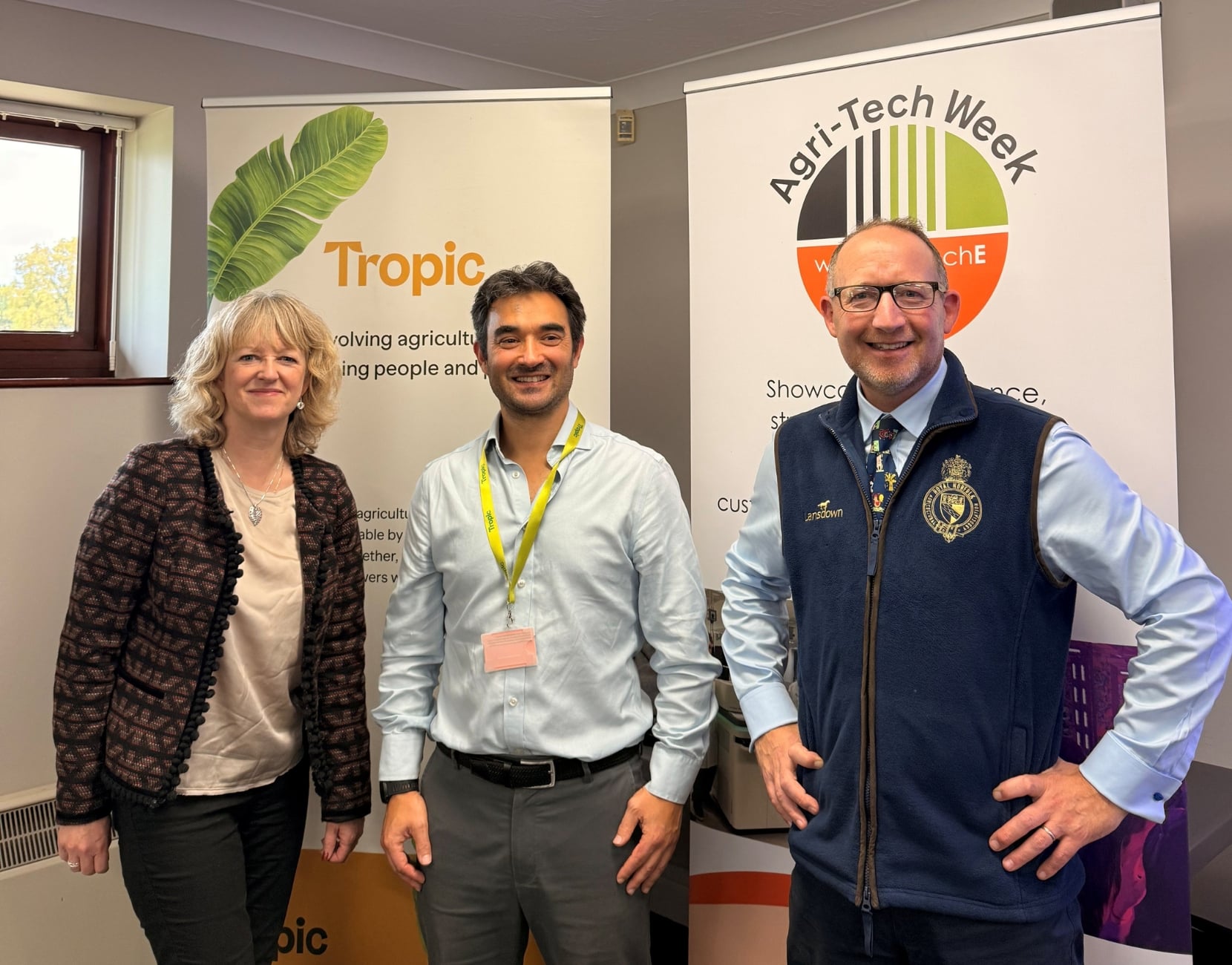
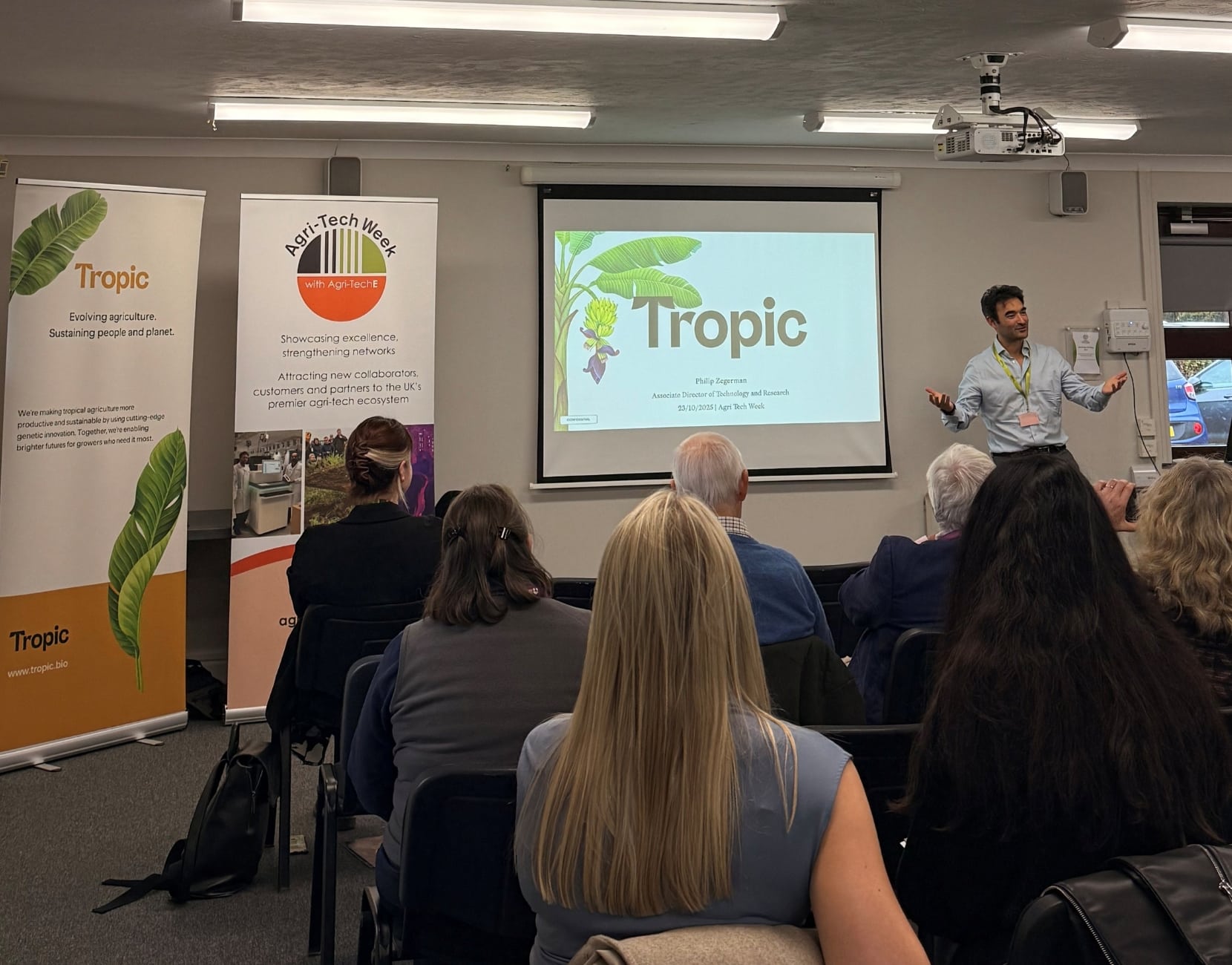
We were delighted to welcome Dr Philip Zegerman, Director of Technology and Research at Tropic Biosciences based on Norwich Research Park. A tropical seed company, with particular interest and expertise in bananas, rice and coffee, Tropic was established in 2016 and now employs 150 staff. The business is moving from a pure R&D focus to commercialisation, having previously raised a number of rounds of funding from investors including sovereign wealth funds.
By 2050, it is anticipated that 75% of global food demand will be from the tropics, but currently only around 19% of commercial R&D funding is spent in the geographical area.
Tropic use cutting edge technologies, including CRISPR gene editing, to increase crop resistance to critical diseases and reduce waste in the supply chain. Gene editing differs from genetic modification in that it involves making precise changes to an organism’s DNA, using enzymes to ‘cut’ the sequence and replace sections with material from the same host. The process effectively accelerates and focuses changes to DNA, shortcutting the breeding process.
Dr Zegerman outlined the pioneering work being undertaken by Tropic on bananas, which are the fourth most important crop globally in terms of calorie value. 100 billion bananas are consumed globally each year, and around half the crop is lost to wastage in the supply chain. The Gros Michel was, until the 1950s, the most commonly eaten variety until disease sent it to the edge of extinction. The Cavendish banana which we eat today is now under threat from Tropical Race 4 (TR4) – a soil-borne fungus that causes Panama disease.
Gene editing offers the opportunity to introduce disease resistance to the Cavendish, as well as extending the shelf life of bananas through slowed browning and degradation. This offers a range of benefits including minimising wastage, opening up the prepared food market, enabling access to more distant markets and reducing or eliminating the need for ethylene treatment.
More widely, Tropic’s proprietary gene editing platform, GEiGS® (Gene Editing induced Gene Silencing), offers gene editing possibilities in crops and livestock to improve their natural traits. Two current examples are a collaboration with British Sugar to produce beet with resistance to yellows virus, and work with Genus to develop disease resistance in pigs. Dr Zegerman highlighted the positive approach of the UK government to encourage gene editing, backed up with significant grant funding. The Genetic Technology (Precision Breeding) Act became law in England in 2023, and work is underway on a legislative and regulatory framework. Draft laws have been passed in the EU.
Tropic stands ready to work with growers and producers to develop solutions to issues affecting particular sectors.
For more information, visit https://tropic.bio/ and https://www.geigs.com/
Post Overview
This story has been submitted by an Agri-TechE member.
Related Posts

3CR Bioscience Case Study: Understanding the genetics of important traits in hemp to help breed improved cultivars

Innovative vets adopts agri-tech for early dairy disease detection
SEAD Artists Webinar: Drone Repeat – Introduction to the use of drones within Paludiculture
New study identifies genetic markers for wheat yellow rust resistance

The Processors and Growers Research Organisation (PGRO) launches Vining Pea Tool