ATW 2024: Innovations for 21st Century Challenges
 University of Essex
Agri-TechE Week 2024 celebrates its 11th year – our largest yet, featuring nine events curated by Agri-TechE and hosted by our incredible member community. This week exemplifies innovation, collaboration, and forward-thinking in agri-tech.
Each event reflects the strength of our ecosystem, fostering vital connections between growers, researchers, and technology developers. Thank you to our members for hosting and making Agri-TechE Week possible and showcasing what our community can achieve.
Industry representatives and researchers from the Essex Plant Innovation Centre (EPIC) at the University of Essex got together to discuss ways in which the agricultural sector can address challenges faced by growers and the wider industry.
What is the place of Controlled Environment Agriculture (CEA) in crop production?
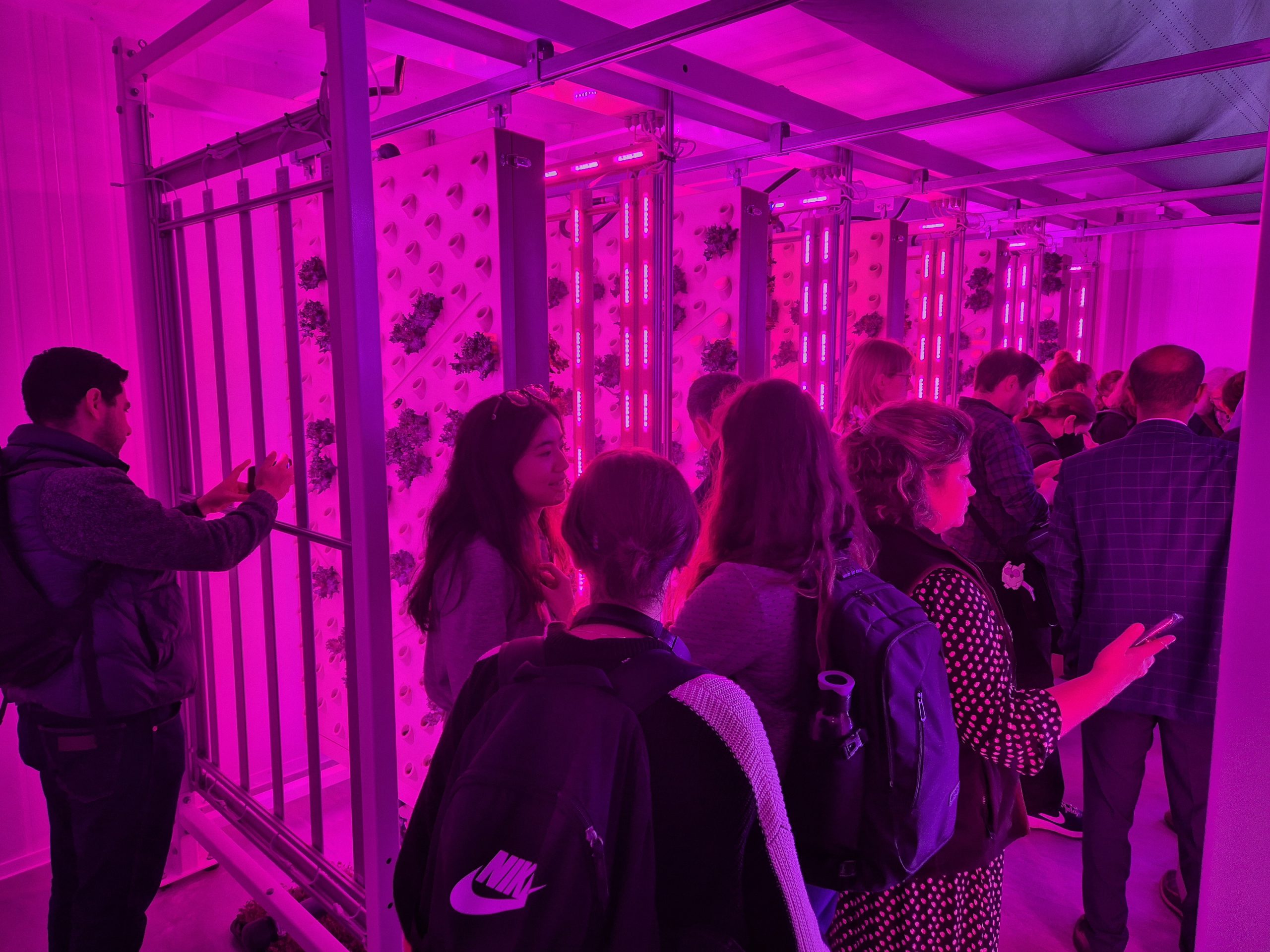
Controlled Environment Agriculture has the potential to address issues in modern crop growing including protection from disease and pests, widening the land available to growers and water efficiency. However, it is not without challenges, not least of which is energy costs.
Jonathan Bell, Operations Manager for Stourgarden, described how his company is incorporating CEA into their operations. In conjunction with researchers at the University of Essex, Stourgarden are utilising a bespoke aeroponics facility to develop methodologies to reliably germinate and grow onions to crop size. With work funded for the next year it is hoped that CEA can produce high‑quality onions at scale for harvest or transplantation.
Dr Deepa Harridas, research scientist from Innovation Agritech Group spoke about her work on nutrient management in CEA. Dr Harridas’ work demonstrates the importance of substrate choice, watering regimes and the microbiome in maximising CEA technologies.
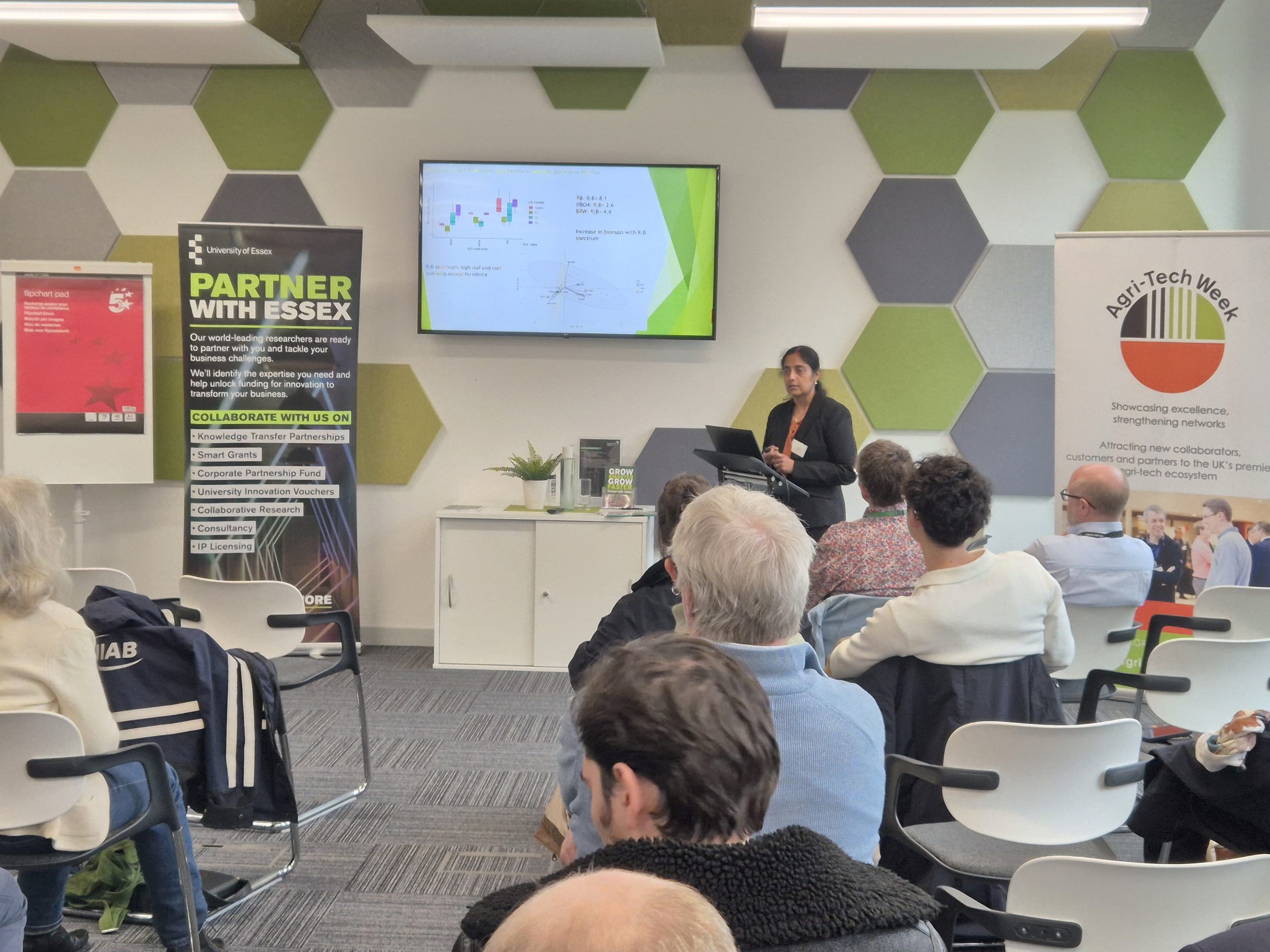
Professor Tracy Lawson from the University of Essex and EPIC spoke about her team’s project ‘Green Conversations’ – developing tools for real‑time monitoring of photosynthesis in CEA to maximise yield and minimise energy usage. Dr John Stamford (Vertical Future) presented on his team’s research into further ways to maximise efficiency of light usage.
Dr Mark Else, Head of Crop Science at Niab, addressed some of the challenges faced by strawberry growers. This sector depends on glasshouses for a large proportion of its crop and is therefore still reliant on natural light. Mark and his team have been working on methods to best utilise CEA tools and have shown substantial gains in yield under well managed conditions.
Non CEA Innovations
Work in non‑controlled environments was also presented to the audience. Karthik Ashok, a data scientist from Baker Consultants presented work from his team who carry out research on ‘eco‑acoustics’. Utilising novel machine‑learning tools the team are developing methodologies to identify how healthy a soil is from the sounds produced by the animals living in it. It is hoped that these tools will lead to an improved understanding of soil ecology.
Dr Pallavi Singh from University of Essex and EPIC spoke on her pioneering work in grafting monoctyledon plants, something historically thought not to be possible, which is opening up new possibilities in developing drought and disease resistant grain crops.
Dr Amanda Cavanagh from University of Essex and EPIC presented some early stage results from a PhD project sponsored by the British Beet Research Organisation, which aims to develop a more drought resistant sugar beet industry in the UK.
Conclusions
21st century agriculture is faced with unprecedented challenges, from climate change to labour shortages. But innovative research and the technologies it generates offer equally unprecedented opportunities to address these challenges.
Related Posts

Alternatives to chemicals for cleaning to be discussed
ATW 2024: Can vertical farming help feed the world?

Market opportunities for controlled environment agriculture – CEA 2019
Agri-TechE at Norfolk Farming Conference
Low pressure tyres boost yields by 4 percent say researchers at Harper Adams