Patenting, Trademarks, Copyright, Trade Secrets...
In the next installment of our micro-learning series, we’ll explore potential legal solutions to help you keep your ideas safe and sound.

CHAP: Initial study suggests promising future for Aeroponic Rolling Benches

Member News
The views expressed in this Member News article are the author's own and do not necessarily represent those of Agri-TechE.

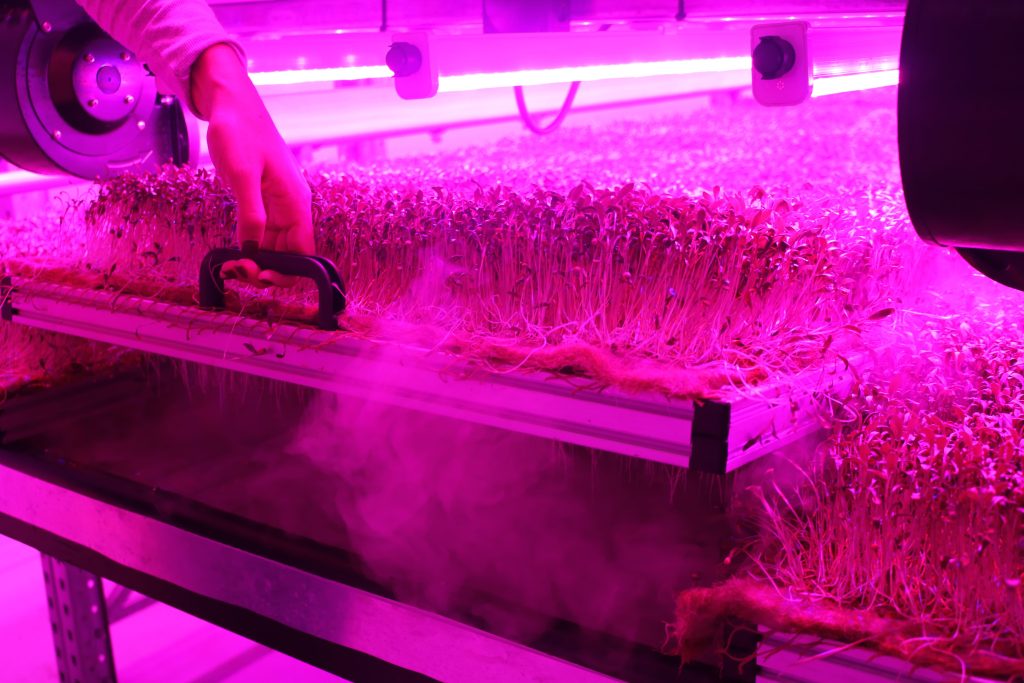
The integration of aeroponics into large-scale controlled environment agriculture (CEA) spaces is a step closer to commercialisation, following the first stage of a feasibility study funded by Defra and UKRI.

The 21-month project is led by LettUs Grow Ltd, supported by Agri-TechE Innovation Centre, Crop Health and Protection (CHAP), and focuses on the design and prototype of a fully functioning advanced Aeroponic Rolling BenchTM system.

The aim is to finesse the technology to enable growers to install it into existing automated growing set-ups, such as hectare-scale greenhouses and indoor farms.

Initial work suggests a promising future for the bench system – functionality has been proven across various crops, and constructive feedback received from industry experts for future design iterations.

Temi Odanye, Lead Project Engineer for LettUs Grow, led the installation for part one of the study at CHAP’s Vertical Farming Development Centre at Stockbridge Technology Centre. She said: “The journey to creating a new product is always a steep learning curve. These trials provided us with a rare opportunity to test the first prototype’s integration and performance within an existing vertical farming facility.

“We were pleased with the simplicity of the installation process and have already collaboratively identified areas for further improvement in the design. The preliminary growth cycles across four different crops and two different growing media have now provided us with initial design assurance, proven functionality and produced some encouraging indicative growth results.”

LettUs Grow’s unique ultrasonic aeroponic technology is a method of growing plants without soil, where roots are suspended in air and irrigated using a nutrient-dense mist. Aeroponic technology was previously only available in containerised farming systems, restricting its impact for commercial scale UK food producers.

For the study, the bench system was run alongside hydroponic versions within CHAP’s vertical farm. An exclusive showcase event was then organised to gather feedback from UK industry experts including glasshouse growers, construction experts and vertical farmers.

Dr Harry Langford, Innovation Lead at CHAP, said: “In the wake of rising commodity prices and a pressing need to meet Net Zero targets, horticultural growers across the country are keen to explore novel solutions that can help them to achieve continuous improvement in their operational and environmental efficiencies.

“Our existing hydroponic rolling benches represent commercial best-practice, so it has been a pleasure to work with LettUs Grow to install their benches within our farm and conduct a series of validation trials across four microgreen crops to demonstrate comparative performance.

“Stakeholders have been impressed by their performance so far and we are excited to test further design iterations over the coming months.”

Part two of the study will demonstrate the commercial viability and value at scale, and help to reinforce the benefits of aeroponics, which include bed-level control, reduced water consumption and minimised pest and disease pressure.

For more information about this project, contact CHAP at enquiries@chap-solutions.co.uk or visit www.chap-solutions.co.uk

AF Group and Fram Farmers: Co-operatives co-operating

Member News
The views expressed in this Member News article are the author's own and do not necessarily represent those of Agri-TechE.

Today is the launch of the Agri Procurement Alliance. It is a ground-breaking collaboration between the UK’s three largest agricultural buying groups; AF Group Ltd, Fram Farmers Ltd and Woldmarsh Producers Ltd, all with equal interests, focused on delivering better value, service, and expertise for our members.

By working together, the new alliance will be a powerful influence in the rural supply chain for our 6,000 Members.

Why create APA?

We have all felt the recent shifts and uncertainty in supply chains. Adjustments and consolidation in, for example, the fertiliser supply chain continue and these are affecting manufacture and distribution.

APA has been established in response to these developments and to better meet the needs of Members of AF Group, Fram Farmers and Woldmarsh.

How will APA work?

To start with, APA will focus on fertiliser and share the benefit of procurement as three buying groups.

You can discuss your fertiliser requirements and give us your forward/early orders in the usual way. We will aggregate your order with those of others and secure product and delivery to get what you need ready for when you need it.

Where can you find out more?

Read our answers to our Members’ and suppliers’ Frequently Asked Questions about APA. 

Best of both worlds

The establishment of APA in no way dilutes the independence, identity or distinct propositions of the three buying groups. The boards of the three founders of APA – AF Group, Fram Farmers and Woldmarsh – are very clear of our very distinct memberships, served and supported in different ways. 

With AF, and through APA, we are sure you will see that for fertiliser procurement we are now in an even stronger position to serve you with expert independent advice and best value crop nutrition for the seasons to come.

David Horton-Fawkes   AF Chief Executive

Did you know that plasma treated seeds germinate faster?

Member News
The views expressed in this Member News article are the author's own and do not necessarily represent those of Agri-TechE.

As an indoor microgreen grower, you understand the importance of maximising your crop’s productivity while minimising the use of harmful agri-chemicals. That’s why we are excited to introduce you to our revolutionary seed treatment technology, powered by cold plasma.

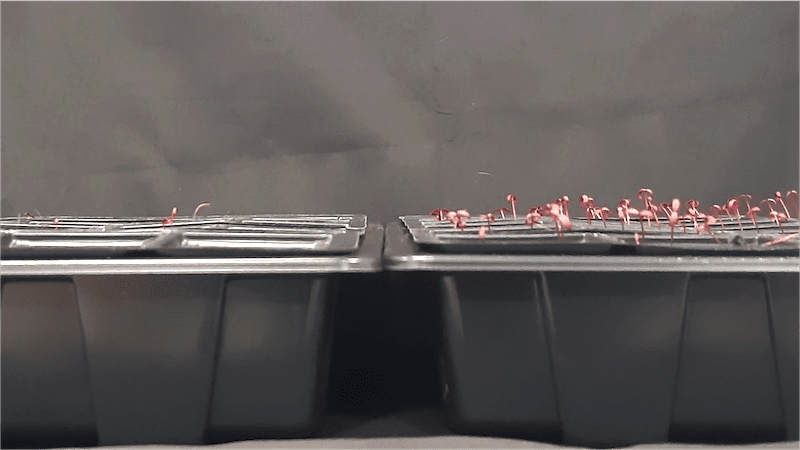
Cold plasma technology has been proven to improve germination rates, promote healthier plant growth, and shorten crop cycles. Our seed treatment technology delivers these benefits to indoor farm growers, helping you to achieve higher yields and more profits.

What’s even more impressive is that our technology achieves these results without the use of any agri-chemicals. That’s right, zero chemicals. This means that your microgreen crops will not only be healthier and more productive, but also safer and more sustainable for the environment and your customers.

Here are a few more benefits of our cold plasma seed treatment technology:

  • Faster germination rates: Get your crops growing quickly and evenly, so you can start harvesting sooner.
  • Improved plant health: Our technology helps to strengthen plant resistance to pests and diseases.
  • Shortened crop cycles: With faster germination and healthier plants, you can reduce your crop cycle times and increase your overall productivity.

For detailed results and data please visit our resources page and download the latest whitepapers on seed treatments we have completed in our laboratory.

Future Farm Podcast – Making e-commerce work for farmers

Member News
The views expressed in this Member News article are the author's own and do not necessarily represent those of Agri-TechE.

The economics of the food chain are broken and farmers pay the price. Farmers buy high, sell low, and the empty produce shelves we saw at the turn of the year show that the situation is unsustainable. In February 2023, FutureFarm launched its newest innovation, Collective Deals, a reverse auction for the agtech industry. In the latest podcast episode, CEO Florian Ritzmann dissects the game-changing early findings, and what the data says about farmers’ online buying behaviours in the digital age.

Listen here

Harvest AI join PwC’s Scale | AgriFoodTech programme

Member News
The views expressed in this Member News article are the author's own and do not necessarily represent those of Agri-TechE.

Harvest AI are thrilled to announce that they have recently joined PwC’s Scale | AgriFoodTech programme led by PwC Belgium as one of ten scale-ups. Over the next few months, we will be collaborating closely with PwC and other enterprises in the Agri & Food industry in a 10 week programme of masterclasses, pitching events and much more. 

This is a fantastic opportunity for us to connect with fellow scale-ups, share ideas, and work together towards a more sustainable future.

We can’t wait to be inspired, make new connections, and establish partnerships within the European Agri & Food business community.

Stay tuned on LinkedIn for more updates on our progress!

Schneider Electric Customer Story: Mataura Valley Milk

Member News
The views expressed in this Member News article are the author's own and do not necessarily represent those of Agri-TechE.

The Challenge

To build the world’s best nutritional plant, Mataura Valley Milk needed the ability to quickly adapt and tailor production to meet market demands, tracking and tracing from farm to facility, process batching, and to maintain power supply integrity.

The Solution

Apps, Analytics and Services: AVEVA software*: System Platform, Batch Management, Manufacturing Execution System, and expert services
Edge Control: Modicon M580 and M340 PLCs
Connected Products: Altivar ATV 630 and 660 drives, AccuSine harmonic filters, iMCC, switchgear, power metering, and TeSys U

  • Bespoke integrated electrical and automation systems – based on EcoStruxure Plant and Power – tailored for the customer and standardized across the entire facility: from milk reception to dryer process, standardizing the process, wet mix, boiler, water treatment plant, wastewater treatment, refrigeration, etc.
  • Integrated AVEVA industrial software for batching, traceability, and seamless dataflow across the complex manufacturing process
  • Strong service support

The Results

  • 20% faster time to market through connectivity and engineering standardization
  • Payback period of 28 months for power-quality equipment
  • Additional 4.5% available energy on the grid
  • Visibility of real-time data on every process for informed decision making
  • Compliance with stringent standards (harmonic distortion levels)
  • Ease and flexibility to increase product portfolio and volume to meet growing demand
  • Reduced OpEx budgets compared to conventional systems
  • Cleaner and more cost-effective power

Read the full story on the Schneider Electric website.

* The Schneider Electric industrial software business and AVEVA have merged to trade as AVEVA Group plc, a UK listed company. The Schneider Electric and Life is On trademarks are owned by Schneider Electric and are being licensed to AVEVA by Schneider Electric.

A member of Yellow Brick AgTech has made a bold and generous move by making its fertilisation software available for free to non-profit organizations

Member News
The views expressed in this Member News article are the author's own and do not necessarily represent those of Agri-TechE.

This decision comes after more than 12 years of commercial sales in over 72 countries, during which time the company has accumulated invaluable data to support the algorithm behind its fertilization recipes.

The i-Plantnutrition fertilisation software is renowned for its accuracy and effectiveness, with growers using it to make informed decisions and reduce their fertilisation use. The software’s output is based on years of data that have been carefully analysed to provide reliable and unbiased results.

Johnathan Kol-Bar, CEO of i-Plantnutrition, commented: “Recognizing the importance of sustainable agriculture practices, i-Plantnutrition has decided to make its software available to all growers for free. This move demonstrates the company’s commitment to supporting sustainable farming practices and its dedication to ensuring that growers have access to the latest tools and technology.“

The decision to make the software free also ensures that good fertilisation practices is not influenced by any fertilisation company, and that its fertilisation recipes remain accurate and non-biased. This independence is crucial for growers who need reliable information to make informed decisions about their fertiliser use.

With this announcement, i-Plantnutrition is not only providing a valuable tool to growers but also encouraging the adoption of sustainable farming practices worldwide. By making the software available for free, the company is removing financial barriers that may have prevented some growers from accessing the software in the past.

The i-Plantnutrition fertilisation software is a testament to the company’s commitment to innovation and sustainability. The software’s accuracy and effectiveness have helped growers around the world to reduce their fertilizer use and improve their yields. Now, with the software available for free, more growers will be able to benefit from this valuable tool.

By providing this software, the company is helping growers to make more informed decisions about their fertiliser use, reducing their environmental impact, and improving their yields. The i-Plantnutrition fertilisation software is an example of the power of innovation and collaboration in promoting sustainable agriculture practices.

For any queries, please contact us on johan@ybcap.com

Bio Natural Solutions® products receive V-Label certification

Member News
The views expressed in this Member News article are the author's own and do not necessarily represent those of Agri-TechE.

Bio Natural Solutions® coatings have been certified by the vegan V-Label, a Swiss seal of approval that provides guarantee and safety. Our Life Cover Plus® and Vital Cover products are produced in a responsible way, without animal ingredients and with environmentally friendly production processes. We are proud to say that we offer certified vegan products that not only help to extend the shelf life of food, but also contribute to a more sustainable future for everyone.

Legume Technology attend AgriTek & FarmTek Expo in Astana, Kazakhstan.

Member News
The views expressed in this Member News article are the author's own and do not necessarily represent those of Agri-TechE.

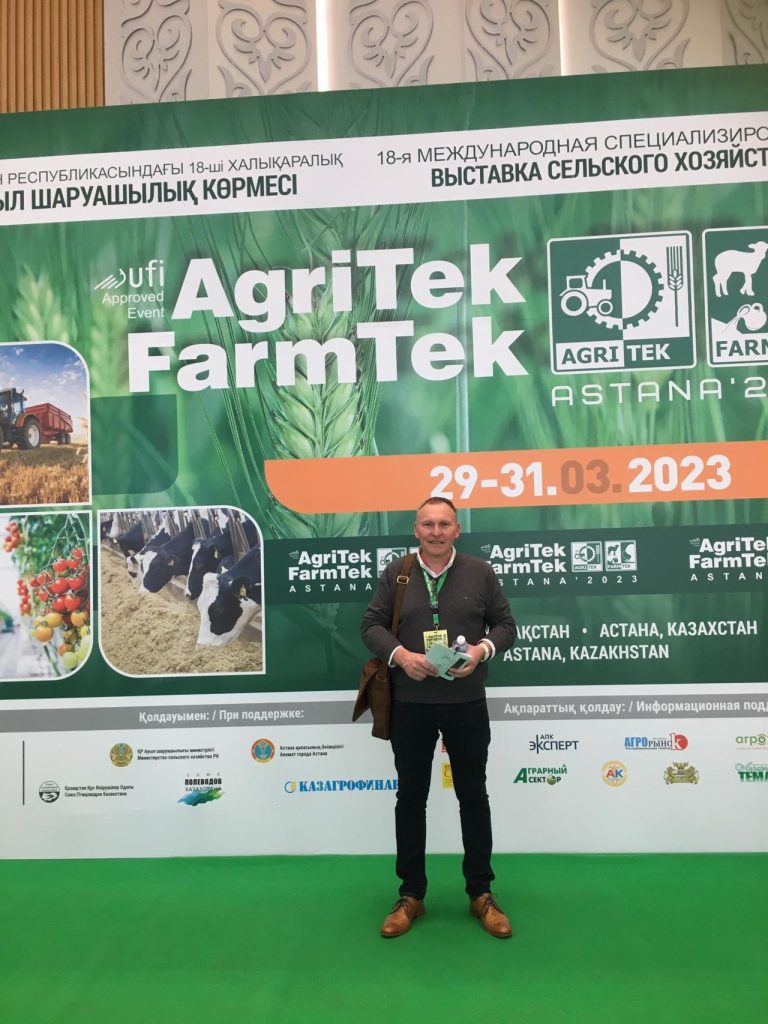
From 29th until 31st March, Legume Technology participated in a trade mission organised by Department for Business and Trade and exhibited at AgriTek & FarmTek Expo in Astana, Kazakhstan. It is the 9th largest country in the world with over 21 million ha of arable land and good opportunities to showcase the efficiency of our products. We look forward to exploring this new territory and how our products can make a difference!

In review: the role of genetic editing in crops

Member News
The views expressed in this Member News article are the author's own and do not necessarily represent those of Agri-TechE.

The process of plant domestication has been ongoing for thousands of years. Expanding the genetic diversity of crops has mostly relied on naturally occurring variations selected for their beneficial impact. However, this approach as used throughout most of the history of agriculture, lacks control and precision, is slow to yield results and depends on an element of luck. In this next guest blog, Hannah Senior and Dr Jamie Claxton provide us with a deep dive into how genetic editing in plants can help boost food production whilst diversifying our crops, reducing waste and minimising risk to pest and diseases.

Nowadays, we have numerous ways to control introduction of heritable mutations into a plant’s genetic material. For instance, the development of computing and genotyping has allowed marker assisted breeding, better informing the recognition and use of the genetic indicators of beneficial traits. In addition, creating a large pool of genetic variants to select from became easier by using chemical compounds and irradiation to increase the background mutation rate. Unfortunately this also creates drawbacks such as deletion and rearrangement of big genomic fragments.

A major step forward happened with the discovery of a new, powerful tool: the Clustered Regularly Interspaced Short Palindromic Repeats (CRISPR) and the CRISPR associated protein (Cas9), CRISPR-Cas system. This game changing approach has since been utilised in many crops to target genes linked to traits such as shelf life or taste profile.

One of the key advantages of the CRISPS-Cas system (and similar approaches developed subsequently) is the high precision it provides by enabling the introduction of specific changes at selected sites in the DNA. This not only accelerates the plant breeding process but also lowers cost and increases accuracy.

The implications could be wide-reaching, helping to rapidly develop plants with high resistance to climatic stress, emerging pests and diseases or increased content of chemicals for use in the medical sector. Yet, as with all new technologies, full consideration must be given to how these crops will be cultivated and ensure alignment with sustainability, climate changes and food security goals both in the UK and globally.

Hannah Senior CHAP Non-Executive Director and CEO of PBS International works extensively with plant breeders and seed producers worldwide. Below she provides her outlook on the value of gene editing in building a sustainable and resilient agriculture sector.

“Dramatic shifts caused by climate change, demographics and the economy have accelerated the need for new crop varieties. Successfully cultivating crops in a variable climate with the added challenges of lower inputs and less labour will require accessing every tool in the box. To help jump-start the process, it’s great news that the Genetic Technology (Precision Breeding) Bill has passed through Parliament.

Gene editing has met with concerns from the public, yet recent data presented by The Food Standards Agency indicated that around 74 percent of people are comfortable with gene editing, especially in plants, when they understand it. The problem is that inadequate representation of what genetic engineering is and can achieve limits this understanding, especially when the pros and cons of the technology itself are confused with other issues.

An example of this is a concern that if we allow genetic engineering, a handful of multinational corporations will be in control of all our crop genetics. ‘Seed sovereignty’ and the implications of consolidated agribusinesses are legitimate concerns, of course. Ironically, concerns about the safety of genetically modified organisms (GMOs) – gene editing’s predecessor’s technology – added fuel to consolidation that was already happening across seed companies.  Regulators made the process of launching biotechnology-enhanced crops very onerous, and as a result, only very large companies working on the biggest crops (e.g. soy and maize), could afford it. With appropriate regulation, gene editing has the potential to work against this trend because it is faster, cheaper and more accessible which enables small companies, start-ups, NGOs and researchers to use this technology to develop new varieties and work on a wider range of crops.

Gene editing is not the answer to all our problems. Achieving our sustainability goals and future-proofing food production in an ever-changing climate will require other tools such as including higher investments in preserving genetic diversity, scientific research more generally, and farming systems research.  But gene editing is a valuable and welcome addition to the options available.”

Next, Dr Jamie Claxton, Director of Research and Development at Tozer Seeds, discusses current industry challenges and how genetic editing could accelerate crop breeding to benefit and support food production.

“We are the largest UK-based independent vegetable, salad and herb seed breeding company but small compared to many of our multinational competitors, so we have to be really innovative to successfully compete in the commercial marketplace. We primarily use traditional plant breeding techniques but the timescale for developing new varieties is long. This is particularly true for the biennial crops we work on, such as parsnip and celery. Developing a new variety of a biennial crop can take 10-15 years which is a huge investment in resources. Even new varieties of our annual crops such as wild rocket take up to 10 years to develop.

The commercial fresh produce sector is facing huge challenges due to many interacting factors; climate change, Brexit, Covid-19, pesticides withdrawal and huge inflation of input costs for growers, threatening UK food security. It is becoming apparent to us as a company that in order to remain competitive we need to embrace new technologies to speed up the release of new varieties to market and meet these fast-changing demands to help secure UK food supplies. Traits such as pest and disease resistance, resistance to drought, improved shelf life and slower bolting to reduce food waste as well as improved nutritional content to maintain public health will need to come to market in a much shorter timeframe than can be achieved by traditional plant breeding techniques. We are also looking at quickly developing varieties for new growing technologies such as urban vertical farms to reduce food miles.

Gene editing is an efficient precision breeding tool that I believe will allow us to overcome these hurdles. It is important to distinguish this technique from genetic modification, which is the introduction of a fragment of DNA into a crop form an unrelated species. Gene editing does not involve any DNA from any other organism being introduced into a plant, it is simply a powerful and fast tool that allows very precise edits to be made to the genome that will, for example switch on a gene that codes for disease resistance or drought tolerance. The results are no different to traditional plant breeding – it is a faster and more precise technique.

We currently have an Innovate UK – funded Knowledge Transfer Partnership with a scientist from University of York, working with us to develop the protocols for gene editing within our economically important crops. The government’s Precision Breeding Bill last year has recognised that gene editing is distinct from genetic modification with an aim to remove some of the tight regulation around gene editing. This is vital to secure food security within the UK as other countries outside Europe are already pushing forward with this new technology and releasing new varieties. Public perception, understanding and approval are key to highlighting the huge benefits of this new technology and its essential role in securing food production in the UK.”

CHAP aims to build networks of leading scientists, farmers, advisors, businesses, and academia to understand industry priorities and develop innovative solutions. To be our next guest contributor, e-mail enquiries@chap-solutions.co.uk

Please note, the opinions expressed in this article do not necessarily reflect the views or opinions of CHAP.

Financing a low-emission, nature-positive agricultural sector

Member News
The views expressed in this Member News article are the author's own and do not necessarily represent those of Agri-TechE.

To achieve the transition to an inclusive, net zero carbon and climate-resilient economy, public investment alone will not suffice. In this new guest blog Amy Allan, Nature Programmes Analyst at the Green Finance Institute (GFI), discusses the role of private sector investment in supporting the transition of the agriculture sector towards reaching a net zero future and secure food production.

“In 2019 the GFI was established to sit at the nexus of the public and private sectors, convening sectoral coalitions to identify and unlock barriers to private sector investment to move capital at the scale and pace needed for the transition. We work across a range of sectors – including nature and biodiversity, where our mission is to increase private sector investment into nature restoration, nature-based solutions, and nature-positive outcomes in and for the UK.

Agriculture plays a key role in net zero and nature-positive ambitions. The agricultural sector currently accounts for an 11% share of greenhouse gas (GHG) emissions in the UK and is projected to rise to 30% by 2030, as other sectors reduce emissions at a faster rate. Furthermore, as stewards of over 70% of the UK’s land, farmers play a direct role in environmental improvements.

In England, the Environmental Land Management schemes will pay farmers to transition to more sustainable means of food production alongside improving nature. However, to deliver a resilient and secure food system – focused on food production and able to deliver the much-needed environmental outcomes – farmers require greater financial support.

To date there has been no estimate on how much a farming transition will cost, but we can be certain that it will be in the billions. A report commissioned by the GFI and produced in partnership with environmental economics consultancy, eftec, in 2021, for example, found a £3.7 billion financing gap for sustainable soils management this decade. Across the UK, there also exists a £19.4 billion gap for protecting and restoring biodiversity.

There are a series of potential private sector sources of finance that can be mobilised for the transition:

  • Banks are exploring the potential to provide loans at discounted rates to farmers that meet environmental outcomes, as well as loans to cover costs required for a farming transition. Many are looking to lend to natural capital projects, and some banks are supporting farmers through the supply of measurement and monitoring tools
  • Supermarkets, manufacturers and food and beverage companies are looking to support farmers within their supply chains to transition by exploring premium payments through certification, insetting payments and other incentives. They too are paying for, or developing their own, GHG emissions calculators and offering payments for basic baselining
  • Buyers of and investors in ecosystem services which stem from improved environmental activities on farms are also seeking to pay farmers for carbon improvements (soil, hedgerows, peatlands and woodland), habitat creation and restoration, nutrient reduction and flood risk reduction

In this context, Defra commissioned the GFI to bring together the farming sector with the above market participants in a Strategic Working Group to identify barriers and collectively recommend solutions to the flow of that capital. Following a six-month consultation with the Working Group and interviews with over 75 experts from across the agricultural sector the GFI published the Financing a Farming Transition report on the 28th March 2023.

The report lays out the barriers preventing private sector finance from moving at scale into the farming transition, including data, confidence and implementation gaps, and identifies four key enablers that will overcome these challenges and create the supporting environment needed to unlock private sector finance and investment for farmers. With each enabler, a roadmap to implementation and key considerations – such as addressing data privacy concerns – are provided.

The key enablers set out in the report are as follows:

Improving data access and availability

Making environmental and spatial data easily accessible through a common platform and language would help farmers, banks and the private sector in integrating natural capital improvements into their businesses and decision-making processes, in addition to the free provision of premium mapping software to farmers.

Setting priority environmental outcomes metrics

The private sector and farming community are seeking a clear vision from government so that they know where to invest their time and resources. A government-defined set of simple, priority environmental outcomes around soil health, water quality and biodiversity for example, complemented by best-practice measurement guidance, would help clarify for farmers and the private sector the environmental data they may want to collect.

Clarity and guidance on high-integrity environmental markets

Greater clarity and formal guidance on the operation of high-integrity environmental markets will provide confidence, such as guidance on insetting, the ability to stack or blend ecosystem services, overarching standards, the inclusion of different forms of tenure in agreements, and tax treatment of ecosystem services.

Aggregation model support

Support including funding, a community of practice and guiding principles will encourage the creation of aggregation models that produce landscape-scale environmental improvements and greater capacity for farmers to attract private finance.

The GFI and many of those that fed into the report are now working together with government to move the recommendations forward.”

CHAP aims to build networks of leading scientists, farmers, advisors, businesses and academia to understand industry priorities and develop innovative solutions. To be our next guest contributor, e-mail enquiries@chap-solutions.co.uk

Please note, the opinions expressed in this article are the author’s own and do not necessarily reflect the views or opinions of CHAP.

New irradiance sensor improves irrigation management

Member News
The views expressed in this Member News article are the author's own and do not necessarily represent those of Agri-TechE.

A new irradiation sensor will enable all arable and vegetable producers to manage their irrigation, fieldwork and disease protection more precisely, helping to curb costs and boost productivity. The low-cost system operates with exceptional accuracy, large reach and is user-friendly.

Sencrop’s new Solarcrop irradiance sensor, which has just been launched in the UK, means producers can link up real-time solar irradiation, rainfall, humidity, temperature and wind data, as well as accurate weather forecasting, in one simple app. Based on crop type and growth stage, this accurately predicts evapotranspiration rates and soil moisture availability, helping farmers to identify when and how much to irrigate without the need for expensive and very localised soil probes.

“Much of the UK is getting drier – and more extreme weather events are becoming the norm,” says Martin Ducroquet co-founder of Sencrop. “In addition, the environmental issue around irrigation is no longer in question; producers can massively reduce their water consumption by optimising irrigation systems. We want Irricrop to change the world of irrigation, by making this new solution accessible to all. This evolution is completely consistent with our original mission, to standardise precision agriculture.”

One sensor can monitor up to 10 fields across a range of 10 miles, explains Thibaut Mathey-Bony, product innovation manager at Sencrop. “Based on two years of research and development and patented technology, Solarcrop measures solar irradiation to a unique accuracy of 2%.” When combined with the Raincrop and Windcrop sensors, as well as individual field and crop information, it can accurately predict the soil moisture surplus or deficit over the coming seven days, enabling producers to better plan their irrigation or field work.

“Solarcrop is Sencrop’s third pillar of hyper-local data for farmers, helping them to make the best choices for their crops,” says Mr Mathey-Bony. “The firm now has a network of more than 2,000 connected stations across the country, generating ultra-precise and local information like temperature, humidity, wind speed and rainfall. Now farmers can also measure solar irradiation, it maximises their ability to manage climatic risks, as well as diseases and pests.”

This is because farmers get to access a whole range of ag-weather related features: The firm links up with prediction services for diseases like blight and cercospora, so that producers and agronomists can act on highly tailored risk-based advice.

The low-cost plug-and-play service also means everyone can use it, not just those with deep pockets. The sensors are extremely quick and easy to install, and farmers can choose the appropriate subscription package for them.

Mr Mathey-Bony adds: “When combined with accurate weather forecasts and real-time monitoring, farmers can optimise the use of inputs, for example only spraying and undertaking fieldwork when the weather conditions are right.”

  • For more information on the irrigation system, visit sencrop.com/uk/irrigation.