How open collaboration in agri-tech could help solve the farm profitability puzzle
 Agri-TechE
 Access to funding, technology fragmentation, and a misalignment with farmers’ needs are perennial barriers to the adoption of the latest agri-tech, according to industry leaders speaking at Agri-TechE ’s REAP agri-tech conference.
But with new funding like ADOPT and a more open approach to co-developing exciting new technology, farmers attending the event believe it is easier than ever to see the benefits of agri-tech.
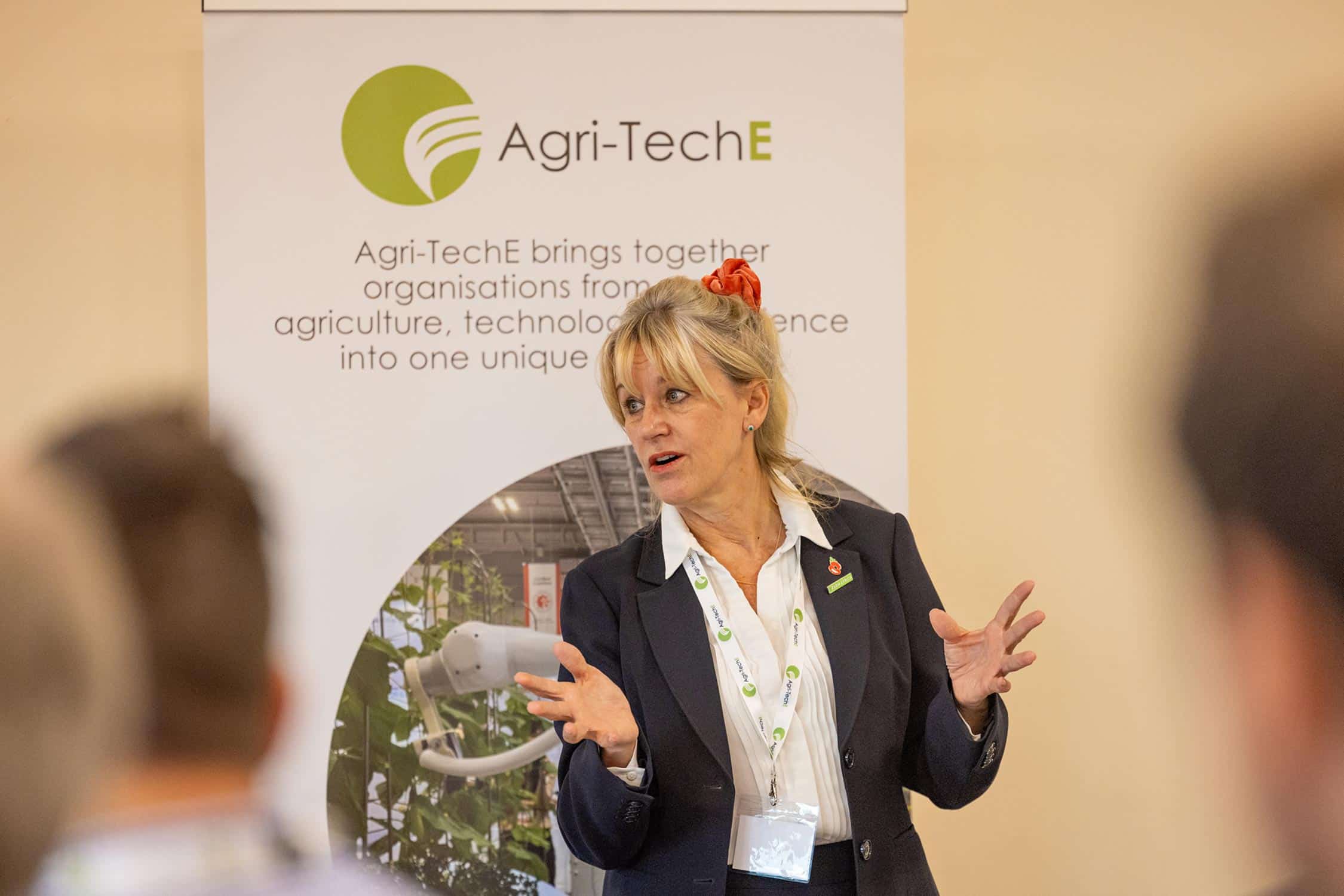
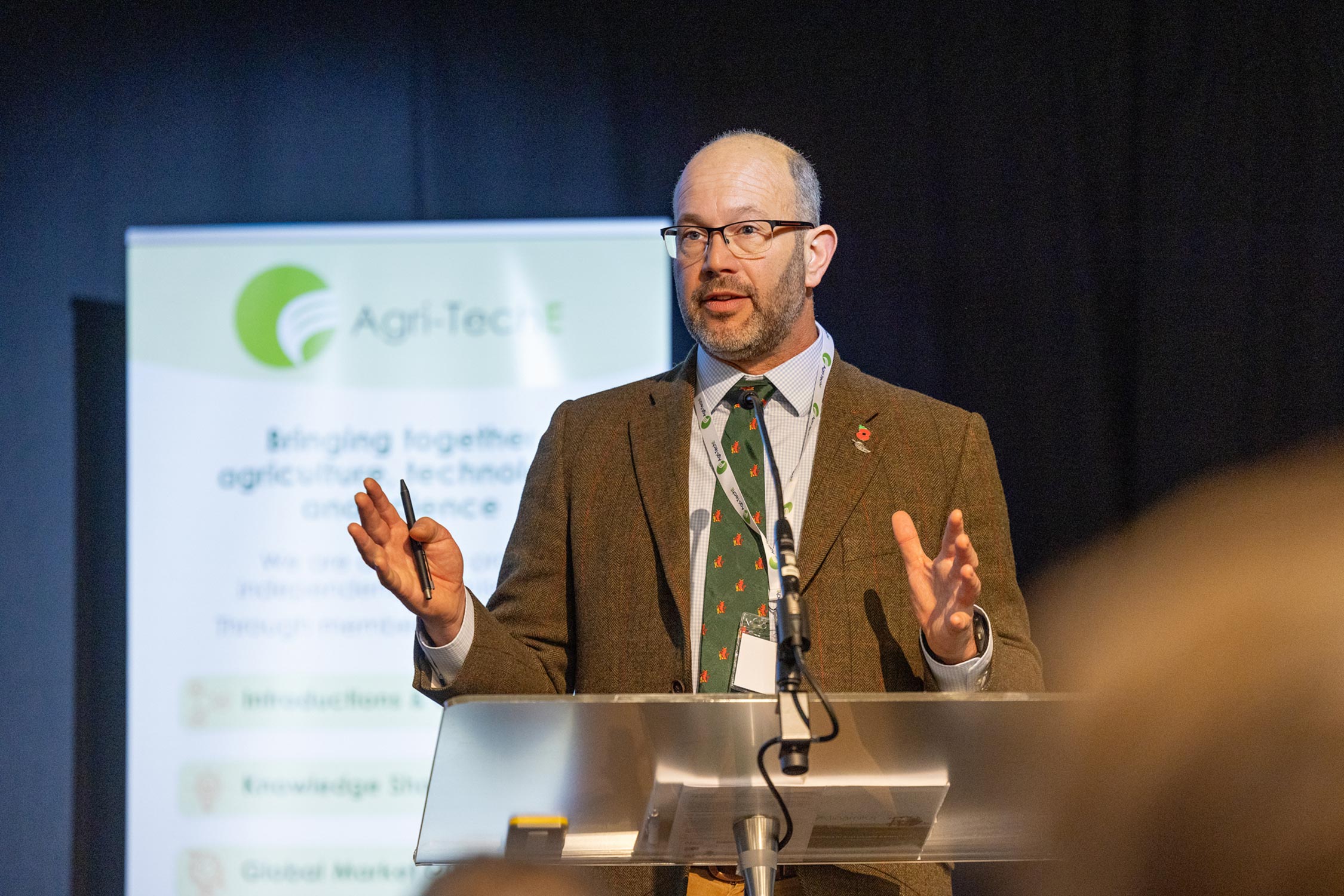
With Baroness Minette Batters speaking at REAP about her Farm Profitability Review for the first time since submitting it to Defra, the stark realities that farmers face without direct subsidy support are apparent. She believes that new technology will be needed to help unlock efficiencies and improve profits.
“On the evidence that I have (in the Farm Profitability Review), agri-tech is front and centre of profitability,” said Baroness Batters. “We have got to get research and innovation onto every farm and into every field.
“Two bits of evidence that I have seen for farm profitability are farmers having to have really good control of input costs and farming at scale. To be able to get the latest research hitting on farms is fundamental to improving these.”
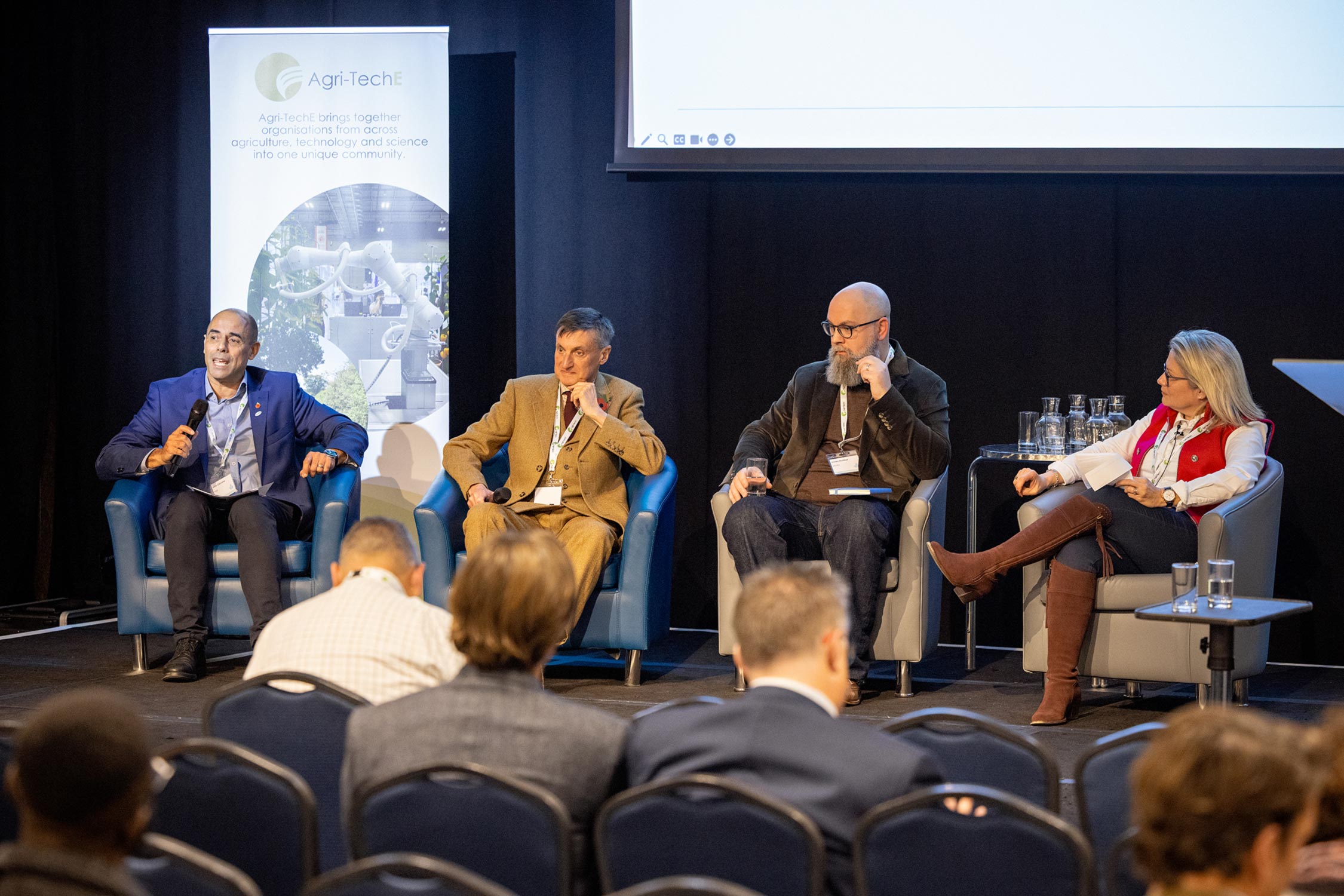
The benefits the UK has of diverse farming systems, soil types and innovative farmers make it an ideal location for agricultural trials. “We need to position ourselves as the world’s go-to place for testing and trialling agri-tech,” said Dr Belinda Clarke, Director of Agri-TechE .
“We are not going to change the world with one start-up or one research project at a time. Let’s pull them together, allowing the farmers to set the challenge,” she added.
Professor Mario Caccamo, CEO of Niab, cited one example in which the UK is pulling ahead of its competitors internationally, thanks to post-Brexit legislative changes. The Precision Breeding Act comes into force this month. It allows precision-bred crop varieties to be sold in England for human and livestock consumption, subject to individual approval from the Food Standards Agency (FSA).
He said that this has already had an impact in the research sphere, with the UK conducting more gene-edited crop trials than the rest of Europe combined this year.
“One key advantage of this (CRISPR-Cas9 gene editing) technology is that it is affordable, and it therefore has the potential to democratise access to it. We expect it to incentivise new ideas and investment in the UK,” explained Professor Caccamo.
What did the farmers and growers think?
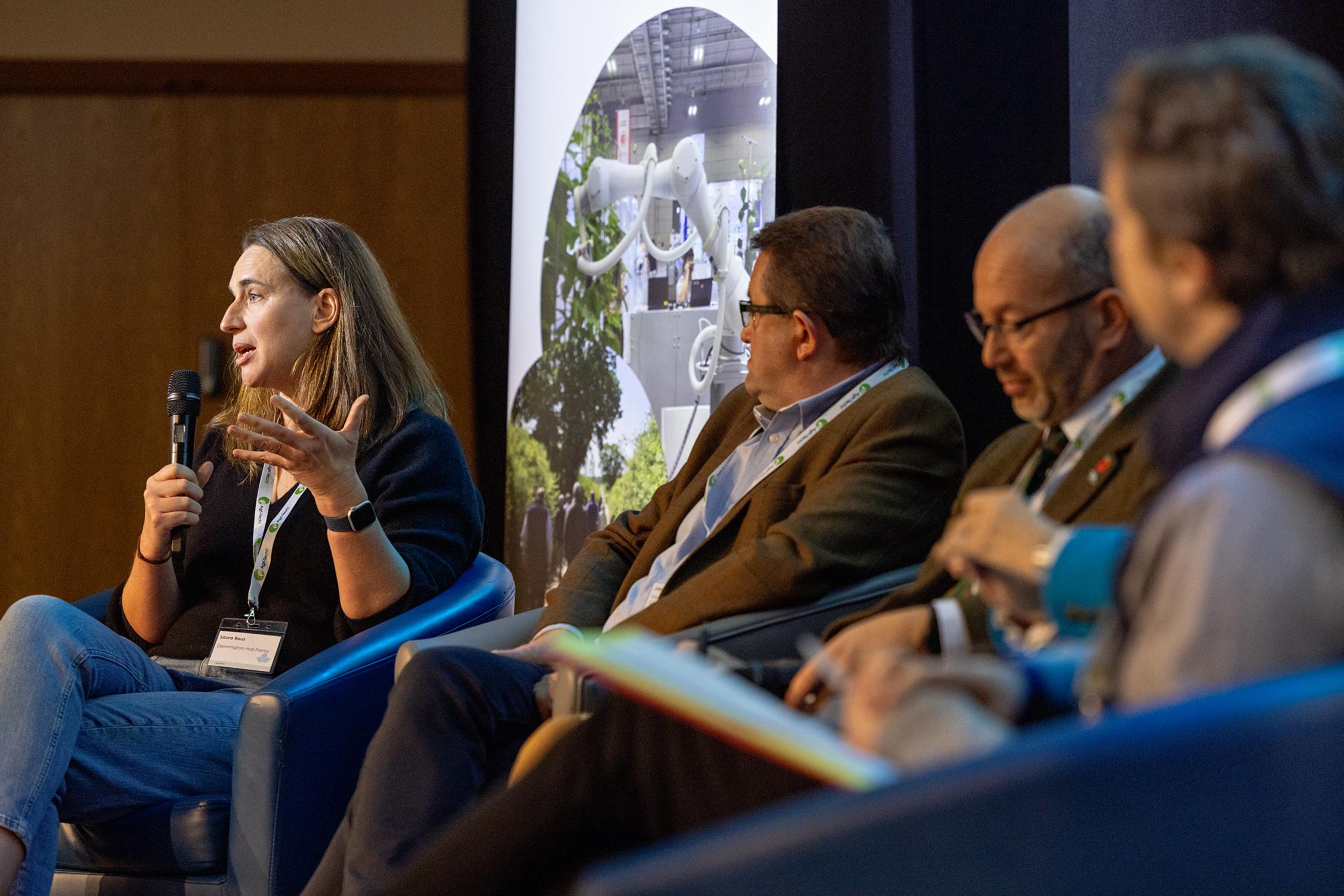
Laura Rous from Dennington Hall Farms, a 1,500 Ha arable farm in Suffolk, is in an ADOPT-funded project with Niab and Limagrain and another neighbouring farm, looking at the long-term nitrogen reductions possible from using a legume cover crop mixture.
“We have found it really exciting to be part of the decision-making and problem-solving, building the project out from things I talk about with the farm’s manager, Ryan McCormick, on a day-to-day basis,” said Laura.
“Because our problem of trying to figure out reductions in nitrogen use is one all farmers face, we hope the results we get from this project will be meaningful to not just us but the wider industry.”
Outside of programmes like ADOPT, Jake Freestone, farm manager at the 1,600 ha Overbury Estate in Gloucestershire, said that less formal collaboration with researchers and companies has delivered the same impact for their business. As for him, the two-year funding timeline of ADOPT projects does not always work when he is examining the impact of experiments on a long-term rotation.
“If you are open to opportunity, then it will come,” explained Jake. “Attending events like REAP, making conversations and having a really open mind help. We have the land, the machinery, the ambition and the desire to make changes happen.”
“Working with ideas that are close to commerciality is important for farms. We need to do the final bit of testing, not necessarily always be there for the concept testing.”
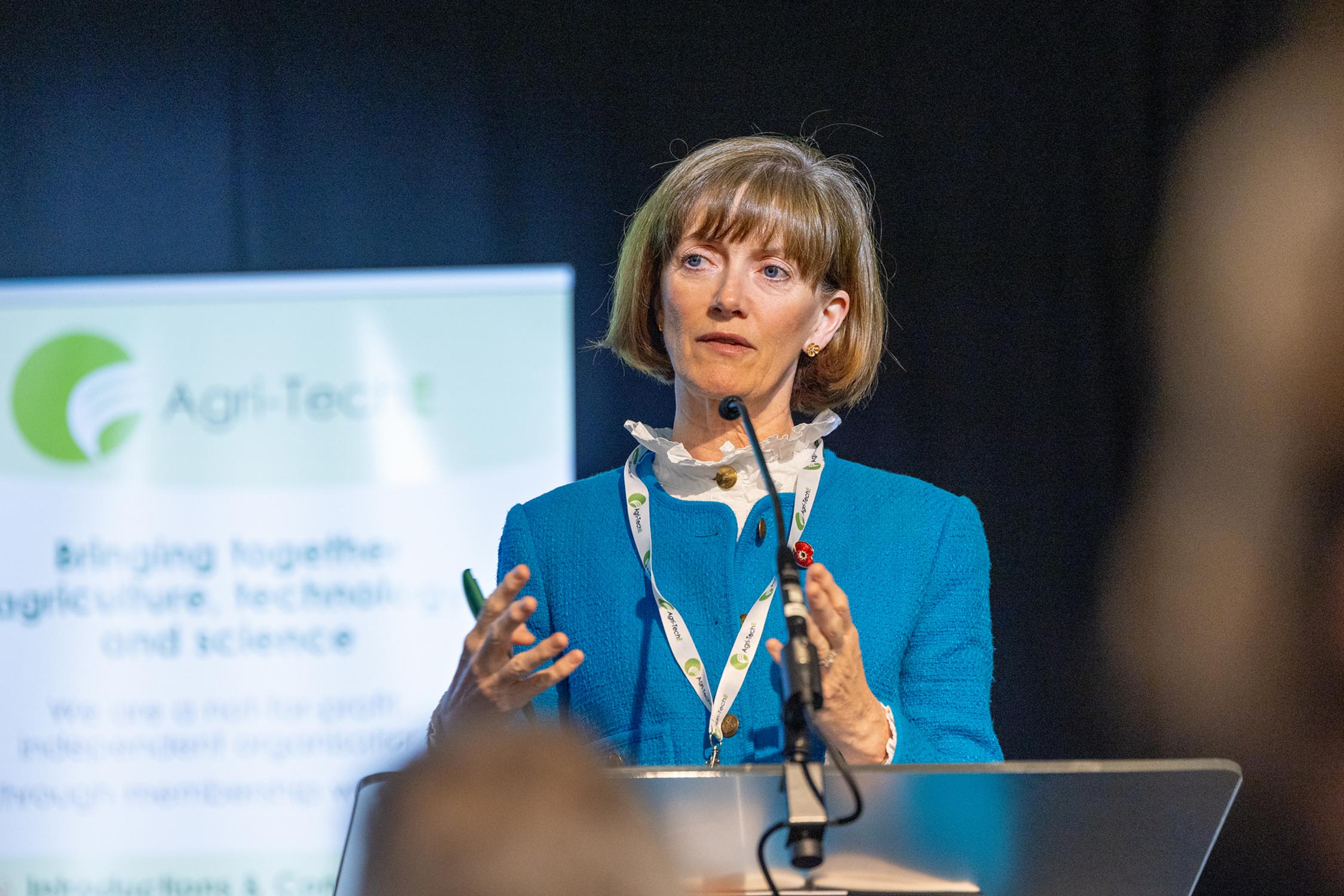
For the horticulture sector, these collaborations are challenged by the lack of levy-funded research which Ali Capper, chair of British Apples and Pears, noted. “For apples, we had to rescue our research and development,” she said. “The primary focus at AHDB was pest and disease research, which is critical to the industry’s future.”
Ali welcomed the ADOPT programme, despite its administrative burden, noting, “It’s not perfect, but it’s brilliant that we have something farmer-led.”
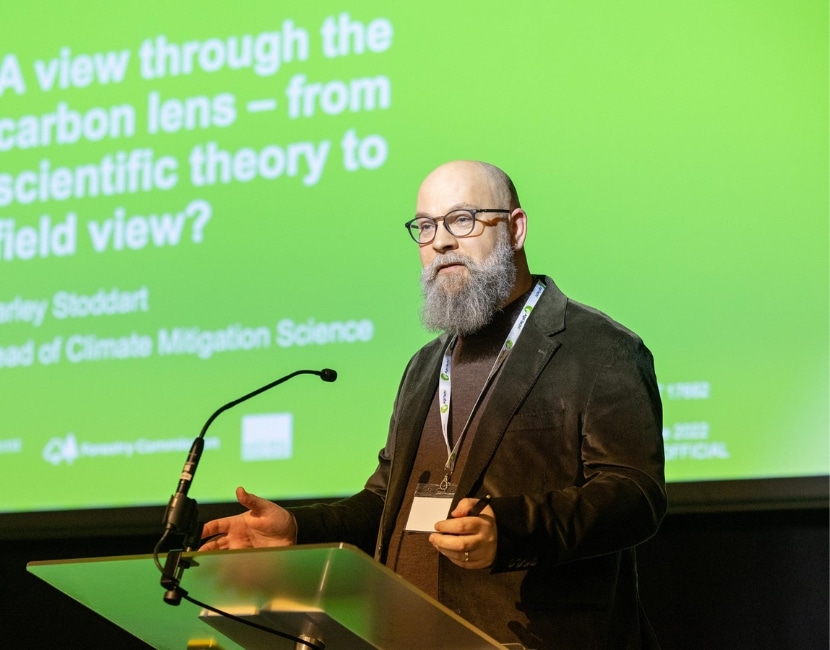
Wrapping up the REAP Conference with his closing keynote, Harley Stoddart, Defra’s Head of Climate Mitigation Science, noted several similarities among the technologies on display throughout the day, notably those related to soil biology.
“I can’t help but think how many of these innovations link up to become more than the sum of their parts. The REAP conference is about collaboration and co-existing, and we wouldn’t be able to operate as an industry without doing those things,” Harley concluded.
Top technology to look out for from REAP 2025
The Research in Practice and Start-up Showcase sessions are annual features at REAP that this year allowed seven researchers and eight entrepreneurs to present their technologies to the audience. Here are our top five to look out for in the years to come:
1. Peptides: a 21st-century herbicide?
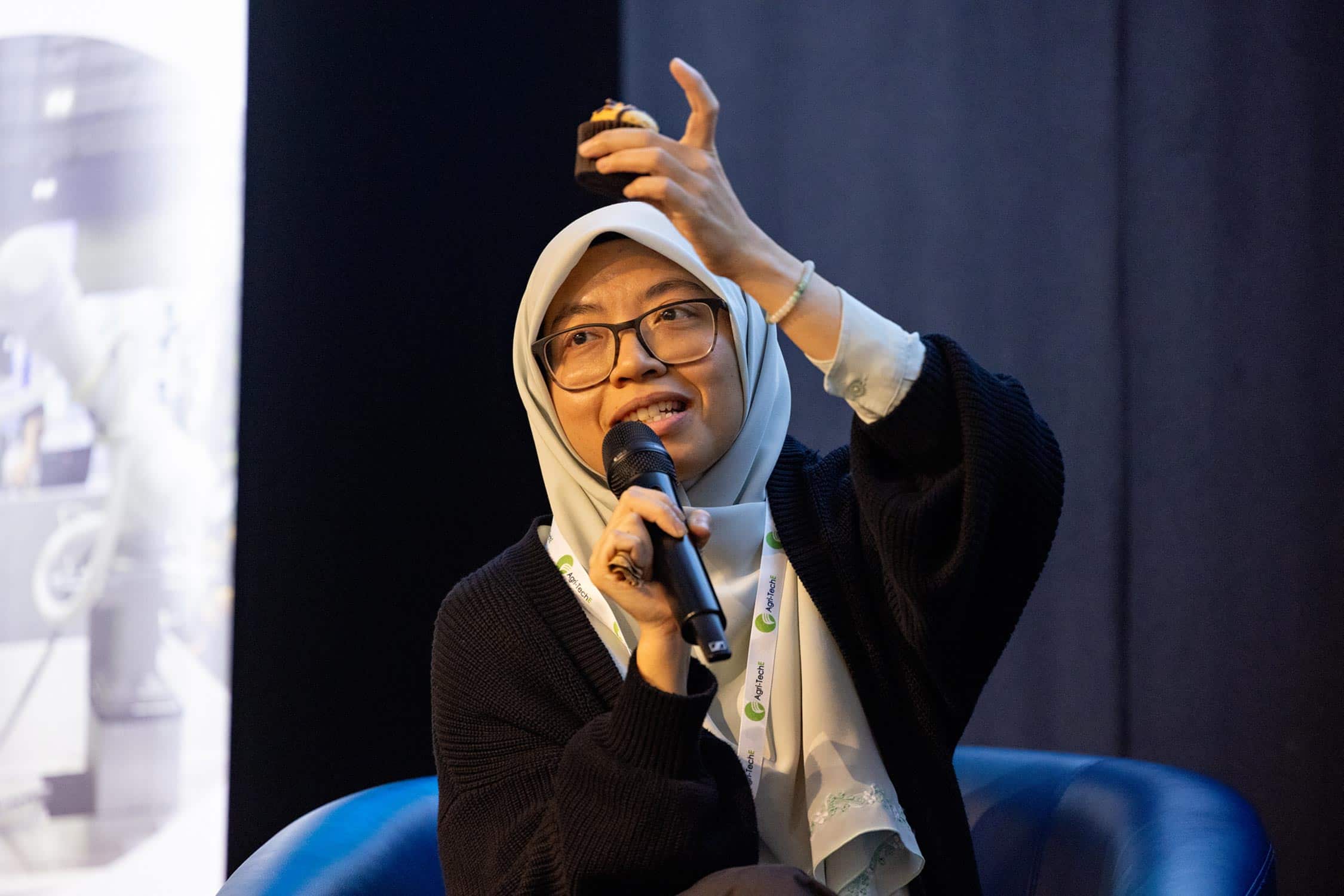
Peptides are traditionally used as a biostimulant to stabilise yield when a crop is subjected to drought or flooding. However, Dr Nadia Radzman, a biologist at the Sainsbury Laboratory in Cambridge University, is investigating the use of peptides as bioherbicides. She believes that by careful design, their effects can be reversed and used to elicit an extreme stress response in plants.
“At the same time, I am co-applying it with another chemical that is protecting the crops from the bioherbicide,” said Dr Radzman. “This protector RNAi spray makes the crop ‘blind’ to the bioherbicide. So, together, this would be a system that is very cost-effective as a bioherbicide.”

2. Navigate funding availability and eligibility with the click of a button
Helping farmers to navigate the complex world of grants and subsidies is the start-up business Oko. It uses geospatial satellite imagery and conversational AI to identify potential funding available to farmers.
The key difference between Oko and other land management software is its ability to scan its database of available funding and provide farmers with options for a particular parcel of land, explained Jasper Kaucky, founding software engineer at Oko. Once identified, the system will assist in applications and manage the actions required by the funds.
In 2026, the team aims to implement a subscription plan that allows farmers to browse their directory, access real-time planning tools, efficiently plan and apply for funding, and estimate their potential earnings.
3. From two weeks to 30 minutes: rapid lab-quality livestock disease diagnostics
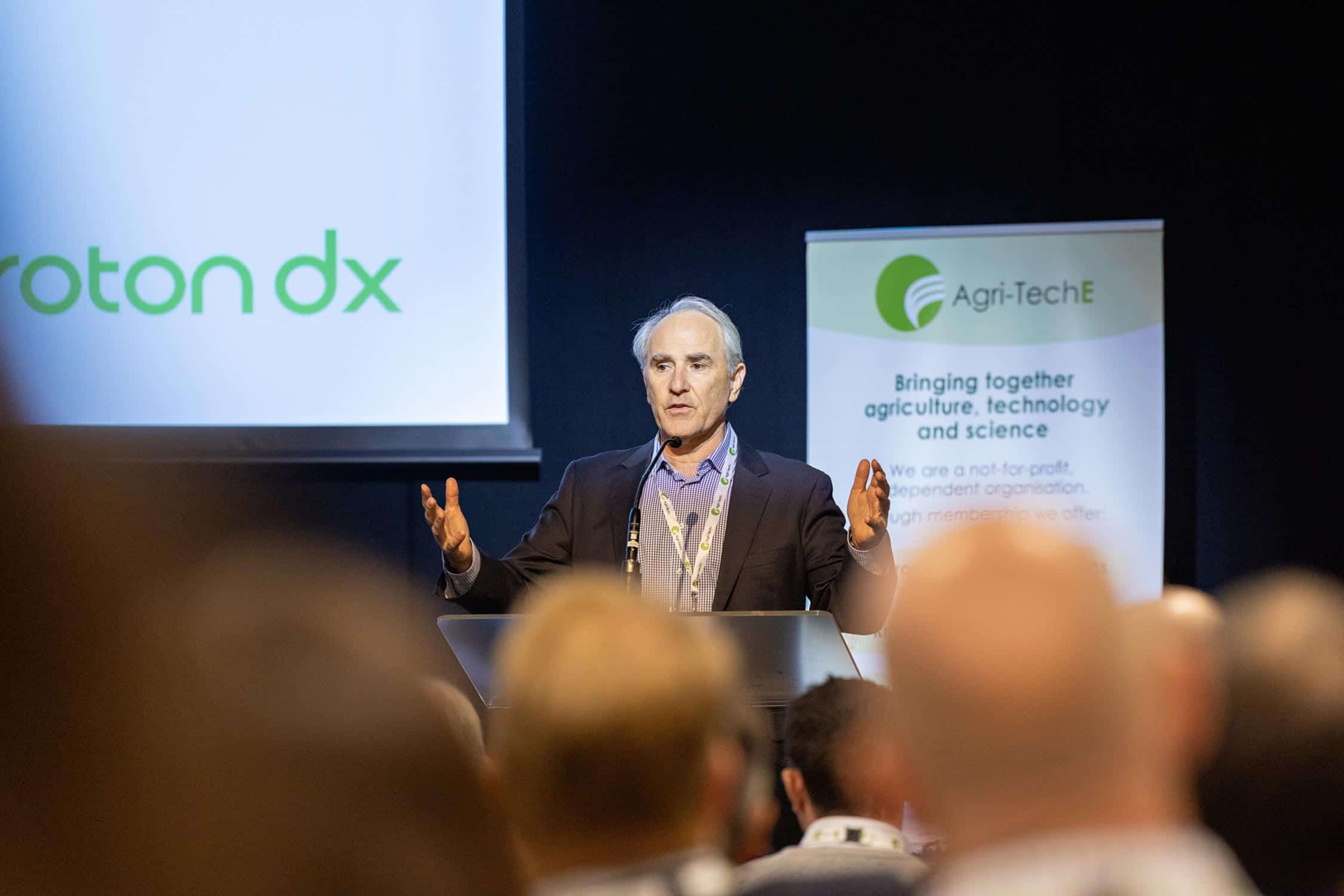
Sometimes an innovation arrives that completely transcends the existing standard. That’s the impact of the Tesco Agri T-Jam winner for 2025, ProtonDX. They have developed a farm-portable device which is capable of delivering lab-quality results for a range of livestock – and soon plant – diseases, explained Bob Enck, CEO of ProtonDX.
The system gets a clean sample extraction in the field, which feeds a molecular LAMP-based diagnostic test capable of producing an accurate result in 30 minutes. Compare that to the existing system, where samples are sent to a laboratory and results are often not returned for two weeks. That is an additional two weeks for the disease to spread and for farmers’ losses to accumulate. From this evidence alone, Bob believes ProtonDX’s business case is compelling.
Their initial work has been focused on screening pigs for porcine reproductive respiratory syndrome virus (PRRS) and influenza. PRRS, in particular, is a major challenge for the pig sector. It was the most frequently reported disease issue in pigs over the last six months, and with the potential to lead to infertility in sows, the economic impact can be huge.
ProtonDX is launching the product commercially in the pig sector and is developing poultry, beef, and dairy markets with specific pathogen diagnostics for important diseases in these sectors.
4. Could a six-inch soil battery be the most practical on-farm renewable yet?
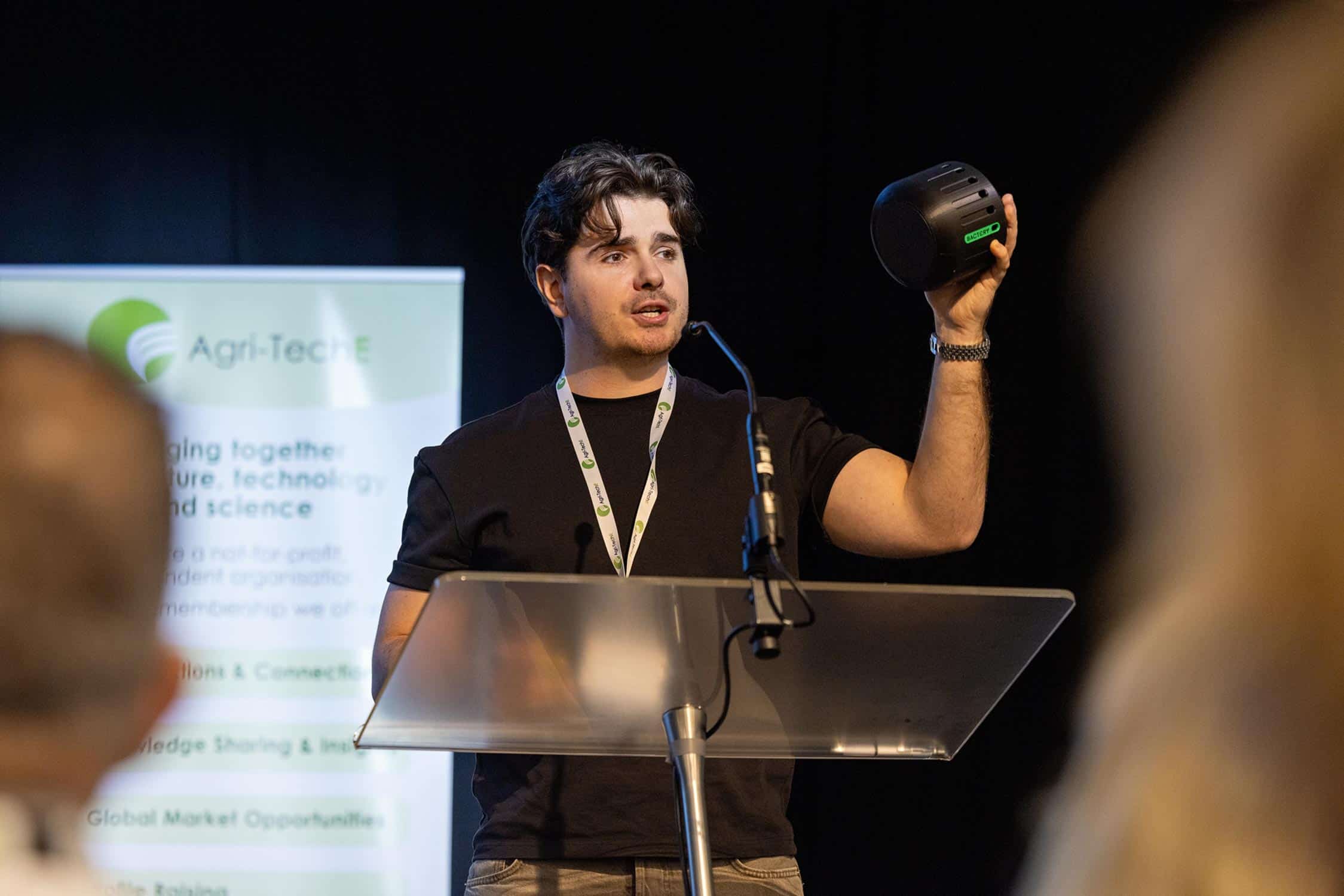
A six-inch box filled with soil might not look like the future of on-farm energy generation, but that’s precisely what Jakub Dziegielowski, founder and CEO of Bactery, is betting on. Bactery has developed a soil-powered device that captures electrons released by soil bacteria to generate electricity.
With an anticipated lifespan of 30 years and measuring just six by six inches, the battery device is low-maintenance and designed to sit quietly in the ground, offering a low-profile alternative to above-ground renewable energy sources that depend on the wind or sunlight.
Jakub said it could offer a long-term, cost-effective solution for powering sensors scattered across a farm. With trials underway and a hopeful commercial launch planned, Bactery provides a new route to decentralised, soil-based energy.
5. Lupins. What’s not to like?
With >40% protein levels, high digestibility, and the ability to fix nitrogen, there is a lot to like about lupins, according to Dolapo Olawoyin, research scientist at the University of Leeds.
He has been studying the properties of lupins and their potential use in the food chain. The protein levels are comparable to those of imported soy and exceed those of the UK’s main pulse crops, peas and faba beans. Lupins also have a balanced amino acid profile containing all the essential amino acids.
He hopes that his research will stimulate further discussion within the food chain, creating a market for farmers to grow lupins for.


Thank you to our REAP 2025 sponsors!
Post REAP Conference blues?!
The annual REAP Conference may be completed for this year, but you needn’t wait until next November… On 28 April we are hosting another Conference NatureTech for Profit and Planet to explore how nature-tech innovation is enabling the delivery, measurement, and monetisation of ecosystem services across the UK’s productive landscapes.
An early-bird price of £100 (ex VAT) is available until 1st February.
Agri-TechE member discounts apply in addition – Agri-TechE members will need to log in or register for an account.
Post Overview
Agri-TechE Related Posts
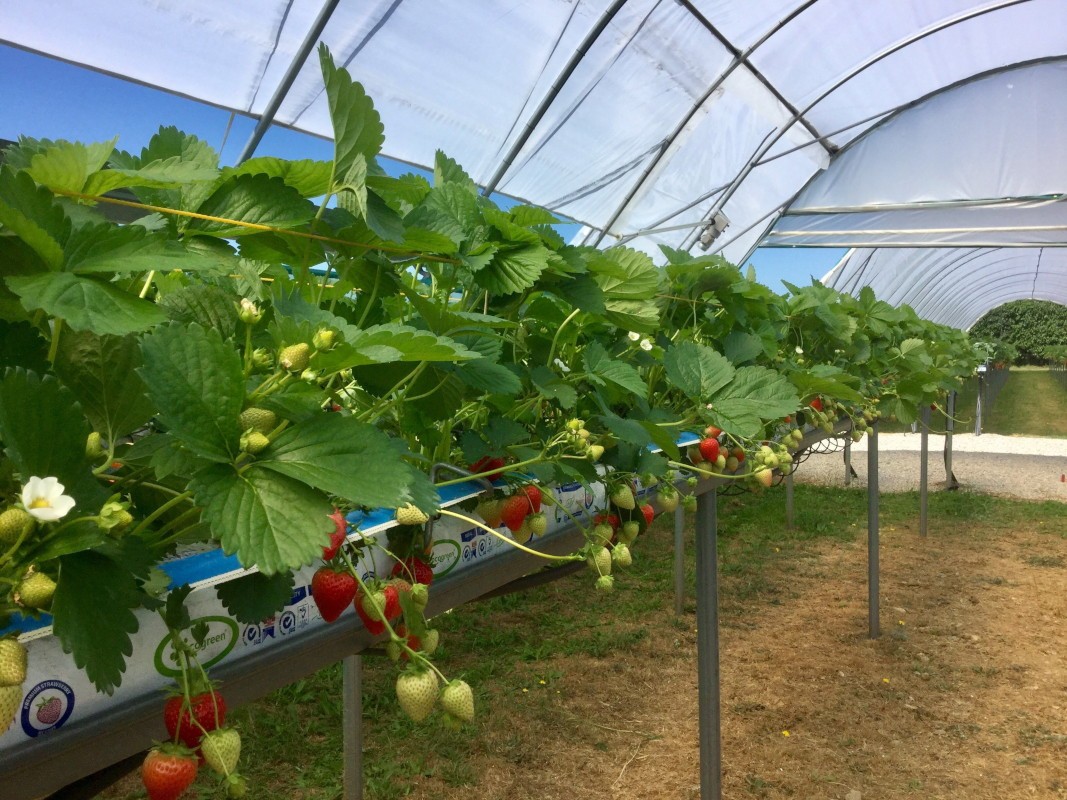
Sweet and water efficient strawberries – Niab EMR and Delta-T Devices collaborate at WET centre
Is animal welfare on your Christmas menu?
Breedr’s virtual value-chain for livestock production supports NFU’s targets
Breedr launches first smart beef contracts based on lifetime animal data

Growing plant science