GROWing a business support ecosystem
 Agri-TechE
 Creating a business plan is an important first step to making a business concept into a viable business and is also a vehicle for sharing the concept with others that can help. There is significant funding available for early stage agri-tech businesses so the issue is not finance but changing a mind-set; encouraging people to be more entrepreneurial and creating an ecosystem to support them.
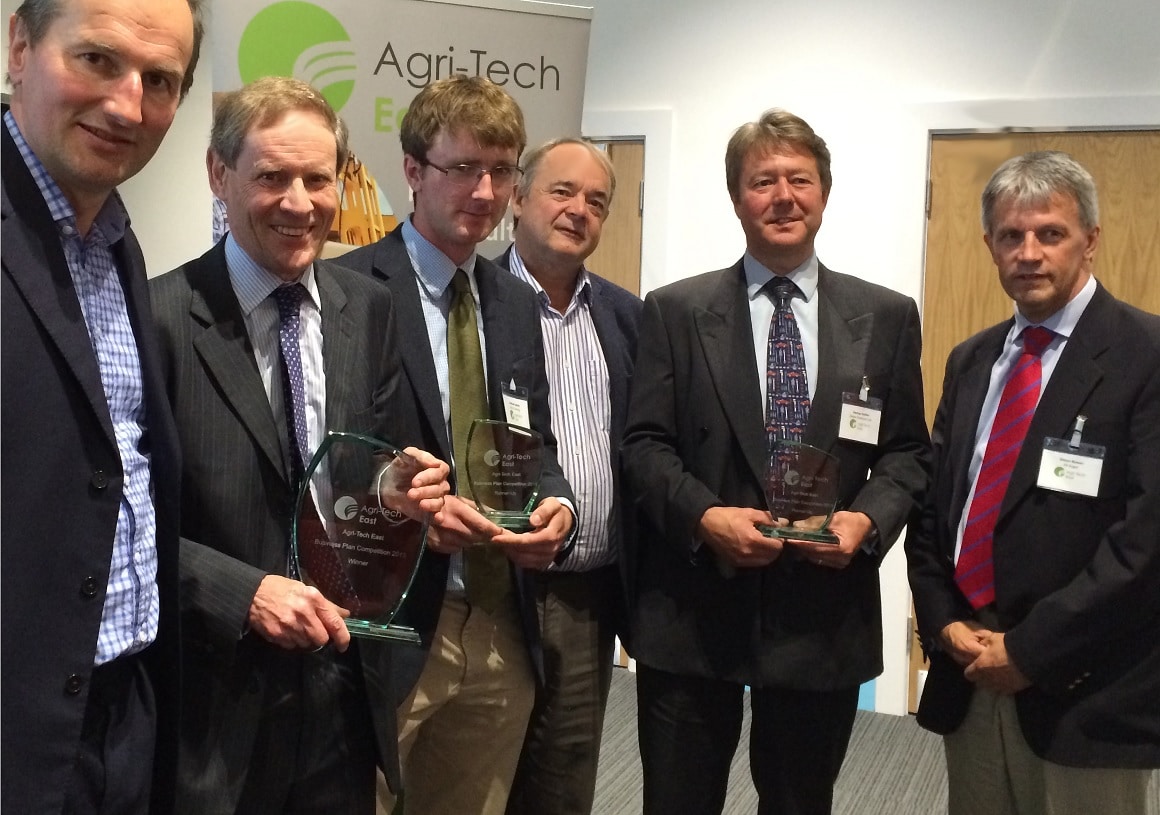
It was exciting to see how ‘agri-tech’ covers such a range of business opportunities and this was demonstrated by the variety of finalists in GROW, the UK’s first agri-tech business plan competition.
The aim of the competition was to stimulate entrepreneurial thinking, support people unfamiliar with business to gain support for developing a plan, and to give them an opportunity to pitch their idea to an interested audience.
There is also a significant business support ecosystem in the east of England with technology incubators, membership networks and specialist advice and consultancy available. GROW brought together these elements as support prizes in addition to the cash prize provided by HGCA (now called AHDB Cereals & Oilseeds).
A recent presentation I gave to representatives of the UK Local Enterprise Partnerships included some of our recent thinking on the key ingredients of an economically functional agri-tech “cluster.”
These include access to a strong knowledge base, an ability to translate that knowledge into the field, a range of companies of different sizes, maturities and disciplines, as well as access to finance, mentoring and coaching. A good agri-tech cluster also needs a focus on education, training and skills development to provide a pool of talent from which organisations can recruit high quality staff.
Members of the east of England’s agri-tech cluster came together around the business plan competition in a way which exemplifies how such a system can work.
Thanks to the generosity of organisations from both the public and private sector, we were able to offer a menu of support award prizes for the winner and two runners-up. They were able to choose the prizes that best suited their needs as they build their businesses.
Since the winners were announced, there has been a powerful demonstration of the value of a coordinated regional effort to support early stage ventures. Office and laboratory accommodation, training and mentoring, connections to researchers, legal advice, and membership of regional networks are just some of the Support Award Prizes being taken up by the winner and two runners-up of the competition.

The winner, Patrick Mitton, is taking up a place on the University of Cambridge “Ignite” programme, run by the Centre for Entrepreneurial Learning. This week-long boot camp harnesses the expertise of the serial entrepreneurs in the network to coach and mentor people as they build their businesses. Patrick will also benefit from the support on offer from the Future Business Centre, and is receiving some free legal advice from Barr Ellison in helping to draft agreements.
As a runner-up, George Kohler from Diesel Dynamics chose a year’s membership of three regional business networks – Cambridge Cleantech, Cambridge Network and the Norfolk Network, recognising the value of engaging with the wider business community, both general and sector-specific.
The other runner-up, Andrew Spinks from B&C Farming, will have an office at the new Centrum building at the Norwich Research Park, where he can forge closer links to the research base and use the support on offer to help build his business. His membership of the Hethel Innovation Launchpad Programme will also help him network with those from different sectors and learn from the experience of others. Andrew is also joining the Norfolk Network as a member for a year.
Such support, properly resourced and delivered by experienced people who can mentor young businesses, is a critical element of the business innovation ecosystem.
With small companies increasingly being an engine of innovation for larger organisations, we must do all we can to provide a supportive environment for young businesses to grow and thrive.
Post Overview
Agri-TechE Related Posts

A survival capsule for tree seedlings that boosts germination by up to 40 per cent

Great response to GROW

Last chance to register for GROW

UK agri-tech diverse and active

Stop press – GROW