Government confirms commitment to ELMs at Oxford Farming Conference
 Agri-TechE
 Farming Minister Mark Spencer has confirmed Defra’s commitment to the Environmental Land Management (ELM) scheme, which makes payments to farmers for initiatives that enhance the natural environment by announcing increases in payment rates for particular actions. ELM is to replace the Basic Payments Scheme, which makes a payment based on land area.
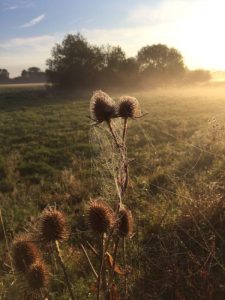
Speaking at the Oxford Farming Conference 2023, he said: “As custodians of more than 70% of our countryside, the nation is relying on its farmers to protect our landscapes as well as produce the high-quality food we are known for, and we are increasing payment rates to ensure farmers are not out of pocket for doing the right thing by the environment.”
Dr Belinda Clarke, Director of Agri-TechE , comments: “It is good to get clarity on these schemes to maintain confidence across the industry. Farming is a long-term activity and changes to practice may need investment in equipment and tools. The increased rates confirms the direction of travel and this is very helpful.”
Payment has been a source of contention as there has been a lack of information about how it will be structured.
Innovation for ELMs
At a workshop coordinated by Agri-TechE at Rothamsted in March 2022, farmers revealed concerns over how environmental improvements such as soil health, pollinators, water retention and carbon sequestration would be measured and if this would be a metric used for payments in the future.
The event identified a number of areas where improved metrics are required, where agri-tech solutions are emerging and the opportunity gaps, ie where innovation could prove beneficial.
The challenges include:
- How can non-specialists accurately identify plant and insect species and report the outcomes in a meaningful way?
- How can the source of water pollution be identified and a whole watershed approach be adopted to improve water quality?
- How can machinery become more fuel-efficient, lessen soil damage and require less labour?
- How can we increase woodland in the landscape and measure its value for carbon capture whilst still maintaining productivity?
- How can we increase the efficiency of livestock production so higher quality meat is produced with lower environmental impacts?
- How can we make crops less reliant on inorganic inputs?
A full report is available on request
Announcement about payments
The announcements from Defra at the Oxford Farming Conference were mostly to cover the initial costs of setting up the schemes; it is unclear if to gain continued payments farmers would need to provide evidence of the long-term benefits to the environment and, if so, what metrics would be required.
Sustainable Farming Incentive (SFI)
SFI pays farmers to undertake sustainable management actions (going beyond regulatory requirements) alongside productive farming. The initial offer, launched in June 2022, includes three ‘standards’: improved grassland soils, arable and horticultural soils, and moorland.
The payments are to be enhanced with a new ‘SFI Management Payment’ of £20 per hectare, up to 50 hectares of land entered into the scheme (maximum of £1k). For a 50-hectare farm this represents a potential increase of as much as 50%. Payments will be backdated to when the SFI scheme fully opened in June 2022. An expanded range of SFI standards will be published soon.
The SFI agreement has also been shortened to three years to allow tenants on shorter contracts to enter into the scheme without the need for landlord consent.
Examples of eligible projects (an expanded list is anticipated soon):
- Increase in rates for in-field grass strips. These strips allow pollinators such as bees to make their way across large fields from one strip to another, improving the consistency of pollination.
- Sowing strips of land with a seed mix. These provide food for birds in winter, encouraging wildlife to remain on the farm year-round.
- Low input grassland in upland areas. This option provides grasses and wildflowers that provide nectar food and shelter for invertebrates and help attract ground-nesting and feeding birds to less productive farmland.
- Creating successional areas and scrub. These areas help provide habitats for birds and other important species and improves the quality of woodland edges, as well as restricting soil erosion and holding back water to reduce downstream flooding.
Countryside Stewardship (CS)
Farmers with a Countryside Stewardship (CS) agreement – of which there are now 30,000 across England – will see an average increase of 10% to their revenue payment rates, covering ongoing activity such as habitat management.
Defra is also updating capital payment rates, which cover one-off projects such as hedgerow creation.
Applications for the Countryside Stewardship capital payments open today (5 January 2023) and may include:
- Hedgerow creation – to create new habitats for beneficial insects and birds, reduce soil erosion, improve drainage, and increase carbon capture.
- Improving or upgrading existing outdoor, uncovered yard drainage – to reduce foul drainage volumes and runoff.
- Re-wetting and maintaining moorland peatland habitats – payment for capital works for grip blocking drainage channels have risen.
Revenue rates will remain the same for those in Environmental Stewardship (ES) agreements. A full list of the increased capital and revenue payment rates is available.
Grants for tree planting
Meanwhile, capital and annual maintenance payments for the England Woodland Creation Offer (EWCO) and Tree Health Pilot (THP) will also be updated this year, helping to incentivise farmers to incorporate more trees as a valuable natural resource on farms. By publishing rates Defra hopes that landowners will plant now and not delay to see if the next offer is better.
Taken together, these changes will encourage more farmers to take individual positive actions such as creating hedgerows and flower-rich grass areas on the edge of fields alongside sustainable food production.
Post Overview
Agri-TechE Related Posts
Diageo sees positive impact of regen agriculture
#ATW21 Friday: Carbon avoidance or carbon capture?
Nature for finance – balancing food security with environment

‘NatureTech’ and its role in agriculture

Unlocking emerging agri-tech with everyday objects