It’s been a packed few weeks across the agri‑tech landscape, notably…
On the policy front, the long‑awaited Land Use Framework has been published. Designed to guide land use over the next 20–30 years - balancing food production, nature recovery, ecosystem services and energy generation - positively, it recognises food security as national security and emphasises protecting the UK’s best and most versatile agricultural land. But with a commitment only to maintain current (historically low) levels of domestic production, and no binding mechanisms to deliver it, could the government have been more ambitious?
Defra has also opened a six‑week ‘Call for Information’ on the UK–EU sanitary and phytosanitary “dynamic alignment” arrangements - the first concrete step since the policy was announced last year. It invites views from across the agriculture and food supply chain on how a shared rule book for crop protection and precision breeding should operate, and what support businesses will need to prepare.
And this week two new AgriScale funding competitions have been announced to the tune of £13M to accelerate agri-tech manufacturing in industrial research and experimental development.
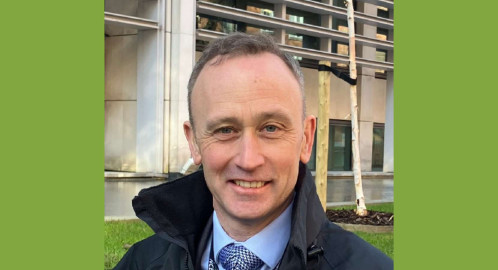
Leadership positions hit headlines in the innovation ecosystem: Tom Bradshaw was re‑elected as President of the NFU, and Steve McLean has taken the helm as new CEO of the UK Agri‑Tech Centre. This month we had a great early conversation with Steve about their refreshed strategy to help agri‑tech companies commercialise and scale.
(And just to be clear - because it’s a perennial point of confusion: The UK Agri‑Tech Centre is not Agri‑TechE. They’re a government‑funded organisation; we are an independent membership network focused on convening, connecting and catalysing the innovation community across the UK and internationally. They’re them, we’re us!)
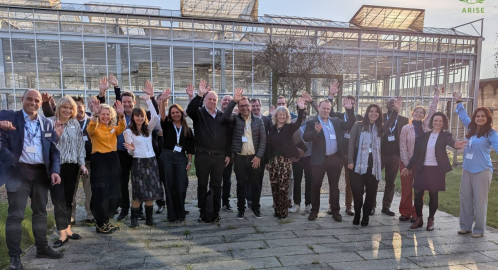
Speaking of international collabs, ARISE - the DSIT‑funded programme we’re leading to strengthen agri‑tech links between the UK, Missouri (USA), and LATAM - came to the UK this month for visits to key research institutions and an Innovation Summit at Niab featuring BBSRC, the Dep’t for Business and Trade and Dyson Farming Research – alongside 80 partnering meetings to spark new collaborations across continents.
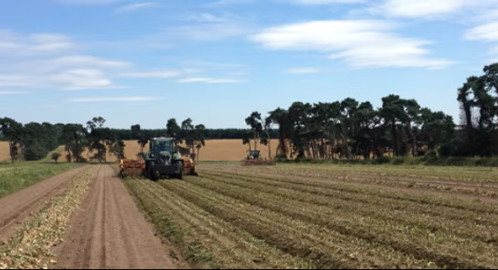
And, as ever, our bread and butter: bringing farmers into the innovation conversation. We connected the Scottish Agricultural Organisation Society with growers who provided frank feedback on a weather and risk-mapping prototype. Louise Penn hosted Messium on her family’s Northamptonshire farm for a BBC TV demo of their hyperspectral nitrogen‑mapping system, showing how satellite data can guide real‑time decisions. And through our Farmer First Innovation Group, we brought growers together to dig into supply‑chain traceability.
For the rest of the scoop from the Agri-TechE community, read on: |