The Productive Landscape: NatureTech for Profit and Planet
As agriculture navigates a new landscape of environmental ambition, ecosystem services - from soil health and water quality to carbon sequestration and biodiversity - are no longer ‘nice to have’ but central to resilient, profitable farm businesses.
At Agri-TechE, we've been championing technologies that support nature for over a decade - from land sparing to innovations that improve water quality. Now, as natural capital gains widespread recognition, how can we harness the insights from our network to shape the future?
This one-day conference will bring together a dynamic community of farmers, technologists, researchers, and policy influencers to explore how naturetech innovation is enabling the delivery, measurement, and monetisation of ecosystem services across the UK’s productive landscapes.
Featuring industry leaders technology innovators and research partners, this event will challenge thinking, spark ideas, and connect those at the forefront of a more integrated agri-environmental future.
Highlights include:
- Strategic insights from policy and research leaders
- Case studies from pioneering farms and landscape partnerships
- Exhibition and demonstrations of cutting-edge technologies
- Opportunities for meaningful networking and collaboration
This event is for those who recognise that the future of agriculture is as much about managing natural capital as it is about producing food - and that technology is a key enabler of this transition.
Scroll down to see the detailed agenda.
Cost:
- The standard price is £150 (ex VAT). Agri-TechE member discounts apply in addition; log in or register for an account in order to access your member discount.
- Farmers (with less than 750 acres) are eligible for a discounted ticket at £50 (ex VAT). To qualify, farmers have to provide a Single Business Identifier (SBI) that they have used to claim subsidies, demonstrating that they are actively engaged in farming business and SFI claims.
Please note the event fee is non-refundable for cancellation within 5 working days of the event.
5 Basis CPD and 4 NRoSo points will be available for attendees this event.
Huge thanks to ADAS, Fenland SOIL and Rothamsted Enterprises for supporting this Conference.


ADAS is the UK’s largest independent environmental and agricultural consultancy, with more than 75 years of experience in the industry. We have an intrinsic understanding of food production and the unique challenges and opportunities faced by organisations operating in the natural environment. Our purpose as a company is to design and deliver practical, productive and profitable solutions that enable our clients to grow and meet their food, climate, water and energy challenges.
Fenland SOIL was set up in 2021 as part of the work carried out by the Cambridgeshire and Peterborough Combined Authority’s Independent Commission on Climate as a dedicated team with farmers at its core to tackle climate issues relating to agriculture and peat in the Fens. We are a not-for-profit members organisation set up by farmers for farmers that aims to inform and develop ‘whole farm’ land use policies, focused on climate change mitigation and biodiversity enhancement in the Fens. We work with a range of corporate partners and farmers to carry out research and work with farms to find a sustainable future for Fenland Farming.
Exhibition:






Agenda
Dr Robert Bradburne is the Chief Scientist, Director of the Chief Scientist’s Group and head of the Environment Agency’s Science Profession. He leads an interdisciplinary team of over 200 scientists and other specialists supporting all aspects of science across the Environment Agency. Robert and the teams' work encompasses environmental data provision, scientific research, and analysis and evaluation. Robert has 23 years' experience working in and with government and holds a degree in plant sciences from Cambridge University and a PhD in crop genetics from the John Innes Centre.
Chair: Tim Place, Chairman of R & JM Place Ltd, a family‑owned soft fruit growing and food processing business based in East Norfolk. The company supplies strawberries, raspberries, blackberries, cherries and rhubarb to UK supermarkets, as well as frozen ingredients to food manufacturers.
Have we moved on from “public money for public goods” – or is there now an embedded business imperative for farmers to deliver nature positivity alongside food production? It could be that encouraging pollinators increases yields, or that supply chain customers are demanding more from their suppliers, and continuation of a contract might depend on being able to demonstrate ecosystem service delivery. This session will take a high-level view about the business drivers behind nature-tech adoption and argue the business case for its implementation.
Chair: Lucy Wilson, Managing Director ADAS Sustainable Agricultural Systems.
Lucy leads the ADAS Sustainable Agricultural Systems business and is also a spatial data and GIS specialist. She has an academic background in ecology and environmental management and interest and experience in a wide range of rural issues including land use and land use change, food security, biodiversity and environmental land management. In recent years, she has worked with the Environment Agency to develop and test a spatial scenario tool to identify optimal locations for land use change to deliver maximum environmental outcomes.
About the Speakers:
David joined LEAF as Chief Executive Officer in September 2023, before this David worked as Director of Sustainability and External Affairs for the UK Grocery Division of Associated British Foods (ABF). David joined ABF via W. Jordans (Cereals) Ltd. David worked closely with founders Bill and David Jordan to publicise the Jordans breakfast cereal brand and its longstanding commitment to wildlife friendly farming. Jordans was acquired by ABF in 2008 and David subsequently went on to lead sustainability for the Jordans & Ryvita Company, before being promoted to the position of Divisional Director for Grocery in 2017. He has a deep interest in farming and wildlife stemming from this work, and in particular the formation of the highly respected Jordans Farm Partnership, through which he worked alongside longstanding farm suppliers to the Jordans business together with LEAF, the Wildlife Trusts and The Prince’s Countryside Fund.
Kirsty Brannan is the Biodiversity and Conservation Manager for The Crown Estate, with responsibility for embedding nature recovery across a diverse portfolio of rural land. Kirsty works closely with tenant farmers and partners to deliver practical, nature‑positive outcomes alongside productive and resilient land use, with a particular focus on landscape-scale approaches, biodiversity net gain and natural capital.
Explore exhibition and demonstrations of cutting-edge technologies.
Already the use of “nature-tech” on farm is starting to gain traction, and this session will introduce you to some of the innovators who have developed solutions to help monitor, measure and manage nature-based solutions on farm. We’ll discover a range of technologies as well as understanding their journey towards commercial success, and how their business models are underpinning their future impact.
Chair: Charlie Curtis, Agricultural Sustainability Manager at British Sugar
Take a moment to recharge, check out the exhibition, and network with fellow attendees.
Good case studies give confidence among farmers and land-owners (and the wider supply chain) around the adoption of a new tool, service or practice. This session will showcase stories of the positive impacts and benefits on-farm – and the inspiration and drivers behind the intention to deploy technology to help improve nature recovery and enhancement, alongside production.
You’ll hear the farmer’s perspective on costs, learning curves, and cultural shifts, as we explore questions such as:
-
How difficult - if at all - will it be to gain farmers’ trust?
-
Is it all about “who pays,” or are there examples where businesses are finding that delivering for nature also benefits the bottom line?
This moderated discussion with farmers who are integrating ecosystem-focused technology on their farms will reveal their experiences, motivations, and insights.
Chair: David Webster, CEO, LEAF (Linking Environment And Farming)
About the Speakers:
-
Julius Joel, Future Farming Co-director G’s Group, Celery Product Director.
Julius has spent 10 years learning about biological farming and is fortunate to have been part of the Future Farming development at Shropshire Group. They are working to express the science of Regenerative Agriculture in an intensive Horticulture context, transitioning without yield or reliability reduction. Their approach targets the same yields on lower purchased inputs, while making the farms better. One of their change accelerators is their own home grown cheap biological soil and plant inoculant. They are also working to increase biodiversity on all their farms alongside using farm and field habitats to enable total IPM .
- Craig Livingstone, Director of Farming & Estates at Lockerley Estate and Preston Farms
After graduating from the Scottish Agricultural College at Edinburgh University with a BSc in Agriculture, Craig began his career as a Farm Manager in South Oxfordshire. He later trained as an agronomist, advising on a substantial arable portfolio. Craig joined Lockerley Estate in 2016. His work there resulted in him being awarded Arable Farmer of the Year and Overall Farmer of the Year by Farmers Weekly. Lockerley Estate became a LEAF Demonstration Farm in 2019, and in 2020 Craig was invited to join the advisory panel for the National Food Strategy. The estate has since achieved LEAF Marque certification and is recognised as a ‘beacon farm’ for regenerative farming practice. In 2021, Craig led the collaboration between Lockerley Estate and Preston Farms and now oversees a diverse rural estate spanning 2,350 hectares.
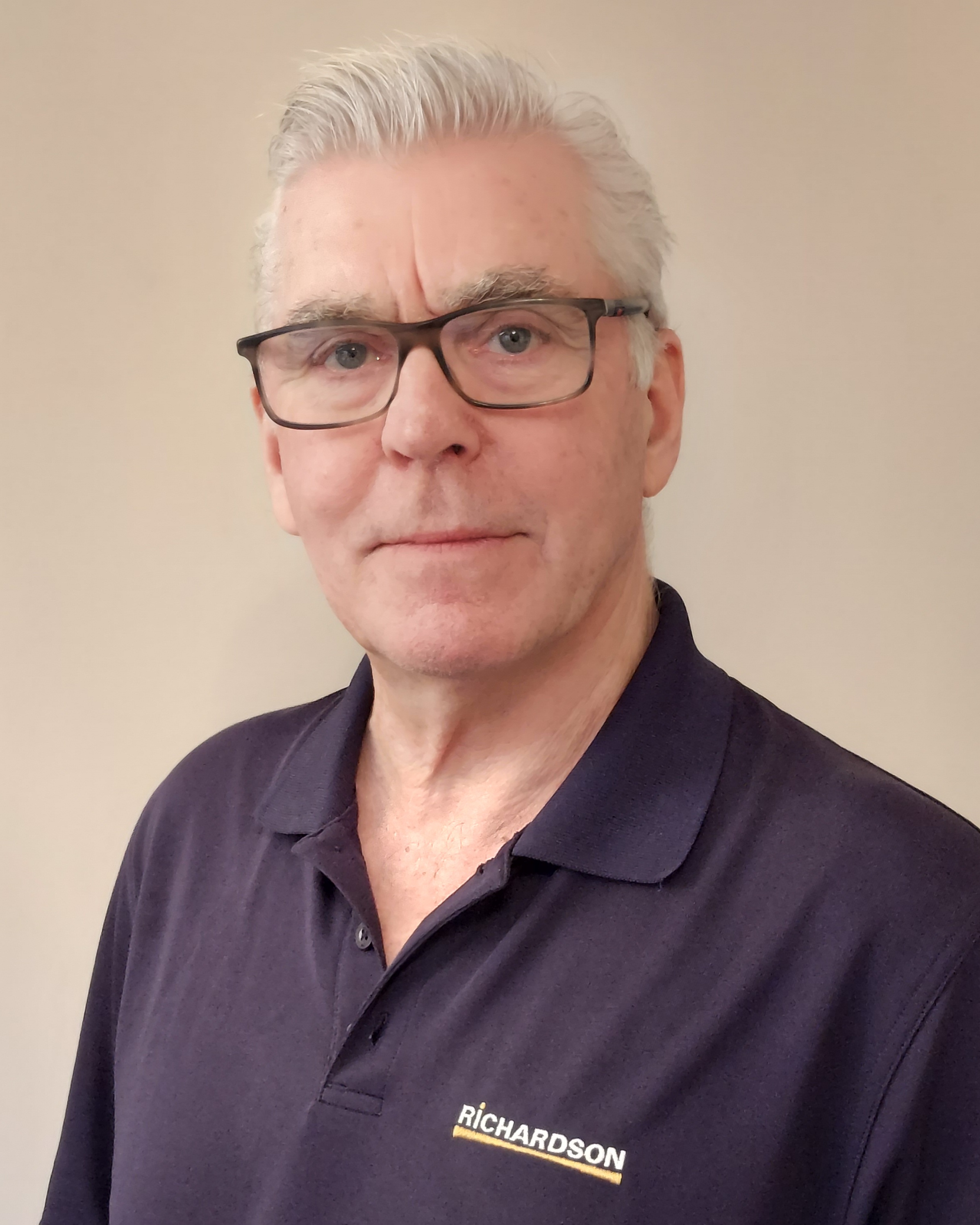
- Brin Hughes, Agronomy Manager for Richardson Milling
A Biological Scientist by training, Brin originally worked in agricultural research for Fisons back in the late 70’s. Brin has spent over 30 years working with farmers and the agriculture trade as an agronomist. He spent 10 years as Technical Manager of a National Distributor (United Agri Products) training agronomists and managing the company’s trials programme. For 8 years he worked as Technical Manager with Bill Jordan’s small team at Conservation Grade developing the unique Environmental Certification scheme for the oat growers who supplied Jordans Cereals. And in recent years Brin has been the Agronomy Manager with Richardson Milling UK (formerly European Oat Millers). Where he has been working with the oat supply chain, including farmers, merchants, breeders and researchers, with the aim of improving the quality of oats supplied to the mill at Bedford.

For technology to really make a difference in fields, on farms, across estates, and within landscapes, it needs to be scaleable and inter-operable. This session will unpack what still needs to be achieved for widespread, commercial adoption and implementation of innovations for nature recovery and landscape management. We’ll be hearing from a group of experts to reveal the next steps to bridge the gap between innovation, adoption and scale-up.
Chair: Dr Mary Ellis, Co-founder & CEO, PheroSyn